Zhuque-3 Landing, Roman Telescope Launch and SpaceX’s Louisiana Plan
The short version
A roundup of space news from the second half of August. It covers China's first successful landing of an orbital-class booster on legs by Zhuque-3, the Falcon Heavy launch of the Nancy Grace Roman Space Telescope, SpaceX's planned Louisiana spaceport, new US space executive orders, and a Long March 6C stage that broke up in orbit. It also covers the Swift rescue mission, the delay of Chang'e 7 and the delay of Crew 13.
Full written account
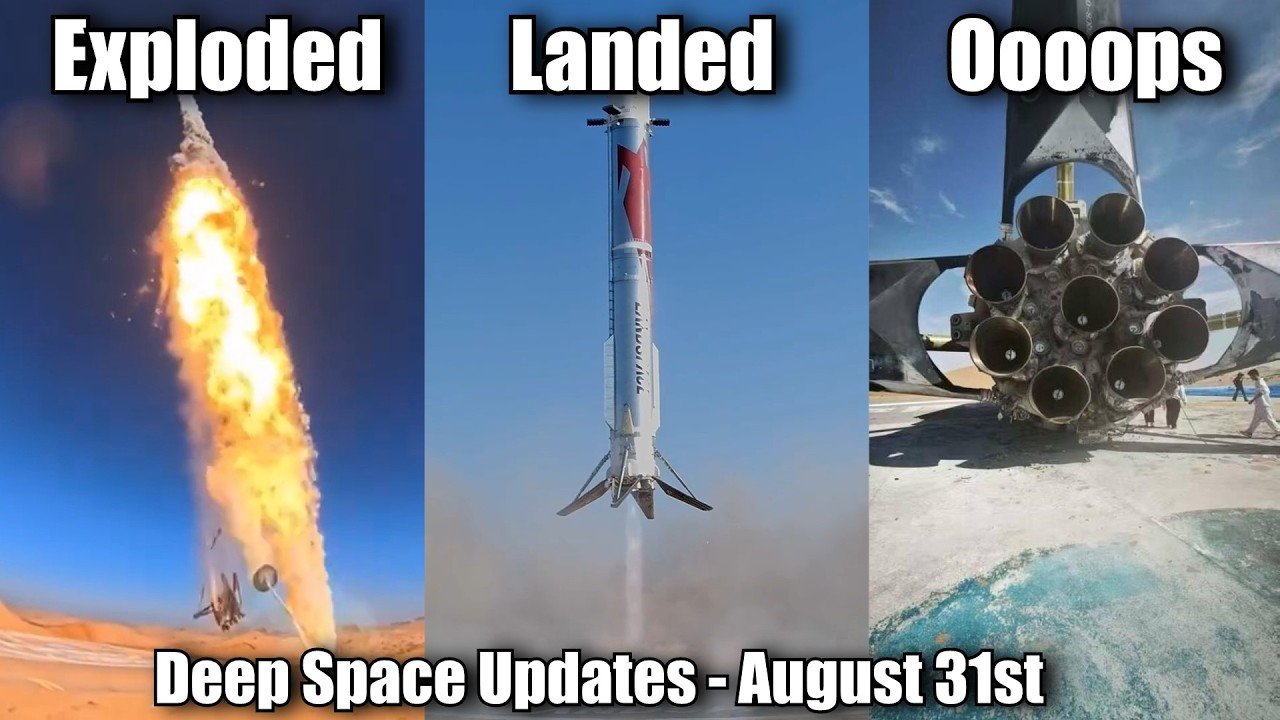
China's Zhuque-3 booster landed on its legs on 18 August after launching Honghu-3 from Jiuquan, the country's first successful landing of an orbital-class booster on legs. One of the legs then failed and the booster ended up lying on its side. It was one of several developments in the second half of August, from a telescope launch to policy changes and a new SpaceX spaceport.
Zhuque-3 lands on legs
LandSpace's Zhuque-3 is a stainless steel methalox rocket about 66 m tall and 4.5 m wide, with nine engines on its first stage. It aims to carry about 20 tons to low Earth orbit. After roughly 2 minutes of flight the first stage separated, flipped, and headed to a landing site about 400 km downrange. This was LandSpace's second attempt. The landing profile was changed from the previous flight and used fewer engines, so more propellant was needed but there was more margin for error. After the success, LandSpace released more video of the earlier failed attempt, in which the booster exploded. Some outlets reported a re-flight in six months, but images show the booster on its side, so that seems unlikely.
Launches in the period
- 16 August: a Falcon 9 from Vandenberg carried Starshield Group 1-4, also known as USSF 366, with 23 modified Starshield satellites.
- 16 August: a Long March 12 from Wenchang carried the 24th batch of Guo Wang satellites.
- 20 August: Rocket Lab's Electron launched QPS-SAR-18 from Mahia, the eighth of 17 launches for the iQPS radar constellation.
- 22 August: a Soyuz 2.1B with a Fregat stage launched GLONASS-K from Plesetsk, apparently without airspace closure announcements.
- 27 August: an Ariane 6 launched Meteosat 14, a 3.8-ton weather satellite bound for 9° east. It was the first geostationary satellite launched by Ariane 6.
A Long March 6C that launched six small satellites from Taiyuan on 15 August left a stage in orbit. LeoLabs found it had broken into tens, if not hundreds, of fragments at around 400 to 480 km, altitudes that potentially cross space station orbits.
A Falcon 9 from SLC-40 flew Starlink on booster 1067's 37th mission, apparently the last Starlink launch on a Falcon 9 from Florida. Vandenberg will keep launching Starlinks because it can reach inclinations Starship cannot.
Nancy Grace Roman Space Telescope
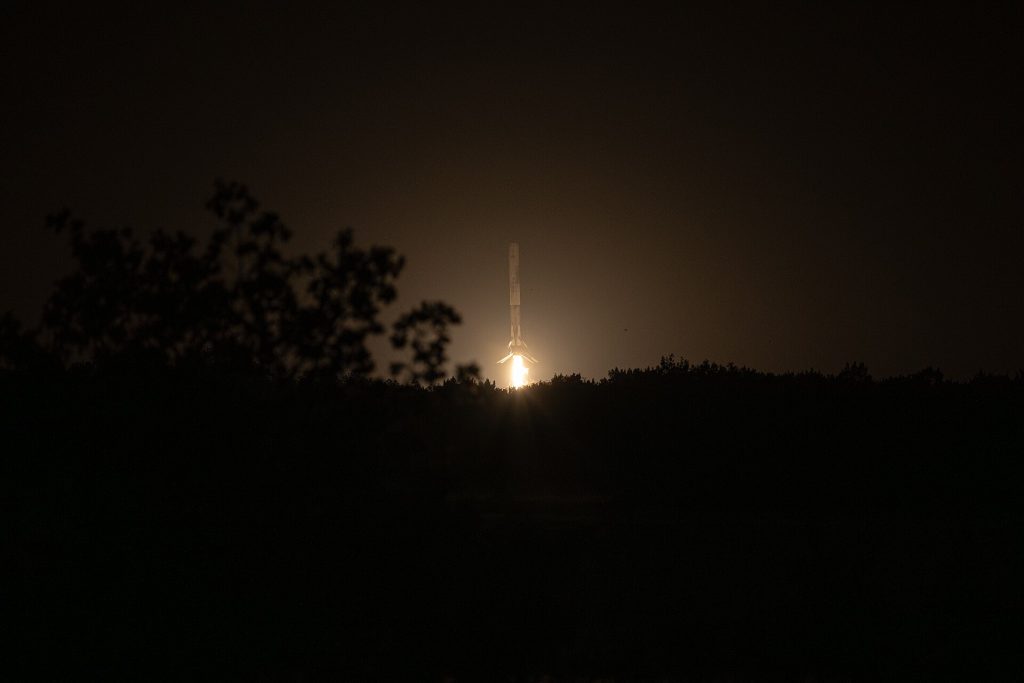
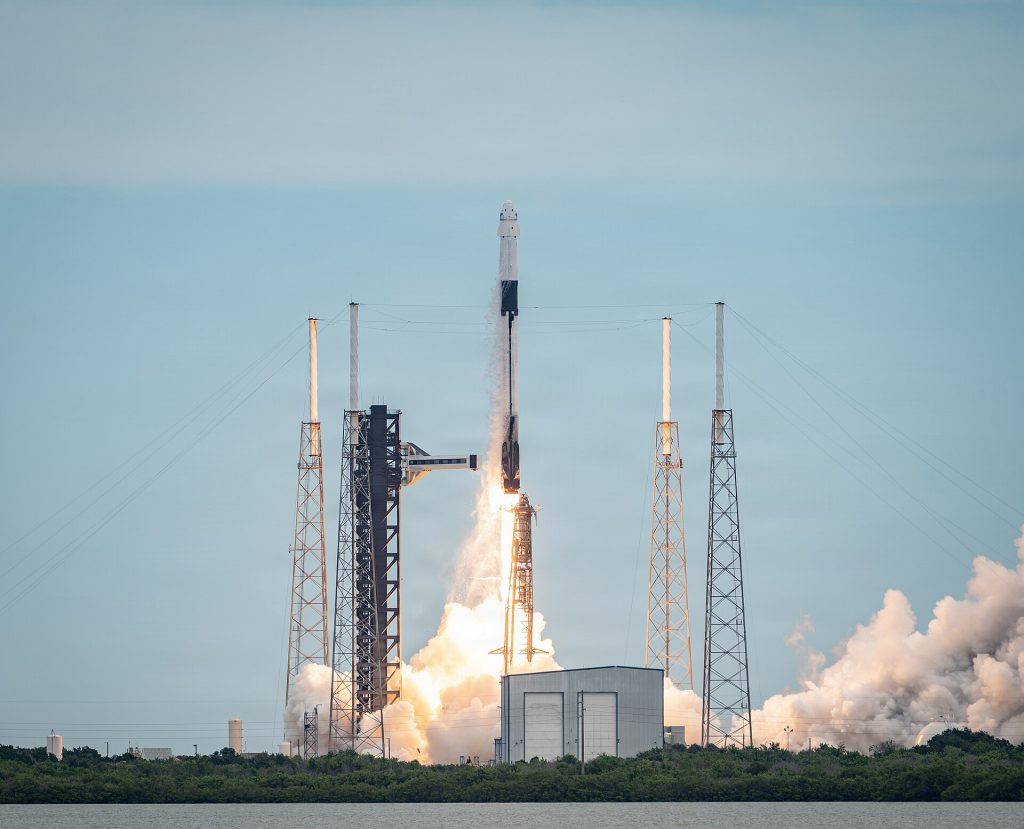
On 30 August a Falcon Heavy launched the Nancy Grace Roman Space Telescope from pad 39A, ahead of schedule. It is heading for L2, a trip of about 100 days, with commissioning starting after about 10 days. The first course correction burn has been completed. The side boosters returned to the launch site, though the NASA camera was pointed at the wrong landing site, so only one booster was shown. The spacecraft began as spy satellite hardware that did not meet the NRO's requirement and was donated to NASA. Its coronagraph can block the light of a star to see nearby objects such as exoplanets.
Starship and Louisiana
Starship 41 and its booster completed test fires, with all 33 booster engines. SpaceX will carry live Starlink satellites to operational orbits, but will not attempt a Starship catch at Boca Chica. SpaceX also announced a spaceport in Vermilion Parish, Louisiana, with a south-facing coast that allows launches to medium inclinations by heading east and returns over water. Starship 40 was picked up from the water by a recovery ship named Forte and is heading toward Brownsville. Starship flight 14 is currently expected in the middle of September.
Policy and other news
A new national space transportation policy, the first update since 2013, sets a goal of 1,000 launches per year from the US. A second executive order creates a commission to study a federal space academy, which the text makes a NASA-led effort.
Catalyst Space's Swift rescue spacecraft reached orbit, but a safe mode event damaged its reaction wheels and it used too much propellant in recovery. Even if it docks, it cannot raise Swift's orbit enough. Swift is back in science mode.
Chang'e 7 was scrubbed twice, with Typhoon Noru in the area, and the booster was rolled back. Some sources suggest the next opportunity is early 2027. It was meant to be the first spacecraft to land near Shackleton crater.
Crew 13, expected on 12 September, has been pushed back after an oxygen leak on the Dragon capsule. Isar Aerospace plans another Spectrum launch attempt from Andøya between 4 and 10 September.
Questions this video answers
What did Zhuque-3 achieve on 18 August?
It launched from Jiuquan carrying Honghu-3, and its first stage landed successfully on landing legs. This was China's first successful landing of an orbital-class booster on legs.
Where is the Nancy Grace Roman Space Telescope headed?
It is heading to the Lagrange point at L2. The trip should take about 100 days, and commissioning starts after about 10 days.
What launch rate does the new US space transportation policy aim for?
It sets a goal of 1,000 launches per year from the US.
Why was Crew 13 delayed?
The mission, expected on September 12th, was pushed back because of an oxygen leak on the Dragon capsule.
Why was Chang'e 7 not launched?
After two scrubs, with Typhoon Noru in the area, the launch was delayed and the booster rolled back. Some sources suggest the next opportunity for its trajectory is early 2027.