Tiangong space station
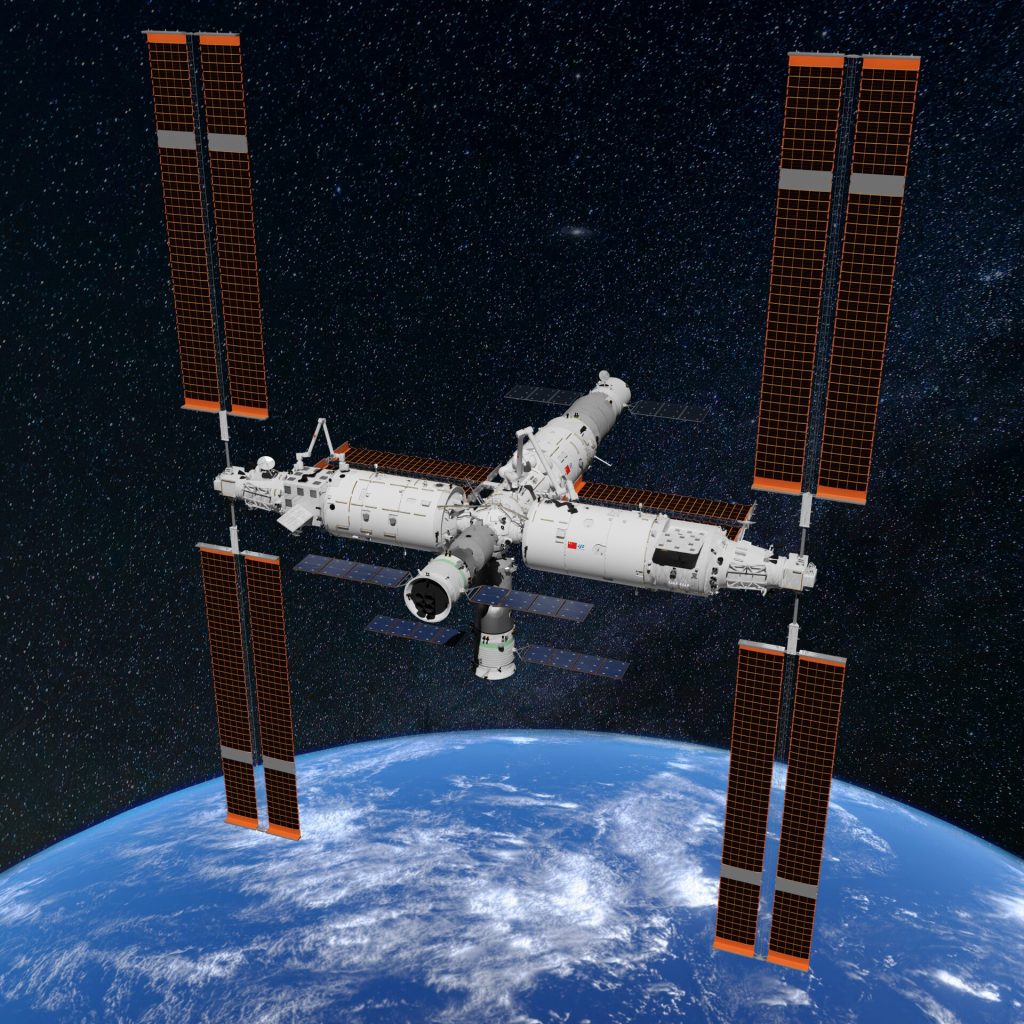
The Tiangong space station, launched into Earth orbit by China in 2021, is a continuing crewed mission rather than an accident or incident. The checked facts list its outcome only as in progress, with no deaths or survivors recorded.
What happened
-
Watch this moment · 0:36
China launches the first Tiangong station
-
Watch the video
2016
Tiangong 2 is launched
-
Watch the video
2019
Tiangong 2 is de-orbited
Astrum says it was brought down once its tasks were completed.
-
Watch this moment · 2:23
Modules of the current station are launched
Astrum says the core module and two science modules were assembled in space, launched between 2021 and 2022. Mystral says assembly took two years from the first module reaching orbit.
-
Watch this moment · 20:40
Longest spacewalk in history
Mystral says it lasted 9 hours 6 minutes. The crew installed space debris protection devices and inspected and maintained external equipment.
-
Watch this moment · 29:50
Shenzhou 20 crew return on a different spacecraft
Mystral says their craft was suspected of debris damage, so they came home on 14 November aboard the spacecraft their replacements had flown up on. Shenzhou 22 was launched early.
-
Watch this moment · 26:10
Planned expansion and Xuntian telescope
Mystral says the plan is to grow from three modules to six, and that the Xuntian telescope is scheduled to launch in 2027 and dock at the reserved front hatch for servicing.
Key facts
| Mission name | Tiangong space station |
|---|---|
| Outcome | In progress |
Videos about this mission
The videos, in date order
Drag, zoom or press play to watch them on this page.
April 2025 – September 2026
Drag to explore dates · Select a video to preview.
Dates are when each video was first published on YouTube.
From single-module labs to a permanent station
Astrum traces China's station work to 2011, when the first Tiangong was launched whole as a small prototype to master rendezvous and docking. Tiangong 2 followed in 2016 to test technologies for a larger station and was de-orbited in 2019.
Mystral argues the rule caused China's own station rather than preventing it.
Three modules built in two years
Astrum describes the current station as the Tianhe core module for living plus two science modules, one for life sciences and medical technology and one for microgravity physics. It gives a mass of 100 tons, a length of 55 metres and room for up to six crew.
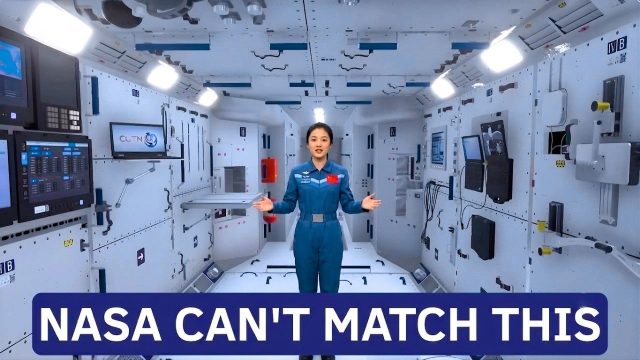
Mystral says the modules arrived preassembled and docked themselves automatically, with a small indexing arm swinging each one onto a side port. It also describes crews relocating the core module's solar arrays after they were shaded by the lab modules, and says the station supports 25 experiment cabinets and 67 exposed payload slots.
Research ambition versus payload efficiency
Astrum frames the station around five research themes: on-orbit assembly and construction, robotics and autonomous systems, new energy and propulsion, environmental control and life support, and general spacecraft technology. It argues these point toward long-range activity such as lunar and wider solar-system habitats, which is the presenter's interpretation.
Mystral compares hardware instead. It also describes the planned growth to six modules.
Sources: The facts and written text on this page come from the 2 videos on this page, by Astrum, Mystral.