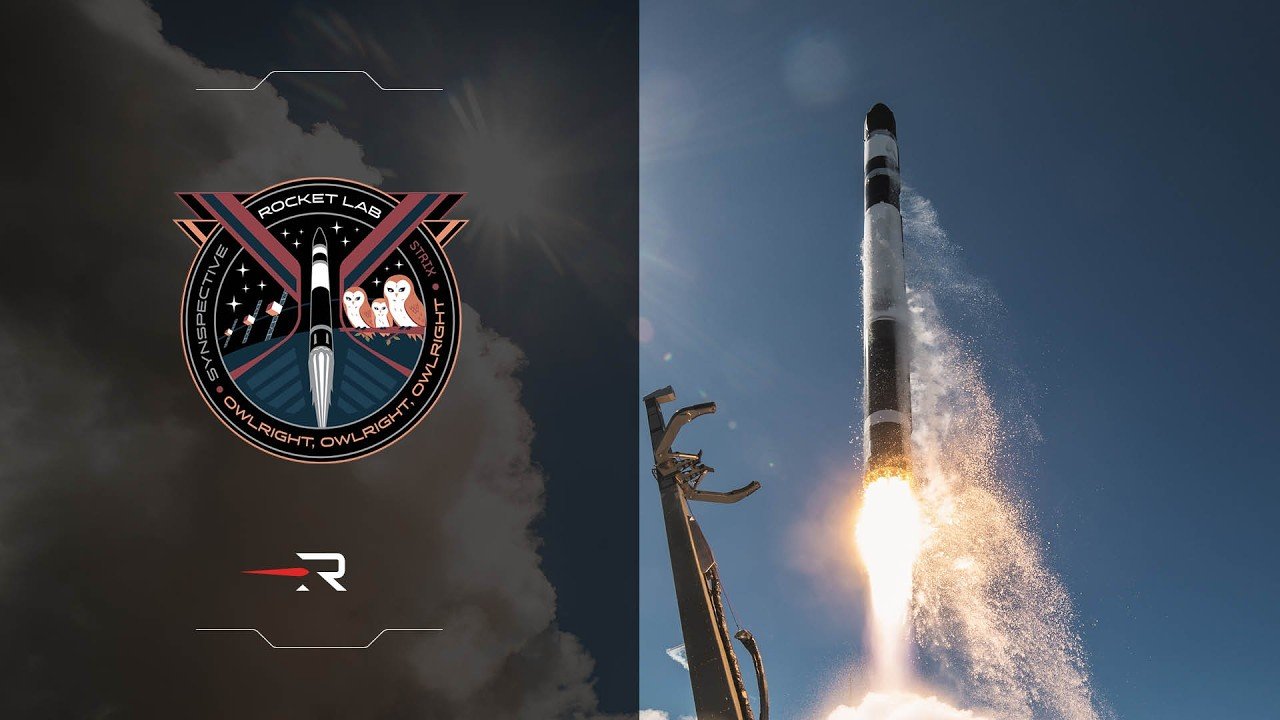
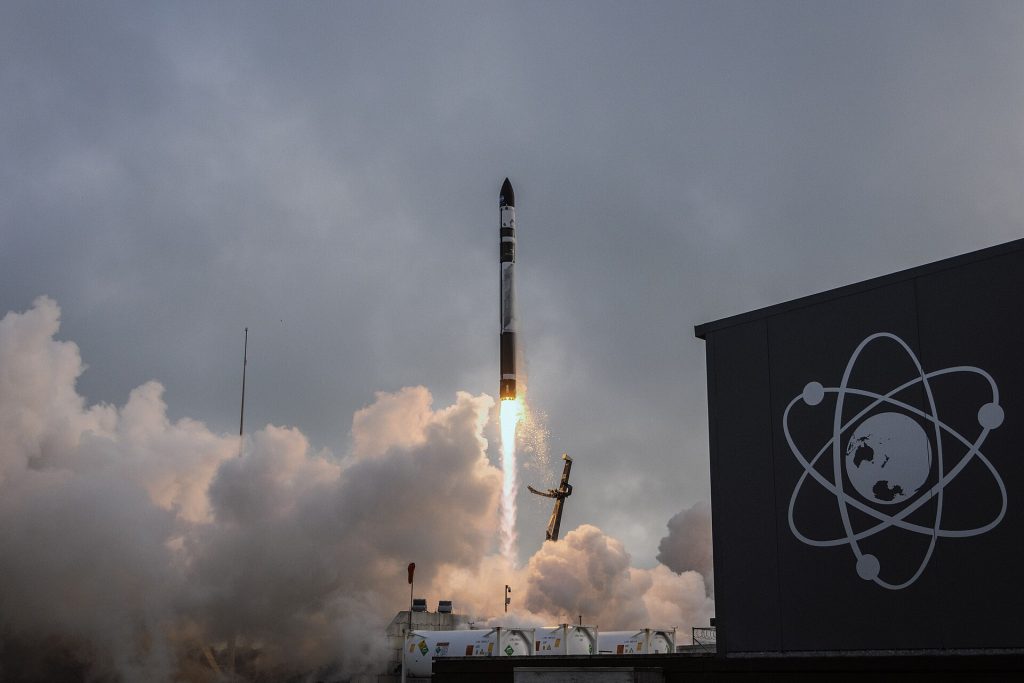
Electron Delivers a StriX Radar Satellite to Orbit for Synspective
The short version
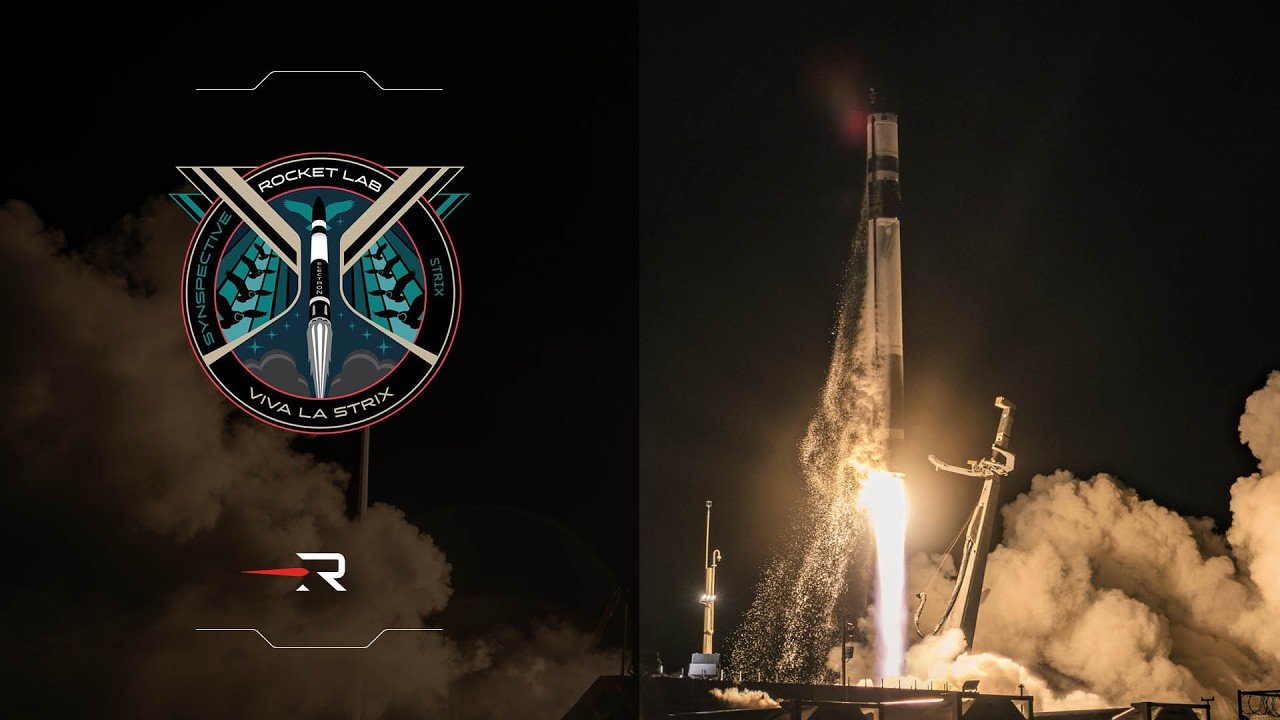
Rocket Lab's Electron launched the 'Viva La StriX' mission from Launch Complex 1 in New Zealand on 22 May 2026 at 09:33 UTC, carrying one StriX radar satellite for Synspective. The webcast covers the countdown, the go/no-go poll, stage separation, a battery hot swap on the second stage, and kickstage deployment of the satellite. Mission control confirmed payload deployment and called it a mission success, the ninth Synspective launch on Electron.
Full written account
Rocket Lab's Electron rocket lifted off from Launch Complex 1 in New Zealand at 9:33 p.m. local time on 22 May 2026 (0933 UTC), carrying a single StriX radar imaging satellite for the Japan-based operator Synspective. The mission, named "Viva La StriX", was Electron's 88th launch and the ninth time Rocket Lab had launched a Synspective satellite. It ended with payload deployment into low Earth orbit and was declared a mission success.
The customer and the satellite
Synspective is building a constellation of synthetic aperture radar (SAR) satellites. Unlike optical satellites that rely on sunlight, SAR satellites use radio waves to create images of landscape and objects, so they can capture images day or night and through cloud cover. The data is used for urban development, construction, infrastructure monitoring and disaster response. A Synspective representative described using the satellites in weather-adverse situations such as flooding and typhoons, and producing disaster area estimates to send to local agencies for relief.
Rocket Lab's launches for Synspective began in 2020, and the company has been Synspective's sole launch provider since. Another 18 missions are booked on Electron to deliver the rest of the constellation before the end of the decade. For this flight, the target was a 45 degree orbit, mostly circular, with a 572 km apogee and a 545 km perigee.
The vehicle
Electron is a two-stage, carbon composite rocket with nine Rutherford engines on the first stage and a tenth, vacuum-optimised Rutherford on the second stage. Rutherford is described as the world's first 3D printed, battery-powered rocket engine: electric pumps driven by batteries, with the thrust chamber, injector pumps and main propellant valves made by additive manufacturing. Rocket Lab's 1,000th Rutherford had recently come off the line at its engine development complex in Long Beach, California, at a pace of around one engine per day.
This Electron used a custom fairing built to fit the wide body of the StriX satellite, so operators need not design to a standard fairing's limits. An 11th engine, Curie, powers the kickstage, the platform on top of the second stage that carries the payload and can change speed and direction to adjust altitude and inclination. Across both stages Electron loaded 12,000 kg of liquid oxygen and kerosene.
Countdown
The broadcast hosts, Muriel Baker and Julian Spice, reported a clear evening, a one-hour launch window with liftoff at its start, and all vehicle, payload and ground systems green. Launch director Michael Pearson ran the go/no-go poll, in which every console, from propulsion and avionics to range safety, weather and the executive team, answered go. The poll closed at T-minus 11 minutes 11 seconds, with the terminal count auto sequence due at T-minus 10 minutes.
At T-minus 2 minutes the onboard flight computer takes over the countdown, and the autonomous flight termination system (AFTS) is armed; controllers reported it green and enabled for flight. The Rutherford engines ignite about two seconds before T0 to build full thrust.
Flight timeline
- 43 seconds: approaching max Q, the point of greatest aerodynamic stress; GNC called "Cleared Max Q" shortly after.
- After max Q: more than 16 kilometers up and above 1,900 km/h.
- Staging: the first stage power pack shut down (MECO) a couple of seconds before stage separation, followed by second stage ignition, then fairing jettison.
- About 6.5 minutes: a battery hot swap mid-burn, in which the old battery pack is ejected from the second stage and a fresh one takes over. "Battery jettison confirmed. Hot swap successful." The stage was then above 196 km and moving at more than 17,000 km/h.
- About T+9 minutes: second stage cutoff (SECO), transfer orbit achieved and kickstage separation.
- About 53 minutes: Curie engine ignition to circularise the orbit. Its burn adds anywhere from 10 to over 100 m/s depending on the target orbit, and the timing is set by the kickstage's guidance computer.
- Just under an hour after launch: Curie cutoff, nominal final orbit, then payload separation and deployment confirmed.
The kickstage coasted in an elliptical transfer orbit at 44.89 degrees inclination before the Curie burn. Between kickstage separation and payload deployment, the interval is just under an hour.
Neutron update
While propellant loaded, the hosts covered Rocket Lab's Neutron, a medium-lift reusable rocket being prepared for launch later in the year. Its Archimedes engine, in stage one and stage two vacuum versions, was being tested across the full range of gimbal angles at Stennis Space Center in Mississippi. Stage separation was being simulated with test articles: Neutron's second stage hangs inside the first and deploys along interior rails out of the "hungry hippo" fairing, which lets the fairing halves stay attached to the first stage and return for reuse. The full vehicle is due to come together at Wallops Island, Virginia.
Questions this video answers
When and where did Viva La StriX launch?
It launched on 22 May 2026 at 09:33 UTC from Launch Complex 1 in New Zealand.
What was the payload?
A single StriX synthetic aperture radar (SAR) Earth observation satellite for Synspective.
Did the mission succeed?
Yes. Mission control confirmed payload deployment and the broadcast called it mission success.
What orbit was targeted?
A mostly circular orbit with a 572 km apogee and 545 km perigee at about 45 degrees inclination.
How many more Synspective launches are booked?
Another 18 missions are booked on Electron to deliver the rest of the constellation before the end of the decade.
Explore related missions
Connected by the topic: Electron