Electron Launch 91: Rocket Lab Deploys Its 10th StriX Satellite
The short version
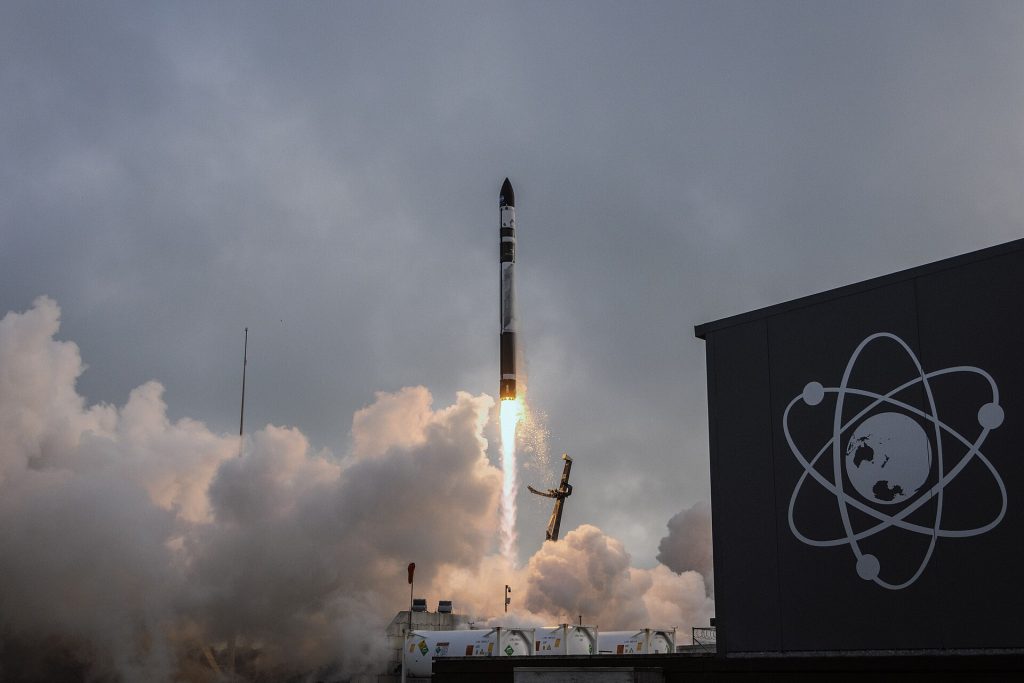
Rocket Lab's 91st Electron lifted off from Launch Complex 1 in New Zealand at 5:43 a.m. local time on 27 June 2026, carrying a single StriX radar satellite for Synspective. It was the tenth dedicated Electron launch for the Japan-based operator. The kick stage deployed the satellite to a 552 km low Earth orbit, and mission control confirmed payload separation.
Full written account
Rocket Lab's 91st Electron rocket lifted off from Launch Complex 1 in Mahia, New Zealand, at 5:43 a.m. local time on 27 June 2026 (2:43 a.m. in Japan), carrying a single StriX synthetic aperture radar satellite for Synspective. The mission, named "10 Owl Of 10", was the tenth dedicated Electron launch for the Japan-based Earth observation company, and it ended with the satellite delivered to orbit. Rocket Lab's mission control in Auckland ran the broadcast.
The mission and its customer
StriX is both the name of Synspective's satellites and the genus of owls, which is why each mission carries an owl-themed name. Rocket Lab's hosts said 17 more Synspective missions remain to be named in the same way. The launches are meant to establish Synspective's StriX constellation of SAR satellites by the end of the decade.
SAR stands for synthetic aperture radar. The technique bounces radio waves off landscapes and objects, and the measurements are stitched together into imagery. The description lists its uses as urban development planning, construction and infrastructure monitoring, and disaster response. The target was a 552 km low Earth orbit.
The launch was cleared with a clean run through early morning operations, with no issues reported across the launch vehicle, the payload or the range. Fog hung over the site and the weather was described as unsettled, but the launch went on time.
The Electron rocket
Electron stands 18 meters tall on the pad and weighs 13,000 kg fully fueled. It is a two-stage rocket with a kickstage, in the small lift class. Rocket Lab described it as the world's most frequently launched rocket of its type for many years, and said it expects launch number 100 within months.
The fairing for this mission was customized to fit the boxy shape of the StriX satellite without compromising aerodynamic performance, a customization used on many Synspective launches. Electron is built from carbon composite, which gives a high strength-to-weight ratio; each fairing half weighs less than 50 kg.
Both stages use Rutherford engines: nine on the first stage and one vacuum-optimized engine on the second. Rutherford is described as the world's first battery-powered 3D-printed rocket engine. Its electric pumps are driven by motors running on batteries, so no propellant is burned to power a turbopump, and the engine operates at 95% efficiency. The thrust chamber, injector, pumps, main propellant valves and other parts take around 24 hours to print. The kickstage uses a 3D-printed engine called Curie, which can relight several times in orbit for plane changes, altitude adjustments or multi-satellite deployments.
Countdown
The final go/no-go poll began at T-minus 12 minutes, led by launch director Michael Pearson, with each console answering "go". The poll finished at T-minus 11 minutes 11 seconds, and the terminal count auto sequence was set for T-minus 10 minutes.
At T-minus 2 minutes, control passed to the rocket's flight computer in the autonomous auto sequence start, which makes its own go/no-go decisions from hundreds of sensor readings. One early action is to arm AFTS, the autonomous flight termination system, which monitors trajectory and flight health. Tanks on both stages were pressurized for flight, which pushes propellant into the engines and strengthens the tanks, like air pressure in a balloon.
Flight
At 42 seconds the rocket approached Max Q, the point of peak aerodynamic loading, and mission control then called it cleared. Electron was then more than 20 km up and moving at more than 2,500 km/h.
Main engine cutoff, stage separation and second stage ignition were all confirmed in quick succession. The brief coast after cutoff lowers the dynamic forces during separation. Fairing jettison was confirmed with the satellite visible on the kickstage. At that point the rocket was moving at more than 8,300 km/h and had climbed past 141 km.
About 4 minutes 30 seconds into flight, halfway through the second stage burn, the batteries were close to depletion. Electron performed a battery hot swap: it dropped the spent battery packs, which were dead weight, and connected a fresh pack to keep the engine firing. Hot swap was confirmed successful.
Second engine cutoff and kickstage separation followed, and the kickstage entered a staging orbit.
Deployment
The kickstage coasted for about 40 minutes while its flight computer refined its burn calculations. Curie then fired to move out of the phasing orbit, followed by a second burn lasting roughly two and a half minutes to circularize. The hosts quoted orbital velocity above 27,000 km/h. The burn put the kickstage on a nearly circular path of about 552 km, with a slightly lower point at 548 km. Curie cutoff was confirmed, and payload separation of the StriX satellite was confirmed, delivering it to orbit as planned.
Victus Haze and Motiv
The broadcast also looked back at Electron's 90th launch, Victus Haze, flown from the same site about a week earlier for the US Space Force. It was a test of going from call-up to launch in a single day, and took 16 hours and 42 minutes from phone call to liftoff. Rocket Lab built the spacecraft too; commissioning took 38 hours, more than 33 hours ahead of a 72-hour deadline. The spacecraft then completed its first rendezvous maneuvers, approaching and imaging a second spacecraft.
The hosts also announced Rocket Lab's acquisition of Motiv, a robotics company whose technology includes the type of robotic arm used on NASA's Perseverance rover. Its products also include solar array drives, gimbals, filter wheels and focus mechanisms. Rocket Lab said this positions it for Mars sample return, NASA's Mars Communications Network, and national security work.
Questions this video answers
When and where did 10 Owl Of 10 launch?
It lifted off at 5:43 a.m. NZT on 27 June 2026 from Launch Complex 1 at Mahia, New Zealand.
What did the mission carry?
A single StriX synthetic aperture radar Earth observation satellite for Synspective.
Which orbit was targeted?
A 552 km low Earth orbit.
What is the battery hot swap?
During the second stage burn, Electron drops depleted battery packs and connects to a fresh pack so the engine keeps firing until stage separation.
Was the launch successful?
Yes. Mission control confirmed payload separation and the presenters said the payload was successfully delivered to orbit.
Explore related missions
Connected by the topic: Electron