Electron Launches ESA’s Celeste IOD Satellites to 510 km Orbit
The short version
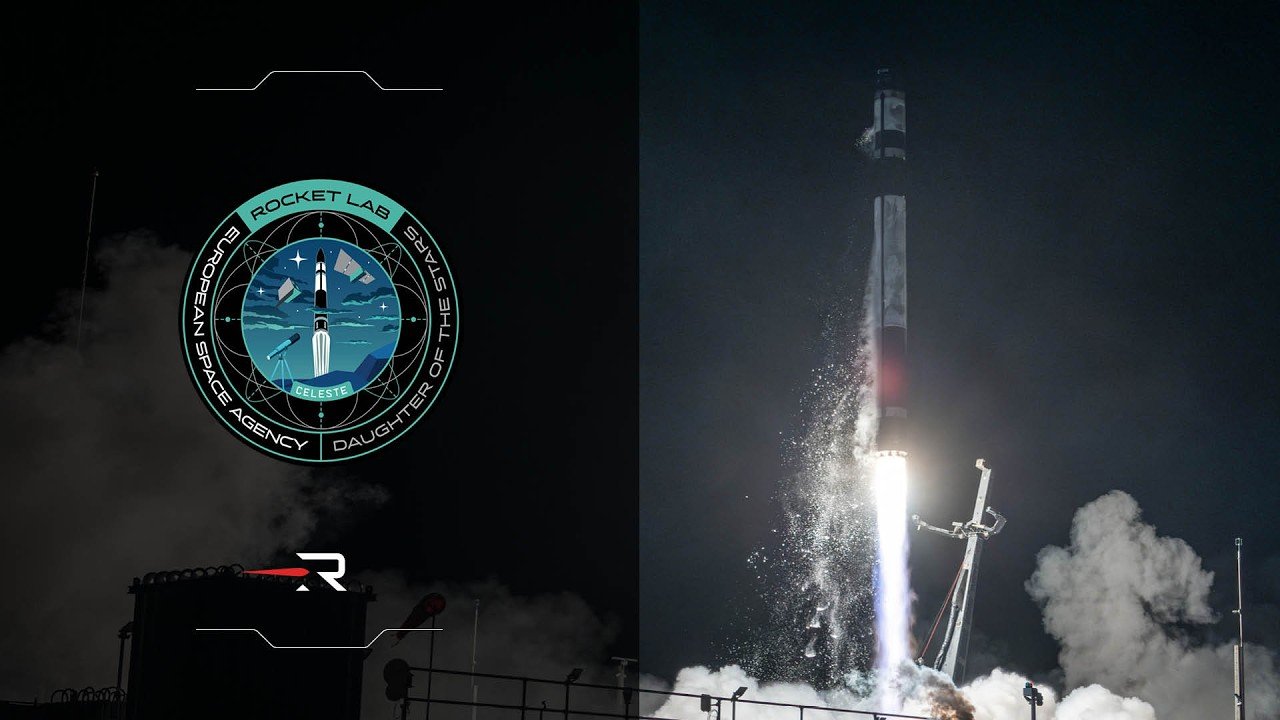
Rocket Lab launched an Electron rocket from Launch Complex 1 in New Zealand on 28 March 2026 NZT, carrying the two Celeste IOD demonstrator satellites for the European Space Agency. The satellites were deployed to a 510 km low Earth orbit to test LEO-PNT navigation services alongside Galileo and EGNOS. Rocket Lab confirmed full mission success on its 85th Electron launch.
Full written account
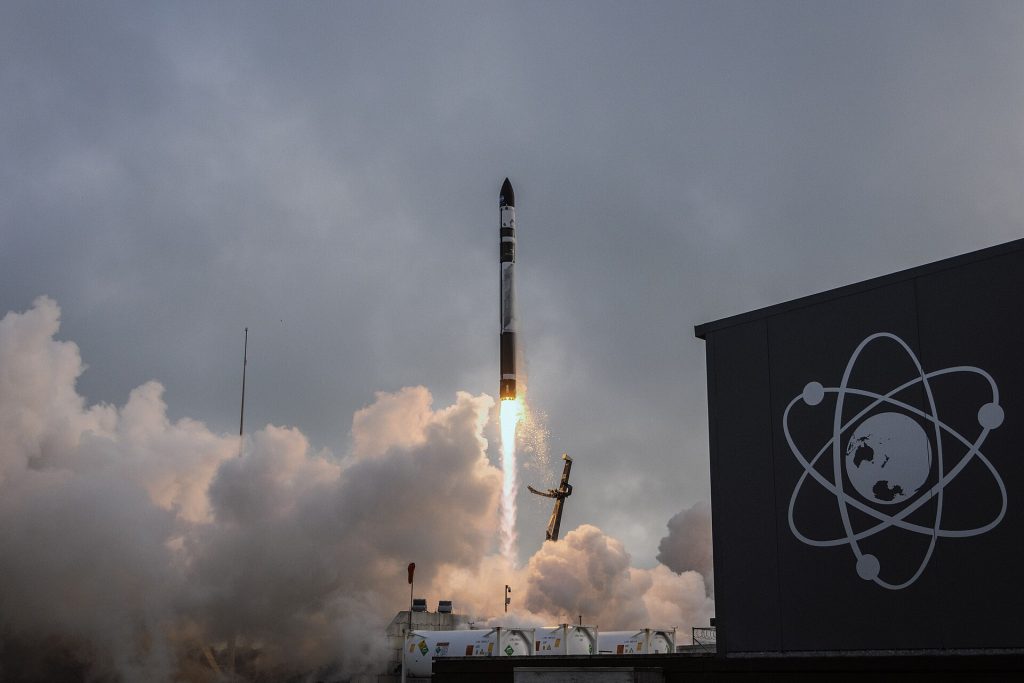
Rocket Lab launched an Electron rocket from Launch Complex 1 at Mahia, New Zealand, on 28 March 2026 NZT, carrying two European Space Agency (ESA) demonstration satellites into a 510 km low Earth orbit. Liftoff came at 22:14 New Zealand Daylight Time (0914 UTC), from pad A, only days after another Electron had left pad B of the same complex. The mission, named Daughter Of The Stars, was Rocket Lab's first dedicated launch for ESA and the 85th launch overall for Electron. All stage, kickstage and payload events were reported as nominal, and both spacecraft were confirmed deployed.
The payload: ESA's Celeste mission
The two spacecraft, IOD-1 and IOD-2, belong to ESA's Celeste LEO-PNT demonstration mission. LEO-PNT stands for Low Earth Orbit Positioning, Navigation, and Timing. They were provided by European prime contractors Thales Alenia Space and GMV, with IOD-1 built by GMV. They are compact cubesats that, according to the broadcast, were built, tested and qualified in under two years.
The aim is to test how a fleet in low orbit can work alongside Galileo and EGNOS, Europe's navigation systems in medium Earth orbit. Galileo was described as powering smartphones, mobility and critical infrastructure for over 5 billion users worldwide. The Celeste team described three pillars: augmenting Galileo and EGNOS with faster and stronger signals, adding resilience through additional frequencies, and introducing new service concepts such as indoor navigation.
The two satellites will broadcast navigation signals in L-band and S-band and operate in orbit for at least six months. Their engineers named autonomous orbit determination and transmission in different frequency bands among the technologies to prove, in a package small enough to be manufactured at scale and low cost. Celeste will also explore how navigation can work with 5G and 6G. More advanced satellites are to follow.
The mission name refers to Maria Celeste, described as Galileo Galilei's daughter. ESA's Director General, named in the captions as Dr. Josef Aschbacher, called it the inaugural Celeste launch. He said it would help shape the European Union's own LEO navigation layer and contributes to one of three pillars of ESA's European Resilience from Space initiative, endorsed at CM25.
The countdown
The launch director, Julia Vanbarka, ran the go/no-go poll starting around T-minus 12 minutes. Stations answering included stage operators, avionics, GNC, VCON, telemetry, ground control, the propellant loading specialist, range safety, the weather officer and the launch safety officer. The poll finished at T-minus 11 minutes 3 seconds, with auto sequence set for T-minus 10 minutes. The launch window was one hour, with the launch at the top of it and backup opportunities through to 19 minutes past the following hour.
Callouts in the final two minutes included the vehicle on internal power, AFTS (the flight termination system) green and enabled, and both stage tanks pressurised.
Flight sequence
- Max Q: Electron throttled back to pass through maximum aerodynamic pressure, then cleared it. The nine first-stage Rutherford engines had it above 2,500 km/h and above 20 km altitude.
- Staging: Main engine cutoff (MECO) came a couple of seconds before stage separation, followed by second-stage ignition of the single vacuum-modified Rutherford engine.
- Fairing: The fairing split in half, exposing the two satellites for the first time. Second-stage flight time to orbital insertion was about 6.5 minutes.
- Battery hot swap: Around T+6 minutes 32 seconds the second stage dropped its drained battery packs, which power the electric pumps feeding the engine, and switched to fresh ones without interrupting the burn. Battery jettison was confirmed, and the fresh pack was to power the vehicle for another 2.5 minutes.
- SECO and kickstage separation: At about T+9 minutes the second-stage engine shut down and the kickstage carrying ESA's satellites separated into a nominal transfer orbit, in a sequence of about four seconds.
The kickstage then spent about 40 minutes travelling around Earth, mostly out of ground station coverage, so the broadcast paused.
Deployment
The kickstage's Curie engine, a 3D-printed engine, fired to reposition into a circular orbit at 510 km. Curie cutoff was confirmed and a nominal final orbit achieved. IOD-1 separation was confirmed first. IOD-2 was scheduled for about T+54 minutes 6 seconds, with the kickstage using its reaction control system to point in the required direction. Payload 2 separation was then confirmed, and the broadcast declared full mission success.
About Electron
The broadcast described Electron as the world's most frequently launched small-lift rocket, flying from pads in New Zealand and on the United States' Eastern Shore. It stands about 18 m tall and weighs 13,000 kg fully loaded with liquid oxygen and kerosene. Most of the vehicle is carbon composite, and the Rutherford engines are 3D printed and battery-powered. Nine sit on the first stage and one on the second.
Rocket Lab said that with the two spacecraft, Electron had deployed over 250 satellites to orbit, plus one to lunar orbit, and that more than 900 of its 3D-printed engines had flown. It cited two launch pads and 132 approved launch opportunities per year. The turnaround from pad B back to pad A, including roll out and wet dress, took a few days.
Questions this video answers
What was the Daughter of the Stars mission?
A dedicated Rocket Lab Electron launch for ESA carrying the two Celeste IOD demonstrator satellites, IOD-1 and IOD-2.
Where did it launch from?
Launch Complex 1 in New Zealand, from pad A.
What orbit were the satellites placed in?
A circular low Earth orbit at 510 km altitude.
What are the satellites testing?
LEO-PNT, positioning, navigation and timing from low Earth orbit, working with the Galileo and EGNOS constellations.
Who built the satellites?
IOD-1 was built by GMV; the satellites were provided by Thales Alenia Space and GMV.
How long will the satellites operate?
At least 6 months, according to the broadcast.
Explore related missions
Connected by the topic: Electron