Electron Launches iQPS MIKURA-I Radar Satellite from New Zealand
The short version
Rocket Lab launched Electron from Launch Complex 1 in New Zealand on 6 August 2026 carrying QPS-SAR-13, nicknamed MIKURA-I, for iQPS. The kick stage circularized its orbit and mission control confirmed payload separation. It was Electron's 92nd launch and the eighth for iQPS.
Full written account
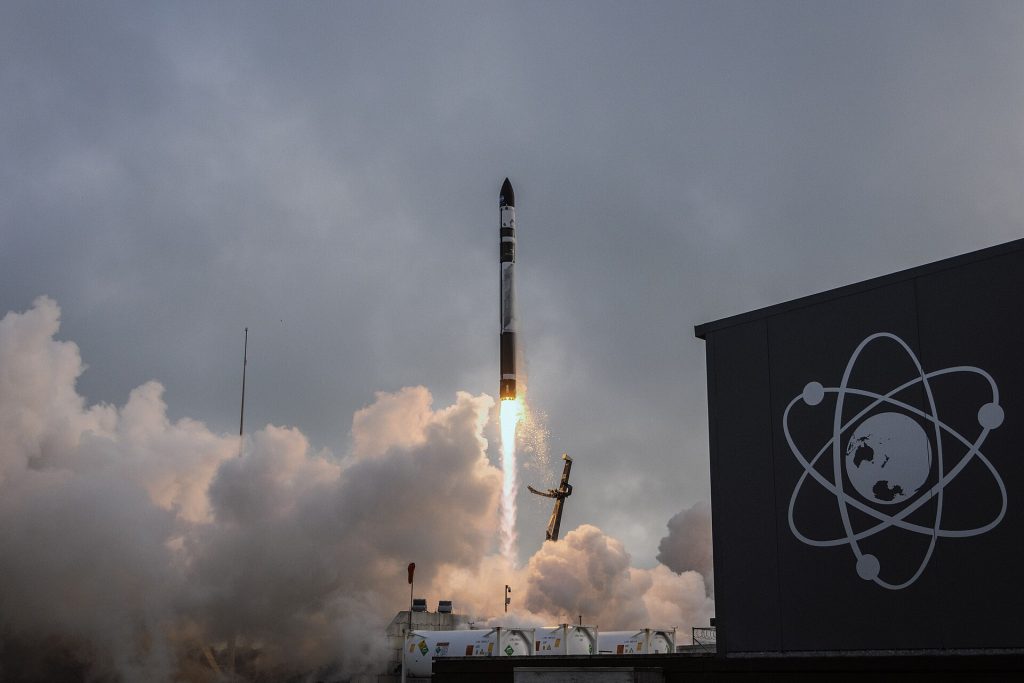
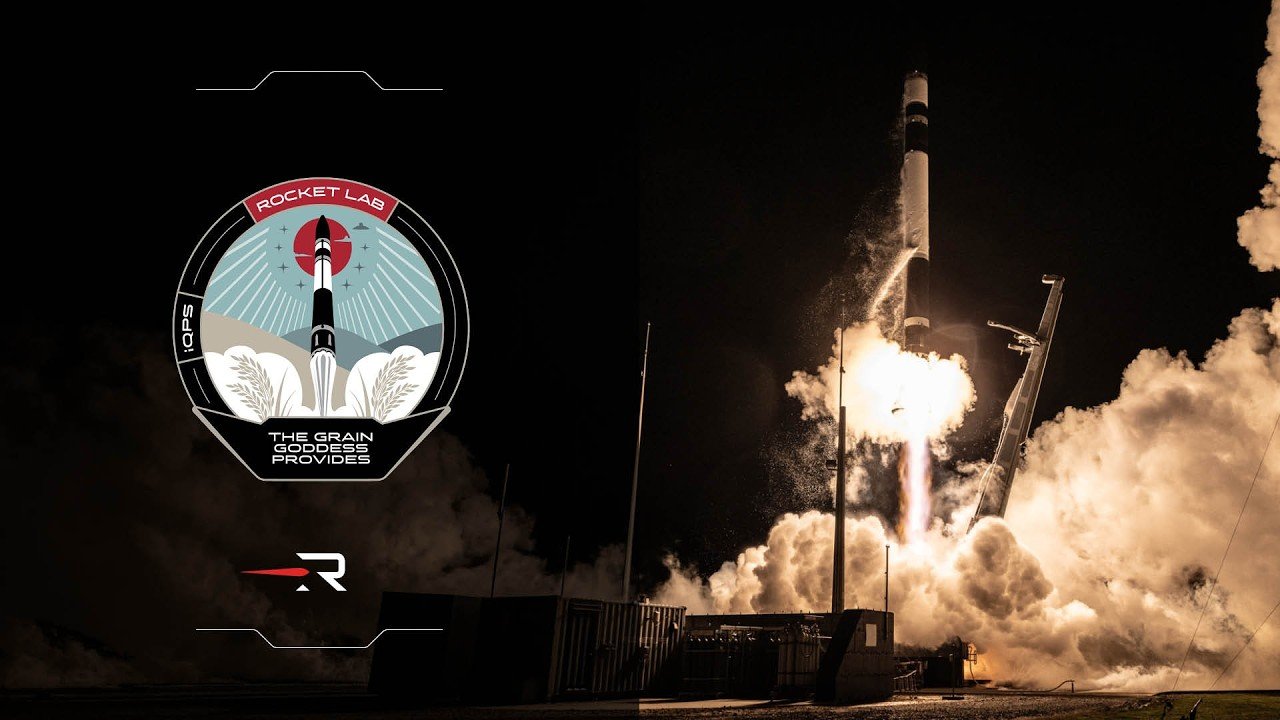
Rocket Lab's Electron lifted off from pad A at Launch Complex 1 on the Mahia Peninsula in New Zealand at 9:18 p.m. local time on 6 August 2026 (09:18 UTC per the mission listing) on 'The Grain Goddess Provides', its 92nd launch. The payload was QPS-SAR-13, nicknamed MIKURA-I, an Earth-imaging radar satellite for the Japanese customer iQPS. Electron delivered it to a 575 km circular orbit, and mission control confirmed payload separation to close out a mission the hosts called a success.
The satellite and its customer
iQPS, the Institute of Kyushu Pioneers of Space, nicknames each satellite after a god or goddess. MIKURA-I is named for the Japanese goddess associated with food, abundance and prosperity. QPS-SAR-13 carries synthetic aperture radar, which bounces radio waves off terrain and buildings to map a location day or night and in any weather.
In a clip played during the broadcast, iQPS said it was founded in Fukuoka to establish a space industry in Kyushu and marked its 20th anniversary in 2025. It works with more than 25 partner companies, mainly in northern Kyushu. Its first satellite launched in December 2019, and it is working toward a 36-satellite QPS-SAR constellation aiming for near real-time observation almost anywhere on the globe. A new R&D hub, QIP, was established in March 2025 and integrates manufacturing, testing and shipping on one floor, enabling production of up to 10 satellites per year. The company says its satellites are used for inspecting large infrastructure and monitoring wildfires, earthquakes and eruptions.
This was the eighth Electron launch for the iQPS constellation. Rocket Lab said Electron has been the only rocket to deploy the constellation since 2024, and that another seven iQPS missions are booked.
The vehicle
Electron is an 18 m tall two-stage rocket made of carbon composite in its exterior and interior tanks, flying since 2017. Its Rutherford engine is 3D printed and electric pump-fed: batteries drive the propellant pumps that feed liquid oxygen and kerosene. Nine Rutherford engines power the first stage and a vacuum-optimized version powers the second. The engines light about 2 seconds before liftoff, producing some 43,000 lbs of thrust.
A kickstage near the top of the rocket, inside the nose cone, carries the satellite to its precise orbit with its own 3D printed Curie engine, which can relight multiple times.
Countdown
The launch director, Pala Tisonga, polled each operator at about T-minus 12 minutes. Stations including stage, avionics, GNC and range roles each reported go, and the count moved into the terminal count with auto sequence starting at T-minus 10 minutes. A one-hour launch window and a couple of further gaps were available had the team needed to stand down. Operators reported no issues during the lead-up.
Flight timeline
- Liftoff: stage one propulsion nominal. Electron passed 900 km/h at more than 6 km altitude.
- Max Q: cleared at more than 2,200 km/h and about 10 km altitude.
- Main engine cutoff and stage separation, followed by confirmed second stage ignition, at more than 7,900 km/h.
- Fairing jettison, about 4 minutes into the flight, with just under 6 minutes of second stage burn left. The vehicle cameras, which had been out, returned.
- Battery hot swap: the second stage switched mid-burn to a fresh set of batteries, and the spent pack fell away, confirmed as 'Hot swap successful'. Electron was then at an altitude of 244 km.
- Second engine cutoff and delivery of the kickstage to a nominal transfer orbit.
- About 40 minutes of coasting, then a circularization burn by the Curie engine.
- Curie cutoff, then payload QPS-SAR-13 separation confirmed at about T+48 minutes.
Result
The hosts described it as the 13th successful launch of the year for Rocket Lab, with 100% mission success, and noted that Electron's 100th launch was expected within a few weeks. iQPS operators were to begin satellite commissioning over the following hours.
A responsive-space example
While the countdown ran, the broadcast showed a segment on VICTUS HAZE, a Space Force tactically responsive space mission in which Rocket Lab handled launch, spacecraft and on-orbit operations. The requirement was to launch within 24 hours of notice; Rocket Lab launched in 16 hours and 42 minutes. The team then completed its mission tasking, including rendezvous and proximity operations with another spacecraft that served as a simulated threat, within 60 hours.
Questions this video answers
When did The Grain Goddess Provides launch?
06 August 2026, with liftoff at 09:18 UTC (9:18 p.m. in New Zealand, 6:18 p.m. in Japan).
Where did it launch from?
From Rocket Lab Launch Complex 1 on the Mahia Peninsula in New Zealand, pad A.
What was the payload?
QPS-SAR-13, nicknamed MIKURA-I, an Earth-imaging synthetic aperture radar satellite for iQPS, bound for a 575 km orbit.
How did the mission end?
Mission control confirmed payload separation and the hosts called it a mission success for Electron and iQPS.
How many launches was this?
It was Electron's 92nd launch, the eighth for iQPS and the 13th of the year.
Explore related missions
Connected by the topic: Electron