Electron Launches the 13th StriX Radar Satellite for Synspective
The short version
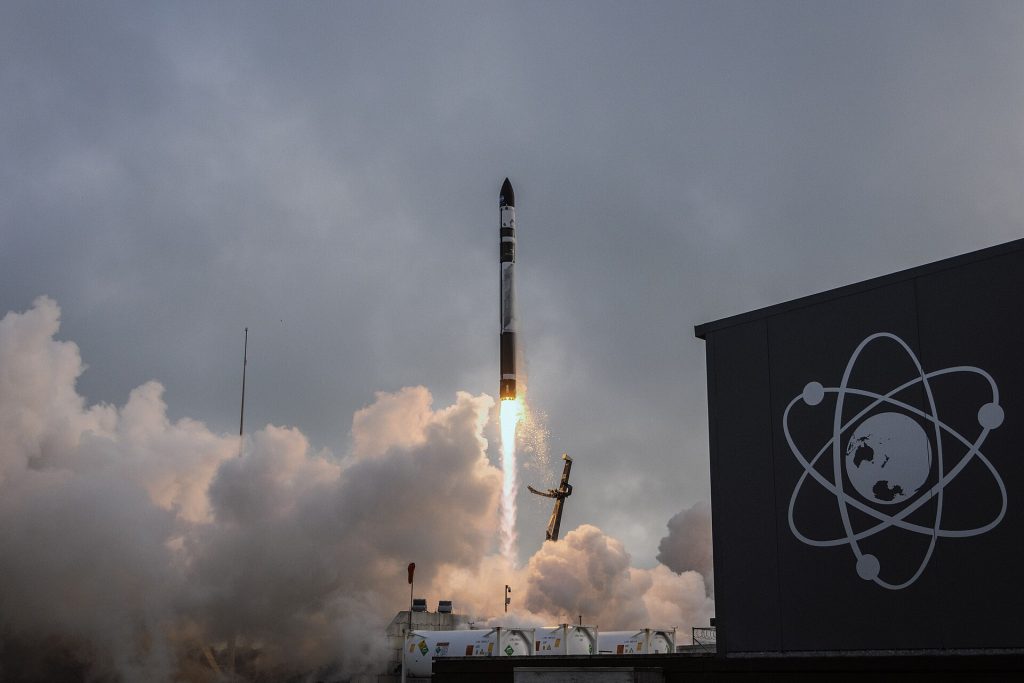
Rocket Lab's Electron launched from Launch Complex 1 in New Zealand with the 13th StriX radar satellite for Synspective. The broadcast follows the go/no-go poll, max Q, stage separation, battery hot swap and kickstage separation. The satellite was deployed into its planned orbit, and it was Rocket Lab's 97th launch overall.
Full written account
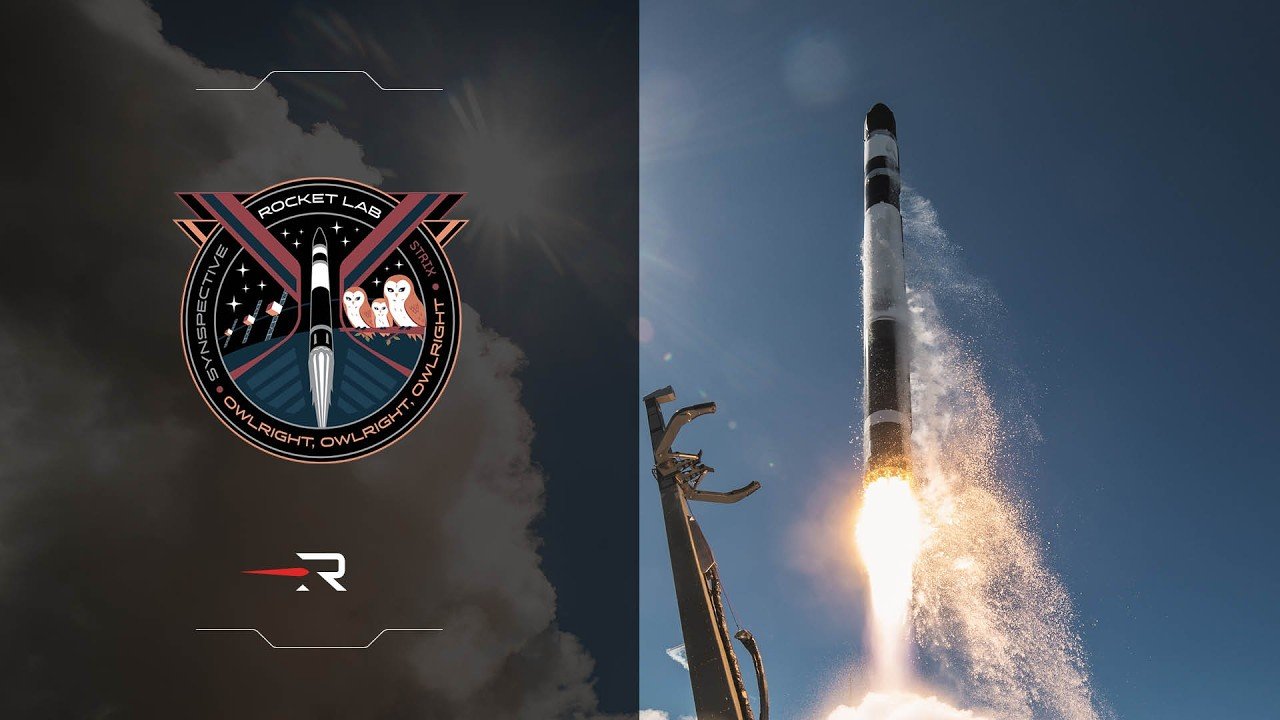
Rocket Lab's Electron lifted off from Launch Complex 1 on the Mahia Peninsula, New Zealand, on 26 September 2026 at 00:39 UTC (12:39 p.m. local time) and delivered the 13th StriX radar satellite to orbit for Synspective. The mission, named "Owlright, Owlright, Owlright", was Rocket Lab's 97th Electron launch and its 18th of the year. It flew from the same pad as another dedicated Synspective mission launched just the week before.
What the satellite does
Synspective is a Japan-based Earth observation company. Its StriX satellites carry synthetic aperture radar (SAR), which images the surface by measuring radar signals that bounce back, so it works day or night and does not need clear skies or sunlight. Rocket Lab said the StriX satellites are about one-tenth the size of conventional SAR satellites and about one-twentieth the cost to get on orbit. The first one, StriX Alpha, flew on Rocket Lab's 17th launch, "The Owl's Night Begins", in 2020. After this launch, 14 more missions for Synspective remain between now and 2030.
The rocket
Electron is a two-stage rocket with an optional kick stage. It stands 18 m tall with a 1.2 m diameter, is made almost entirely of carbon composite, and weighs around 13 tons at liftoff. It burns liquid oxygen and kerosene in 10 Rutherford engines: nine on the first stage and one on the second. Every Rutherford uses battery-powered electric motors to drive its propellant pumps, and Rocket Lab described them as the first 3D-printed engines and the first battery-powered rocket engines to fly to space. The kick stage has its own 3D-printed engine, called Curie, which can start multiple times in space to place each satellite precisely within the constellation.
Countdown
The launch director, Julia Wembarka, ran the go/no-go poll at T-minus 12 minutes, with stations at mission control in Oakland and range control at LC-1 each responding. The poll finished at T-minus 11 minutes 9 seconds with every station go. The launch window was open for 40 minutes. At T-minus 2 minutes the onboard flight computer took over the final checks, and liquid oxygen flowed until about T-minus 1 minute 30 seconds.
Flight
Electron cleared the pad, passed max Q (maximum aerodynamic pressure) and went supersonic. At about 3 minutes, main engine cutoff, stage separation and second-stage Rutherford ignition took place in less than 10 seconds. The fairing was jettisoned about 3.5 minutes after liftoff, exposing the satellite to space for the first time.
The second-stage engine burns for just under 7 minutes, but its first set of batteries is depleted after about 4 minutes. Electron therefore performs a battery hot swap, scheduled for about T+6 minutes 37 seconds, that switches to a fresh pack without interrupting the engine. Mission control confirmed the battery jettison and the successful hot swap. Electron was then travelling at more than 15,000 km an hour and climbing above 193 km. The stage 2 nozzle ran at around 1,000 °C, which is why the bottom of the stage carries reflective surfaces protecting its batteries, avionics, cables and carbon structure.
Second engine cutoff came at about T+9 minutes 10 seconds, and the kick stage separated into a nominal transfer orbit.
Deployment
The kick stage coasted for around 40 minutes in an elliptical orbit. Its Curie engine then burned for about three minutes to raise perigee and settle into a 559 by 549 km orbit. Mission control confirmed cutoff and a nominal final orbit, followed by payload separation. Rocket Lab noted that this made three additions to the StriX constellation in the past four weeks.
Ten years of Launch Complex 1
The launch fell on the tenth anniversary of Launch Complex 1, which Rocket Lab calls the world's first private launch site. A decade earlier the stretch of coastline was rolling farm paddocks meeting the Pacific; Rocket Lab now describes it as the busiest orbital launch site in the southern hemisphere. The company thanked its launch partners, the community across Mahia, the landowners, local iwi and its operations crew, and said two more launches remain until its 100th.
Questions this video answers
When and where did Owlright, Owlright, Owlright launch?
Rocket Lab's Electron lifted off from Launch Complex 1 at Mahia, New Zealand, on 26 September 2026 at 00:39 UTC.
What did Electron carry?
A single StriX synthetic aperture radar satellite for Synspective, the 13th StriX satellite in its constellation.
What orbit was targeted?
A 559 km low Earth orbit; the kickstage's final orbit was stated as 559 x 549 km.
Was the mission successful?
Mission control confirmed payload separation and called it a textbook deployment exactly as planned.
How does it count among Rocket Lab launches?
It was Rocket Lab's 97th launch overall and its 18th launch of the year.
Explore related missions
Connected by the topic: Electron