Kakushin Rising: Electron Deploys Eight JAXA Satellites to Orbit
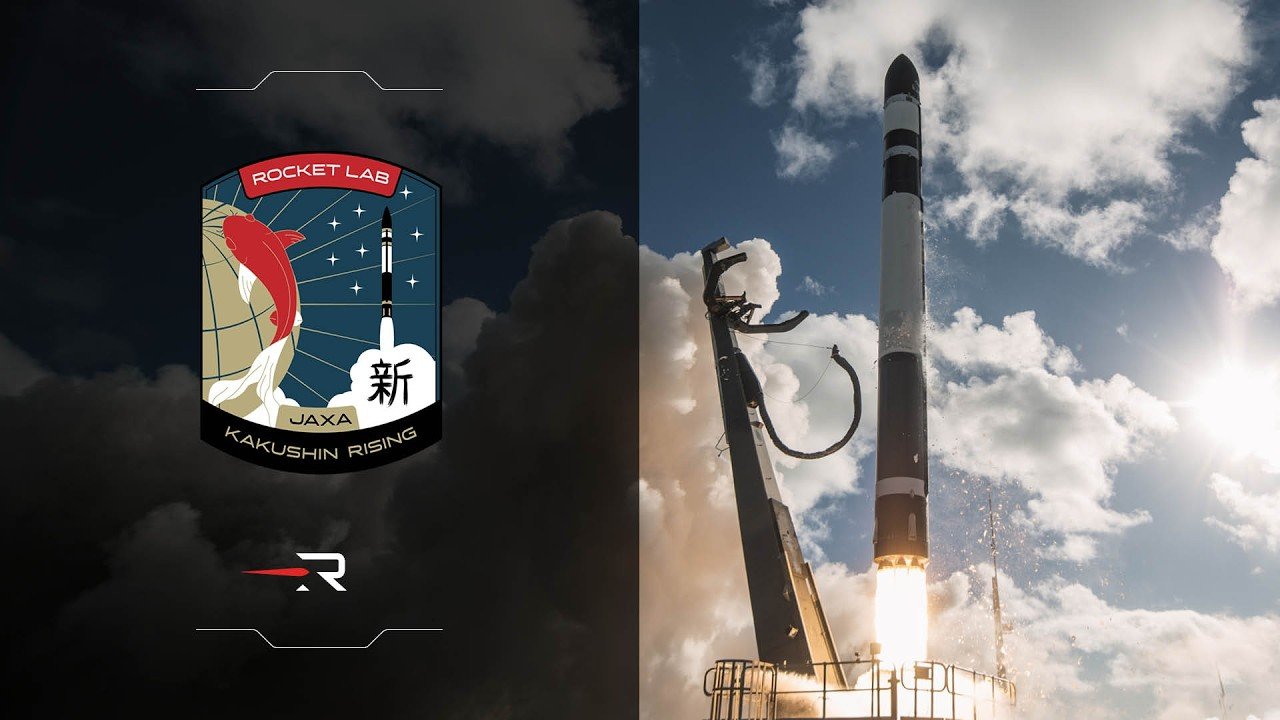
The short version
Rocket Lab's Electron launched the Kakushin Rising mission for JAXA on 23 April 2026 from Launch Complex 1 in New Zealand, carrying eight small satellites to a 540 km circular orbit. It was the second dedicated Electron launch for JAXA's innovative satellite technology demonstration program and Electron's 87th launch. Rocket Lab described it as 100% mission success after all eight payloads were deployed from the kickstage.
Full written account
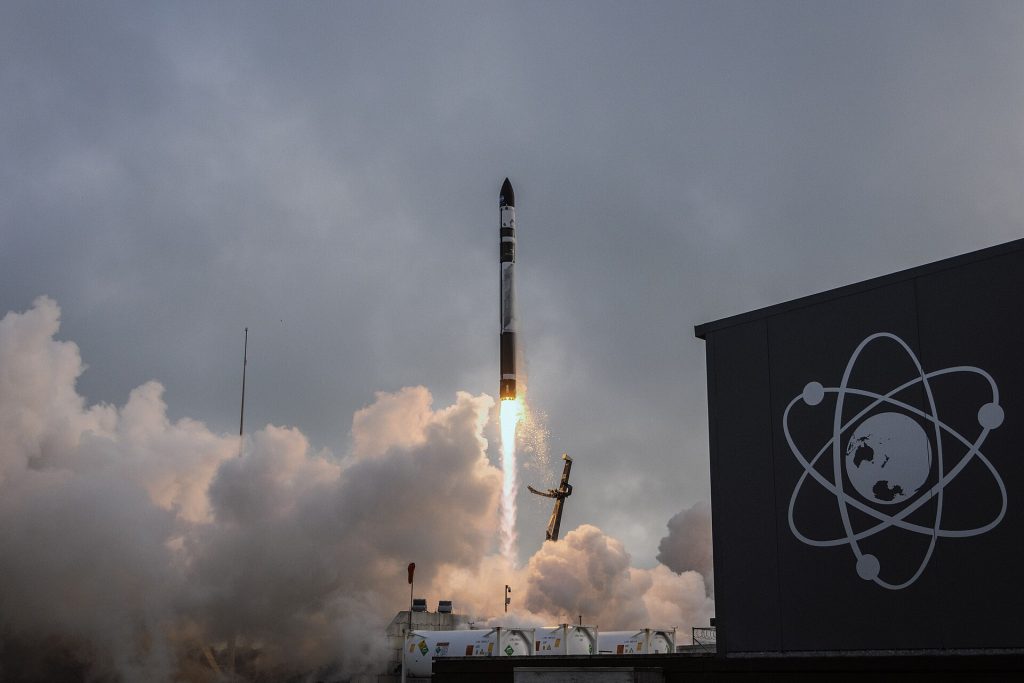
Rocket Lab's Electron lifted off from Launch Complex 1 in New Zealand at 3:09 p.m. local time on 23 April 2026, carrying eight small satellites for the Japan Aerospace Exploration Agency (JAXA) on a mission named Kakushin Rising. It was Electron's 87th launch and only the second dedicated launch Rocket Lab has flown directly for JAXA. All eight payloads were deployed, and Rocket Lab called the result 100% mission success.
The mission and its name
Kakushin Rising was flown for JAXA's innovative satellite technology demonstration program, a national project to test new ideas and technologies on orbit from companies, universities and research institutions across Japan. It was the second of two dedicated launches Rocket Lab flew for the program. The first, named Raise and Shine, took place in December and deployed eight technology demonstrations packed inside one spacecraft called RAISE-4.
The word kakushin primarily means innovation, reform or transformation in English, signifying a fundamental or disruptive change in technology or business.
Electron was bound for a 540 km circular low Earth orbit at a 97.5 degree inclination, launching on a southern trajectory over Antarctica.
The rocket
Electron is an 18 m tall two-stage rocket built for dedicated small-satellite launches, which gives customers control over schedule and orbital trajectory instead of sharing a ride. It began launching in 2017. Both stages burn liquid oxygen and kerosene. Stage one has nine Rutherford engines and stage two has one. The engines are 3D printed and electrically driven, using battery-powered pumps rather than gas-generated turbopumps.
The payloads sat on the kickstage, a platform with a 3D-printed Curie engine that can perform multiple burns to adjust inclination and reposition satellites before release, then lower its own orbit to deorbit sooner and limit space debris. The Curie nozzle is only 15 cm tall, and the engine has a specific impulse of around 320 seconds. Rocket Lab's engines are named after physicists: Rutherford, Curie, Archimedes and, for its new ion thruster, Gaus.
Countdown and flight
At T-minus 12 minutes the launch director, Sarah Longa, ran a go/no-go poll across propulsion, mission management, avionics, weather monitoring and the ground station network. The sequence finished at T-minus 11 minutes 17 seconds, and the automated terminal count began at T-minus 10 minutes. Electron's onboard computers took control from T-minus 2 minutes.
- Liftoff: 3:09 p.m. local time, with a pitchover to head south.
- Max Q: cleared about a minute and a half after liftoff, with Electron at 2,200 km/h and more than 18 km altitude.
- Main engine cutoff, stage separation and second stage ignition: confirmed, followed by fairing separation.
- Fairing jettison: the second stage was then at more than 8,700 km/h and 125 km altitude.
- Battery hot swap: around T+6 minutes 33 seconds, the stage two engine switched to fresh batteries and ejected the old set. The Rutherford's pumps run on batteries, so this keeps the engine burning for its full duration.
- Second stage engine cutoff: the kickstage was released into a transfer orbit.
The transfer orbit is an intermediate elliptical trajectory that takes about 40 minutes to complete. Payload deployment was scheduled to start at T+50 minutes.
Circularization and deployment
After the coast, the kickstage's Curie engine ignited for a burn of about a minute and a half to circularize at 540 km. Mission control confirmed Curie cutoff and a nominal final orbit. The payloads were released at various intervals, sometimes together, over the 3 minutes following Curie shutdown.
- FSI-SAT2: a 1U CubeSat from the Future Science Institute with a multispectral camera and onboard data processing, deployed first.
- KOSEN-2R: a 2U satellite from the National Institute of Technology and other educational bodies, with a deployable antenna to study deformation of the Earth's crust below the sea floor.
- PRELUDE: a 6U nanosatellite from Nihon University that detects earthquake precursors from space using VLF radio waves. It deployed together with KOSEN-2R.
- MONO-NIKKO: from an engineering company, an on-orbit demonstration of an intelligent power unit that acquires status data from batteries on ultra-small spacecraft.
- MAGNARO-2: from Nagoya University, testing a new method for constellation formations by rotating and separating linked microsatellites.
- ARICA-2: from Aoyama Gakuin University, testing a satcom network as an alert system for astronomical objects.
- WASEDA SAT-02: from Waseda University, made with a molding technique so it has no screws or mechanical parts.
- ORIGAMISAT-2: from the Institute of Science Tokyo, a lightweight deployable antenna folded using origami techniques that is 25 times smaller when stowed.
With the last three separations confirmed, Rocket Lab described the deployment as a marathon from the kickstage and the mission as complete.
Questions this video answers
When and where did Kakushin Rising launch?
On 23 April 2026 at 3:09 p.m. local time from Launch Complex 1 in New Zealand.
What rocket launched Kakushin Rising?
Rocket Lab's Electron, on its 87th launch.
How many satellites were deployed?
Eight small satellites for JAXA's innovative satellite technology demonstration program.
What orbit were they placed in?
A 540 km circular low Earth orbit at 97.5 degrees inclination.
What does Kakushin mean?
It primarily means innovation, reform or transformation in English.
Explore related missions
Connected by the topic: Electron