Rocket Lab Electron Bridging the Swarm: NEONSAT-1A Launch Scrubbed
The short version
Tim Dodd of Everyday Astronaut hosts a watch-along of Rocket Lab's webcast for the Electron mission "Bridging the Swarm", which was to carry the NEONSAT-1A satellite for KAIST from Launch Complex 1 in New Zealand. A hold was called early in the count, the clock was recycled to the end of the window, and a second hold at T minus 8 minutes 7 seconds ended the attempt. Rocket Lab stood down for the day, and the rest of the stream is Q&A.
Full written account
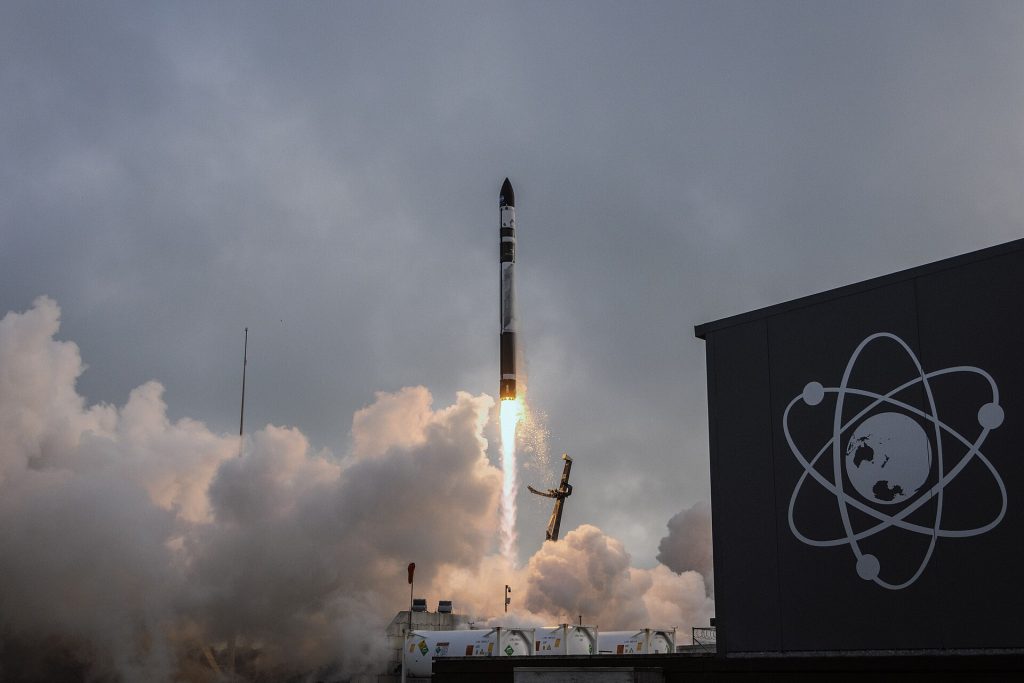
Rocket Lab's 19th Electron launch of the year, "Bridging the Swarm", was stood down on launch day from Launch Complex 1, Pad A, on the Māhia Peninsula in New Zealand. Operators called a hold at T minus 8 minutes 7 seconds, and with too little window left to recycle, the attempt was scrubbed. The rocket was to carry one satellite, NEONSAT-1A, for the Korea Advanced Institute of Science and Technology (KAIST). Liftoff had been scheduled no earlier than December 11, 2025, at 12:45 UTC. Everyday Astronaut host Tim Dodd followed the attempt live and commented on the webcast.
The mission
NEONSAT-1A was headed for a 540 km low Earth orbit on a southern trajectory from New Zealand over the Antarctic, at a 97.4° inclination. The mission name refers to the Swarm mission, which launched in April of the previous year and began KAIST's planned constellation. NEONSAT-1A was to link communications between that first satellite and the next 10 that will complete the constellation.
KAIST wants the constellation to image the Korean Peninsula multiple times a day. Operators plan to use AI to combine the satellite data with existing information, to track natural disasters such as earthquakes and forest fires and to respond quickly to national security events. Rocket Lab named Satrec, the Korean Aerospace Research Institute and the Korean government's Ministry of Science and ICT among the collaborators.
The rocket
This was the 77th Electron overall, the 19th Electron launch of the year, the 15th from Launch Complex 1 and the second from the same pad in two weeks. Rocket Lab called it a record year. Dodd noted that it was also the 300th orbital launch attempt of the year worldwide.
Electron stands 18 m (59 ft) tall and 1.2 m in diameter, and is designed to carry up to 300 kg to orbit. Most of its tanks and structures are carbon composite. The kick stage, the orbital vehicle at the top, carries the satellite and places it precisely on orbit. Stage one has nine Rutherford engines, and stage two has one modified for spaceflight. At liftoff they produce 50,400 lb of thrust, and almost 800 Rutherford engines had been made and flown since Electron's first launch in 2017.
Dodd explained why the engine is unusual:
- The combustion chamber is 3D printed in metal alloy, with powder laser-fused layer by layer.
- Instead of a gas generator or turbine, electric motors driven by lithium-ion batteries spin the pumps for liquid oxygen and RP-1 kerosene.
- Batteries store roughly 5% of the energy density of kerosene, and they do not get lighter as they discharge. For that reason the second stage drops part of its battery weight midway through flight, a hot stage swap.
Launch-day timeline
- Around 5 hours before the first count: Electron was lifted vertical and kerosene loading began soon afterward. Weather balloon data showed 85% favorable conditions, with clear skies and low ground winds.
- T minus 12 minutes: The first go/no-go poll, run by the launch director, came back all go. Each position reported in turn, including first stage, avionics, GNC, beacon, range safety and the weather officer.
- Hold in the count: Operators in mission control called a hold. The reason was not stated on the broadcast, and Dodd speculated about ground-side umbilicals, which he labelled as speculation. The webcast host said just under 30 minutes of the window remained, enough for one recycle attempt, with weather green and the payload healthy.
- Recycle: Operators targeted the end of the window at 2:21 p.m. local time. The clock was reset to T minus 22 minutes 8 seconds, and a new T minus was set at T minus 20 minutes 28 seconds.
- Second poll: A second go/no-go poll at T minus 12 minutes again returned greens across the board. The count continued, with terminal checks running by sequence.
- Scrub: After the stage one and stage two high-voltage batteries were reported ready for flight, a hold was called at T minus 8 minutes 7 seconds. Dodd said that on range comms a repeated "hold, hold, hold" means the launch is done for the day. Rocket Lab's host then said there was not enough time left in the window to recycle, so the team was standing down. She added that backup opportunities were available in the coming days. No cause was given.
Neutron and what Rocket Lab is building next
The broadcast also covered Neutron, scheduled to debut the following year from Wallops Island in Virginia. Rocket Lab said it is more than twice the height of Electron and about six times as wide at the base. It is designed to deliver 13,000 kg to space and would be the largest carbon composite rocket to launch. Its Archimedes engine, tested at NASA's Stennis Space Center in Mississippi, has nearly 30 times the thrust of a Rutherford. Dodd described Neutron's fairings as staying attached to the booster, with the second stage hanging inside the structure. He also said Electron reuse was getting less attention as the company focuses on Neutron.
Questions this video answers
What was Electron meant to launch?
A single satellite, NEONSAT-1A, for the Korea Advanced Institute of Science and Technology (KAIST).
Where was it launching from?
Pad A at Rocket Lab Launch Complex 1 on the Māhia Peninsula, New Zealand.
What orbit was planned?
A 540 km low Earth orbit at 97.4° inclination, on a southern trajectory over the Antarctic.
Why is it called Bridging the Swarm?
NEONSAT-1A is to link communications between the first KAIST satellite, launched in April of the previous year, and the next 10 satellites of the constellation.
Did it launch during the stream?
No. A hold was called at T minus 8 minutes 7 seconds, and with the window running out Rocket Lab stood down for the day.
Explore related missions
Connected by the topic: Electron