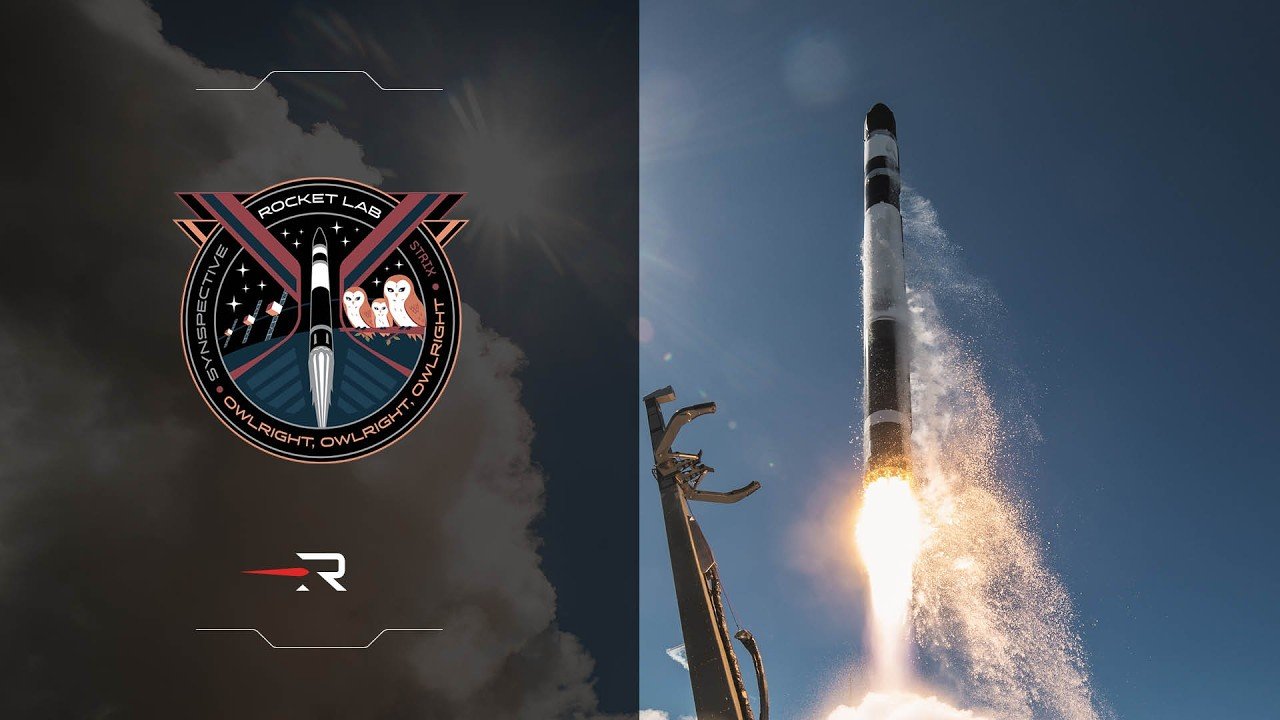
Rocket Lab’s 98th Electron Launch Deploys Three HawkEye 360 Satellites
The short version
Rocket Lab launched its 98th Electron rocket from Launch Complex 1 in New Zealand on the mission 'We're Not Hawking Around', its third dedicated launch for HawkEye 360. Electron carried three HawkEye 360 satellites to a 520 km orbit at 97.45° inclination. Staging, fairing jettison, battery hot swap and kick stage burns were all confirmed, and the three satellites were deployed.
Full written account
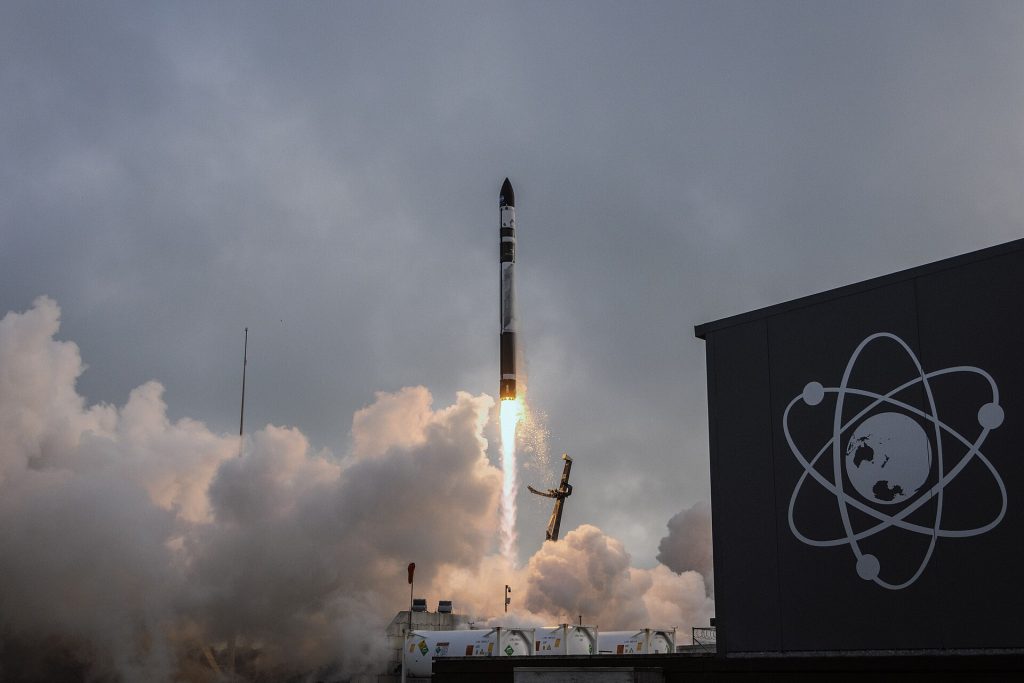
Rocket Lab launched its 98th Electron rocket from Launch Complex 1, Pad A, in New Zealand at 8:11 p.m. local time, carrying three satellites for the signals intelligence company HawkEye 360. The mission, called "We're Not Hawking Around," was Rocket Lab's 19th launch of the year and HawkEye 360's third dedicated Electron launch. The satellites were released into a 520 km circular orbit after a flight in which every call from mission control was nominal.
The customer and the target orbit
HawkEye 360 is an American geospatial analytics company focused on radio frequency signals. Its three new satellites were bound for a 520 km circular Earth orbit at an inclination of 97.45°, where they join the company's constellation. The data collected across the RF spectrum is used for maritime tracking, GNSS jamming detection, radar monitoring, communications mapping and space defense.
In its own mission film, HawkEye 360 said it launched its first cluster in December 2018 and has since made 12 successful launches. It said its team grew to more than 200 professionals and that its AI-powered analytics have identified tens of thousands of vessels.
Rocket Lab had already deployed seven HawkEye satellites on Electron, so this launch was to bring the total to 10. The first HawkEye mission flew on Electron's first flight from American soil in January 2023, from Launch Complex 2 at Virginia's Mid-Atlantic Regional Spaceport on Wallops Island. The second, in 2025, flew from Launch Complex 1 and carried a second cluster plus an experimental fourth satellite that HawkEye used to test new RF technologies.
The countdown
The launch director, Michael Pearson, ran a go/no-go poll at about T-12 minutes, checking each station in turn, including stage, avionics, GNC, range safety and the launch director's substitute. All reported go, and the three-word procedure went into effect at T-11 minutes 11 seconds. Mission control is in Auckland, with operators also at the range in Mahia.
The auto sequence started at T-2 minutes, when the rocket switched to internal power and its flight computer took control. Propellant loading continued until T-1 minute 30 seconds. The deluge system activated to protect the pad and suppress sound as the Rutherford engines lit, and the hold-down clamps released at T0.
The vehicle
Electron is a two-stage rocket, 18 m tall and 1.2 m in diameter, weighing about 1 ton dry and 13,000 kg fully fueled with liquid oxygen and kerosene. Its carbon composite structure is light enough that launch technicians roll it to the pad by hand.
Both stages use 3D printed Rutherford engines, named after the Kiwi physicist who first split the atom. The Rutherford is both 3D printed and battery-powered: brushless DC motors spinning up to 40,000 RPM drive fuel and oxidizer into the combustion chamber, producing nearly 6,000 lb of thrust. On top sits the kick stage, with its own 3D printed engine, Curie, named after Marie Curie. Curie can relight multiple times in space.
The flight
After liftoff, the first-stage propulsion was reported nominal. Electron passed max Q and went supersonic at more than 1,700 km/h. Main engine cutoff, stage separation and second-stage ignition were then confirmed, followed by fairing jettison, which exposed the three satellites to space.
At T+4 minutes the second stage had 74% of its propellant remaining, was passing 10,000 km/h and was at 160 km altitude. Just before 6 minutes, at more than 13,000 km/h, came the battery hot swap, a step the hosts said is seen only on Electron because of its electric pump-fed engines. Two batteries were jettisoned and a third activated, because two are not enough to reach orbit. The swap was confirmed successful at over 16,000 km/h and above 200 km.
Second engine cutoff came at around T+9 minutes, a nominal transfer orbit was achieved and the kick stage separated. It then coasted in an elliptical orbit around Earth.
Deployment
At T+48 minutes the broadcast resumed. During the coast, Curie had ignited to circularize the orbit at 520 km, and mission control confirmed Curie cutoff and a nominal final orbit. The kick stage reoriented with its RCS thrusters, and "Payload separation A, B, and C confirmed" came from mission control. The three satellites were deployed.
Rocket Lab said one more launch remained before its 100th Electron mission. Its launch window for the 99th mission was to open on 3 November in New Zealand.
Rocket Lab also operates four launch pads, with the number expected to reach six once two mobile pads are available at Launch Complex 4 in Kodiak, Alaska. It has launched 13 times from Launch Complex 2.
Questions this video answers
Who was the customer for the mission?
HawkEye 360, an American geospatial analytics company focused on radio frequency signals.
What did Electron deploy?
Three HawkEye 360 satellites were deployed into a 520 km circular orbit at 97.45° inclination.
Where did it launch from?
Launch Complex 1, pad A, in New Zealand, with lift-off targeted for 8:11 p.m. local time.
Did the deployment succeed?
Payload separation of satellites A, B and C was confirmed at about T plus 48 minutes after the kick stage's Curie engine circularized the orbit.
Which Electron launch was it?
It was Rocket Lab's 98th Electron launch and its 19th launch of the year.
Explore related missions
Connected by the topic: Electron