Starship Flight 14: First Orbit and Starlink V3 Deployment
The short version
Starship Flight 14, the first V3 launch at dawn, carried 26 Starlink V3 satellites, about 50 metric tons. Despite a vacuum engine failure, SpaceX sent the ship into orbit for the first time, deployed the satellites and made a controlled return to the ocean, where it exploded at splashdown.
Full written account
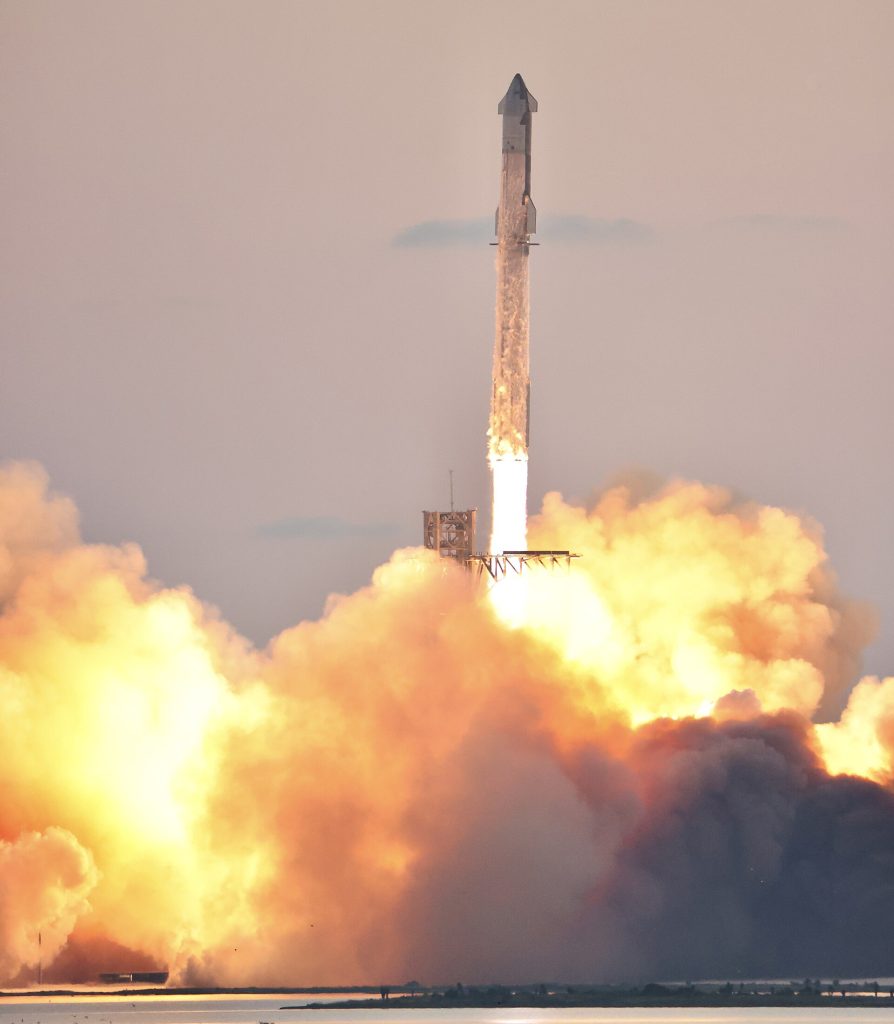
Starship Flight 14 lifted off from Starbase at dawn, carrying 26 Starlink V3 satellites weighing around 50 metric tons, the heaviest payload ever carried by any SpaceX rocket. It was the first morning launch from the Starbase pad since flight number five, and the flight could take up to 10 hours from start to finish. The ship, number 41 off the Starbase production line, was a Starship V3.
The booster
One of the Super Heavy booster's 33 Raptor engines went out at about t+1 minute 20 seconds, which the narrator called not uncommon and without effect on the flight. After hot stage separation, a second Raptor from the middle ring was lost, leaving 31 for the boost back burn. That was better than flight 13, when the booster dropped several engines in a row. No tower catch was planned. The goal was a soft splashdown to show the V3 design was ready for a catch. On landing, two of 11 engines failed to light, then it went to five and three engines for a controlled descent. The narrator said this might be enough for a catch on flight 15.
A vacuum engine fails
The ship burned six Raptors: three vacuum engines and three with small nozzles. One of the three vacuum engines went dead. On several earlier flights such failures had been energetic and taken the ship down, while on flight 12 one was handled well.
The decision to go to orbit
SpaceX had two paths. On the suborbital path the ship stays on a passive safe return and falls into a designated safe zone. Going to orbit meant a brief relight of one small center engine, but then a de-orbit burn would be required. If that burn failed, a ship built to survive re-entry could return as large debris along an orbit passing over South America, Africa and Asia. SpaceX first chose to stay suborbital, then changed the decision and went to orbit.
The orbital insertion burn lasted only seconds and raised speed by a few hundred km per hour. The ship coasted at 277 km at just under 26,400 km/h, the first historic milestone.
Starlink V3 deployment
At just over 36 minutes into the flight, over the tip of South Africa, Starship deployed its first payload. Each V3 satellite supports about 1 terabit of capacity, around 10 times a V2 unit. The 26 satellites are about half the ship's capacity, and it could in theory deploy up to 60, equal to around 20 Falcon 9 launches with V2 satellites. The final two satellites fired flashlights as they drifted away.
Return from orbit
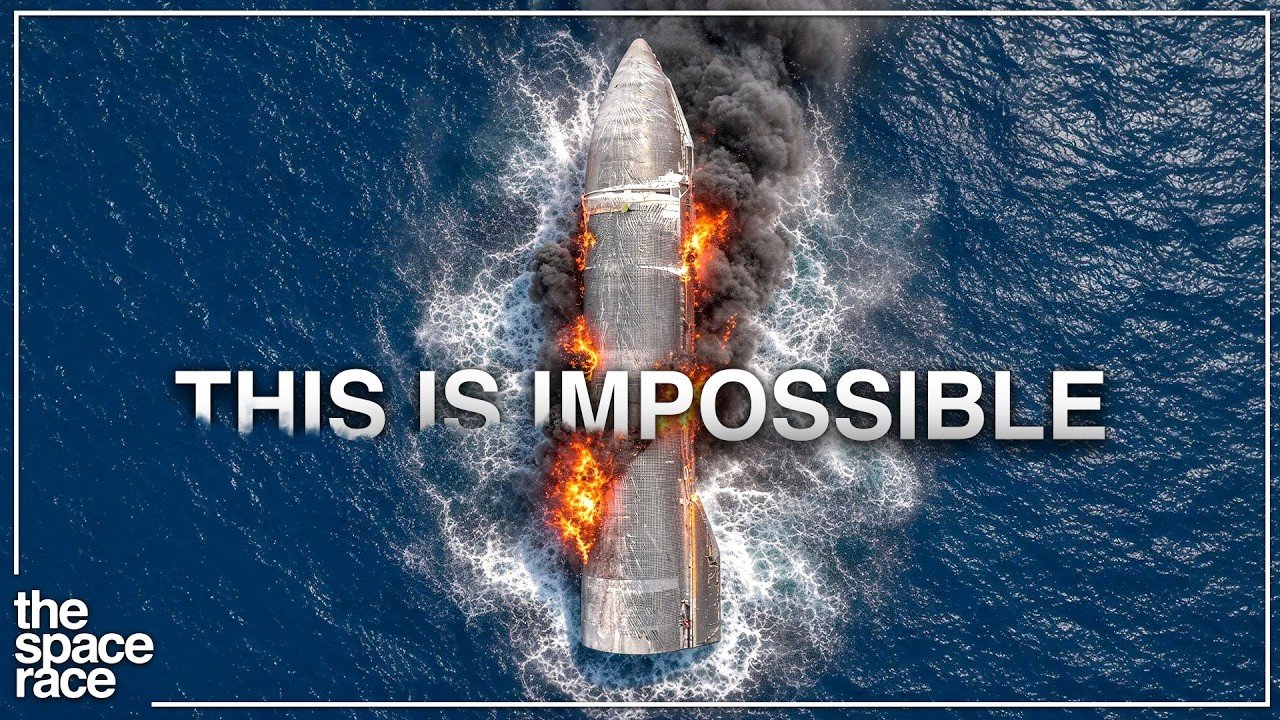
The full plan would have been six orbits with a landing off Chile, which would have let SpaceX study propellant over a long duration in space. SpaceX instead chose a return on the next orbit, to a zone north of Hawaii, citing added risk from possible fuel loss. A center engine relit for the de-orbit burn over the tip of South Africa. The ship descended on its wing flaps and relit three center engines for the landing flip, then exploded at splashdown. Flight 13's ship had instead tipped over and floated.
The narrator said SpaceX has stated it no longer launches Starlink on Falcon 9 from Florida. Flight 15 is expected on October 19th from Starbase, and flight 16 is reportedly scheduled for October 30th from Kennedy Space Center.
Questions this video answers
What did Starship carry on Flight 14?
It carried 26 Starlink V3 satellites weighing around 50 metric tons, described as the heaviest payload ever carried by any SpaceX rocket.
What three milestones did Flight 14 achieve?
Starship reached orbit for the first time, deployed the first operational Starlink V3 satellites, and made a controlled return from orbit to the ocean.
Was the booster caught?
SpaceX did not plan a tower catch on this flight. The booster aimed for a soft splashdown near Starbase to prove the V3 design was ready for a catch.
What engine problem occurred on the ship?
One of the three Raptor vacuum engines went dead, and SpaceX chose to go to orbit anyway with a short burn of one center engine.
How did the ship end its flight?
The ship exploded at splashdown, which the narrator said probably was not a bad thing. The previous flight's ship tipped over and floated.
What comes next?
Flight 15 is expected on October 19th from Starbase, with flight 16 reportedly scheduled for October 30th from Kennedy Space Center in Florida.
Explore related missions
Connected by the topic: Starship