Why Starship V3’s Super Heavy Booster Has Only Three Grid Fins

The short version
Tim Dodd of Everyday Astronaut explains why the Super Heavy booster of Starship version 3 has three grid fins instead of four. He covers how grid fins work, compares Falcon 9 and Starship fins, and describes the reentry and tower-catch reasons for dropping the fourth fin.
Full written account
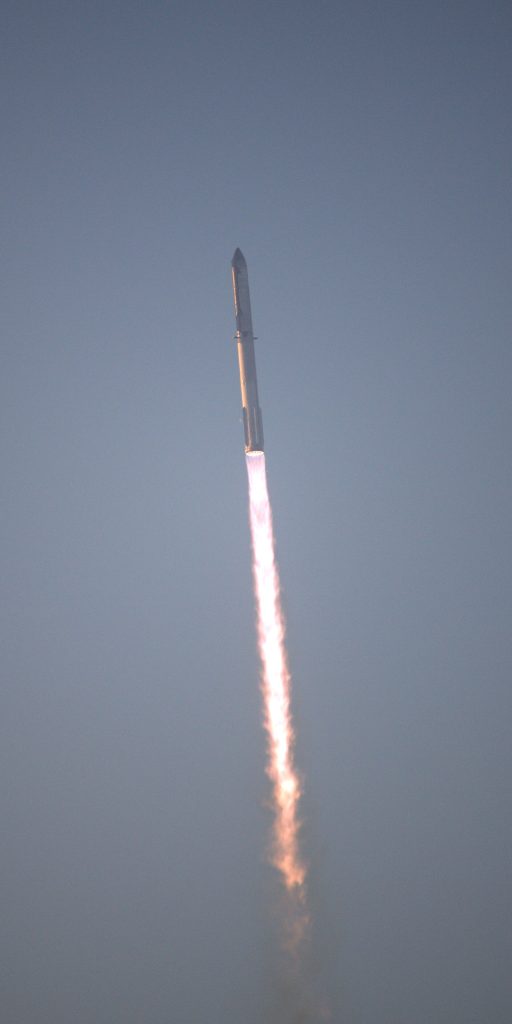
Starship version 3 has a Super Heavy booster with only three grid fins instead of four, which makes the rocket look asymmetrical. The main reason is that one fin sits in the wake of the rocket during reentry and has less control authority. By making the remaining three bigger, SpaceX can make the booster both lighter and more controllable.
What a grid fin is
A grid fin is an aerodynamic control surface that steers a vehicle in the atmosphere. It works like an all-moving fin or rudder, deflecting air, but the fin is broken up into a grid of small fins. Grid fins can fold up, which was their original purpose on guided bombs and missiles. The Soviet N-1 rocket also carried passive grid fins that did not move or steer.
Falcon 9 tucks its grid fins in on the way up and deploys them in space for active guidance on the way down. They have been used on over 600 Falcon 9 missions. Pitch is controlled by the two horizontal fins moving together, yaw by the vertical fins, and roll by opposing pairs moving in opposite directions.
Grid fins are often thought to control the booster by inducing drag, but their control comes from deflecting air, with drag perpendicular to that direction. Grid fins need smaller motors or actuators than a standard fin because their short effective chord length means less aerodynamic torque. They work well at hypersonic and supersonic speeds but suffer in the transonic phase. The serrated teeth added to Falcon 9's fins in 2017 help maintain control there, and Starship keeps that design.
Starship's fins compared with Falcon 9's
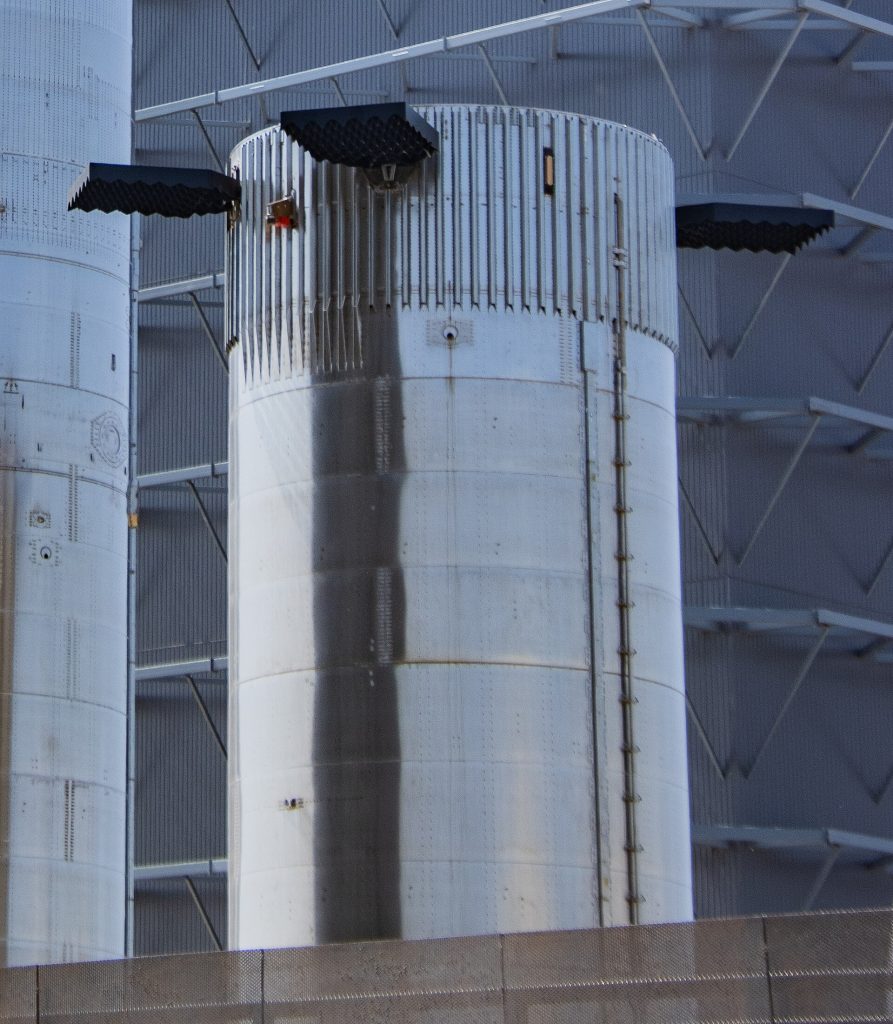
Falcon 9's grid fins are about 1.2 m wide and 1.6 m long and made of titanium. Starship version 3's are about 3.5 m wide and about 3.8 m long in the lattice area, and made of stainless steel. They are always extended and do not retract for ascent. The deployment mechanism would add mass, so the trade is that mass against the drag of keeping the fins out. Super Heavy steers on ascent with engine gimbals, the fins are inactive, and the mass of a loaded Starship means they have little effect. Starship moves its fins with electric motors, while Falcon 9 uses hydraulic actuators.
Two of the fins have catch pins integrated into them, new on version 3. Previous Starships had separate catch balls.
Why three fins
The fourth fin was removed mainly because it was less effective during reentry, especially at high angles of attack, where its position on top of the falling booster leaves it mostly in the wake. Its counterpart on the underside is fully windward. Enlarging the other three allows the fourth fin, its motor and its underlying structure to be deleted. Three fins is basically the minimum for pitch, yaw and roll. A full pair 180° apart for pitch is extra effective when the rocket is trying to increase its angle of attack as much as possible.
Clearance may be another reason. With the fins 90° apart and larger, a fourth fin would sit directly in the pinch point of the catch arms, which extend straight toward the tower. On V1 and V2 boosters the fins were closer together and the catch point was between them.
The angled lattice
The lone fin has no opposing fin to cancel the small adverse pitch from its drag. SpaceX put a slight angle into its inner grid, like trimming an airplane. That lets the side fins stay closer to neutral for mixed roll and pitch inputs. Chines near the aft end help the booster produce more lift and keep a greater angle of attack, so version 3 should be able to come in at a very high angle of attack.
Questions this video answers
Why did SpaceX go from four grid fins to three on Super Heavy V3?
Mostly because one grid fin sits in the wake of the rocket during reentry and has less control authority. Enlarging the remaining three makes the booster lighter and gives it more control.
How big are Starship's grid fins compared with Falcon 9's?
Falcon 9 grid fins are about 1.2 m wide and 1.6 m long and made of titanium. Starship version 3 grid fins are about 3.5 m wide and about 3.8 m long in the lattice area, made of stainless steel.
Do Starship's grid fins retract on ascent?
No. They stay extended, because removing the deployment mechanism saves mass and the booster steers on ascent with engine gimbals, not grid fins.
Where are the catch points on Starship V3?
Two of them have catch pins integrated into them, which is new on Starship version 3. Earlier Starships had separate catch balls.
How are the grid fins moved?
Starship uses electric motors, while Falcon 9 uses hydraulic actuators.
Explore related missions
Connected by the topic: Starship