Starship Flight 12: First V3 Launch, Booster Loss and Engine Out
The short version
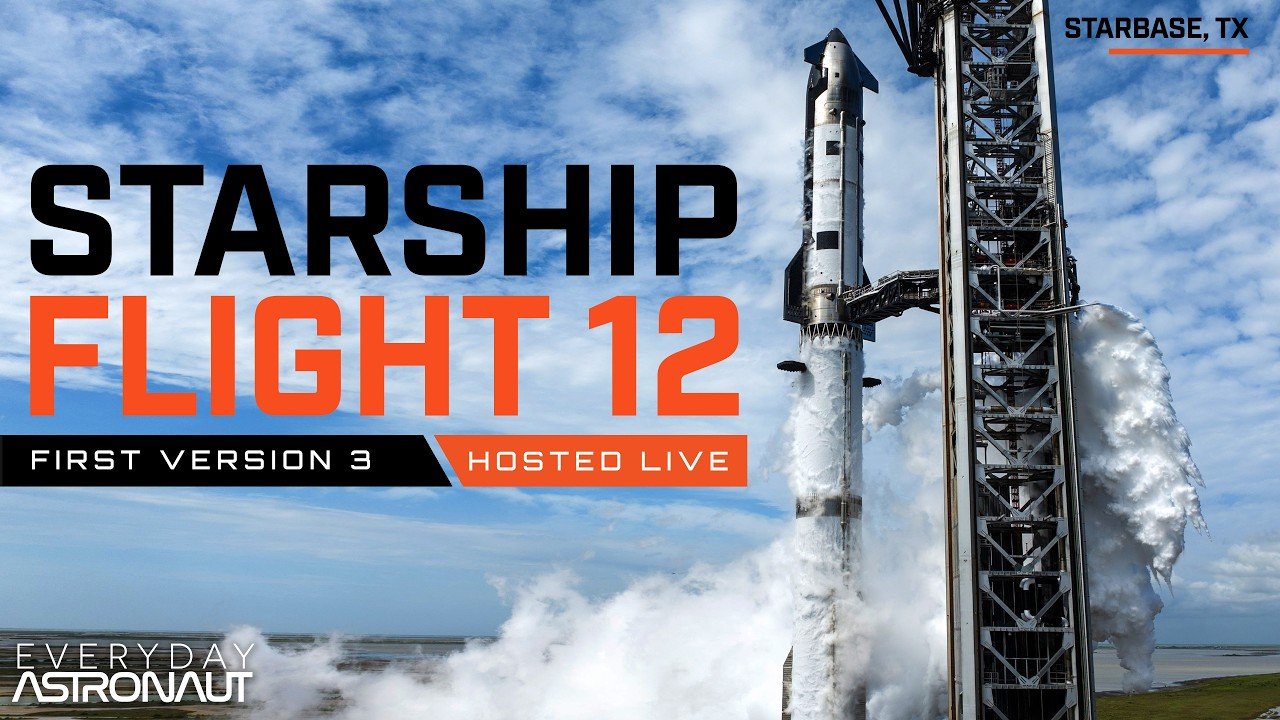
Live coverage of Starship Flight 12, the first flight of a Starship version 3 vehicle from the new pad 2, with commentary from Tim Dodd and the SpaceX webcast. The ship lost one RVAC engine on ascent but reached space and deployed 22 payloads, while the booster shut down early on boost-back. The stream continues toward the planned Indian Ocean splashdown.
Full written account
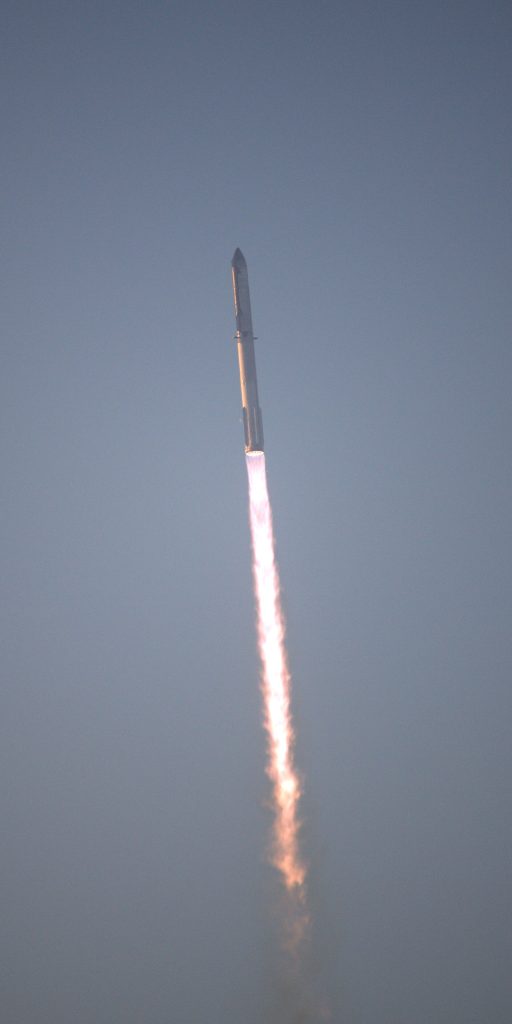
Could a redesigned Starship, with a new booster, new ship, new engines and a new launch pad all flying together for the first time, reach space even after losing an engine on the way up? On Flight 12, the first Starship Version 3 launch, it did. The vehicle lifted off from Starbase, Texas, at the top of its window, about 5:30 p.m. Central Time, on the second attempt. The first attempt a day earlier had been scrubbed.
Why the first attempt was scrubbed
SpaceX's Dan Huot explained the scrub. About halfway up the tower, an arm holds the propellant connections into the ship and pushes against it to keep a good connection. A pin near where the arm attaches to the tower has to be removed before the arm can swing away for launch. When the team began to unpin it, releasing the tension caused motion in the arm that triggered a hold, and that put the pin back in. The result, he said, was a tug-of-war between tower systems that rely on hydraulic pressure: the arm pressing on the ship while the system tried to pull the pin out. The pin started to retract again but hit the same motion hold, and the team ran out of time.
Overnight the tower team welded in hardware to cut down the arm's motion as the pin is released. Engineers also reviewed the software logic for places where it had been overly conservative or had holds built on the wrong readings or timings. SpaceX's hosts called the first day effectively a wet dress rehearsal. The next opportunity would have been after Memorial Day, so there was no backup on the weekend.
What was new on Version 3
SpaceX described the stack as just over 407 ft tall, a little taller than Version 2, with more propellant in both stages. On the booster:
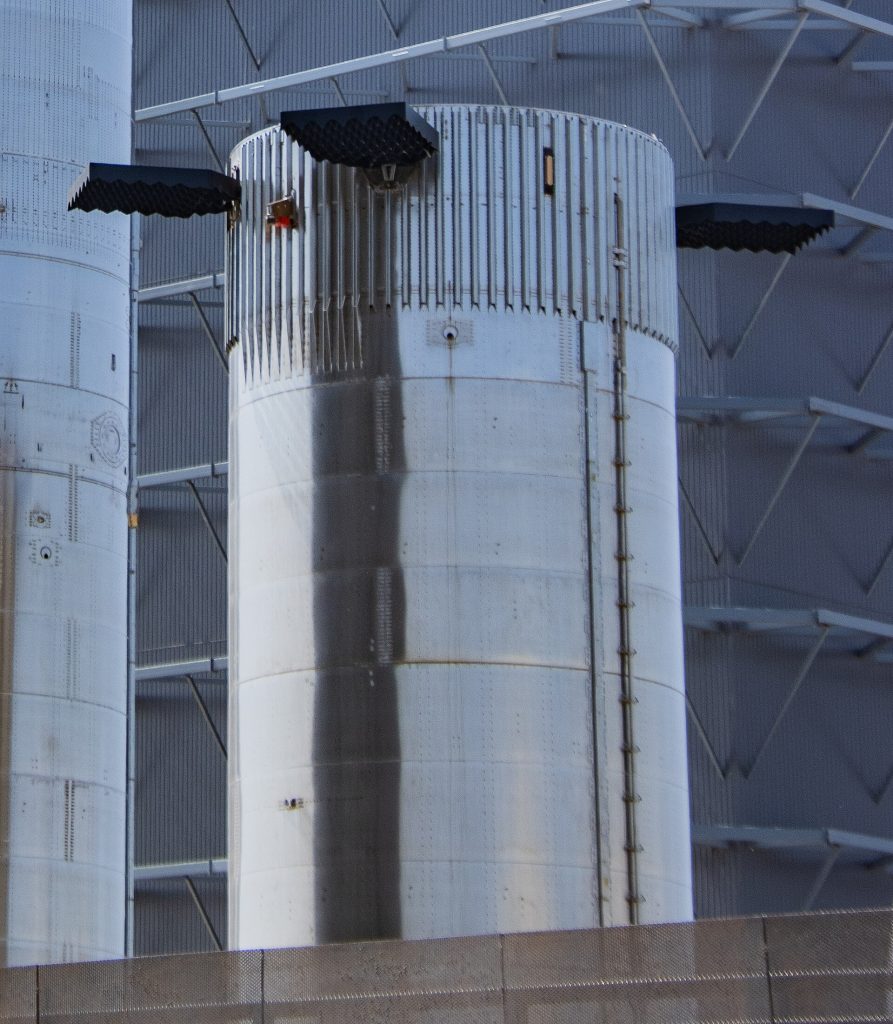
- 33 Raptor 3 engines, with the bulky engine shrouds of earlier generations removed and sensors, feed lines and controllers deleted or integrated inside the engine.
- An integrated hot stage on top, replacing the one-time-use ring. The ship's engines ignite directly into the top of the booster.
- Three grid fins instead of four, each 50% larger and higher strength, also used for lift and intended for catch on future missions.
- A redesigned fuel transfer tube to feed liquid methane to all 33 engines, allowing them to light at the same time with faster, more reliable flips.
On the ship, the propulsion system was redesigned, tank volume increased and on-orbit steering improved. The PEZ dispenser was upgraded to deploy satellites faster, and four docking ports were added, two below the payload bay door and two near the bottom, for ship-to-ship propellant transfer. Version 3 is designed to carry up to 100 metric tons to Earth orbit, the Moon and Mars. The ship on this flight was S39.
Pad 2 also debuted. It has a larger propellant farm with more pumps, shorter chopsticks driven by 100% electromechanical actuators instead of hydraulics, a redesigned launch mount with fuel and oxidizer systems in separate compartments, and booster quick disconnects moved out of the plume. A bidirectional flame diverter and a new top deck flame deflector replaced the old steel "pancake", aimed at zero refurbishment between launches.
Everyday Astronaut's Tim Dodd noted the rocket has about 9% more thrust and expected max Q to come at roughly 45 seconds instead of close to a minute. He also described the plan: no booster catch on this flight, with a splashdown in the Gulf roughly 20 mi (30 km) off the coast, and a possible booster catch no sooner than flight 14.
The flight
Liftoff came on time after a brief hold at T-40 seconds and a short wait for propellant pushback to finish. All 33 Raptor 3 engines lit and the vehicle passed max Q with nominal telemetry. Soon after, one booster engine went out, leaving 32 flying. At hot staging, the three vacuum Raptors on the ship ignited first, then one of the central engines, then the other two, all while still clamped to the booster.
The booster flipped quickly, but fewer engines lit for the boost-back than expected and the burn shut down early. The commentators said the booster would be lost and would splash down in the Gulf; they saw at least a couple of engines fire for the landing burn before contact was lost.
On the ship, one of the vacuum Raptors (an RVAC) went out around 3 minutes 50 seconds into the flight. Because the RVACs can't be steered, the three center engines gimbaled to compensate. The planned burn was about 8 minutes 11 seconds, and the ship ran longer on five of its six engines to reach the roughly 27,000 km/h it needed. Dodd noted an engine appeared to be on fire and venting propellant after shutdown, and one commentator said this likely was not a nominal orbital insertion. SpaceX engineers said the engine-out capability was something analyzed since the first flight.
Payload deploy
The payload bay door opened on schedule. The ship carried 22 deployables, the heaviest load it has carried: 20 Starlink mass simulators and two modified V2 Starlink satellites nicknamed Dodger Dogs, which stretch the V2 mini propellant tanks so they stick out from both ends. The Dodger Dogs carried V3 components, solar arrays and cameras with flashlights, intended to look back at the ship's heat shield at night.
The upgraded PEZ dispenser pushed the satellites out faster than on earlier flights. After the last were away, a view from the Dodger Dog showed the empty payload bay, and Dodd noticed the docking ports. SpaceX then confirmed the planned in-space Raptor relight would be skipped because of what happened on ascent. The sea-level engines were still to be used for the landing burn, with a controlled landing planned in the Gulf rather than the Indian Ocean.
Recovery team and what came next
Seren Sunai, aboard the recovery vessel a couple hundred miles off Australia in about 10-ft seas, said the crew normally sails 500 to 600 nautical miles from shore to clear the range and capture imagery of reentry and splashdown. Their buoys, originally sailboat racing marks, were first tried on flight five, and almost all those deployed for flight 12 are the ones used then. Each carries a Starlink Mini.
Dodd called the day a success because a ship reached space and deployed its satellites, though he said the booster result likely delays the catch attempt. He had hoped the next flight would go better for the booster and was curious what stopped the engines from lighting. He predicted four more Starship launches this year.
Questions this video answers
What was new on Starship Flight 12?
Starship Flight 12 was the first flight of a Starship version 3 vehicle, with a new booster, new ship, new Raptor 3 engines and a new launch pad (pad 2).
When did Flight 12 launch?
Lift-off came right at the top of the launch window, at about 5:30 p.m. Central Time, after a brief hold at T-40 seconds. The first attempt the day before was scrubbed because a hydraulic pin on the tower arm would not retract.
Did the Super Heavy booster land as planned?
No. The booster shut its engines down early during the boost-back burn and did not complete its planned splashdown in the Gulf. Catching a booster was not planned for this flight anyway.
What went wrong with the ship?
One of the ship's three Raptor vacuum engines (RVACs) went out on ascent. The ship kept flying on five of six engines and burned longer to make up the velocity.
Did Starship deploy its payload?
Yes. The ship deployed 20 Starlink simulator satellites and two modified Starlink satellites nicknamed Dodger Dogs. The planned in-space Raptor relight was skipped.
Explore related missions
Connected by the topic: Starship