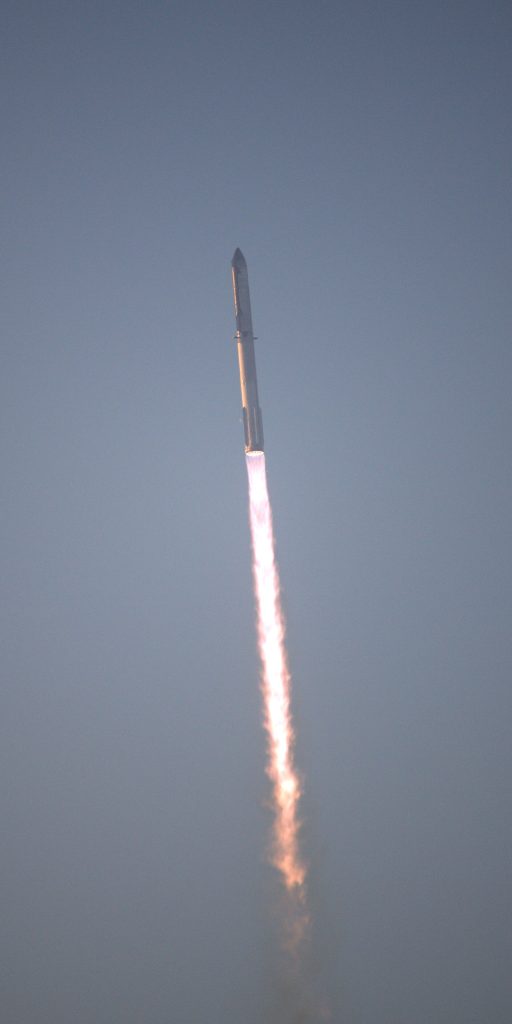
Starship Flight 12: Countdown to the First V3 Launch from Pad 2
The short version
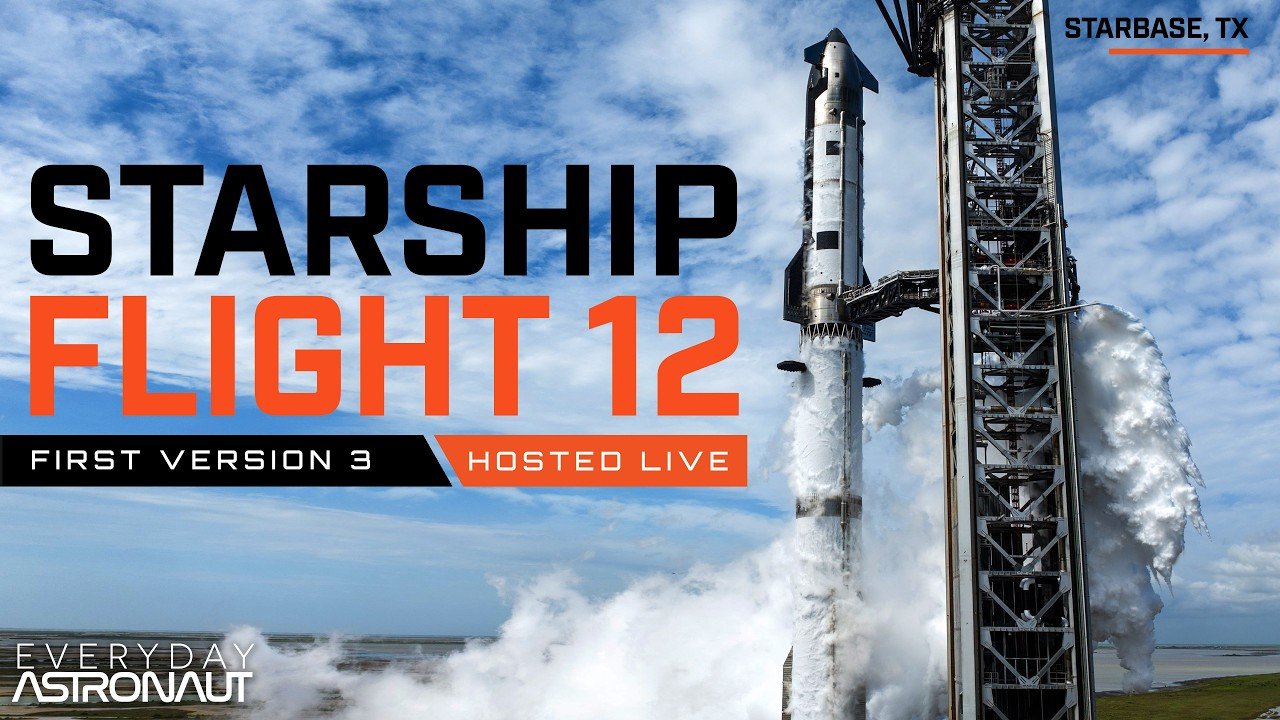
Everyday Astronaut hosts a live stream ahead of Starship Flight 12, the first flight of Starship version 3 from the new pad 2 at Starbase. The stream covers the countdown, version 3 changes, the planned suborbital profile with 20 Starlink simulators, and SpaceX's own webcast segments. The excerpt ends before liftoff, so no outcome is stated.
Full written account
Everyday Astronaut's live coverage of Starship Flight 12, the first launch of Starship version 3, followed a countdown from Starbase, Texas, that began with a 90-minute launch window opening at 5:30 p.m. Eastern (4:30 p.m. Central) and closing at 7:00 p.m. Eastern. The target liftoff time was 6:30 p.m. Central. The clock had been pushed by 30 minutes twice before the vehicle was loaded with propellant, and host Tim Dodd, who was streaming remotely from England, said he expected a scrub. SpaceX instead declared the team "go for prop load".
A new vehicle on a new pad
SpaceX's own webcast described the stack as just over 407 ft tall, a little taller than version 2. It was the debut of a new booster, a new ship, new engines and a new launch pad, Pad 2. The 33 Raptor engines on Super Heavy were said to produce 18 million pounds of thrust, more than twice that of the Saturn V.
The changes SpaceX listed for the booster included:
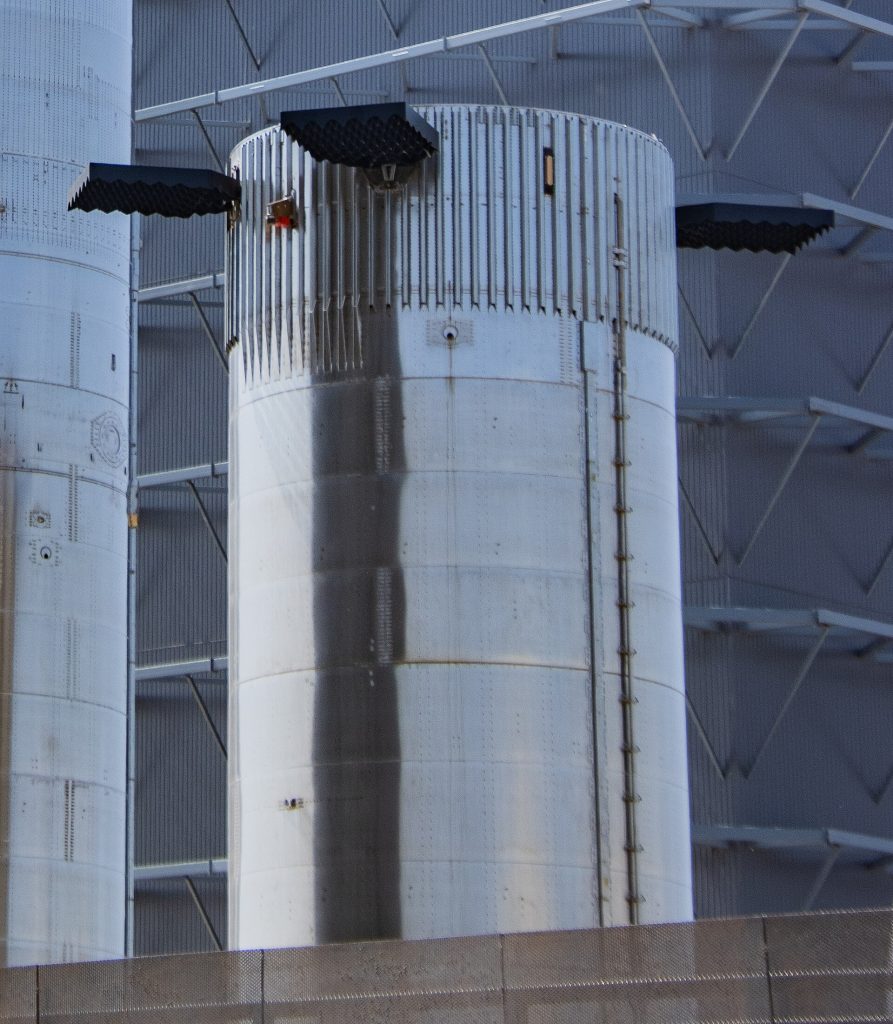
- A hot stage adapter integrated into the booster instead of a one-time-use piece that pops off. The ship's Raptors ignite directly on top of the booster's fuel tank, protected by tank pressure and a non-structural layer of steel.
- Three grid fins instead of four, each 50% bigger and higher strength. They are also used for lift and for catching, with new catch points.
- A redesigned fuel transfer tube, about the size of a Falcon 9 first stage, which SpaceX said helps the booster flip faster and lets all engines start simultaneously.
- Raptor 3 engines, which allowed the bulky engine shrouds to be deleted.
Raptor 3 thrust rose from 230 to 250 tons force for the sea-level engines and from 258 to 275 for the vacuum-optimized ones. The ignition system was redesigned, and many sensors, feed lines and controllers were deleted or built into the engine. The ship carries six engines, three of them with the larger vacuum-optimized nozzles called RVACs.
SpaceX said the ship is designed to carry up to 100 metric tons to Earth orbit, the Moon and Mars. It has a redesigned propulsion system, more propellant volume, an improved reaction control system and a new docking port for linking two Starships and transferring propellant.
Pad 2 has a redesigned launch mount with extensive concrete and steel cladding, separate compartments for fuel and oxidizer, and booster quick disconnects moved out of the plume. It also has a bidirectional flame deflector in place of the old "pancake", shorter chopsticks, and chopstick actuators changed from hydraulics to fully electromechanical. SpaceX said propellant loads about 20% faster on Pad 2 than on Pad 1.
Ullage venting for attitude control
Dodd explained that the tanks hold a large volume of gaseous methane and oxygen that must be vented anyway. The booster already used that venting for attitude control, and he had asked whether the ship could do the same. He said the ship has so much gas volume that it works, and that version 3 has doubled the number of thrusters.
The flight plan
The profile matched flights 10 and 11: a suborbital trajectory, intentionally a few hundred meters per second short of orbit so an untested vehicle cannot be stranded in orbit and later reenter uncontrolled. The booster was not to be caught; Dodd said the new grid fin locations, hot staging ring, shifted center of mass and center of pressure, and new engine ignition system all made a landing-burn test over water safer than a return to the new pad.
According to SpaceX, the planned sequence was:
- Ascent on 33 Raptor 3 engines, with the booster shutting down all but five before hot staging.
- Stage separation with the integrated hot stage, a directional booster flip, engine relight and boostback, then a landing burn and soft splashdown a few miles off the Starbase coast.
- Deployment of 20 Starlink simulator satellites plus two modified satellites nicknamed "Dodger Dogs", built with a stretched V2 mini propellant tank sticking out of both ends.
- A single-engine Raptor relight on the ship, re-entry, then a flip, landing burn and soft splashdown in the Indian Ocean.
Dodd noted that the last two simulators carry thrusters and cameras, and speculated that the ship might roll 180° so they could view the heat shield, since the dispenser door is on the leeward side. That was his guess, not a SpaceX statement. A recovery team member in the Indian Ocean said he had worked seven of these missions and that the team clears the range, then collects imagery with buoy boats and drones.
Countdown
SpaceX flight director Ty Huntington, who also served on Starship's first flight test and flight 11, made the final go/no-go poll at about T minus 1 hour. Propellant loading began on the ship at about T minus 37 minutes, with the booster about a minute later, loading oxygen and then methane. Loading was set to continue until about 3 minutes 20 seconds before launch on the ship and 2 minutes 50 seconds on the booster. Before the pad was ready, the tower vented nitrogen to chill the propellant lines so cryogenic propellant would not boil off against warm pipes.
SpaceX said weather was clear, and that upper-level winds earlier in the day were the reason it moved into the window. Thrust vector control checks were planned at about T minus 100 seconds, with a built-in hold at T minus 40 seconds. The broadcast listed one item that might cause a hold of a couple of seconds, based on recent static fires. The coverage in the transcript ends in the final minutes of the countdown, before liftoff.
Questions this video answers
What was the flight profile for Starship Flight 12?
A suborbital profile similar to flights 10 and 11, with the booster not being caught, no orbit, and 20 Starlink simulator satellites deployed.
What was new about Flight 12?
It is the first flight of Starship version 3, with a new booster, ship, Raptor 3 engines and the new pad 2.
Where was the ship meant to splash down?
Ship and booster were both new; the ship was to finish with a flip, landing burn and soft splashdown in the Indian Ocean.
When was the launch targeted?
Launch was targeted for 6:30 p.m. Central Time, inside a 90-minute window ending at 7:00 Eastern-labeled graphic; the stream says the clock was pushed twice.
Explore related missions
Connected by the topic: Starship