Tiangong Space Station Tour: Modules, Power and Life Support
The short version
CGTN's Wu Lei gives a tour of China's Tiangong space station, ahead of the Shenzhou-15 crew's flight. The video covers its orbit, solar arrays, robotic arm, the Tianhe core module's living space, life-support recycling, and the Wentian and Mengtian lab modules. It states that China planned 11 missions to complete construction, starting with the core module launch in April 2021.
Full written account
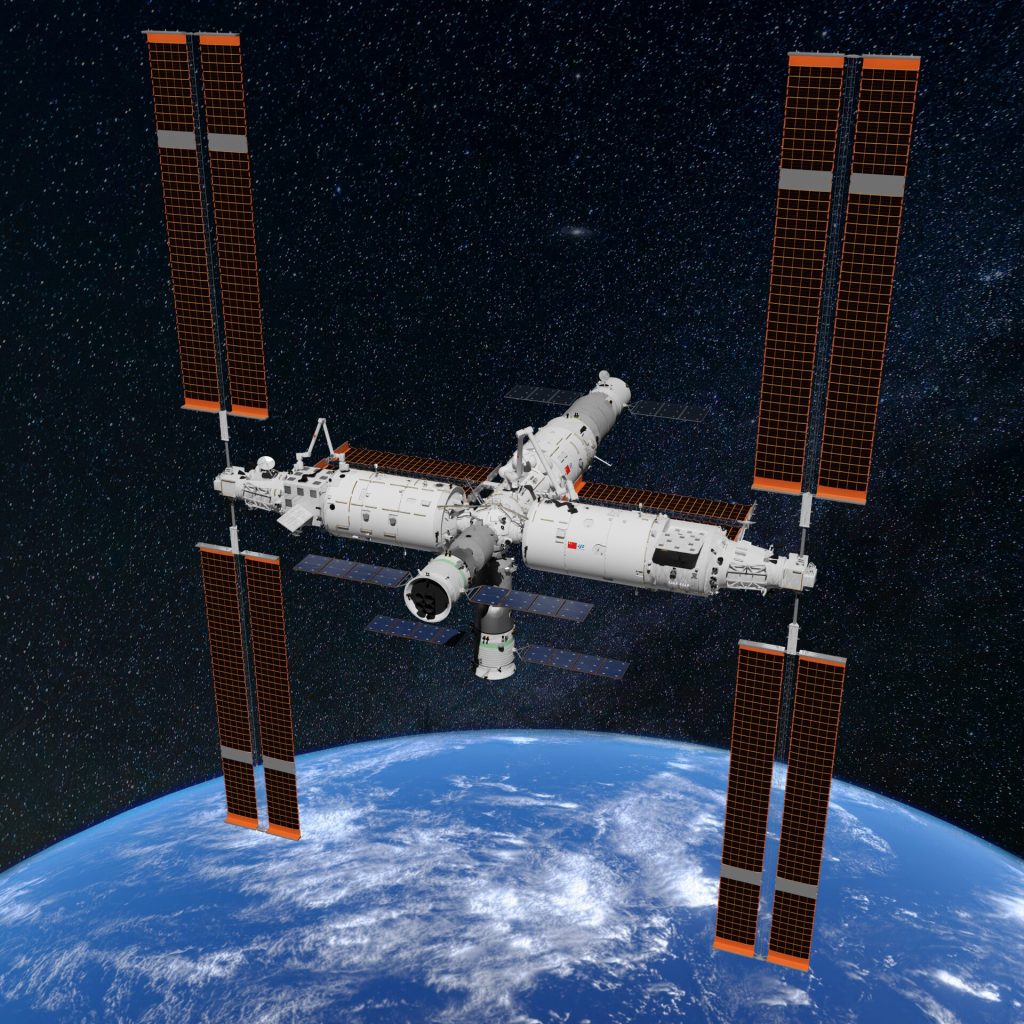
China's Tiangong space station orbits about 400 kilometers above Earth at roughly 7.8 kilometers per second, completing one orbit in about 90 minutes. Its crews can see 16 sunrises a day. With the Shenzhou crewed spacecraft and Tianzhou cargo ship attached, the whole station weighs almost 100 tons.
How the station was assembled
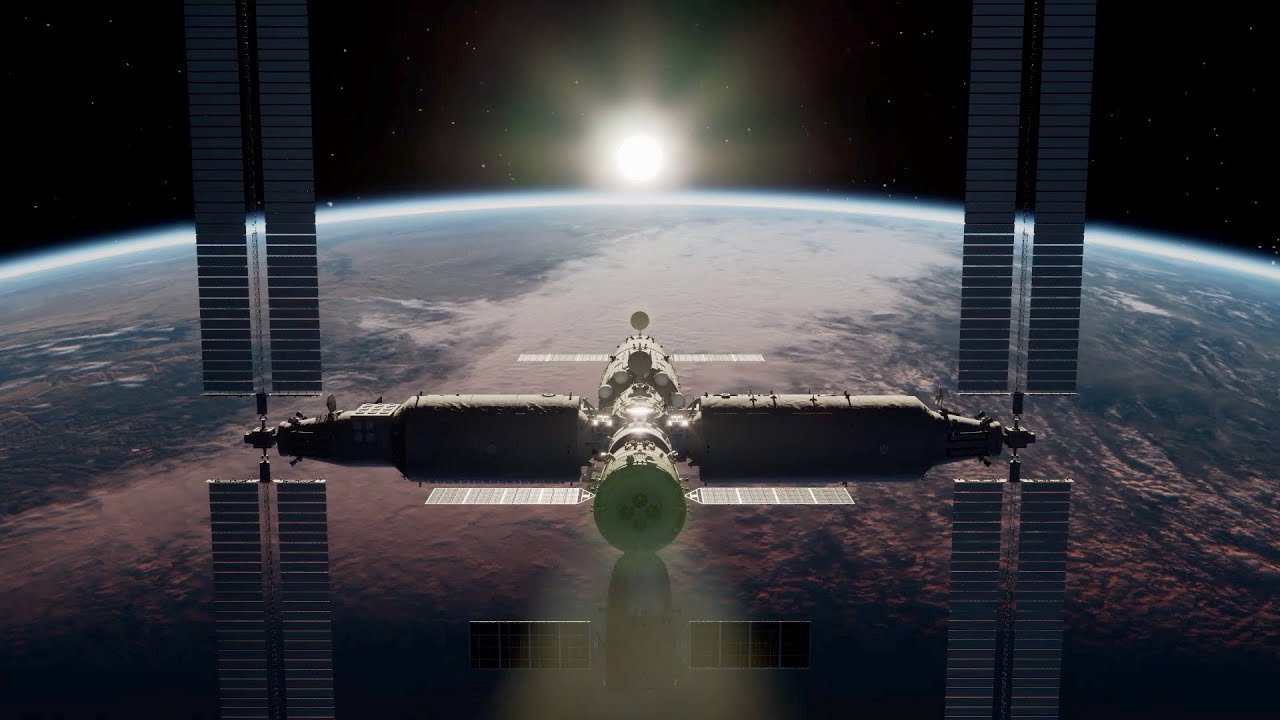
The station mainly consists of the Tianhe core module and lab modules, which together form a T-shaped structure. Construction began with the launch of the core module in April 2021. China planned 11 missions to finish it: three major modules, four Shenzhou spacecraft and four Tianzhou cargo ships.
Power and the robotic arm
Two pairs of flexible solar arrays generate 80% of the station's electricity. Driving devices rotate them 360 degrees to face the sunlight in unblocked positions. Each pair is around 55 m long, and engineers say the four arrays produce nearly 1,000 kilowatt hours a day, comparable to an ordinary family's electricity use for nearly half a year.
Outside, a robotic arm with seven adjustable joints is described as as flexible as a human arm. Taikonauts can stand on it and move quickly, which makes installation and maintenance work more efficient.
Living in the core module
The core module is the main living space, with 110 cubic meters of room. It has three sleeping areas, and the Wentian lab module has another three, supporting up to six taikonauts. More than 120 kinds of food mean a different menu each day. Exercise equipment includes a running machine and a bicycle.
A recycling system collects moisture, volatilized water and carbon dioxide released by the crew, and urine is processed too. Its subsystems cover electrolytic oxygen production, drinking water collection and treatment, urine treatment, and carbon dioxide and harmful gas removal. Within a year it recycled over 2,600 kilograms of water. Crews can use a mobile app to control lights and check storage and supplies, and they can make phone calls, video calls and send emails.
The lab modules
The Wentian lab is mainly for life science research on plants, animals and microorganisms. Its universal biological cultivation module holds rice and Arabidopsis. Taikonauts and students on the ground planted the same seed under different gravity conditions to study growth mechanisms.
The Mengtian lab is mainly for microgravity research, with 13 cabinets inside and 37 payload positions outside the cabin. Special equipment there can release micro spacecraft: with the astronauts, a payload transfer tool and the robotic arm, it ejects small satellites weighing about 100 kg into orbit like a slingshot.
Nine international experimental projects selected from 17 countries and regions will be sent to Tiangong later.
Questions this video answers
How fast does Tiangong orbit?
About 7.8 kilometers per second, completing an orbit in about 90 minutes, according to the video.
How is the station powered?
Two pairs of flexible solar arrays generate 80% of its electricity, and each pair is around 55 m long.
How many sleeping areas are there?
Three in the Tianhe core module and another three in the Wentian lab module, supporting up to six taikonauts.
How many missions were planned to build the station?
11 missions: three major modules, four Shenzhou spacecraft and four Tianzhou cargo ships.
What international involvement is planned?
Nine experimental projects selected from 17 countries and regions will be sent to Tiangong later.
Explore related missions
Connected by the topic: Tiangong