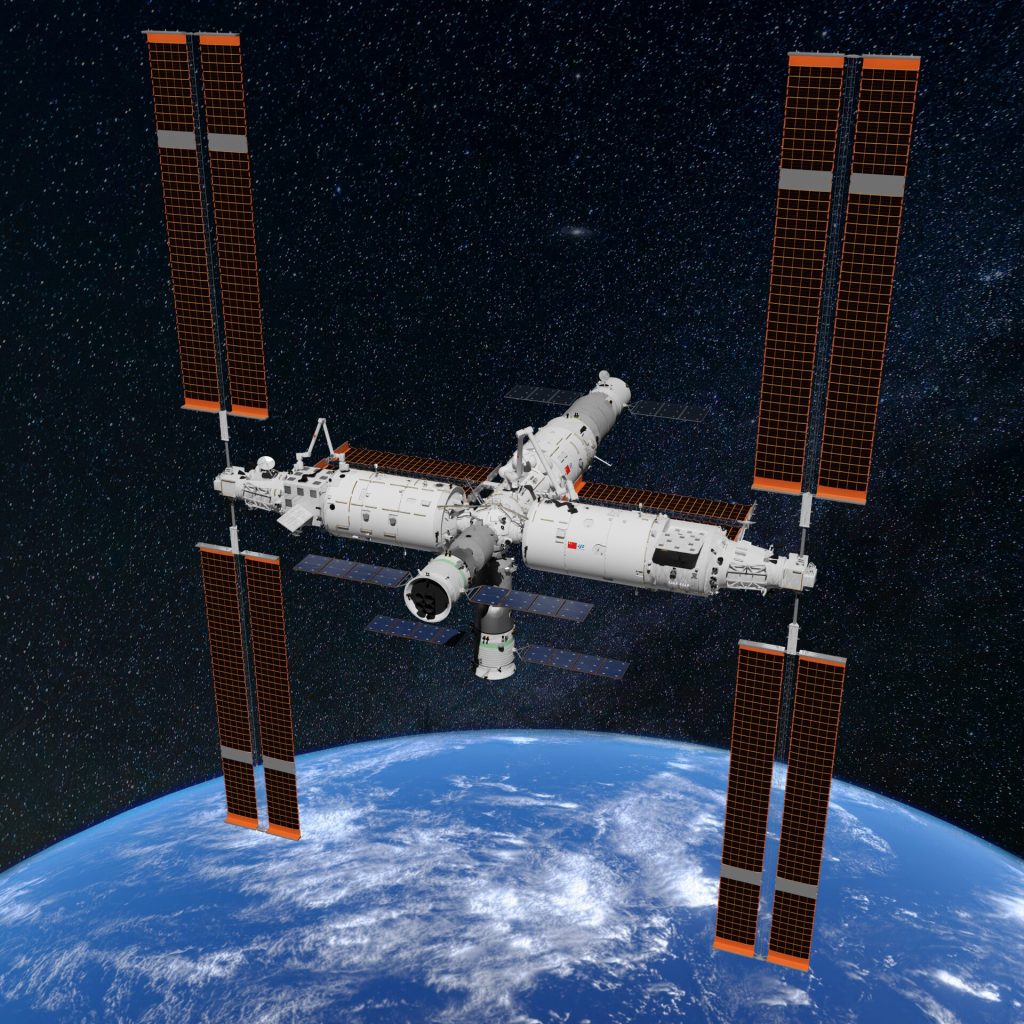
Tiangong vs the ISS: China’s Modular Station and Xuntian Telescope
The short version
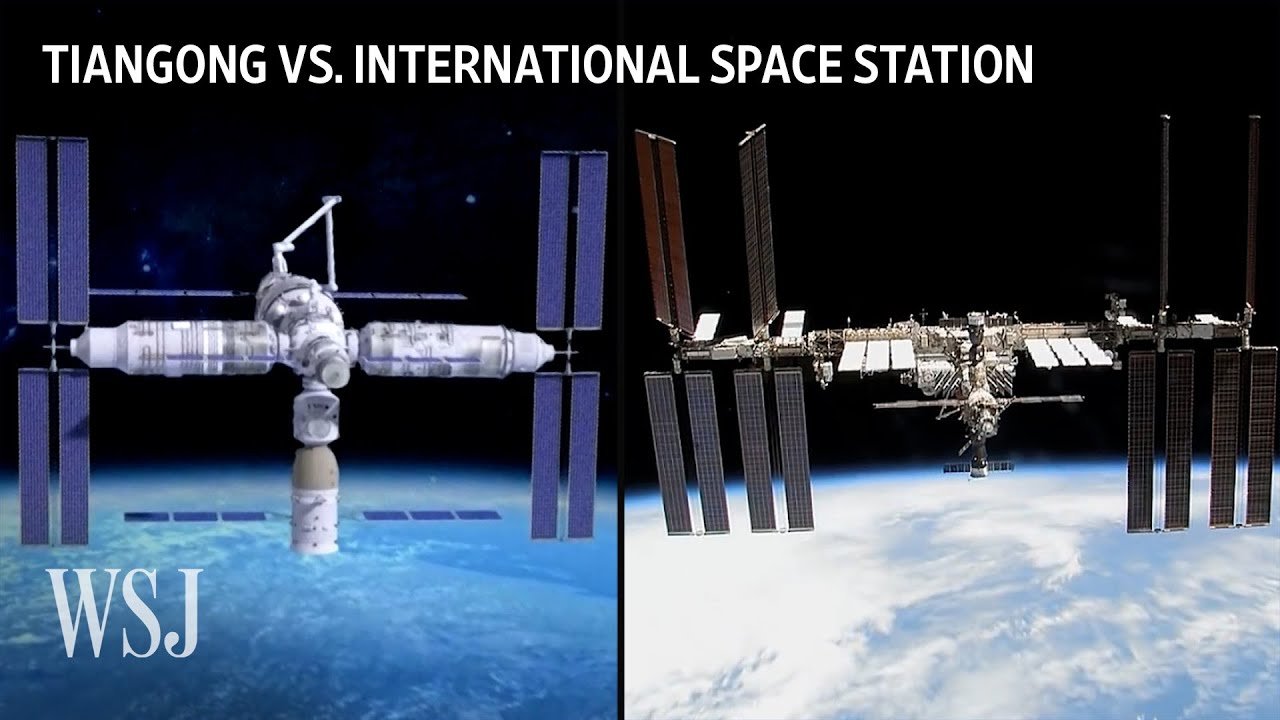
WSJ compares China's Tiangong space station with the International Space Station. Tiangong's core module launched in April and China says the station will be up and running by 2022, while the ISS is agreed to operate through 2024. The video covers modular design, a more efficient propulsion system, the Xuntian telescope and the politics behind China's separate station.
Full written account
China launched the core part of its new space station, Tiangong, in April, and says the station will be up and running by 2022. Tiangong means heavenly palace in Chinese. The International Space Station, then nearly 23 years old, has been agreed by NASA and its partner countries to operate through 2024, though its future after that is unclear.
Why China built its own station
China is not part of the International Space Station. Since 2011, US law has excluded China from working with NASA, and as a result China's astronauts have not been allowed on the ISS, a collaboration of five space agencies. Quinton Parker of the University of Hong Kong's Laboratory for Space Research describes the reasons as primarily political, around trust and technology transfer. In some ways, he says, the exclusion has given China the impetus and political will to pursue its own space endeavors.
The ambition has been 30 years in the making. In 2003 China sent its first astronaut to space, the third country after the US and Russia to do so. Less than a decade later, it said it had launched two test modules.
Modules and size
Space stations are assembled in pieces over many launches. The ISS currently has 16 modules; China has one in orbit, and Tiangong will eventually be made up of three. It is only about a quarter or so of the size of the ISS. Three people can live on it at the moment, against the six usually aboard the ISS, or the record 13 astronauts in 2009. Adding modules could let China reach that capacity too.
The ISS has been an evolving project since 1998. Because of the modular design, a module that fails or is no longer cutting edge can be detached and replaced.
Power and propulsion
China says Tiangong carries more advanced technology. Its solar panels also power its propulsion technology, so although it still uses regular fuel propellants like the ISS, it does not need as much to stay in orbit. China's space agency says the system is about five times more efficient and powerful than the ISS's, which consumes about 9 tons of fuel annually to stay in orbit.
The Xuntian telescope
The ISS has no equivalent of Xuntian, meaning heavenly cruiser, a tag-along space telescope that will orbit parallel to the station. With an enormously large camera, it can look at 300 times the field of view of the Hubble Space Telescope in one hit. It will be able to refuel and be serviced by docking directly at Tiangong, whereas Hubble orbits on its own and needs astronauts to fly in from Earth for repairs. China has said the station is designed for collaborations, and the telescope could one day be used by other countries.
Namrata Goswami, an independent researcher in global space policy, notes that the ISS requires consensus among its partners, while the Chinese station will be operated by China, which will decide which experiments are allowed.
What comes next
NASA is leading a plan for an outpost that will orbit the moon, and Russia has indicated it could launch its own space station by 2030.
Questions this video answers
What does Tiangong mean?
Tiangong means heavenly palace in Chinese.
When will Tiangong be complete?
China says Tiangong will be up and running by 2022, and it will eventually be made up of three modules.
Why is China not part of the ISS?
Since 2011, China has been excluded by US law from working with NASA, so its astronauts have not been allowed on the ISS.
How does Tiangong compare in size with the ISS?
It is about a quarter or so of the size of the ISS. Three people can live on it at the moment, compared with usually six on the ISS.
What is Xuntian?
Xuntian, meaning heavenly cruiser, is a planned space telescope that will orbit parallel to the station and can dock at Tiangong to refuel and be serviced. It can look at 300 times the field of view of Hubble in one hit.
Explore related missions
Connected by the topic: Tiangong