NS-28: Emily Calandrelli’s New Shepard Flight, Start to Landing
The short version
Emily Calandrelli documents her November 2024 flight on Blue Origin's New Shepard, the NS-28 mission, which made her the 100th woman to fly to space. The video covers her arrival in West Texas, astronaut training, a letter from her father, launch, weightlessness at apogee and the capsule's return under drogue parachutes.
Full written account
In November 2024, science communicator Emily Calandrelli launched on Blue Origin's New Shepard rocket and became the 100th woman to fly to space. Her flight was the NS-28 mission, and she documented the days before and during it, from a West Texas arrival to a landing with drogue parachutes.
Background: a rocket with no pilot
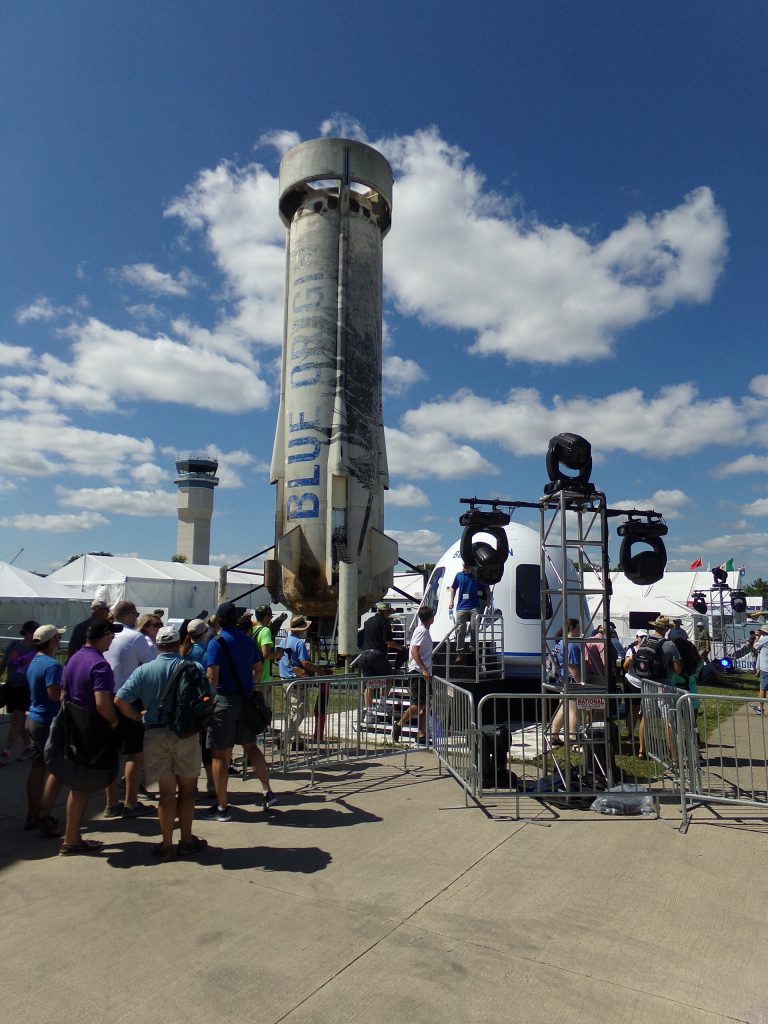
The crew arrived in Texas three days before launch and headed to the middle of the West Texas Desert, to Blue Origin launch site one, where the company launches and lands astronauts in a rocket of its own design. The rocket is fully autonomous and 99% reusable, with no spacecraft pilots on board. It launches itself to space, 62 miles above the planet, and lands itself back on Earth.
New Shepard is named after Alan Shepard, the first American in space, who flew a similar flight trajectory. Calandrelli's launch was the 28th New Shepard flight overall, hence NS-28, the ninth human flight for Blue Origin and the 11th launch of this exact rocket.
Training
Each crew member got an individual Airstream in the astronaut village. Calandrelli taped pictures of family and friends to her wall, along with the 99 women astronauts who came before her, leaving one spot to fill.
Training used a one-to-one mockup of the New Shepard capsule. Seats were custom fitted because, in an emergency, the capsule can be ejected away from the rocket so quickly that the body experiences 15 G forces. The crew practised getting in and out of a five-point harness, since the few minutes of weightlessness at apogee are precious. Calandrelli was seat number six, an emergency-exit seat, with responsibility for the fire suppression system. Training ended, per Blue Origin tradition, with a nominal mission scenario, after a pep talk from trainer Sarah Knights.
What she carried
- Seeds from the organization Fast Plants, to study how spaceflight affects plant growth on a microscopic level.
- A bio button taking her vitals through training and flight, part of a cohort of over 20 suborbital and orbital astronauts.
- Postcards decorated by the team, flown through Club for the Future's postcards to space program.
- Her father's college ring.
- A flash drive holding 9,557 wishes. The Wishes to the Stars project raised over $30,000 for kids in foster care in West Virginia.
Launch and flight
On launch morning she said goodbye to her children, Rose, who is five, and Lincoln, who is two. At the pad she noted the burning off of extra hydrogen: the rocket uses liquid hydrogen and liquid oxygen, and the tiny hydrogen molecule leaks easily, so it is burned off to control leaks safely.
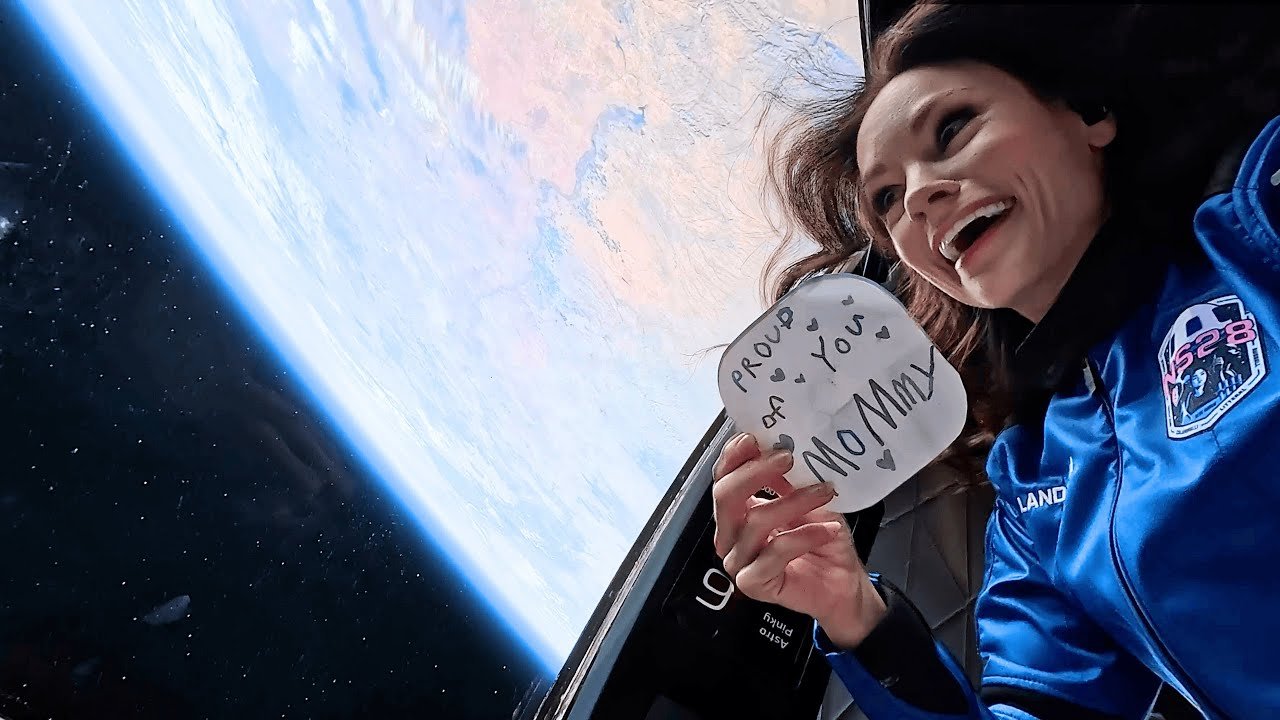
After a countdown from ten, the rocket cleared the tower. Operators called "Stand by MECO" and then "Stand by separation." Weightlessness followed, and she spoke to her family and said she had brought the wishes to the stars. She saw the Earth and the Moon. An operator gave a one-minute warning, and the crew returned to their seats, with seat six reported in and buckled.
Return
The thrusters stabilized the capsule as it descended. The drogues deployed, and the operator said, "Congratulations and welcome back to Earth." Calandrelli called herself the 100th woman in space.
Questions this video answers
What was the mission number?
The flight was NS-28, the 28th New Shepard flight overall and the ninth human flight for Blue Origin.
Who flew on this flight?
Emily Calandrelli, who became the 100th woman to fly to space, flew with a crew she met on arrival at the astronaut village.
Was there a pilot on board?
No. The rocket is fully autonomous and 99% reusable, with no spacecraft pilots on board.
How high does New Shepard fly?
The video says it launches autonomously into space 62 miles above the planet and lands autonomously back on Earth.
What did she carry with her?
Her father's college ring, seeds for a Fast Plants experiment, postcards, and a flash drive with 9,557 wishes.
Explore related missions
Connected by the topic: New Shepard