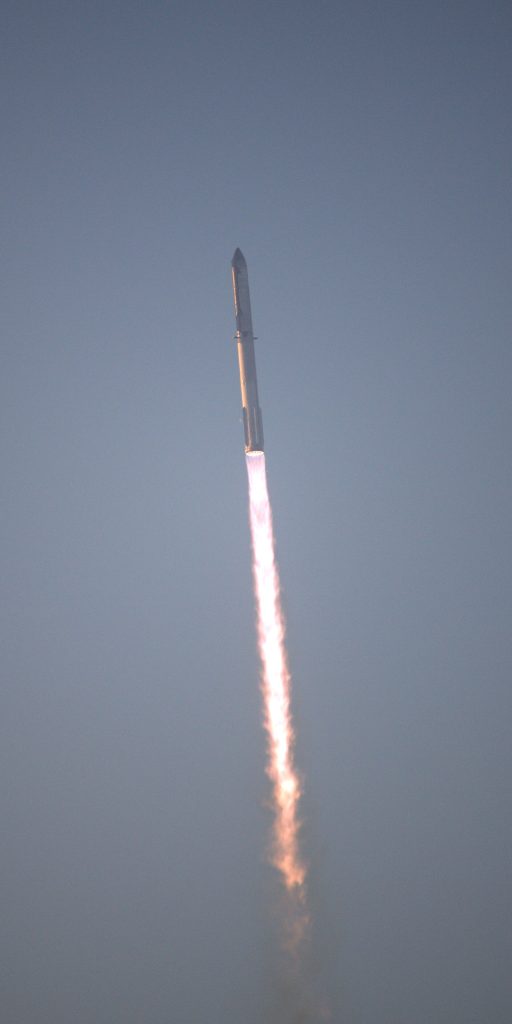
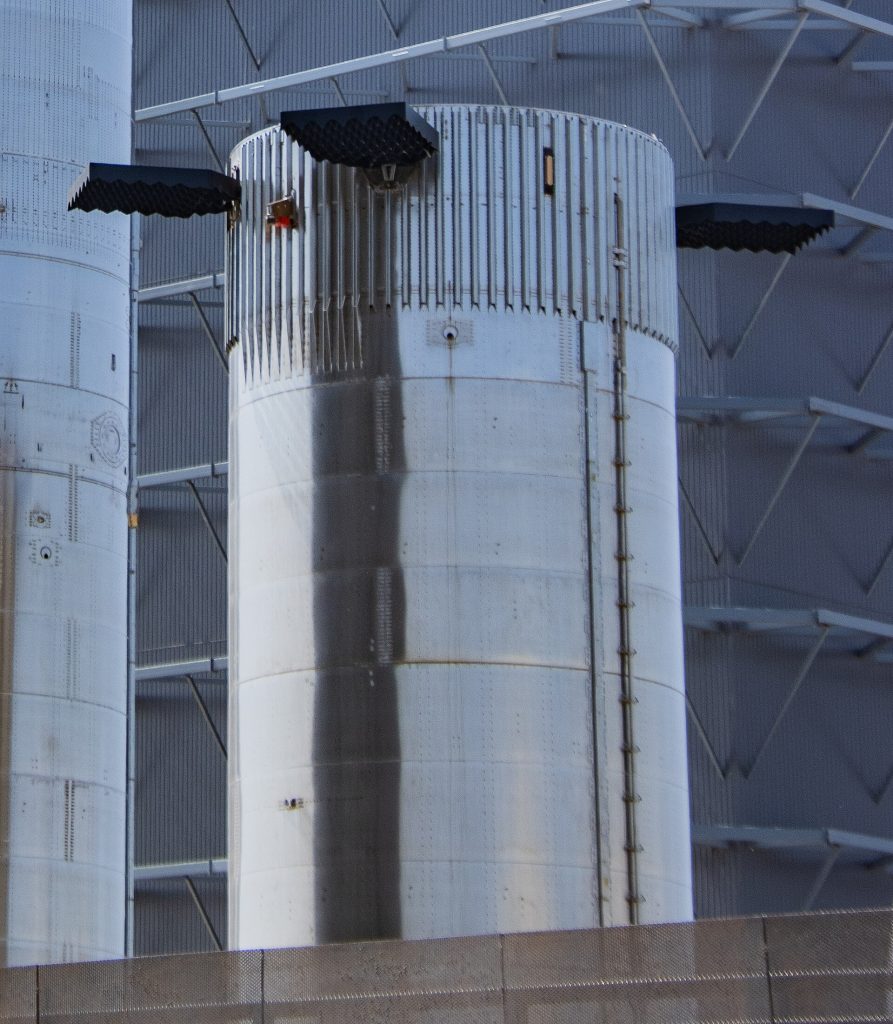
Super Heavy Booster 9 Fires 33 Raptors in Second Static Fire
The short version
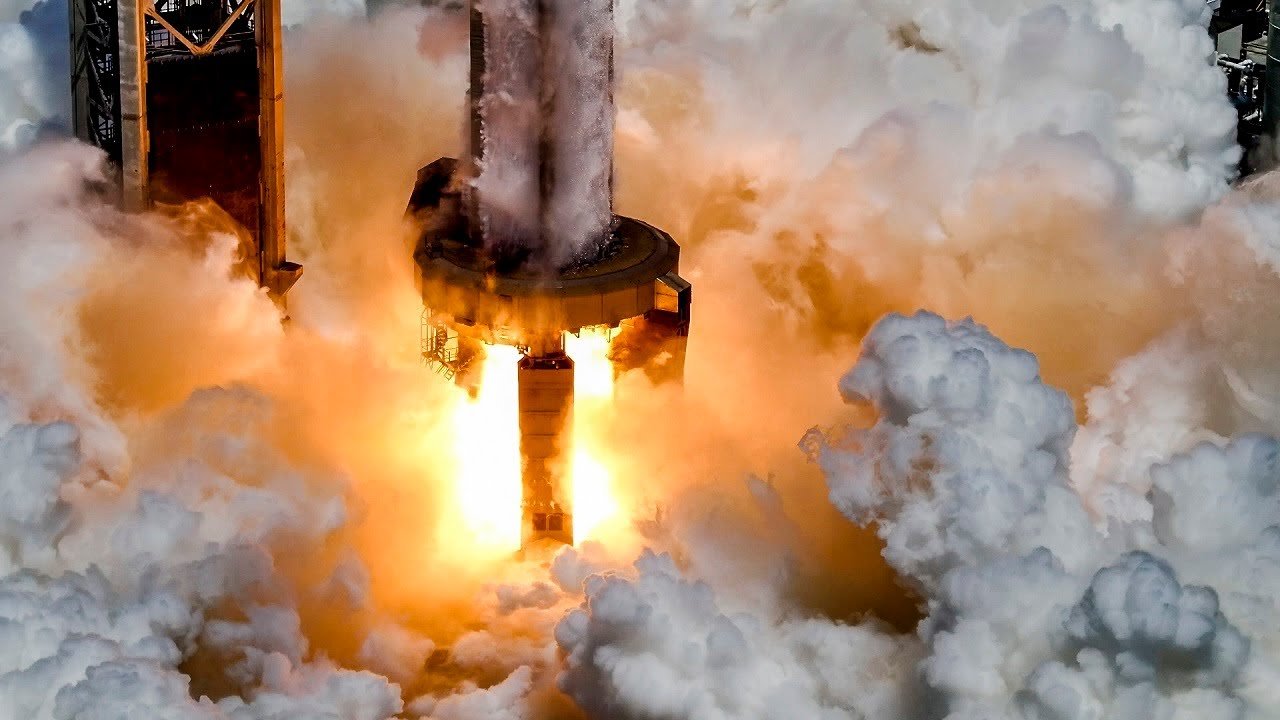
SpaceX's live stream of the second static fire of Super Heavy Booster 9 at Starbase, Texas. The booster's 33 Raptor engines were ignited on the launch mount without lift-off, and the flight director called a full duration firing, with a target of about six seconds. The team said it would review data on how many engines fired and how the tanks behaved.
Full written account
Super Heavy Booster 9 fired its Raptor engines on the launch mount at Starbase, Texas, in its second static fire, a test in which the rocket does not lift off. The booster carries 33 Raptor engines on its bottom end. SpaceX describes Super Heavy as the first stage of the Starship launch vehicle and the most powerful rocket ever designed or flown.
Why even half power matters
In a static fire the engines are throttled up to only about 50 percent of their thrust. SpaceX's commentator noted that even at that level Super Heavy has more thrust than a Falcon Heavy at full power.
Preparation
Propellant loading began a little over an hour before the test. A static fire needs just about a full load of liquid oxygen but only a partial load of liquid methane, and about half of the vehicle appeared frosty. The countdown went into a planned hold at T minus 40 seconds while the fuel temperatures reached a desired range. The commentator said the count had been clean, with no issues being tracked.
The flame deflector underneath the rocket was used again, as it was in the first static fire with Booster 9 a couple of weeks earlier. Its water starts to flow about 10 seconds before ignition.
What the test was for
SpaceX called the test critical: it brings together the rocket's systems, propellant handling, the engines, the ground support equipment and the operators who will fly the vehicle with Starship on top. The aim was a flight-like startup, and the startup sequence had been tweaked since the previous static fire. The test sat on the critical path before the second flight.
The firing
The clock resumed from T minus 40 seconds, and after a countdown from ten the engines ignited. The flight director called a full duration. The team had been targeting about a six second firing. The commentator said the sound rattled the walls at Starbase.
Afterward the team began offloading propellant to make the vehicle safe and started going through the data on how many engines fired and how the tanks behaved. The number of engines that lit was not given and was to be shared later.
Questions this video answers
What was tested?
The second static fire of Super Heavy Booster 9, with its 33 Raptor engines ignited on the launch mount at Starbase.
Did the rocket lift off?
No. A static fire only ignites the engines; the booster stayed on the launch mount.
How long was the firing?
The flight director called a full duration; the team was targeting about a six second firing.
How much thrust is used in a static fire?
Engines are throttled up to about 50 percent of their thrust.
Why was there a hold at T minus 40 seconds?
It was a planned hold to let the fuel temperatures reach a desired range.
How many engines lit?
The video does not say; the team said it would share that after reviewing the data.
Explore related missions
Connected by the topic: Starship