Crew-7 Launch: First Dragon Flight With Four Agencies Aboard
The short version
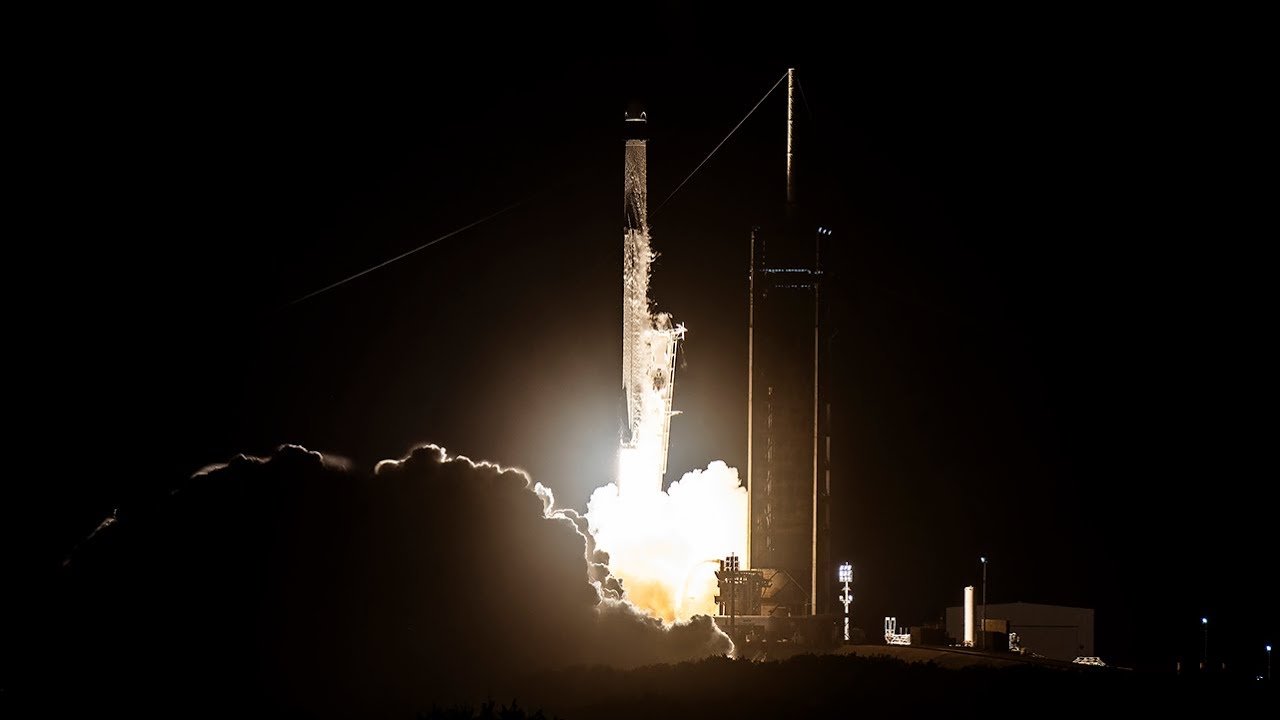
SpaceX and NASA's live coverage of the Crew-7 launch on a Falcon 9 from Launch Complex 39A at Kennedy Space Center on August 26, 2023, at 3:27 a.m. ET. Dragon Endurance carried Jasmine Moghbeli, Andreas Mogensen, Satoshi Furukawa and Konstantin Borisov, the first Dragon crew with every seat filled by a member of a different agency. The first stage landed at Landing Zone 1, and Dragon was to dock with the station about 30 hours later.
Full written account
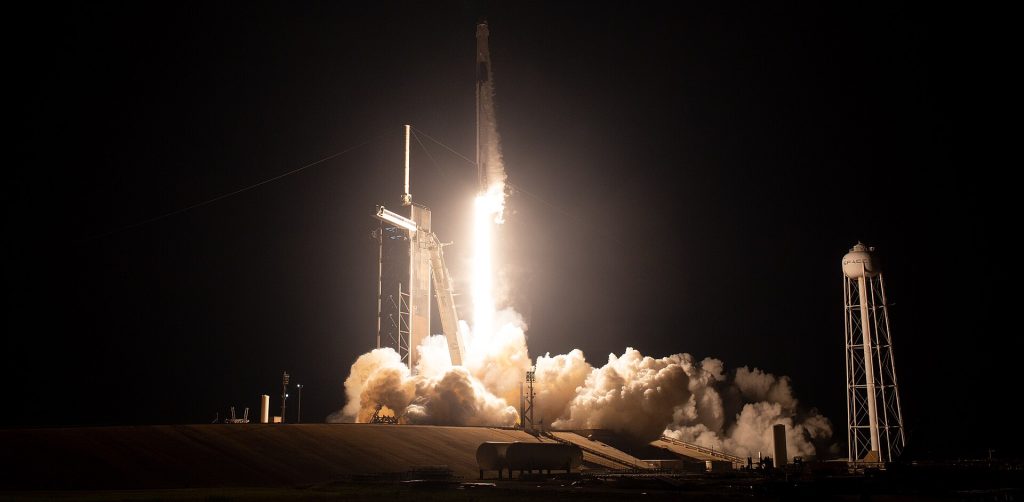
On August 26, 2023, a Falcon 9 lifted off from Launch Complex 39A at NASA's Kennedy Space Center at 3:27 a.m. ET (07:27 UTC) carrying Crew-7, the first Dragon mission in which every seat was filled by a crew member from a different international partner agency. NASA's Jasmine Moghbeli, ESA's Andreas Mogensen, JAXA's Satoshi Furukawa and Roscosmos cosmonaut Konstantin Borisov flew aboard Dragon Endurance to the International Space Station. No one was lost or hurt; the flight ran to plan, and the first stage landed back in Florida.
A first for Dragon
Crew-7 was SpaceX's seventh operational crew mission for NASA. The broadcast described it as Dragon's first all-international crew, with NASA, ESA, JAXA and Roscosmos each represented by one person. It was also the first time an ESA astronaut served as pilot of Dragon, a role filled by Mogensen. Moghbeli, a Marine Corps helicopter test pilot from Long Island, New York, was commander on her first spaceflight. Borisov, selected to the cosmonaut corps in 2018, was also flying for the first time. Furukawa had previously spent 165 days in orbit on Expeditions 28 and 29 in 2011, and Mogensen was on his second trip to the station after his first, a short 10-day mission.
The Dragon was making its third trip to the station, having previously supported Crew-3 and Crew-5. NASA Administrator Bill Nelson, watching from SpaceX's firing room, called the crew a sign of the times, saying the international make-up mirrors plans to return to the Moon in order to go to Mars.
Countdown and a delay
A launch attempt the day before was stood down for additional data reviews. On launch night, weather was forecast at 95 percent favorable, with a five percent chance of violation. The launch window was instantaneous, set by the orbital mechanics of two spacecraft meeting in orbit; a hold would have meant waiting for a backup opportunity the next day at 3:04 a.m. ET.
The crew rode a 20-minute drive to the pad, crossed the crew access arm and boarded. The arm retracted, which takes roughly 90 seconds to two minutes, and the crew then closed their visors and armed the launch escape system. That system uses eight SuperDraco thrusters, which the broadcast said can move Dragon half a mile in 7.5 seconds, a peak velocity of 436 miles per hour. Propellant loading began at T minus 35 minutes with the crew aboard.
Late in the count, teams discussed a sensor issue. The launch team kept monitoring it and continued the count, and the launch went ahead on time.
The ascent
At liftoff Falcon 9's nine Merlin 1D engines provided 1.7 million pounds of thrust. The vehicle throttled down through maximum dynamic pressure, then back up. Main engine cutoff and stage separation followed, and Moghbeli called out abort modes along the way, such as 1B and 2A. The abort zones run up the Eastern seaboard, with the final one, called "Shannon," targeting the coast of Ireland.
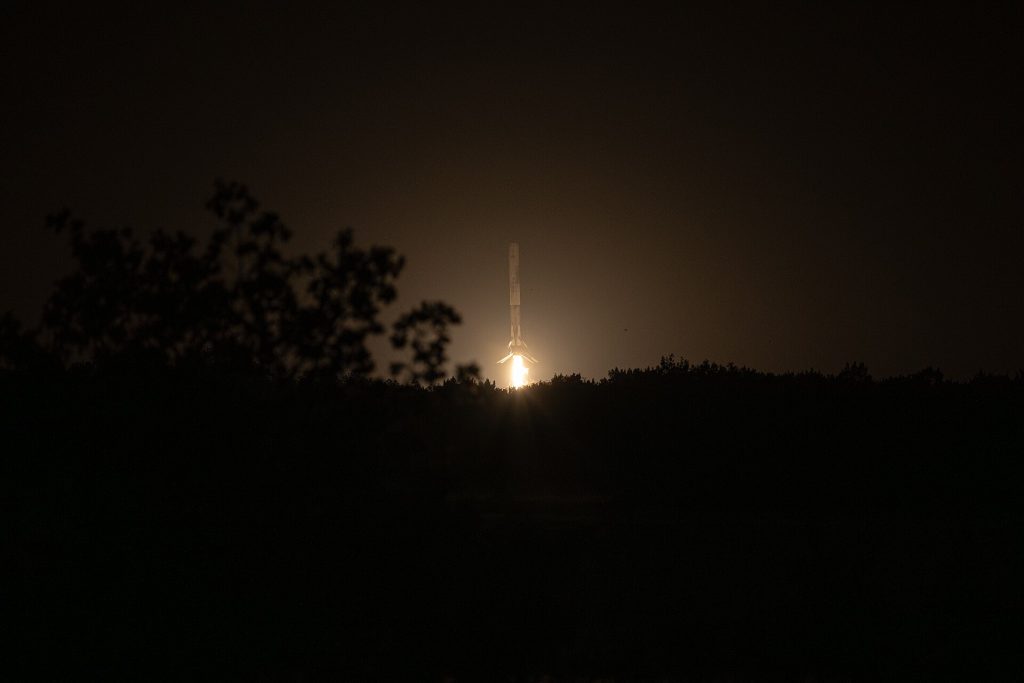
The first stage flew three burns, the boostback, entry and landing burns, and landed at Landing Zone 1 in Florida. The broadcast noted that NASA had decided it had enough propellant margin to burn the first stage a little less and the second stage a little more, which allowed the booster to return to land. Second stage engine cutoff came about eight minutes and 50 seconds into the flight, and a good orbit insertion was confirmed. The launch escape system was then disarmed.
Sasha the sloth
The zero-g indicator that floated in the capsule was a three-toed sloth, a favorite animal of Mogensen's children. His family calls him the slowest person in the world, and the sloth was named Sasha. Mission controllers joked that it was probably officially now the fastest sloth ever.
What came next
The nose cone was deployed after separation, exposing the forward thrusters and docking mechanism. Docking was expected at about 8:39 a.m. ET the next day, after a flight of almost 30 hours that Dragon would fly autonomously, with the crew able to take manual control. About 15 minutes of voice communication through TDRS was to be lost during a phase burn, with ground stations before and after.
Among the work ahead was CIPHER, described as 14 investigations in one, studying the effects of microgravity on bone, exercise, vision and behavioral health in up to 30 astronauts. Crew-6 was due to come home after a roughly five-day handover.
Questions this video answers
When did Crew-7 launch?
On August 26, 2023, at 3:27 a.m. ET (07:27 UTC), from Launch Complex 39A at Kennedy Space Center.
Who flew on Crew-7?
Commander Jasmine Moghbeli (NASA), pilot Andreas Mogensen (ESA), and mission specialists Satoshi Furukawa (JAXA) and Konstantin Borisov (Roscosmos).
What was new about Crew-7?
It was the first mission with every Dragon seat filled by a crew member from a different international partner agency, and the first time an ESA astronaut served as Dragon pilot.
Where did the Falcon 9 first stage land?
On Landing Zone 1 at Cape Canaveral Space Force Station.
How long was the flight to the station?
Almost 30 hours, with docking planned for August 27 at about 8:39 a.m. ET.