Cassini
What happened
- Watch this moment · 0:42
-
Watch this moment · 0:18
Arrival at Saturn
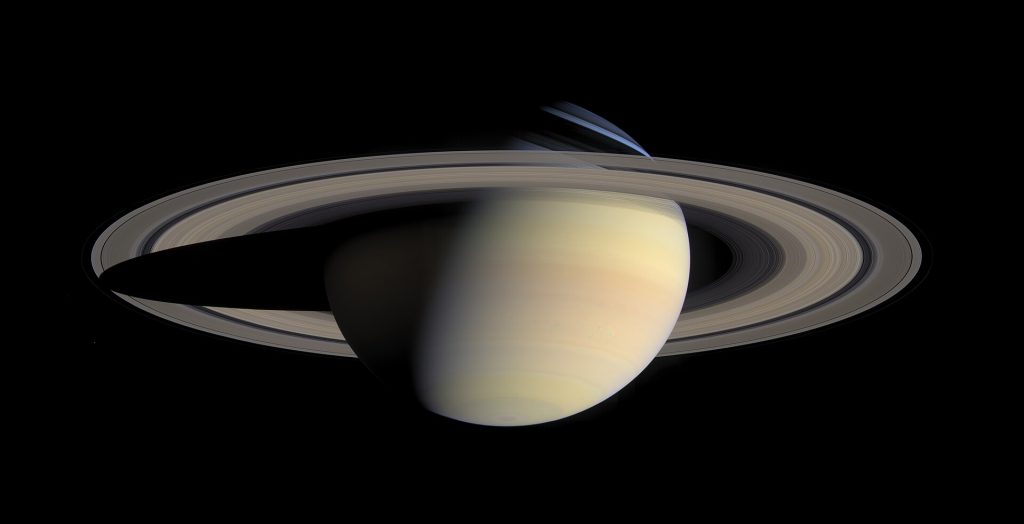
Cassini reached Saturn after the seven-year journey, and began a tour of the planet that lasted 13 years.
-
Watch this moment · 0:18
Titanapproximately
The Huygens probe
Cassini released the Huygens probe, which parachuted through Titan's smog and sent back pictures of riverbeds. Video 57 calls it the first touchdown on an alien moon.
-
Watch this moment · 2:01
Enceladusapproximately
The geysers
Cassini found geysers of salt water shooting from the south pole of Enceladus, whose shell hides an ocean. It flew through the plumes several times and detected promising molecules, but its instruments were not designed to look for life.
-
Watch this moment · 0:20
April 2017approximately
The Grand Finale begins
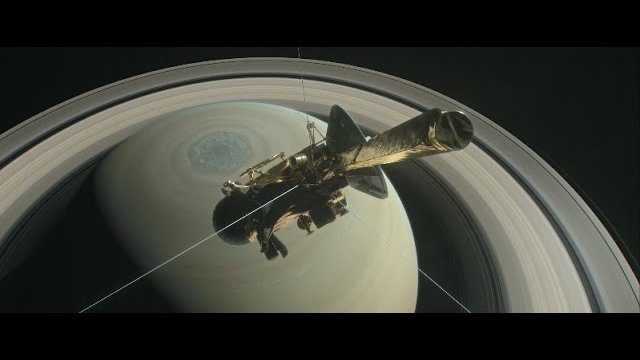
A last pass by Titan pulled Cassini inward for the first of 22 dives between Saturn and its rings, giving a view of the cloud tops and the rings from the inside.
-
Watch this moment · 0:09
The final plunge
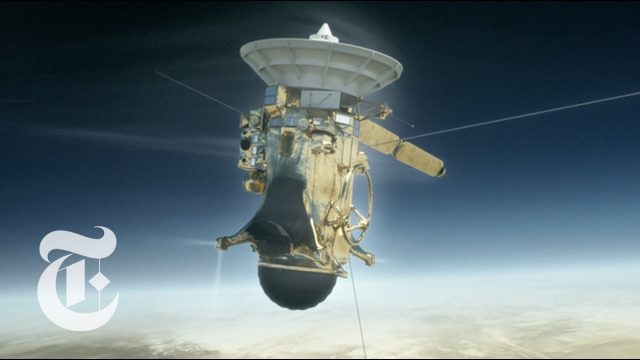
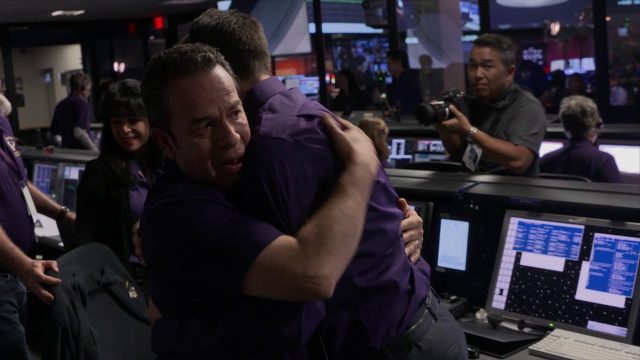
Radio signals kept holding as Cassini descended into Saturn's atmosphere. Controllers at JPL were congratulated on the mission as the signal ended.
Key facts
| Vehicle | Cassini |
|---|---|
| Mission name | Cassini |
| Launch site | Cape Canaveral SLC-40 |
| Crew size | 0 |
| Duration | 20 years |
| Outcome | Success |
Videos about this mission
The videos, in date order
Drag, zoom or press play to watch them on this page.
April – September 2017
Drag to explore dates · Select a video to preview.
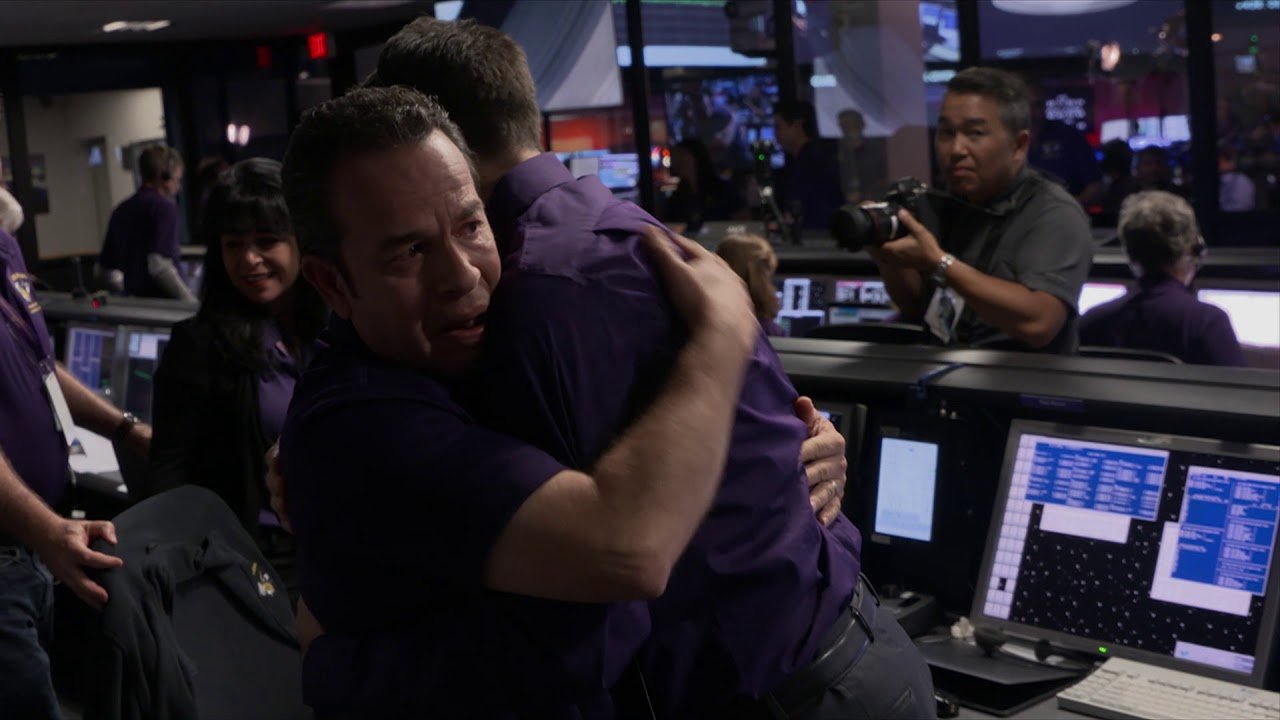
Cassini’s Final Plunge into Saturn: Mission Control Highlights
NASA Jet Propulsion Laboratory
Watch videoDates are when each video was first published on YouTube.
A mission by NASA, ESA and Italy
The Grand Finale
Cassini made 22 dives between Saturn and its innermost ring. These gave it close views of the cloud tops and the rings. It was low on fuel, and video 57 explains the reason for ending the mission: to keep Titan's lakes and Enceladus's ocean free of any microbes carried from Earth, Cassini had to be destroyed.
On the last dive the spacecraft was travelling at over 70,000 miles an hour, as video 57 puts it. It sent data until the end, and the radio signal ended as the atmosphere took the spacecraft.
What came next
Cassini left open the question it could not answer: whether Enceladus's ocean holds life. A future spacecraft will be needed to ask it. Video 71 quotes speakers describing the end of the mission as a beginning, because the data are still being studied.
Questions and answers
Why was Cassini sent into Saturn?
Its fuel was almost gone. NASA ended the mission in Saturn's atmosphere so that the spacecraft could not later crash into Titan or Enceladus and contaminate them.
What was the Grand Finale?
The last phase of the mission: 22 dives between Saturn and its rings, ending with a final plunge into the planet on 15 September 2017.
What did Cassini find at Enceladus?
Geysers of salt water from the south pole, and an ocean under the ice shell. Cassini detected promising molecules, but could not look for life.
How long was Cassini at Saturn?
13 years, from 2004 to 2017.
Sources: The facts and written text on this page come from the 3 videos on this page, by NASA Jet Propulsion Laboratory, The New York Times.