Perseverance
NASA's Perseverance rover launched on an Atlas V on 30 July 2020 and landed in Jezero Crater, the bed of an ancient lake, on 18 February 2021. It carries a drill that collects rock cores in sample tubes, an instrument that makes oxygen from the Martian atmosphere, and the Ingenuity helicopter.
What happened
-
30 July 2020
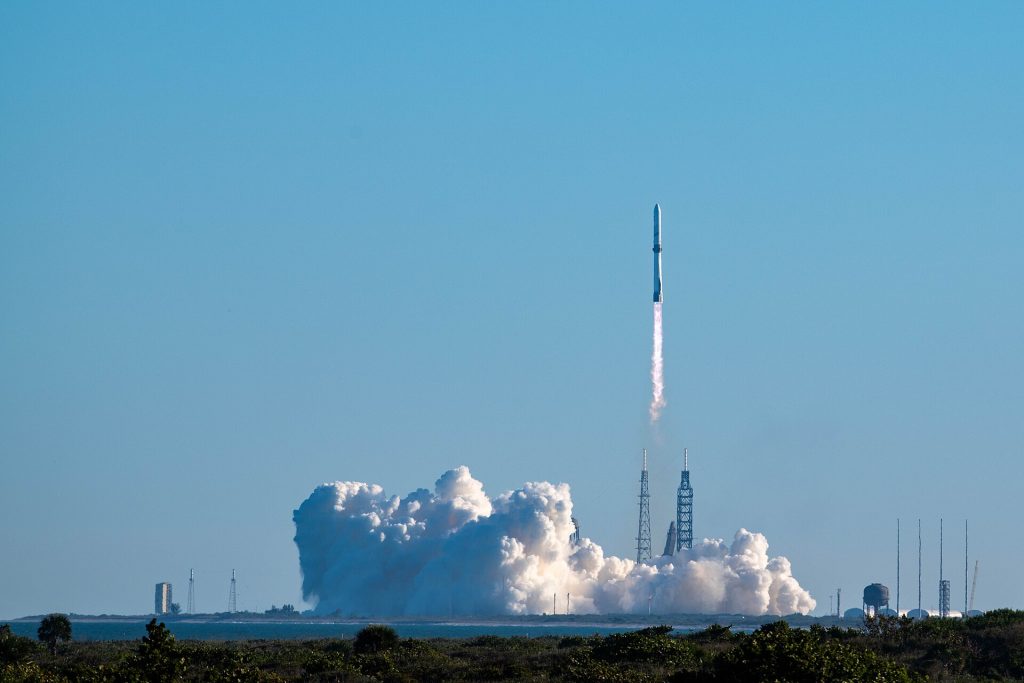
Launch on an Atlas V
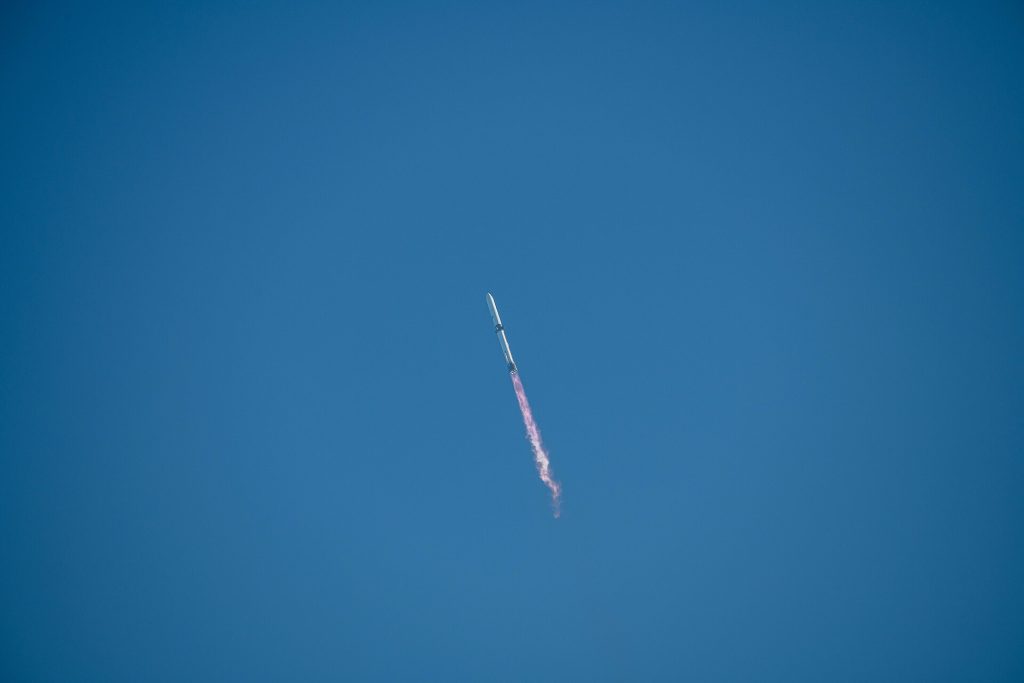
Perseverance lifted off from Florida on an Atlas V made by United Launch Alliance. Video 188 gives the ascent in order: boosters jettisoned, fairing jettisoned, main booster separated, then the Centaur stage and an Earth escape burn that set the course for Mars.
-
Watch this moment · 8:27
Entry, descent and landing
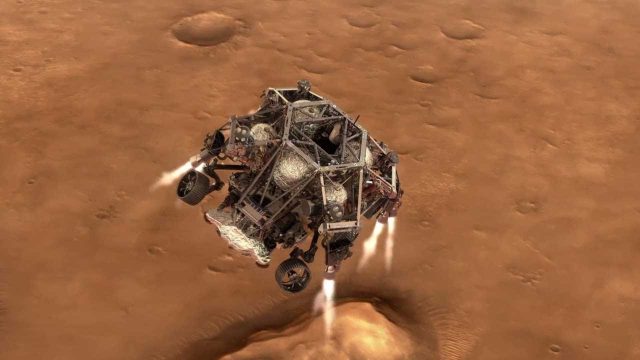
Seven minutes from the top of the atmosphere to the ground. Video 34 walks through it: the heat shield glows, a supersonic parachute slows the craft, the heat shield is popped off, the rover cuts loose from its back shell and rockets fire.
-
Watch this moment · 0:04
About 12 km altitude
Mission control confirms the parachute has deployed, at about 450 metres per second, and then the heat shield separates so the radar and cameras can see the ground.
-
Watch this moment · 1:34
Radar and navigation
The lander vision system produces a valid solution, and terrain relative navigation compares camera pictures with maps of the ground.
-
Watch this moment · 2:00
Back shell separation and divert
The back shell separates, and the vehicle makes a divert manoeuvre to steer clear of hazards.
- Watch this moment · 2:39
-
Watch this moment · 2:54
Touchdown
Touchdown is confirmed, with signals relayed by the Mars Reconnaissance Orbiter.
Key facts
| Mission name | Perseverance |
|---|---|
| Launch site | Cape Canaveral SLC-41 |
| Crew size | 0 |
| Outcome | In progress |
Videos about this mission
The videos, in date order
Drag, zoom or press play to watch them on this page.
December 2020 – February 2021
-
Perseverance: Seven Minutes From Mars Atmosphere to Touchdown
NASA Jet Propulsion Laboratory -
Perseverance: Inside JPL Before the Seven Minutes of Terror
Mark Rober -
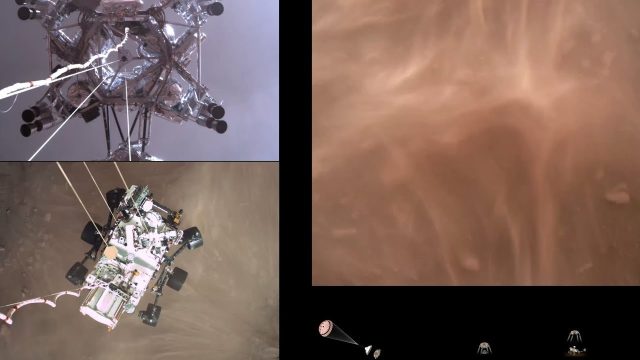
Perseverance Landing on Mars: Descent Call-Outs and Real Footage
NASA -
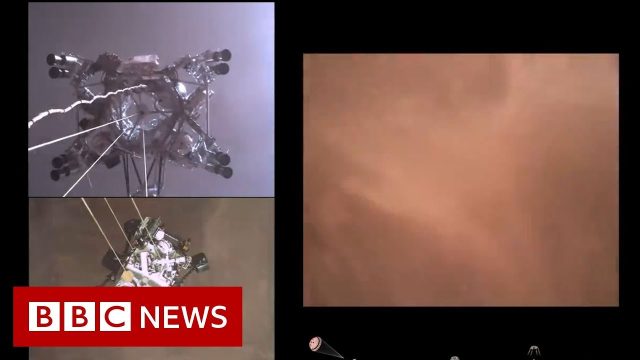
Perseverance’s Mars Landing: Descent Callouts From 12 km Up
BBC News -
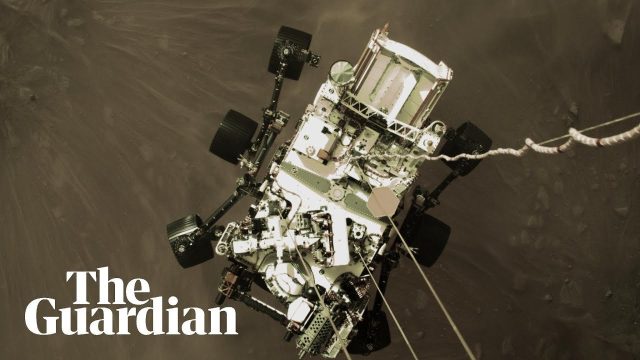
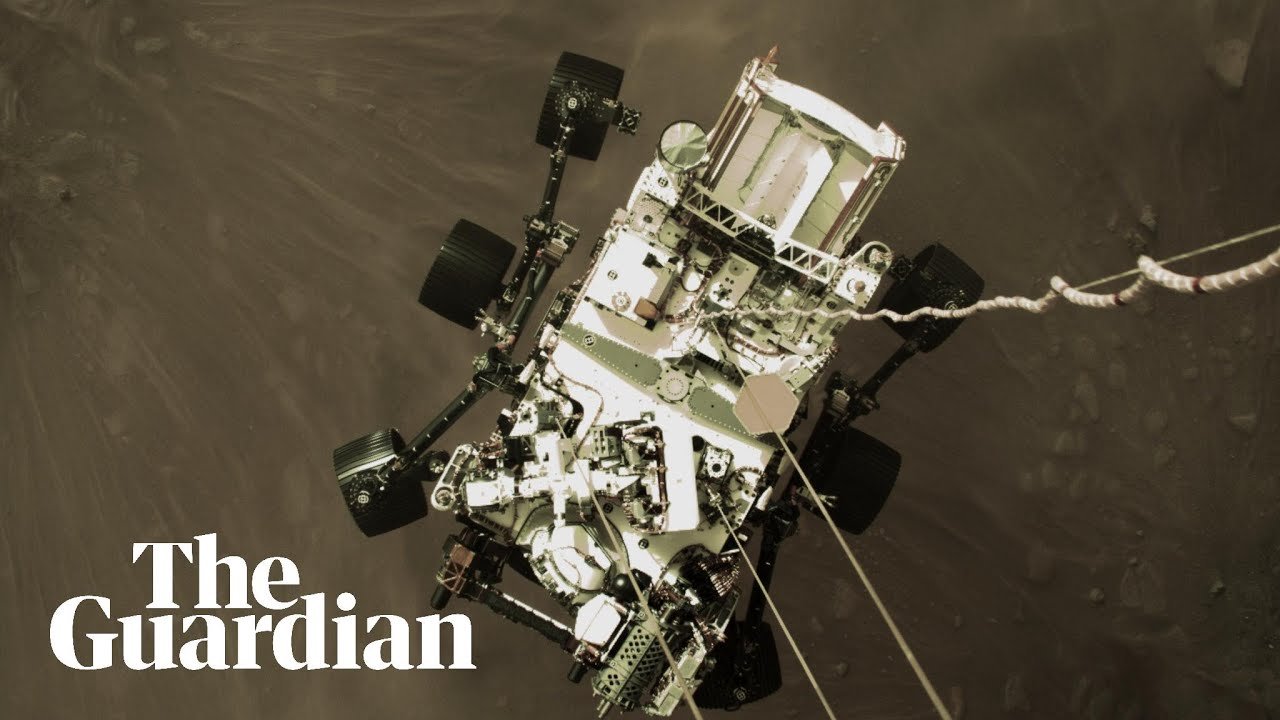
Perseverance Landing Footage: Parachute to Sky Crane Touchdown
Guardian News

Drag to explore dates · Select a video to preview.
Dates are when each video was first published on YouTube.
Why Jezero
In video 34, Mark Rober explains that scientists believe Mars and Earth were similar about 3.5 billion years ago, with liquid water at the surface. Jezero is the bottom of an ancient lake, and the base of a river delta is thought to offer the best chance of finding evidence of past life. The landing target was much tighter than before, which opens up places to land and saves a year or more of driving.
The rover and its parts
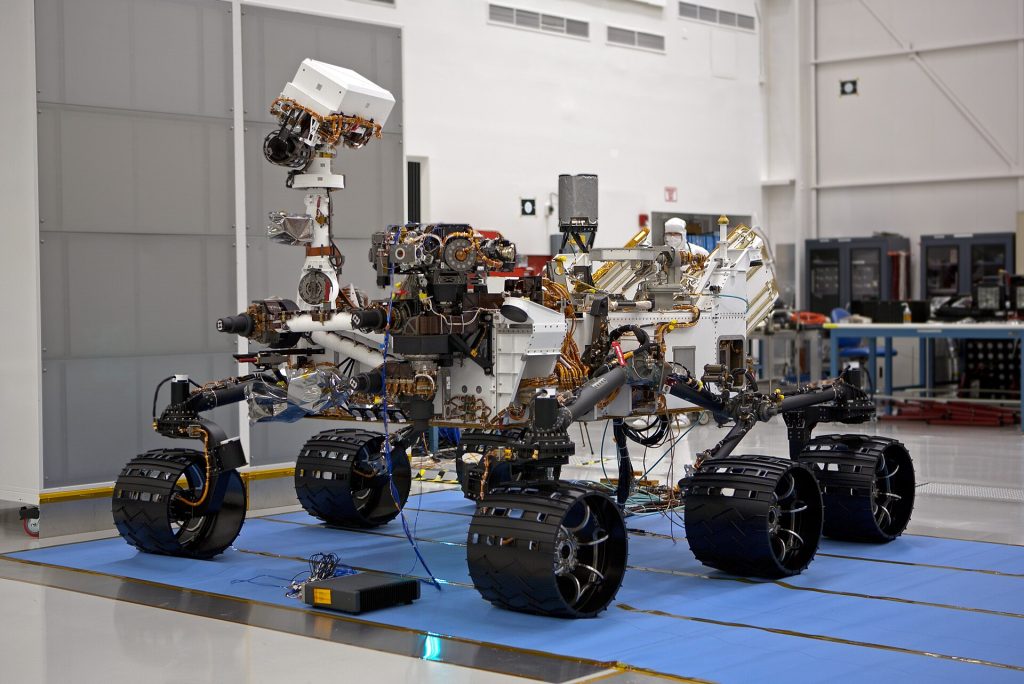
The rover has laser, X-ray and radar instruments, a nuclear power source and, according to video 34, 19 cameras, with more on the descent stage. A hollow drill cores a rock the size of a piece of chalk, and a robot arm inside the body handles the sample tube. The rover has 43 sample tubes for future collection.
Two other pieces of technology rode along:
- Ingenuity, a helicopter stowed on the underbelly, built to make the first powered flight on another planet.
- MOXIE, an instrument that turns carbon dioxide into oxygen, to test the idea for future explorers.
The instruments tour is in video 188. Radio signals take over 11 minutes to reach Earth, so the landing system handled the descent on its own.
What the landing footage shows
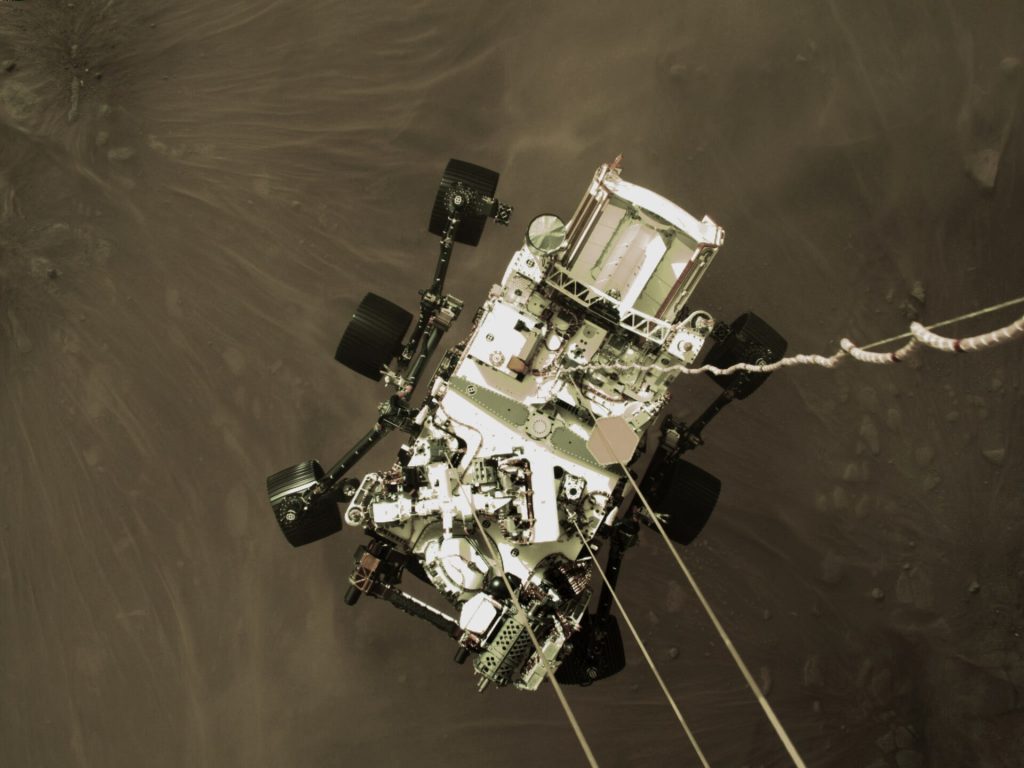
NASA released footage from the descent cameras, as seen in videos 32, 215 and 218. Seven cameras were dedicated to recording the landing, and the team had collected more than 30 gigabytes of data and 23,000 images of the descent. The footage shows the parachute opening, the heat shield falling away, the ground approaching, and the sky crane lowering the rover.
Questions and answers
When did Perseverance land on Mars?
On 18 February 2021, in Jezero Crater.
What is the Ingenuity helicopter?
A small helicopter that rode on Perseverance's underbelly. It was built to be the first powered flight on another planet.
What is MOXIE?
An instrument that turns carbon dioxide from the Martian air into oxygen, to see whether future explorers could make their own.
What is Perseverance looking for?
Signs of past microbial life in the rocks of Jezero Crater, an ancient lake bed, and rock samples to be collected later.
How is its landing different from Curiosity's?
It uses the same sky crane idea, but adds terrain relative navigation, which compares camera pictures with maps to steer clear of hazards.
Sources: The facts and written text on this page come from the 5 videos on this page, by NASA Jet Propulsion Laboratory, Mark Rober, NASA, Guardian News, BBC News.