Curiosity
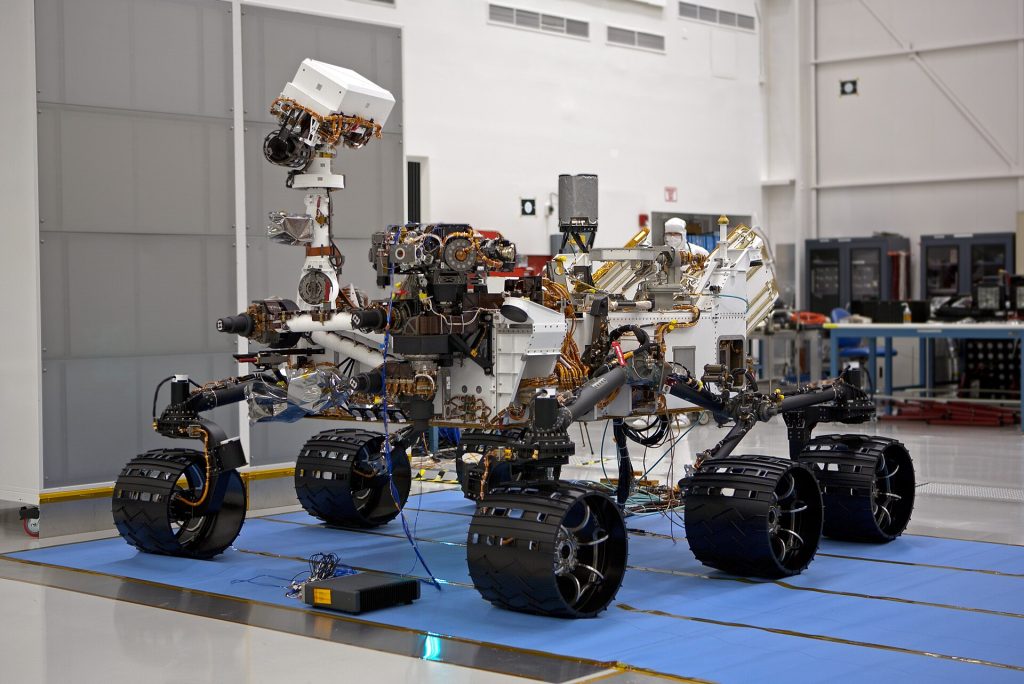
NASA's Curiosity rover, carried by the Mars Science Laboratory spacecraft, landed in Gale Crater on 5 August 2012 (Pacific time) after a flight of about 36 weeks. It was the largest rover sent to Mars at the time, and it touched down by being lowered on cables from a rocket-powered descent stage, a manoeuvre called the sky crane.
What happened
-
26 November 2011
Launch
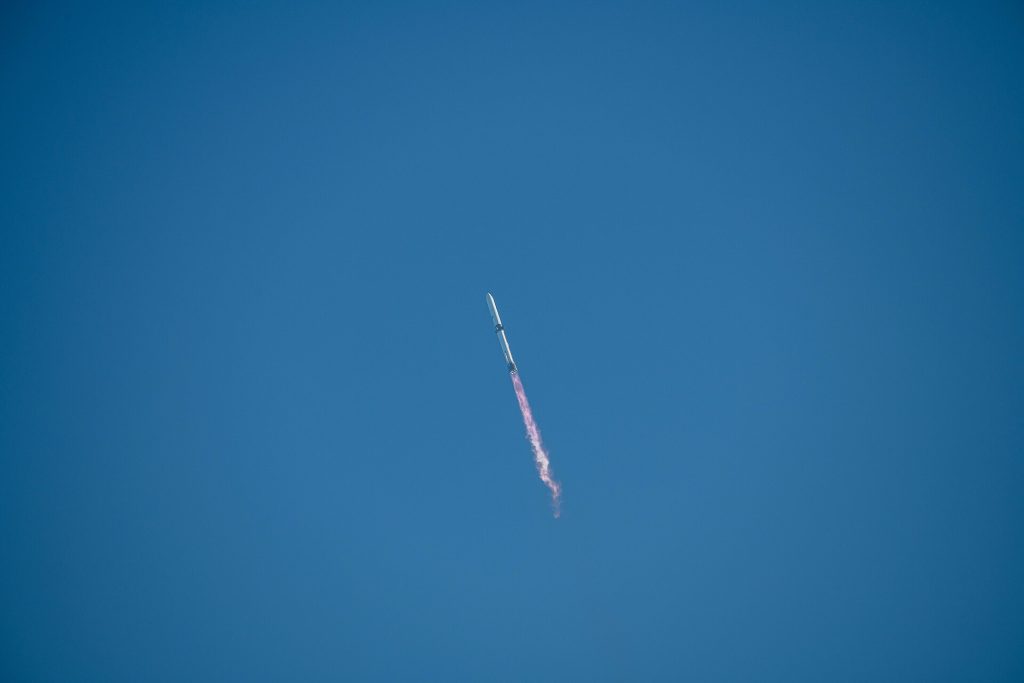
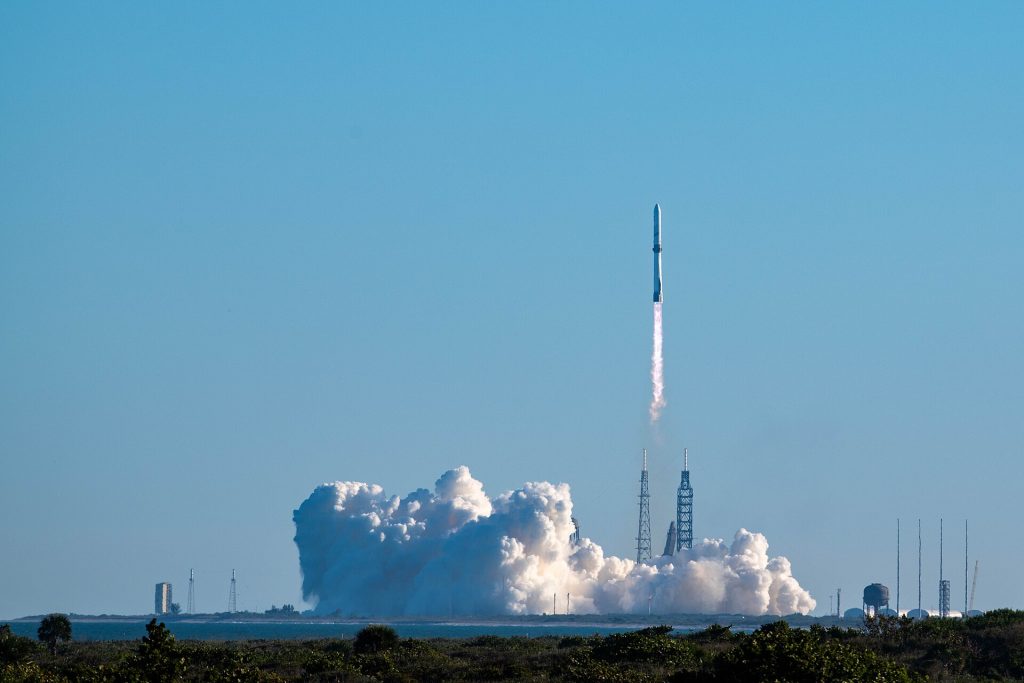
The Mars Science Laboratory launched on an Atlas V rocket from Cape Canaveral, Florida, and cruised for about 36 weeks.
-
Watch this moment · 0:12
Entry
Mission control reports entry interface, the point where the spacecraft meets the Martian atmosphere.
-
Watch this moment · 0:43
Parachute
The parachute deploys at around Mach 1.7. Video 33 opens at this point, with controllers reporting that the thrusters were re-enabled and the spacecraft was decelerating, and then 90 metres per second at 6.5 kilometres altitude.
-
Watch this moment · 0:01
Seconds laterapproximately
Radar finds the ground
The radar acquires the ground at 8 kilometres. Signals from the spacecraft to Earth drop out, which controllers had expected, and telemetry continues through the Mars Odyssey orbiter.
-
Watch this moment · 0:56
Powered flight
After the back shell separates, the call comes: "We are in powered flight." The landing site is described as a nice flat place.
-
Watch this moment · 2:38
The sky crane
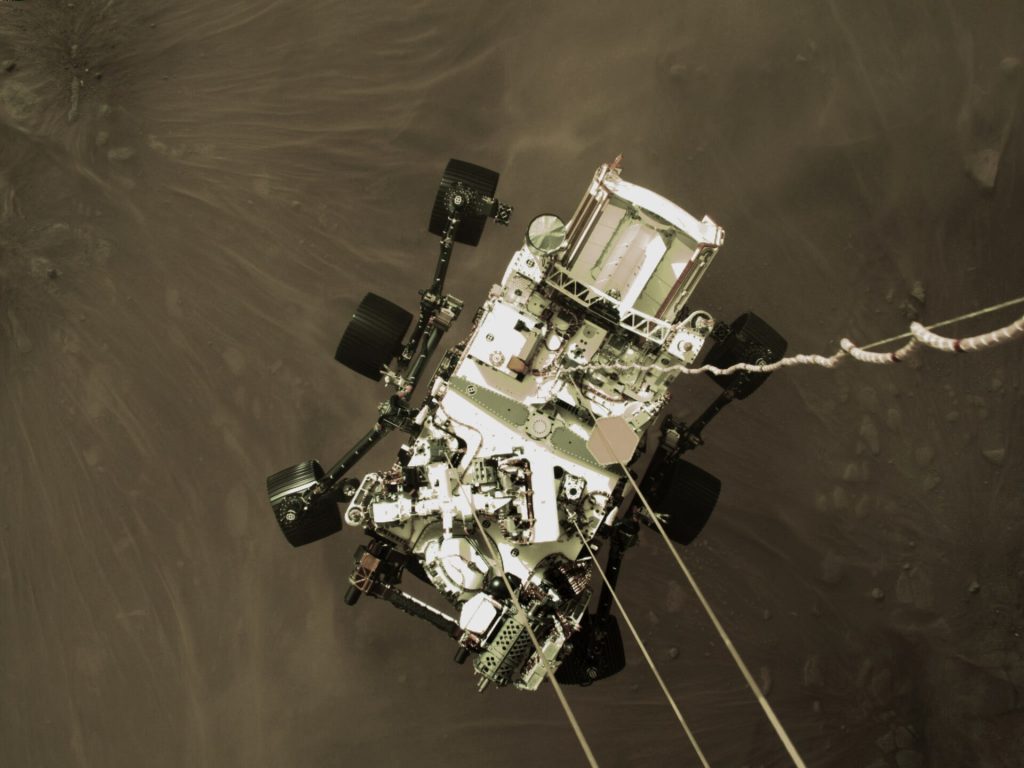
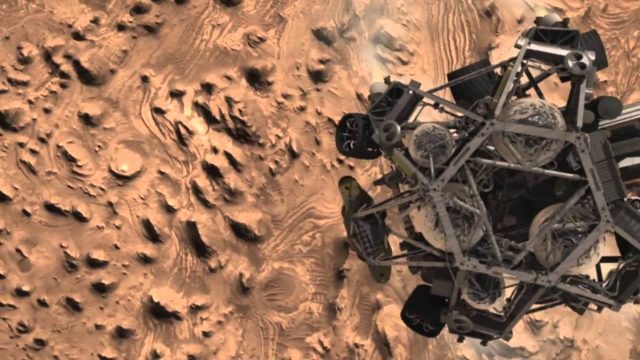
The sky crane starts at 40 metres with a descent of 10 metres per second, the rover is lowered on cables and the bridle is cut.
-
Watch this moment · 3:11
Touchdown
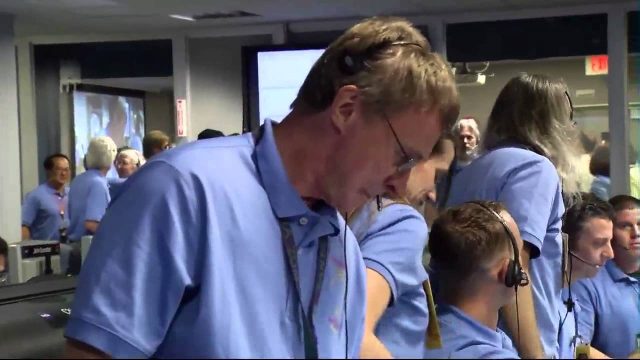
"Touchdown confirmed. We're safe on Mars." The first images arrive as small thumbnails, including a wheel on the surface and the rover's shadow.
Key facts
| Vehicle | Mars Science Laboratory |
|---|---|
| Mission name | Curiosity |
| Launch site | Cape Canaveral SLC-41 |
| Crew size | 0 |
| Outcome | In progress |
Videos about this mission
The videos, in date order
Drag, zoom or press play to watch them on this page.
August 2012 – November 2026
Drag to explore dates · Select a video to preview.
Dates are when each video was first published on YouTube.
Why the sky crane
Curiosity is much heavier than earlier Mars rovers, too heavy to land inside airbags. The mission instead used a descent stage that hovered on rockets and lowered the rover on cables, so the rover's wheels touched the ground first. Video 33 follows the audio of mission control from parachute deployment to touchdown.
The landing site was Gale Crater, beside a mountain, now called Aeolis Mons or Mount Sharp. The orbiter's pass over the site ended as Odyssey set below the peak of the mountain, as the video notes.
The descent in order
1. Parachute deployed, at about Mach 1.7. 2. Heat shield and back shell separated, and the radar took a look at the ground. 3. Rocket-powered flight began. 4. The sky crane lowered the rover on cables, and the cables were cut as it touched down. 5. The descent stage flew away.
What it was sent to find
Curiosity's job was to judge whether Gale Crater had ever had conditions that could support microbial life. NASA's rover found evidence of an ancient lake environment, and has gone on to climb Mount Sharp, studying the layers of rock that formed over time. Its landing system, the sky crane, was used again for Perseverance in 2021.
Questions and answers
When did Curiosity land on Mars?
On 5 August 2012 in Pacific time, which was 6 August in UTC. The landing took place in Gale Crater.
How did Curiosity land?
It was lowered on cables from a hovering rocket-powered descent stage, the sky crane. The cables were cut once the wheels touched down.
How big is Curiosity?
About the size of a car and weighing about a ton, as the descriptions in video 33 say.
How did the pictures get back so fast?
Curiosity sent its first images to the Mars Odyssey orbiter, which relayed them to Earth.
Why is it in Gale Crater?
The crater has a mountain with layers of rock that record Mars' history, and NASA chose it to study whether the planet could once have supported life.
Sources: The facts and written text on this page come from the 3 videos on this page, by NASA, NASA Jet Propulsion Laboratory, Modern Mechanisms.