Curiosity’s Mars Landing: Sky Crane, Touchdown and First Images
The short version
NASA's Curiosity rover, carried by the Mars Science Laboratory spacecraft, landed on Mars after a 36-week flight. The video features mission control audio of the descent, the sky crane phase and the touchdown confirmation, followed by the first images returned via the Odyssey orbiter.
Full written account
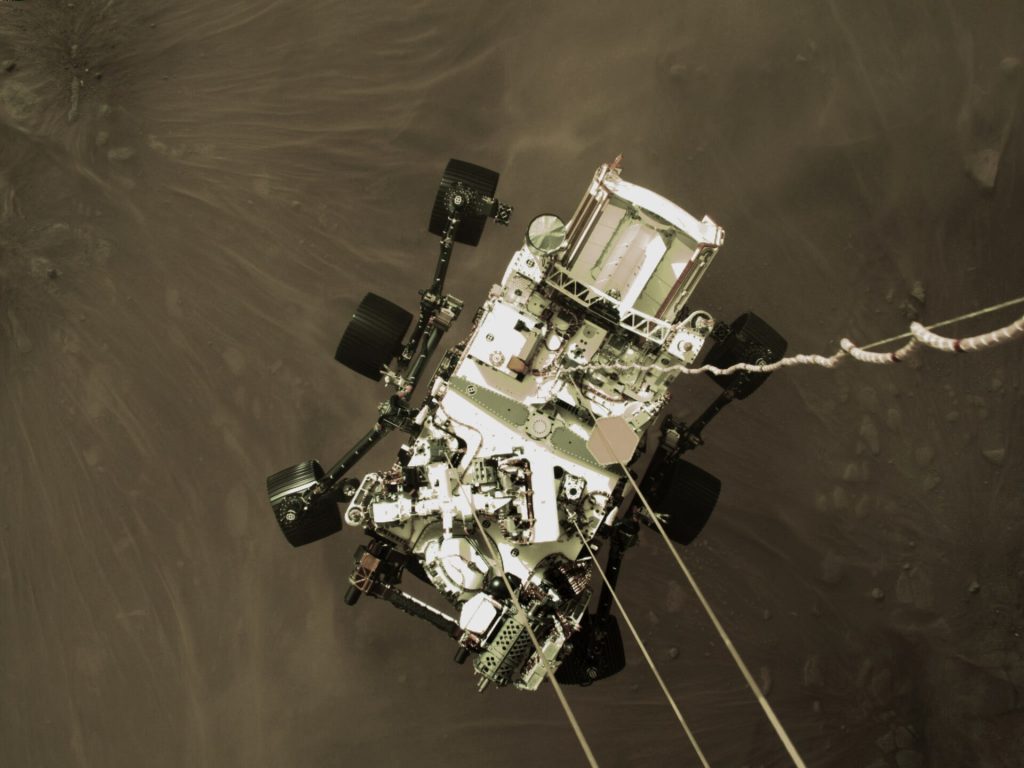
NASA's Curiosity rover, a one-ton, car-size machine hanging from ropes beneath a rocket backpack, touched down on Mars on a Sunday after a 36-week flight. The Mars Science Laboratory (MSL) spacecraft succeeded in every step of what NASA described as the most complex landing ever attempted on Mars, including the final severing of the bridle cords and the flyaway maneuver of the rocket backpack.
The descent
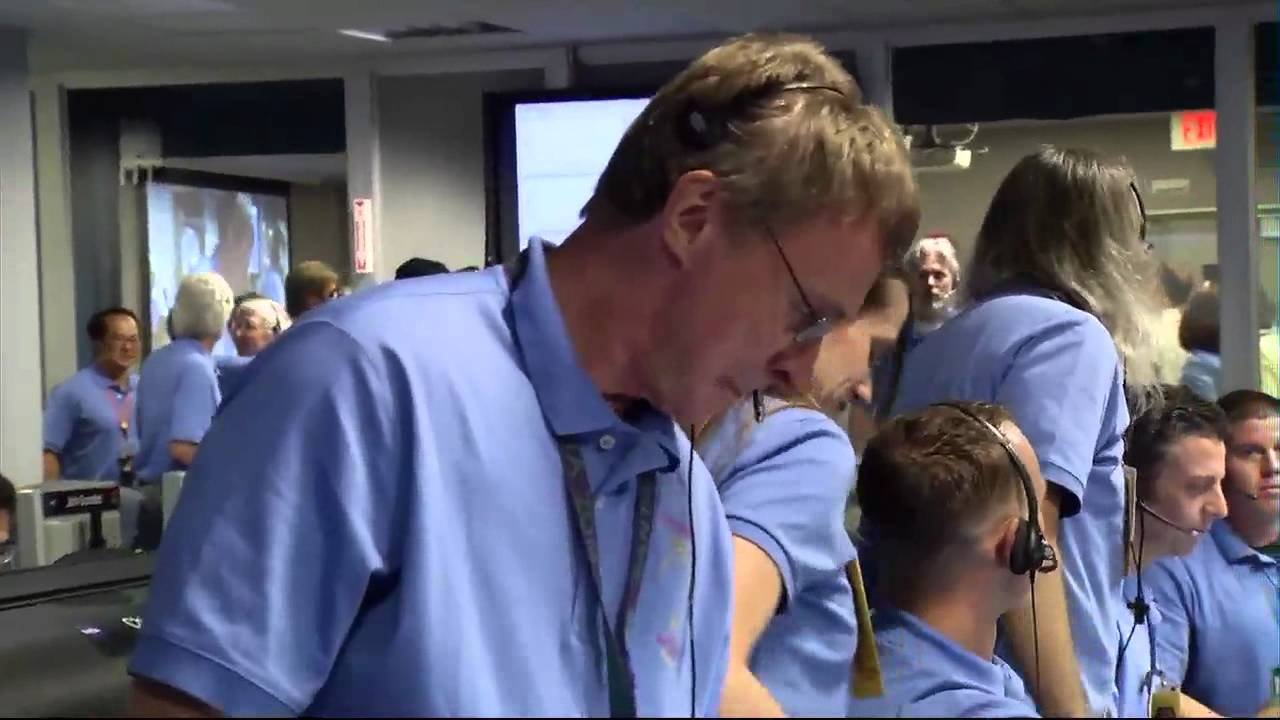
The mission control audio opens with parachute deployment. Controllers report that thrusters have been re-enabled and that the spacecraft is controlling its attitude on the parachute and decelerating. The spacecraft reports 150 m/s and then 90 meters per second at an altitude of 6.5 km. Radar acquires the ground at 8 km altitude.
Tone signals from Earth are lost during the descent. Controllers describe this as expected, and they continue on telemetry relayed through the Odyssey orbiter. At 4 km the spacecraft is down to 86 meters per second.
Powered flight and sky crane
The call "We are in powered flight" comes shortly after back shell separation. At 1 kilometer the speed is about 70 m per second, then 50 meters per second at 500 meters. Controllers note that the landing site is a nice flat place. The sky crane starts at 40 meters altitude, with a descent of 10 meters per second, and the bridle cut is expected shortly. Then comes the call: "Touchdown confirmed. We're safe on Mars."
First images
After touchdown, controllers continue to receive telemetry and Odyssey's signal stays strong. The first images come down as thumbnails. A 64×64 thumbnail from a rear camera shows a shadow, which the commentator ties to the late afternoon sun. The camera has a dust cover, and dust in the air was blown up by the descent engines.
A 256 by 256 image follows, showing dust particles on the window, the horizon in the background and a wheel of the rover on the surface of Mars. Another thumbnail in the other direction shows the shadow of the Curiosity rover. Odyssey is then about to set below the peak of Mount Sharp, ending the data for that pass.
Questions this video answers
What landed on Mars in this video?
The one-ton Curiosity rover touched down on Mars on a Sunday, ending a 36-week flight.
Did the landing go as planned?
The Mars Science Laboratory spacecraft succeeded in every step of the landing, including cutting the bridle cords and the flyaway maneuver of the rocket backpack.
What were the first images?
Curiosity's first images were a 64×64 thumbnail from a rear camera, then a 256 by 256 image showing a wheel on the surface, and another thumbnail showing the rover's shadow.
How did the data reach Earth?
Signals relayed through the Odyssey orbiter, which was about to set below the peak of Mount Sharp as the last data came in.
Explore related missions
Connected by the topic: Mars exploration