Crew-7 Dragon Endurance Rendezvous and Docking with the ISS
The short version
SpaceX and NASA's live coverage follows Crew Dragon Endurance from its approach to the International Space Station through docking on Sunday, August 27, with Crew-7. The webcast explains the rendezvous burns, waypoints and keep-out sphere, introduces the four-person crew, and ends with hard capture and welcome remarks. Launch from LC-39A on a Falcon 9 took place about 30 hours earlier.
Full written account
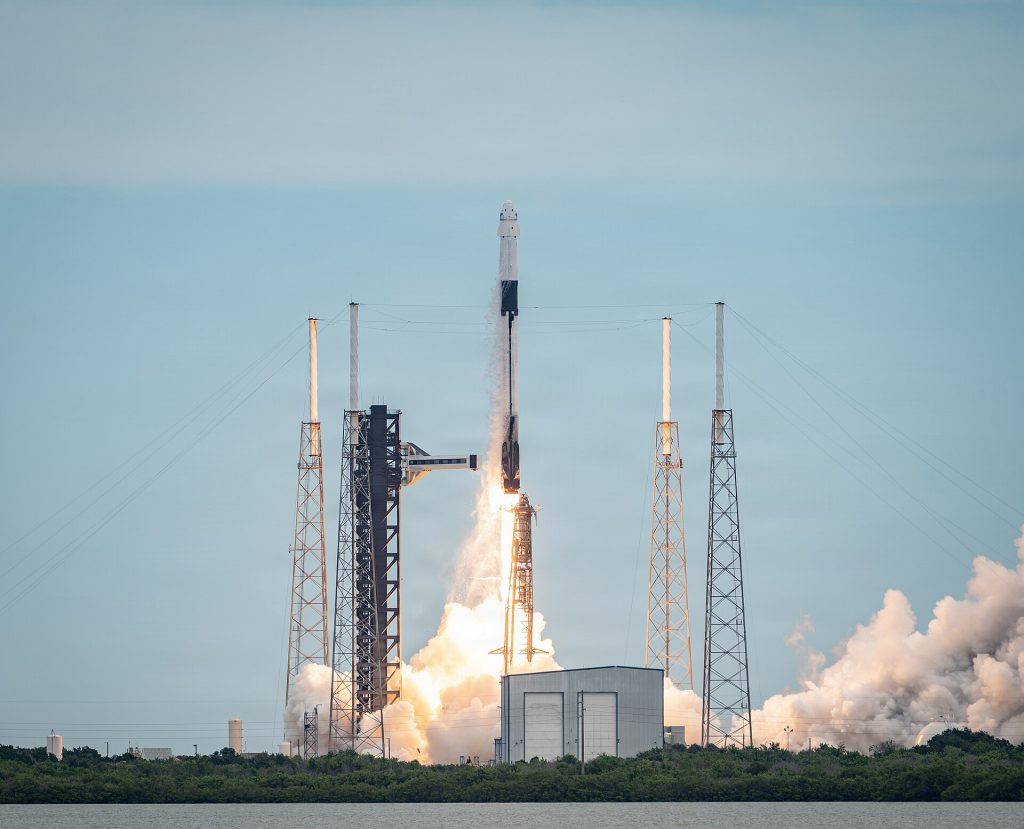
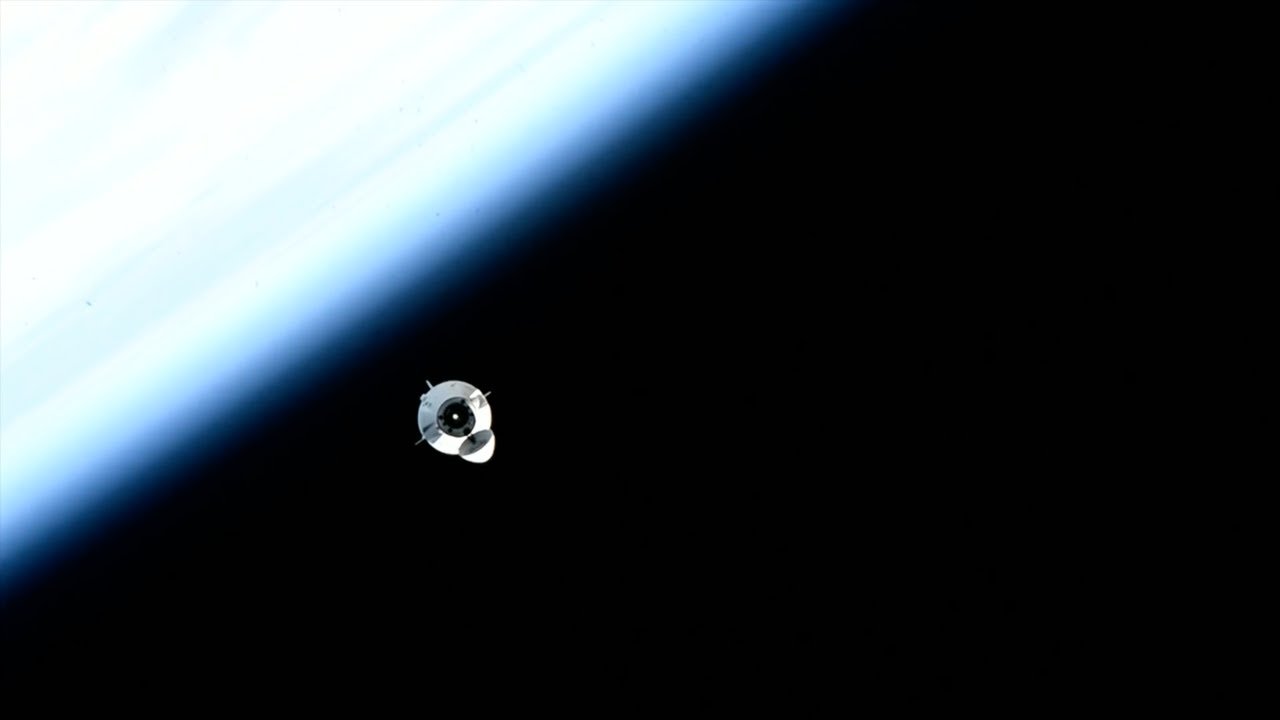
Dragon Endurance docked with the International Space Station on Sunday, August 27, 2023, at 9:16 a.m. ET (6:16 a.m. Pacific), carrying the four members of NASA and SpaceX's Crew-7: commander Jasmine Moghbeli, pilot Andreas Mogensen, mission specialist Satoshi Furukawa and mission specialist Konstantin Borisov. Falcon 9 had lifted off almost 30 hours earlier, at 3:27 a.m. ET (12:27 a.m. Pacific), from Launch Complex 39A at Kennedy Space Center in Florida. The docking brought the number of people aboard the station from seven to 11.
Launch day
The crew began launch-day preparations about four hours before liftoff, with final medical checks and suit-up with the SpaceX team. They walked through the NASA operations and checkout building to say farewell to family and friends; several languages were heard, reflecting a fully international crew. The ride to pad 39A in Teslas took about 20 minutes. About two and a half hours before launch the crew entered the Crew Dragon by crossing the crew access arm and the white room.
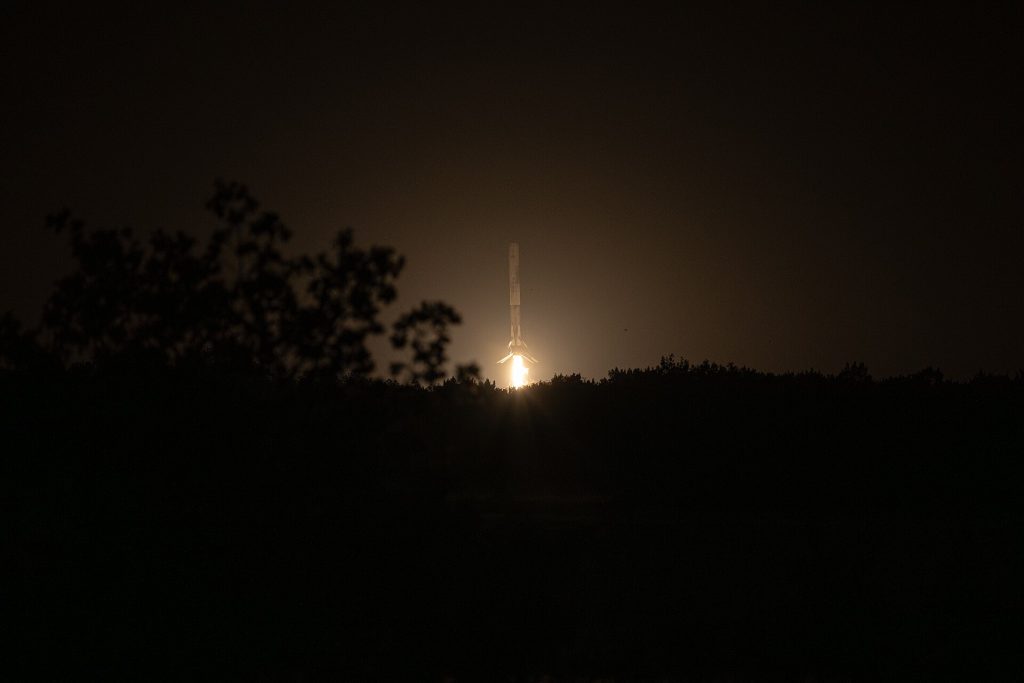
At 3:27 a.m. ET the nine Merlin 1D engines ignited. It was the 11th time humans had ridden Dragon into orbit with Falcon 9. Just after T+9 minutes the first stage landed at Landing Zone 1.
Five burns to the station
About 50 minutes after launch, at 1:15 a.m. Pacific, Dragon performed the phase burn, the first of five major burns needed to raise its orbit and position it for approach. The sequence the broadcast described:
- Boost burn, 10:01 p.m. Pacific: put Dragon in an orbit whose apogee was 10 kilometers lower than the station.
- Close-call coelliptic burn, 10:45 p.m. Pacific: placed Dragon on an orbit roughly coelliptic with the station, about 10 kilometers below it all the way around.
- Transfer burn, 11:54 p.m. Pacific: raised the apogee to 2.5 kilometers below the station.
- Final coelliptic burn, 12:41 a.m. Pacific: a burn of just over 30 seconds that kept Dragon in a constant orbit 2.5 kilometers below the station.
Once on orbit, the crew could leave their seats and suits. They were required to be seated for ascent, for burns during the approach, and for the return to Earth. They put their suits back on shortly before the approach initiation phase and completed suit leak checks, reported as four good checks.
The approach
The approach initiation burn, using the Draco thrusters, began at about 4:29 a.m. Pacific, with Dragon about 2.5 kilometers below the station and about seven kilometers behind it. The burn of roughly 90 seconds swung Dragon up to about 400 meters directly below the station, inside the approach ellipsoid, an imaginary shape measuring four by two by two kilometers. Before entering it, Dragon was on a 24-hour safe trajectory: if it lost thruster control, it would take at least 24 hours to move inside the ellipsoid. The keep-out sphere, with a 200-meter radius, carried a similar requirement of four orbits, or about six hours.
A short mid-course maneuver followed at 4:56 a.m. Pacific. Dragon passed Waypoint 0, 400 meters below the station, at about 5:17 a.m. Pacific, after go/no-go polls from both control teams. It then swung up and out in front of the station to Waypoint 1, about 220 meters away on the docking axis, and was not held there. Waypoint 2 was 20 meters from the docking port, the final checkpoint.
The target was the Node 2 Zenith port, the space-facing port on Harmony, where the Dragon Endeavour from Crew-6 was already docked at the forward port. Dragon flies autonomously and uses lidar to track the station. The crew only monitored, and there was no manual flying. Station astronaut Woody Hoberg watched the approach from the cupola using special software. The docking time shifted by three minutes, to 9:08 a.m. ET, after the burns.
Docking
Before the "crew hands-off point" (CHOP), at about two meters, the crew was not to send commands, and after it retreat and breakout were not permitted. Moghbeli called out distances at five meters. Soft capture was confirmed, and the soft capture ring retracted about four minutes later. Twelve hooks then drove in, six at a time, for hard capture. The station's camera views were limited at times, in part because of Ku-band masking, which keeps the high-power antenna from radiating at the visiting vehicle, and because of tracking-satellite handovers.
Controllers confirmed hard capture, the crew was told they could raise their visors, and the docking sequence was declared complete. Moghbeli said she kept reminding herself it was not just a dream and that they were not stepping out into the training center when they opened the hatch. Mogensen said the real mission began now. After docking, Dragon switched to station power through umbilicals, and Hoberg prepared to pressurize the vestibule between the hatches, which had been exposed to vacuum, a process of roughly an hour.
The crew
Moghbeli, from Baldwin, New York, holds a bachelor's degree in aerospace engineering from MIT and a master's from the Naval Postgraduate School. As an AH-1W Super Cobra pilot and Marine Corps test pilot she flew more than 150 missions and logged 2,000 hours in more than 25 aircraft. Mogensen, born in Copenhagen, flew to the station in 2015 as the first Dane in space and had logged nine days, 20 hours and nine minutes in space. Furukawa, a former medical doctor selected as an astronaut candidate in 1999, flew on Expeditions 28 and 29 from Baikonur in 2011. Borisov was selected as a cosmonaut in 2018 and was on his first spaceflight; he is also a freediving instructor.
With Crew-6 members Stephen Bowen, Woody Hoberg, Sultan Alneyadi and Andrey Fedyaev, plus Frank Rubio, Sergey Prokopyev and Dmitri Petelin, the station held 11 people. Crew-6 was to return after a handover period, with dates to be announced. Rubio was expected home the following month on Soyuz, which would set an American record of 371 days in space. Crew-7's science included an external microorganisms investigation, the ESA Sleep in Orbit study using an EEG, and the CIPHER set of 14 health studies.
Questions this video answers
When did Crew-7 launch?
Falcon 9 lifted off from LC-39A at Kennedy Space Center at 3:27 a.m. ET on Friday, about 30 hours before docking.
When did Dragon dock with the ISS?
Dragon Endurance docked on Sunday, August 27, at 9:16 a.m. ET (6:16 a.m. Pacific).
Who flew on Crew-7?
Commander Jasmin Moghbeli, pilot Andreas Mogensen, and mission specialists Satoshi Furukawa and Konstantin Borisov.
Which port did Dragon dock to?
The node 2 Zenith port, the space-facing port, where Dragon Endeavour was already docked at the forward port.
How many people were on the ISS after docking?
Seven people were aboard before arrival, bringing the total to 11.
Did the crew fly the docking manually?
No. Dragon docked autonomously and the crew monitored; the chop call marks the crew hands-off point.