Falcon 9 Launches 22 Starlink Satellites on a 15th Booster Flight
The short version
SpaceX launched a Falcon 9 carrying 22 Starlink satellites from Space Launch Complex 40 at Cape Canaveral, Florida at 12:01 a.m. Eastern. The first stage, flying for the 15th time, landed on the drone ship A Shortfall of Gravitas, and the launch team called nominal orbit insertion. The host said it was SpaceX's 50th launch of the year and 249th mission overall.
Full written account
A 15th flight for one Falcon 9 booster
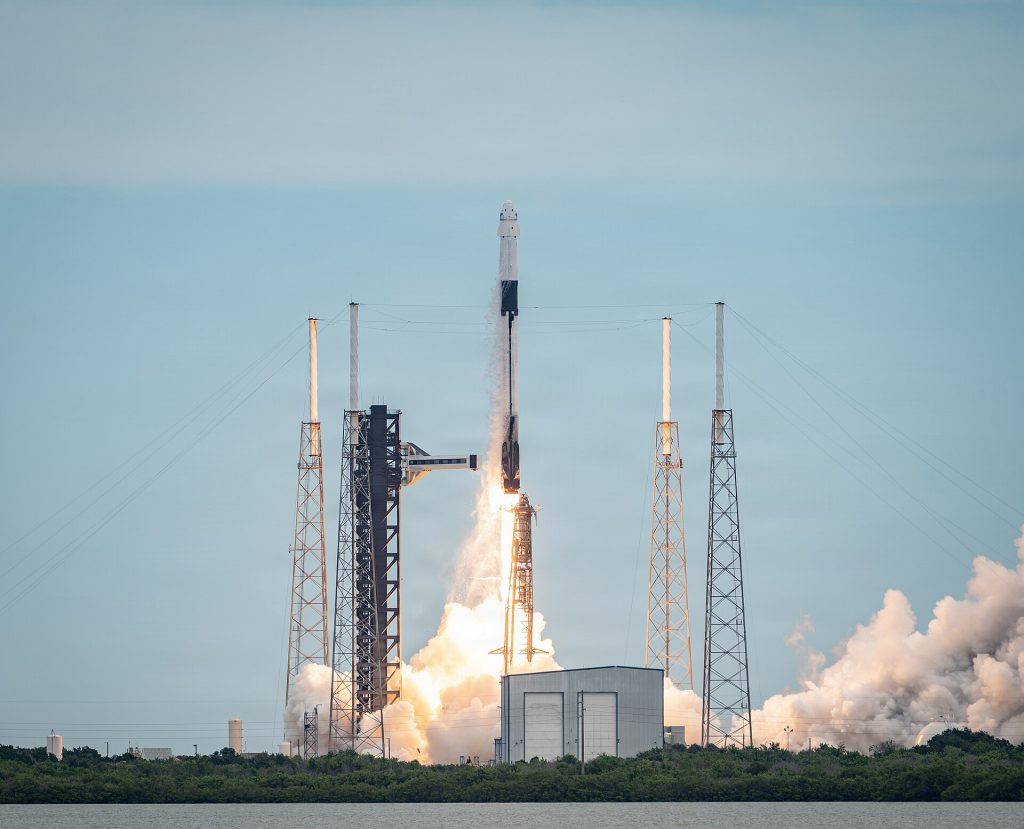
SpaceX launched a Falcon 9 with 22 Starlink satellites from Space Launch Complex 40 at Cape Canaveral, Florida, lifting off at 12:01 a.m. Eastern. The first stage was flying for the 15th time. Host Somi Srivastava, a structures engineer at SpaceX, said the mission was the company's 50th launch of the year and its 249th overall. No one was aboard.
Countdown
At T-minus 4 minutes 45 seconds the range was green. Summer weather had looked tricky, but it had cleared and the team was tracking a 90% chance of go for launch, with no issues reported on the vehicle or spacecraft. The strongback clamp arms below the payload fairing opened and the strongback reclined away from the rocket. The host explained that the strongback, also called the transporter erector, routes electrical connections and propellants to the vehicle.
At T-minus 3 minutes the first stage was fully loaded with RP-1 and liquid oxygen. Once second-stage loading finished, the host said Falcon 9 held 1 million pounds of fuel and liquid oxygen. The white clouds around the vehicle were chilled gas vented from above the liquid oxygen surface to maintain tank pressure.
Ascent and separation
After the launch director gave the final go, the engines reached full power and the vehicle lifted off. It went supersonic and passed max Q, the point of greatest external stress. Main engine cutoff, when all nine Merlin engines on the first stage shut down, was followed by stage separation, ignition of the Merlin vacuum engine on the second stage, and fairing separation. Both fairing halves were flying for the second time, and SpaceX planned to recover them with the vessel Bob.
Booster return
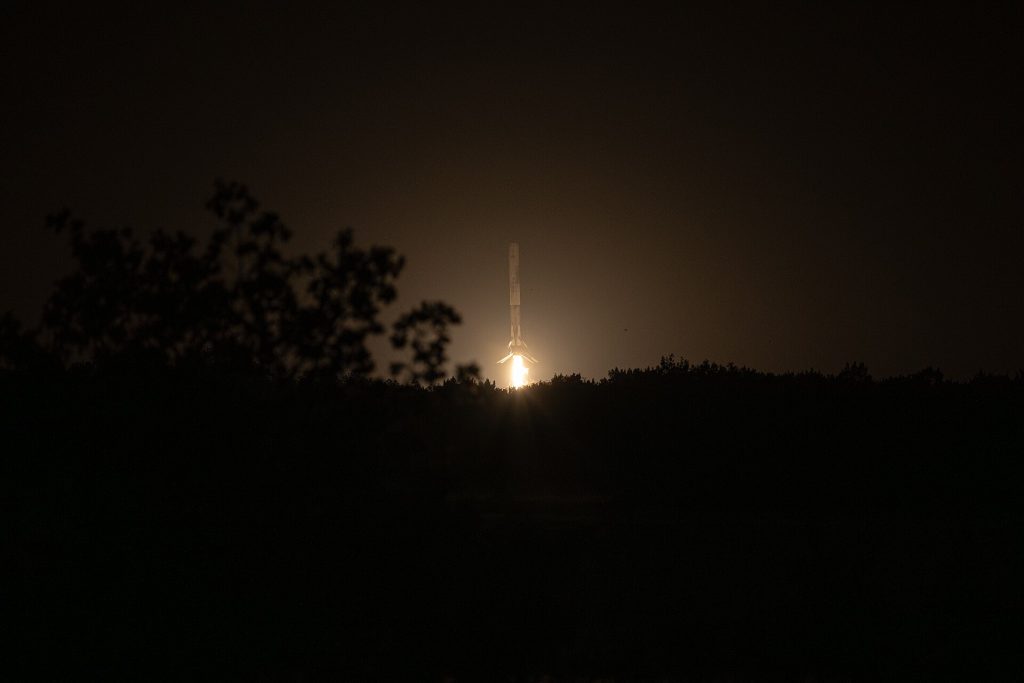
The first stage deployed its grid fins and reignited engines one, five and nine in an entry burn to slow for reentry. It went transonic, performed its landing burn, deployed its landing legs and landed on the drone ship A Shortfall of Gravitas. The host said recovery lets SpaceX refly the most expensive parts of the rocket, which drives down the cost of space access. The landing was SpaceX's 210th overall of an orbital class rocket, counting Falcon 9 and Falcon Heavy.
Orbit
After second engine cutoff, the team called nominal orbit insertion. The host said confirmation of Starlink deployment would be posted on social media. Starlink, designed and manufactured by SpaceX, was described as the world's largest satellite internet constellation, operating in low Earth orbit and live in 62 countries and 78 markets.
Questions this video answers
What was launched?
A Falcon 9 carrying 22 Starlink satellites to low-Earth orbit.
Where did it launch from?
Space Launch Complex 40 at Cape Canaveral Space Force Base in Florida.
Which booster was used and where did it land?
A first stage flying for the 15th time, landing on the drone ship A Shortfall of Gravitas.
Did the fairings get reused?
Both fairing halves were flying for the second time, and SpaceX planned to recover them with the vessel Bob.
What milestones did the host cite?
It was SpaceX's 50th launch of the year and 249th mission overall, and the 210th landing of an orbital class rocket.