Falcon 9 Launches 22 Starlink Satellites on a Fourth Booster Flight
The short version
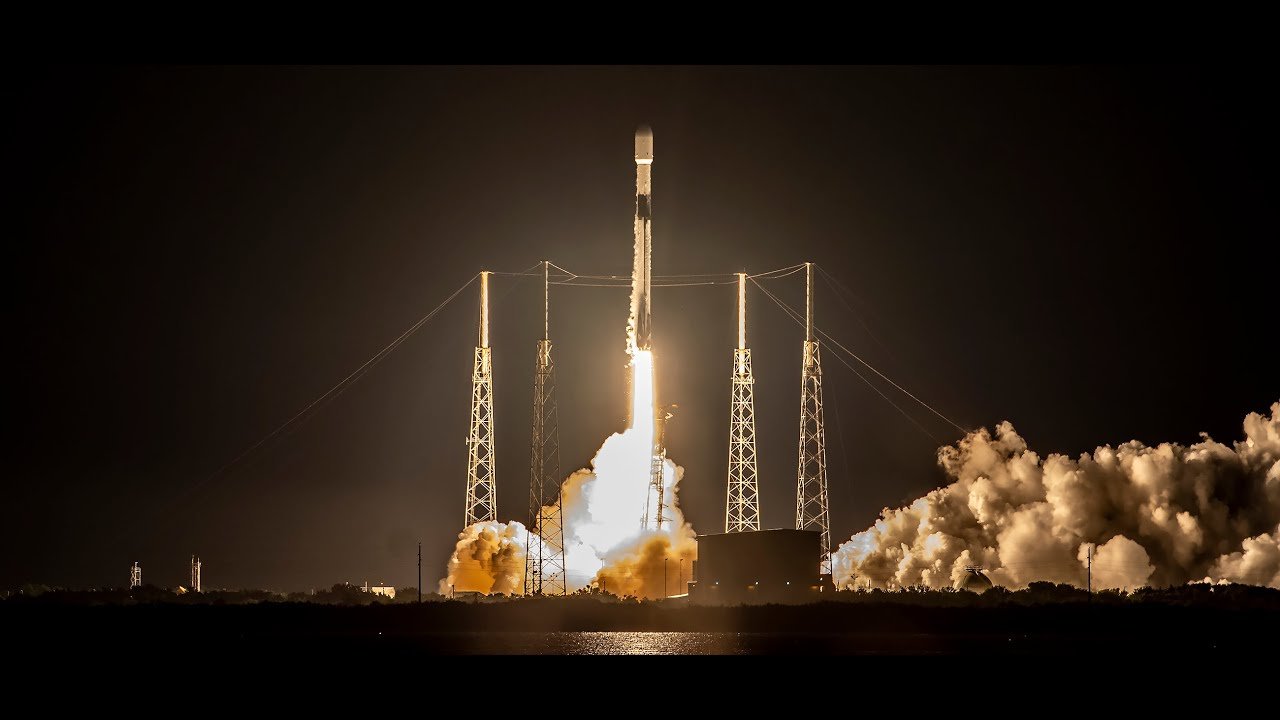
SpaceX launched a Falcon 9 carrying 22 Starlink satellites from Space Launch Complex 40 at Cape Canaveral, Florida. The first stage, flying for the fourth time, landed on the drone ship A Shortfall of Gravitas, and the broadcast confirmed second engine cutoff and nominal orbit insertion. The host said it was SpaceX's 53rd launch of the year and 252nd overall mission.
Full written account
SpaceX launched a Falcon 9 carrying 22 Starlink satellites from Space Launch Complex 40 at Cape Canaveral, Florida, with the first stage flying for the fourth time. The host, Kate Tice, a senior quality systems engineering manager at SpaceX, called it the company's 53rd launch of the year and its 252nd mission overall.
Before liftoff
At about T minus 4 minutes 38 seconds the range was ready and the weather was given a 10 percent chance of violating launch commit criteria. The strongback, the structure that holds the rocket and lifts it to vertical, retracts about two degrees initially and then further as the rocket takes off. The transporter erector is used to integrate the first stage, second stage and payload fairing in the hangar, roll the vehicle to the pad and raise it.
Fuel is rocket-grade kerosene, RP-1, loaded on both stages before the webcast began. Liquid oxygen loading on the first stage finished first, followed by the second stage.
The booster had previously supported Crew-6, SES O3b mPOWER and one earlier Starlink mission. It was scheduled to land on the drone ship A Shortfall of Gravitas. Recovering parts of the rocket allows SpaceX to refly the most expensive parts, which the host said drives down the cost of space access.
Ascent
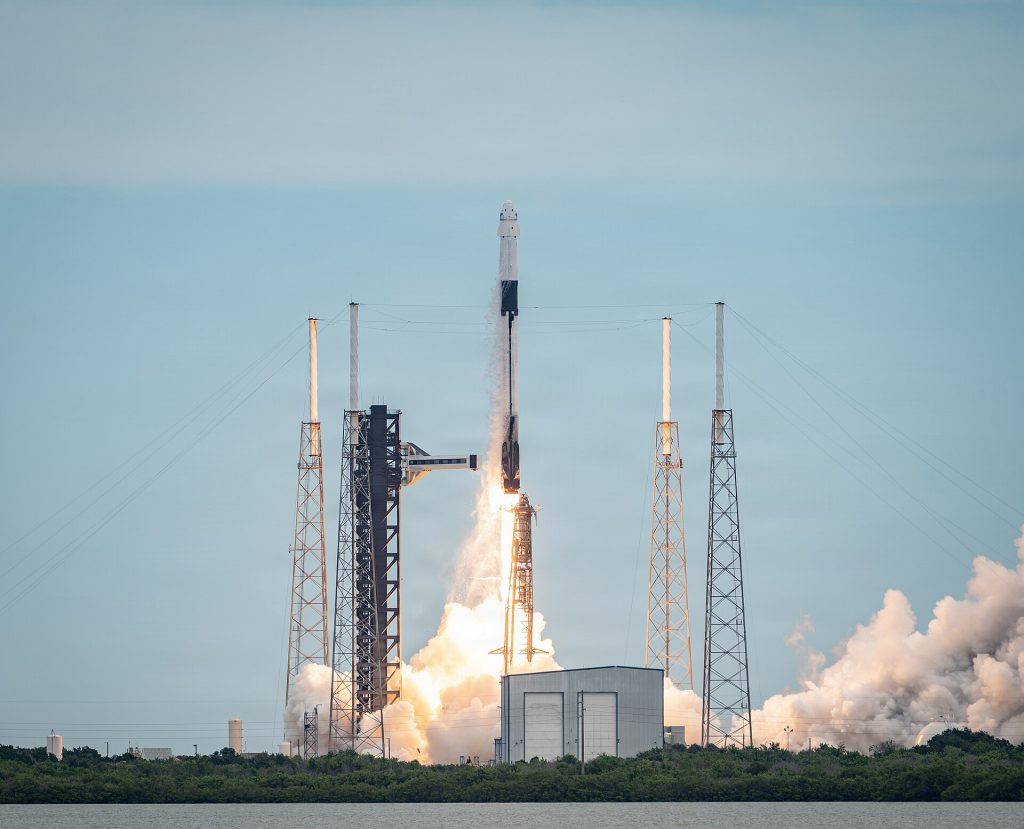
After the launch director's final go, the vehicle lifted off from SLC-40 and pitched downrange. The host gave the liftoff time as 11:41 PM Eastern. The vehicle then went supersonic and passed Max Q, the point of greatest external stress.
Main engine cutoff shut down all nine Merlin 1D engines on the first stage, followed by stage separation and the start of the single Merlin vacuum engine on the second stage. The fairing halves then separated, exposing the stack of Starlink satellites. Both halves were flight-proven, one flying for its eighth time and the other for its tenth, and SpaceX planned to recover them with its recovery vessel.
Booster return
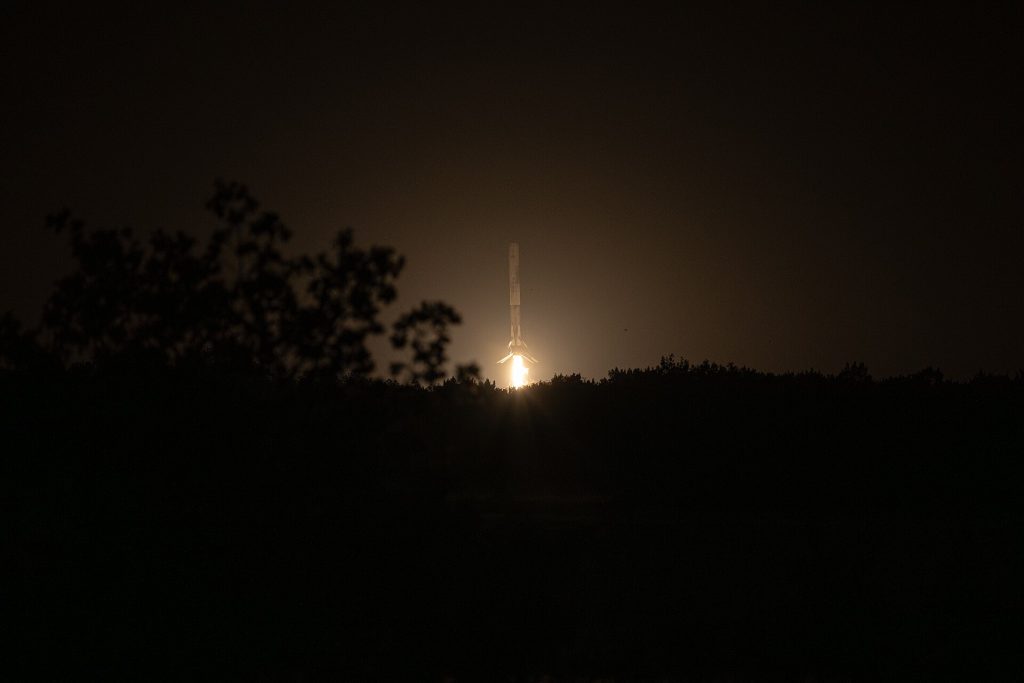
The first stage extended its grid fins, which measure four feet by five feet and are among the largest cast titanium structures in the world. Its entry burn ignited engines 1, 5 and 9 to slow the vehicle for re-entry. The stage went transonic, performed a landing burn and touched down on the drone ship, completing its fourth launch and landing. The host said it was the 214th landing of an orbital-class rocket across Falcon 9 and Falcon Heavy missions.
Orbit
Second engine cutoff was followed by confirmation of nominal orbit insertion. The host described Starlink as the world's largest satellite internet constellation, operating in low Earth orbit to deliver high-speed, low-latency internet to people in remote and rural locations.
Questions this video answers
What did this Falcon 9 launch carry?
22 Starlink satellites bound for low-Earth orbit.
Where did it launch from?
Space Launch Complex 40 at Cape Canaveral Space Force Base in Florida.
Did the booster land?
Yes, the first stage landed on the drone ship A Shortfall of Gravitas, its fourth launch and landing.
Which missions had the booster flown before?
Crew-6, SES O3b mPOWER and one earlier Starlink mission.
How many fairing flights had the halves made?
One half was flying for its eighth time and the other for its tenth.