Falcon 9 Launches 22 Starlink V2 Minis on a Sixth-Flight Booster
The short version
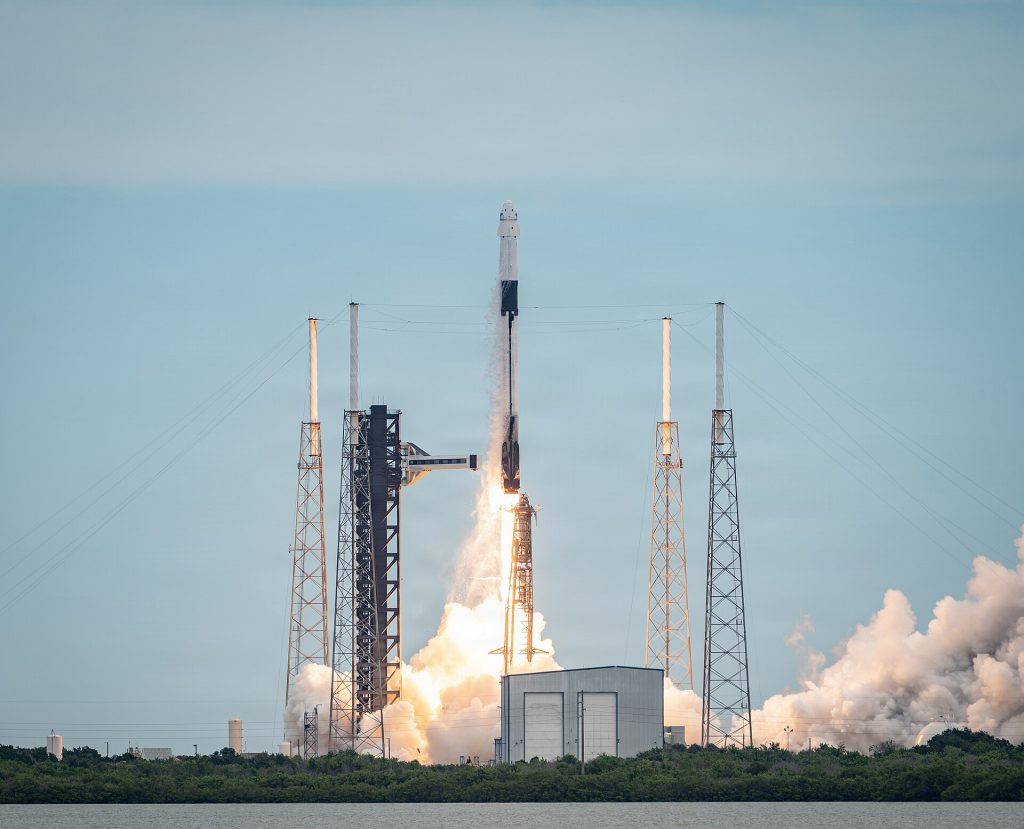
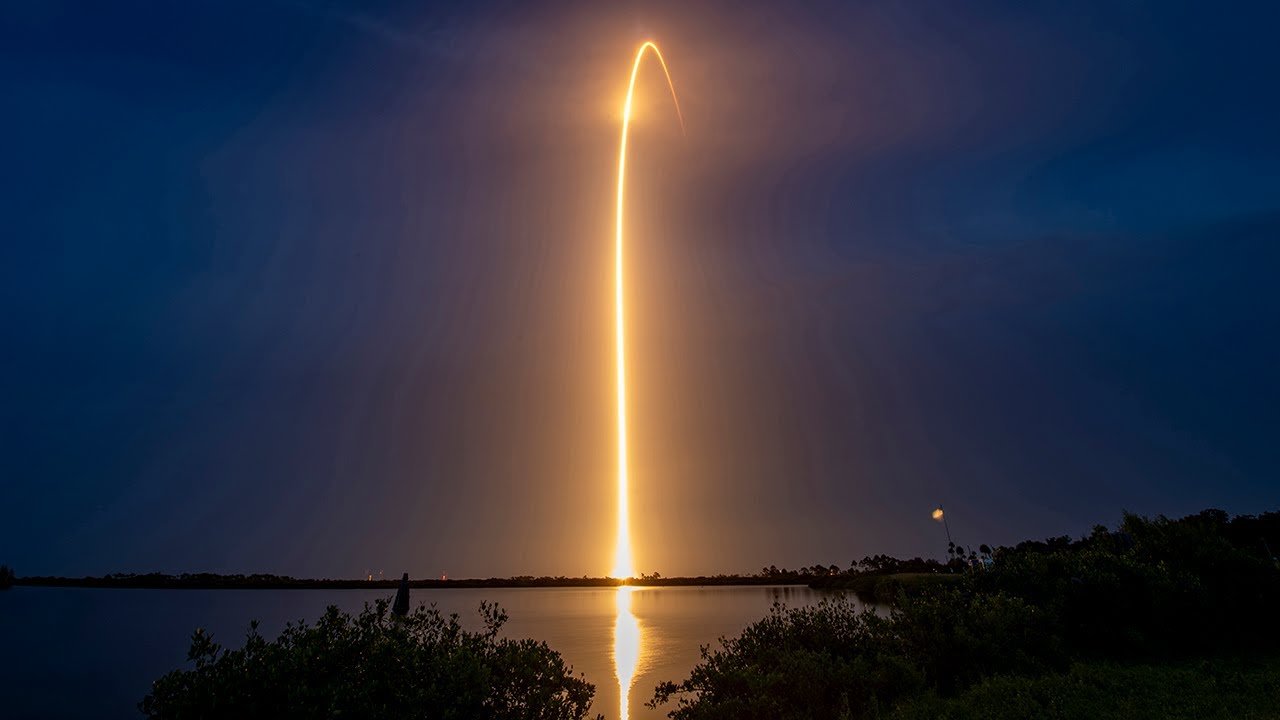
SpaceX's Falcon 9 launched 22 Starlink satellites to low-Earth orbit from Space Launch Complex 40 at Cape Canaveral on July 23 at 8:50 p.m. ET. The first stage booster, flying for the sixth time, landed on a drone ship, and the second stage reached a nominal orbit. The webcast covers the countdown, ascent, stage separation, fairing separation and the booster landing.
Full written account
SpaceX launched 22 Starlink satellites on a Falcon 9 from Space Launch Complex 40 at Cape Canaveral on July 23 at 8:50 p.m. ET. The first stage was flying for the sixth time, and it landed on a drone ship a few minutes after liftoff. It was SpaceX's 49th launch of the year and its 248th mission overall.
A booster on its sixth flight
The booster had previously supported CRS-26, OneWeb Launch 16, Intelsat IS-40e and two Starlink missions. Both fairing halves were flight-proven as well: one was flying for the seventh time and the other for the eighth. SpaceX planned to recover both with its recovery vessel Bob.
The countdown
Propellant loading began at about T-minus 35 minutes. Falcon 9 was fully loaded with 1 million pounds of fuel and liquid oxygen. Weather was a watch item but trending in a positive direction, and teams tracked no issues with the vehicle or the spacecraft.
At about T-minus 4 minutes 46 seconds the strongback retracted. The strongback, also called the TE or transporter erector, is the large structure beside the rocket. It carries propellant and electrical connections to the vehicle while it is on the pad. White clouds around the rocket came from cold gas venting from above the liquid oxygen tank to maintain pressure, which condenses in moist Florida air.
At startup, the flight computers took over the countdown, and the launch director then gave the final go for launch.
Ascent and separation
After liftoff the vehicle passed Max Q, the point of greatest external stress, and went supersonic. Main engine cutoff, when all nine Merlin engines on the first stage shut down, was followed by stage separation and second engine start, which lit the single Merlin vacuum engine. Fairing separation followed.
Landing
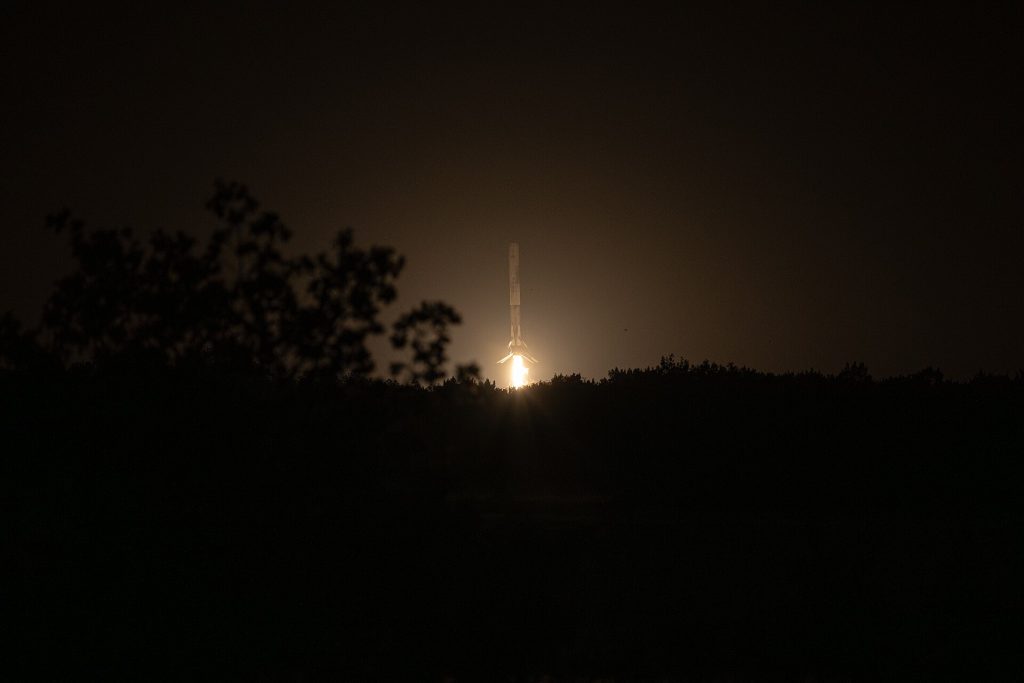
The first stage ignited engines one, five and nine for its entry burn to slow down for re-entry. It then went transonic, performed its landing burn and deployed its landing legs. Landing was confirmed, the sixth launch and landing for this booster and the 209th landing of an orbital-class rocket, counting Falcon 9 and Falcon Heavy missions.
The satellites
The satellites are second-generation Starlink V2 minis. They carry a more advanced phased array antenna and use E-band for backhaul, which gives about four times more capacity per satellite than earlier iterations. The second stage reached a nominal orbit after second engine cutoff, about 145 kilometers above the surface at sunset during the burn, with the stage traveling over 14,000 kilometers per hour at one point.
Questions this video answers
When and where did the Starlink launch take place?
Falcon 9 lifted off on July 23 at 8:50 p.m. ET from Space Launch Complex 40 at Cape Canaveral.
How many satellites were launched?
22 Starlink satellites.
How many times had the booster flown?
This was the booster's sixth launch and landing. It previously supported CRS-26, OneWeb Launch 16, Intelsat IS-40e and two Starlink missions.
What are the V2 mini satellites?
They are second-generation Starlink satellites with a more advanced phased array antenna and E-band for backhaul, giving about four times more capacity per satellite than earlier iterations.
Did the mission succeed?
The booster landing was confirmed and second engine cutoff and a nominal orbit insertion were announced.