Falcon 9 Launches 48 Starlink Satellites on a 12th Booster Flight
The short version
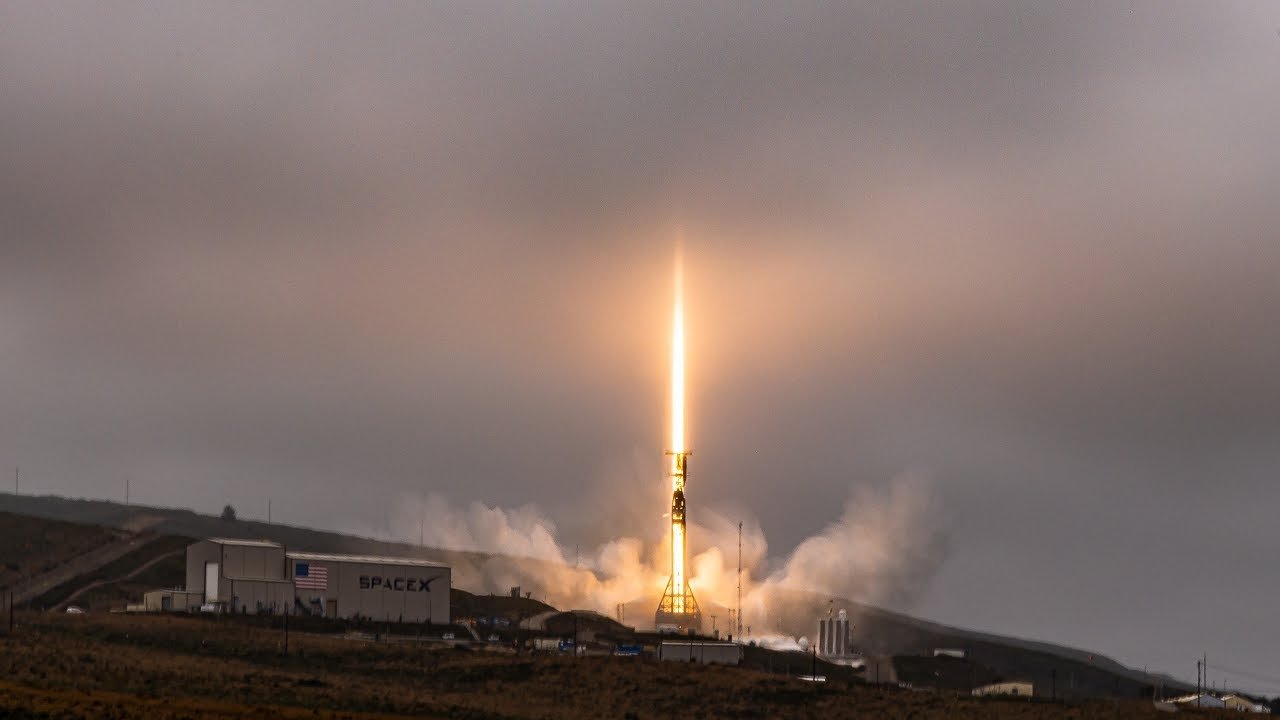
On July 7, 2023 at 12:29 p.m. PT, a Falcon 9 launched 48 Starlink satellites from Space Launch Complex 4 East at Vandenberg Space Force Base in California. The first stage booster, flying for the 12th time, landed on the drone ship Of Course I Still Love You, and the second stage reached a nominal orbit. SpaceX said it was the company's 45th launch of the year and 244th mission overall.
Full written account
On July 7, 2023, at 12:29 p.m. Pacific Time, a Falcon 9 lifted off from Space Launch Complex 4 East at Vandenberg Space Force Base in California carrying 48 Starlink satellites. The first stage booster was flying for the 12th time, and it landed on a drone ship in the Pacific Ocean.
Before liftoff
The mission was SpaceX's 45th launch of the year and its 244th overall. The rocket was partly hidden by a marine layer at the pad. At T-minus 4 minutes 40 seconds the weather was green, the range was ready, and teams were tracking no issues with the vehicle or spacecraft.
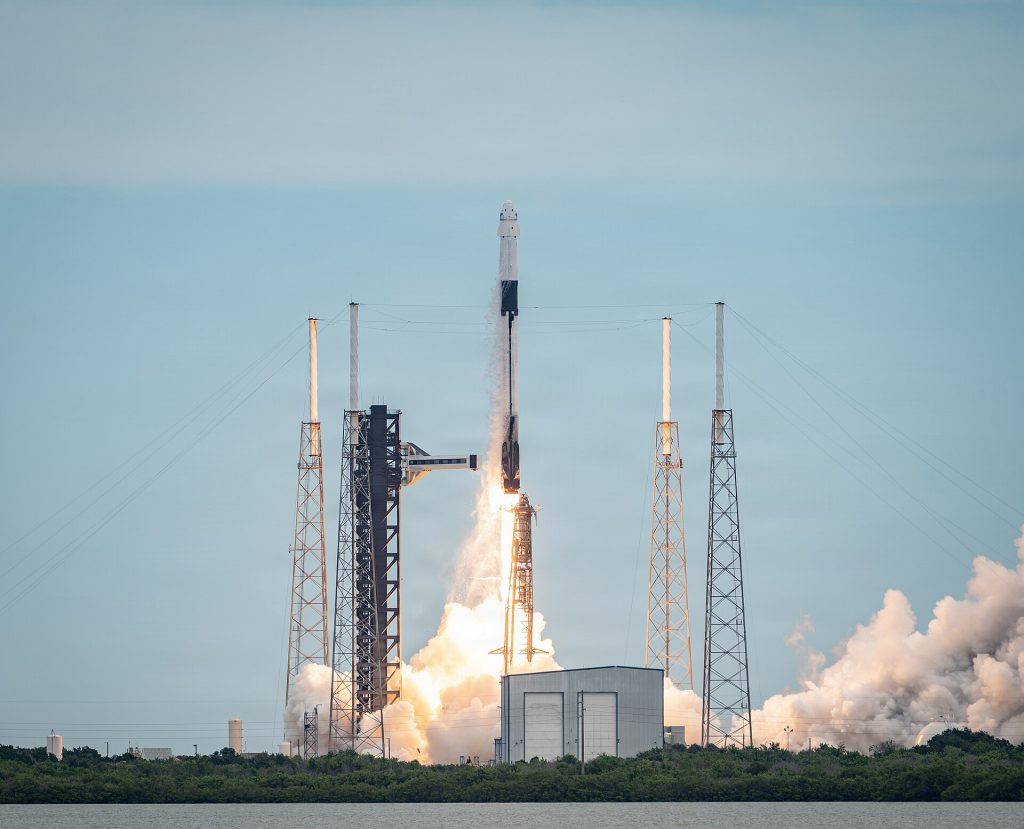
The strongback, the transporter erector next to the rocket used for roll out and for routing propellant and electrical power to the vehicle, retracted ahead of launch. White clouds around the vehicle were chilled gas vented from above the liquid oxygen surface to maintain tank pressure; the moist California air condensed it into clouds and water.
At T-minus 3 minutes the first stage was fully loaded with rocket propellant 1 (RP-1) and liquid oxygen. Once second stage loading finished, Falcon 9 held about 1 million pounds of fuel and liquid oxygen. Startup, when the flight computers take over the countdown, was followed by the launch director's go for launch.
Ascent
- Liftoff came with the engines at full power, and the vehicle pitched down range.
- Falcon 9 went supersonic, then passed Max Q, the point of greatest external stress on the vehicle as it climbs through the atmosphere.
- Main engine cutoff shut down all nine Merlin 1D engines on the first stage, followed by stage separation, ignition of the Merlin vacuum engine on the second stage, and fairing separation.
Both fairing halves were flight-proven, one flying for its fourth time and the other for its seventh. SpaceX planned to try to recover both with its vessel Go Beyond.
Booster return
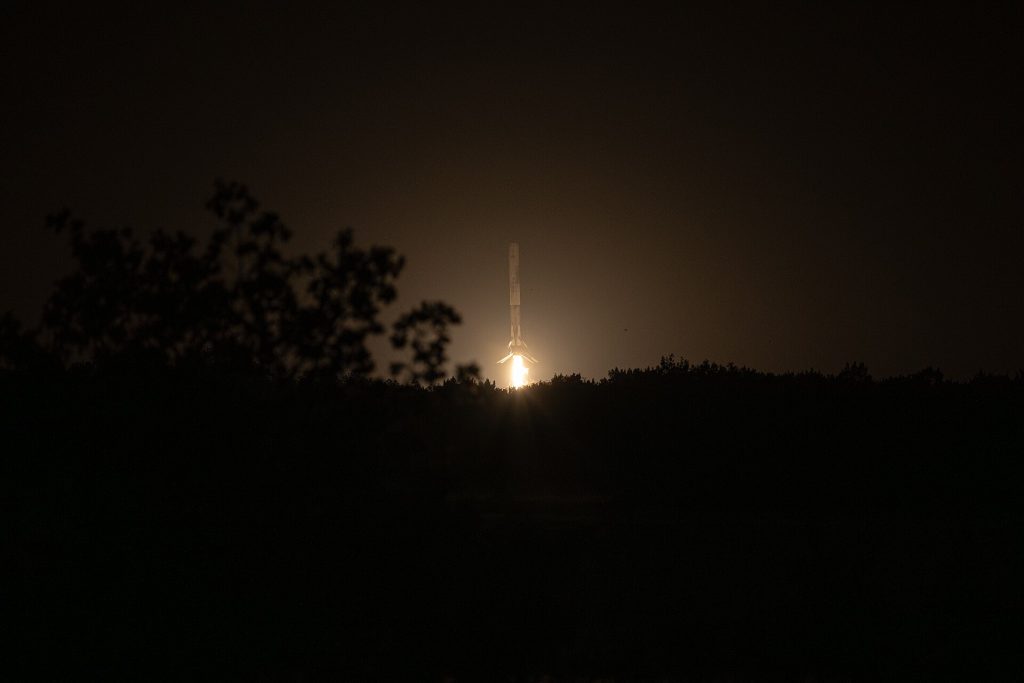
The booster headed back toward the drone ship Of Course I Still Love You. Its entry burn, the first of two, lit three engines to slow it for atmospheric re-entry. The booster then went transonic, and the landing burn, the second and final burn, started ahead of touchdown. The landing was confirmed, and the team at Hawthorne cheered the 12th launch and landing of that stage.
The landing was SpaceX's 205th overall landing of an orbital class rocket, counting Falcon 9 and Falcon Heavy missions. Second engine cutoff and orbital insertion were confirmed as nominal. Confirmation of satellite deployment was to be posted on social media.
Starlink
Starlink is a satellite internet constellation designed and manufactured by SpaceX to provide high-speed, low-latency internet to people living in remote and rural locations around the globe. The booster's earlier missions, listed in the description, were Sentinel-6 Michael Freilich, DART, Transporter-7, Iridium OneWeb, and eight Starlink missions.
Questions this video answers
When and where did the launch take place?
Falcon 9 lifted off on July 7, 2023 at 12:29 p.m. Pacific Time from Space Launch Complex 4 East at Vandenberg Space Force Base in California.
How many satellites were launched?
Falcon 9 carried 48 Starlink satellites.
Was the booster reused?
Yes. It was flying for its 12th time and landed on the drone ship Of Course I Still Love You in the Pacific Ocean.
Were the fairings reused?
Both fairing halves were flight-proven: one flying for its fourth time and the other for its seventh. SpaceX planned to recover them with the vessel Go Beyond.
What is Starlink?
A satellite internet constellation designed and manufactured by SpaceX to provide high-speed, low-latency internet to people in remote and rural locations.