Falcon 9 Launches 56 Starlink Satellites on an 8th Booster Flight
The short version
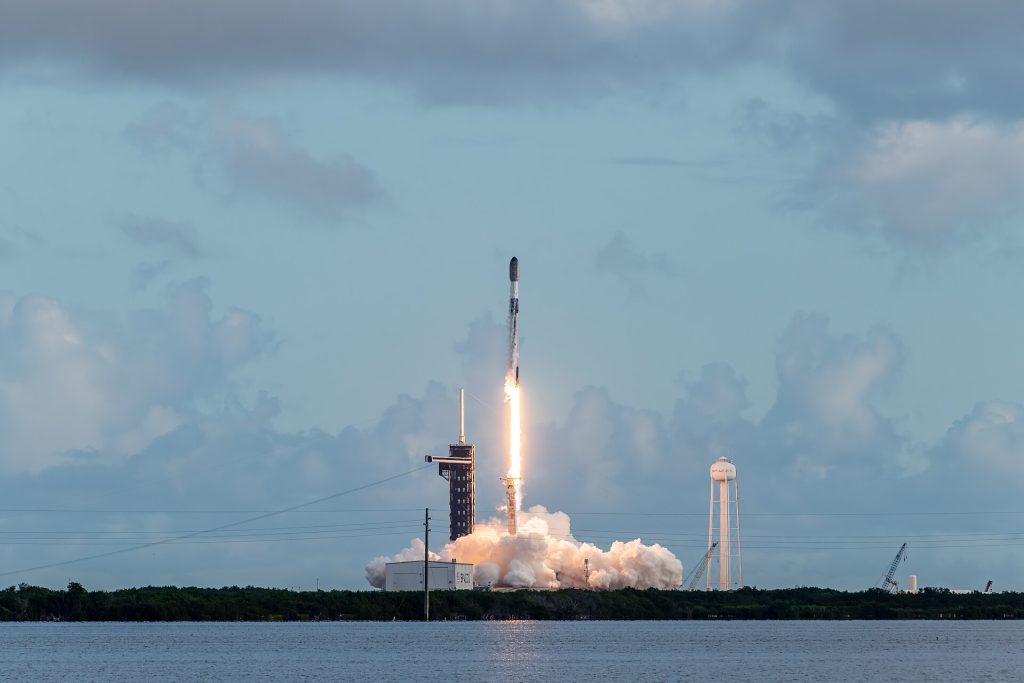
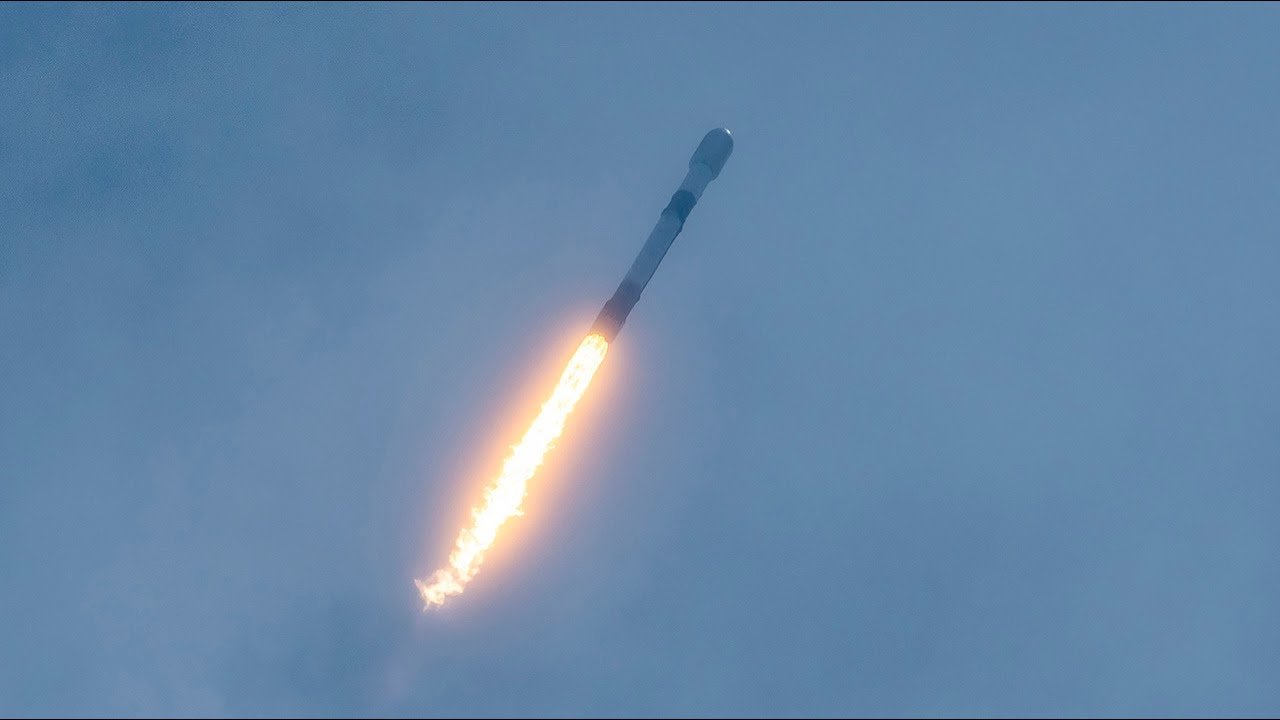
On June 23, 2023 at 11:35 a.m. ET, a Falcon 9 launched 56 Starlink satellites to low-Earth orbit from Space Launch Complex 40 at Cape Canaveral. The booster, flying for the eighth time, landed on the drone ship Just Read the Instructions, and the mission ended with a nominal orbit insertion. SpaceX host Atticus Vedera narrated the broadcast.
Full written account
On June 23, 2023, at 11:35 a.m. Eastern Time, a Falcon 9 lifted off from Space Launch Complex 40 at Cape Canaveral Space Force Station in Florida carrying 56 Starlink satellites bound for low-Earth orbit. It was SpaceX's 43rd launch of the year and the 242nd Falcon 9 mission to date. The first stage was flying for the eighth time.
Countdown
At T minus four minutes 48 seconds, teams reported no issues with the vehicle or spacecraft, and the forecast gave a 75% chance of launching. The strongback, also called the Transporter Erector, which raises the vehicle from horizontal to vertical and routes electrical connections and propellant, retracted away from the rocket.
Falcon 9 uses two propellants: RP-1, a rocket-grade kerosene, and liquid oxygen. With loading complete, the vehicle held 1 million pounds of liquid oxygen and fuel. At T minus one minute the flight computers took over the countdown, and the launch director gave the final go.
A reused booster and fairings
The booster had previously supported CRS-24, Eutelsat HOTBIRD 13F, OneWeb 1, SES-18, SES-19 and four Starlink missions. Both fairing halves were flight-proven: one flew for the seventh time and the other for the tenth, the first tenth flight of a fairing half. SpaceX planned to recover both on its recovery vessel.
Ascent and separation
The vehicle went supersonic and passed Max Q, the point of greatest external stress in the atmosphere. Main engine cutoff shut down all nine Merlin 1D engines, followed by stage separation, startup of the single Merlin vacuum engine on the second stage, and fairing separation.
Booster return
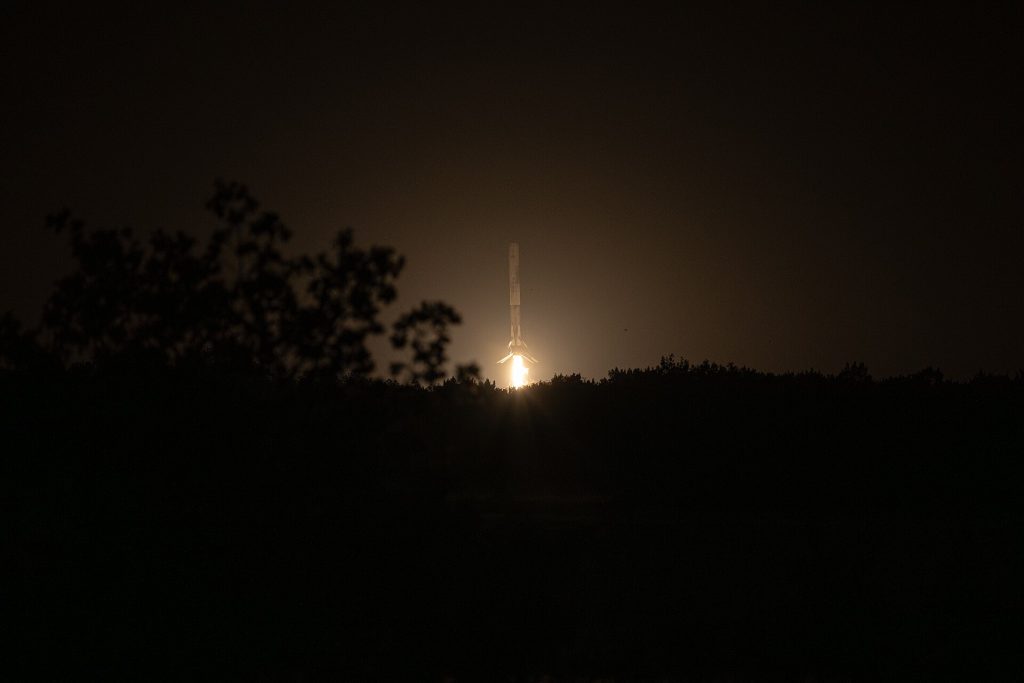
The first stage carried out an entry burn on engines one, five and nine to slow down for atmospheric entry. Titanium grid fins, about four by five feet, are the primary means of controlling the booster during descent. The landing burn lit the center engine, the landing legs deployed, and the booster touched down on the drone ship Just Read the Instructions for its eighth landing.
Orbit
The second-stage engine shut down and the broadcast confirmed a nominal orbit insertion. The Starlink constellation was described as delivering internet to over 1.5 million people. The landing was SpaceX's 203rd of an orbital-class rocket, including Falcon 9 and Falcon Heavy.
Questions this video answers
When and where did the launch take place?
On June 23, 2023 at 11:35 a.m. Eastern Time from Space Launch Complex 40 at Cape Canaveral, Florida.
How many satellites were launched?
56 Starlink satellites, sent to low-Earth orbit.
How many times had the booster flown?
This was its eighth flight; it previously supported CRS-24, Eutelsat HOTBIRD 13F, OneWeb 1, SES-18, SES-19 and Starlink missions.
Where did the booster land?
On the drone ship Just Read the Instructions, marking its eighth landing.
What fairing milestone was noted?
One fairing half flew for the seventh time and the other for the tenth, the first tenth flight of a fairing half.
Explore related missions
Connected by the topic: Falcon 9