Falcon 9 Launches the Last 54 Starlink V1.5 Satellites from SLC-40
The short version
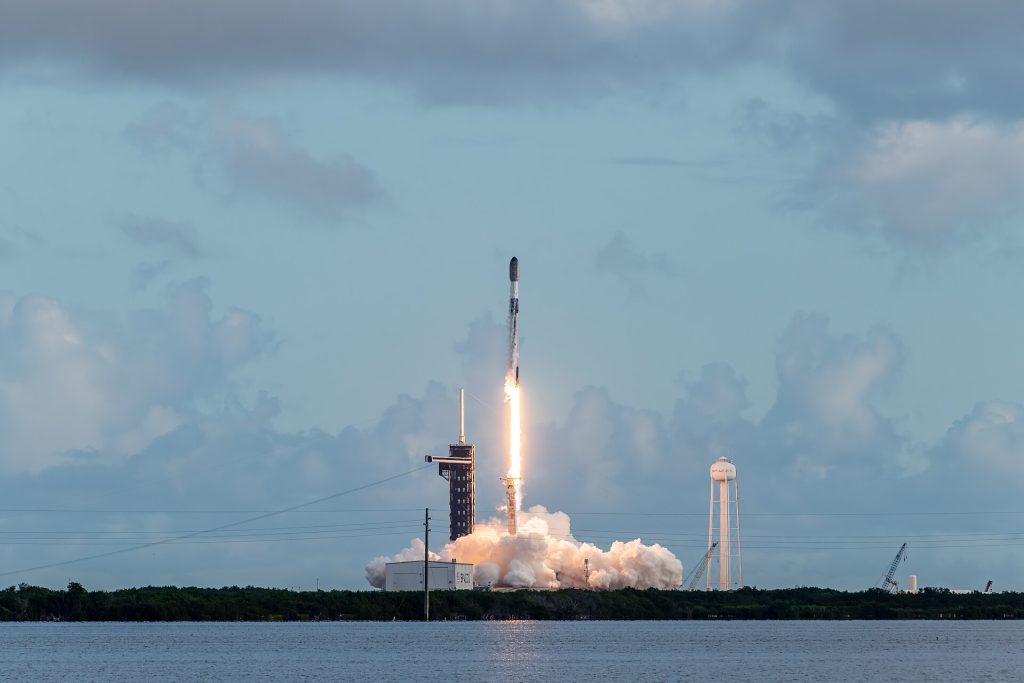
SpaceX launched a Falcon 9 carrying 54 Starlink V1.5 satellites from Space Launch Complex 40 at 11:50 p.m. ET. The booster, flying for the 16th time, landed on the drone ship A Shortfall of Gravitas, and the webcast reported nominal orbit insertion. The host said it was the last launch of V1.5 Starlink satellites.
Full written account
SpaceX launched 54 Starlink V1.5 satellites on a Falcon 9 from Space Launch Complex 40 at Cape Canaveral Space Force Station at 11:50 p.m. Eastern time, on a mission the host described as the final launch of V1.5 Starlink satellites. It was SpaceX's 47th launch of the year and its 246th mission to date.
An abort, then a clean count
The attempt followed an abort called at around the T minus 40-second mark on the previous try on Thursday night, due to elevated O2 (oxygen) levels on one of the first stage engines. After inspection and checkouts, plus a successful static fire the night before, the host said all systems looked good for the 11:50 p.m. launch time. The description listed a backup opportunity on Sunday, July 16, but it was not needed.
Why the V1.5 satellites matter
The host said V1.5 satellites enabled global coverage for Starlink and make up about 67% of the current constellation. They also introduced laser interlinks, which let satellites over the ocean reach ground stations through a laser relay between satellites. Some laser beams have traveled as far as 2,700 km to other satellites. The constellation was described as serving over 1.5 million people, with Starlink recently live in Guatemala and Cyprus.
The countdown and ascent
Before launch the strongback, also called the transporter erector, retracted from the rocket. Falcon 9 burns RP-1, a rocket-grade kerosene, with liquid oxygen. Stage one and stage two loading completed, the rocket entered startup as flight computers took over, and the launch director gave the final go.
After liftoff came supersonic flight and Max Q. Main engine cutoff of all nine Merlin engines was followed by stage separation, second engine start and fairing separation. Both fairing halves were flight proven, one flying for the ninth time and the other for its tenth, and SpaceX planned to recover them with the vessel Doug.
Landing and orbit
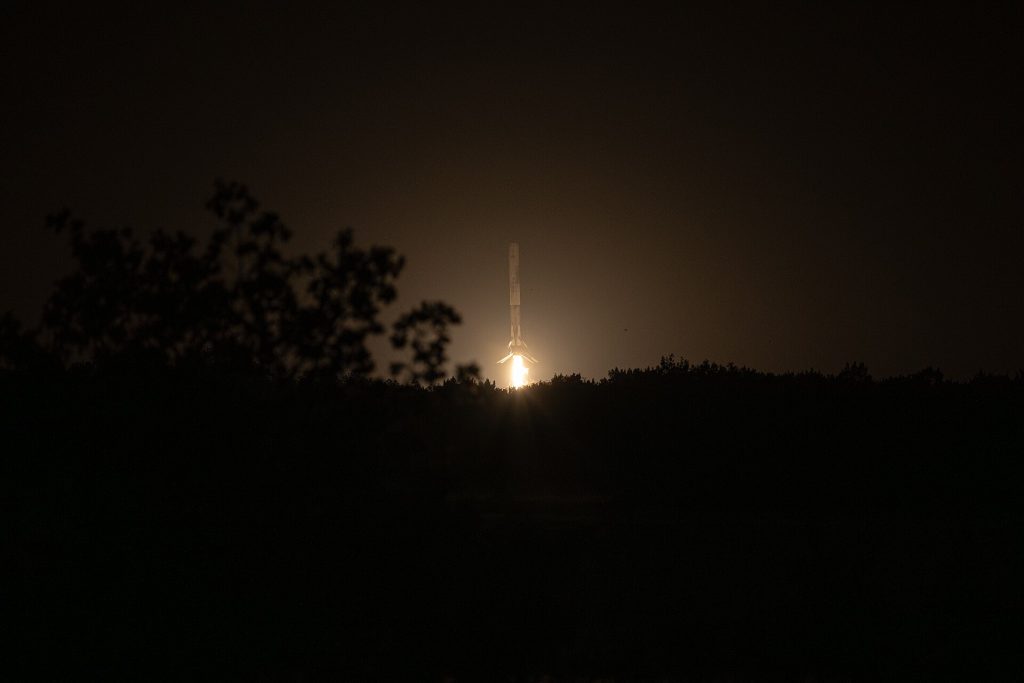
The first stage, on its 16th flight, performed an entry burn with engines one, five and nine, then a landing burn on the center engine, E9. It landed on the drone ship A Shortfall of Gravitas in the Atlantic Ocean. The host called it SpaceX's 207th overall landing of an orbital class rocket. The webcast reported nominal orbit insertion, and the host said SpaceX looks forward to launching V2 and V2 Mini satellites.
The booster had previously launched GPS III-3, Turksat 5A, Transporter-2, Intelsat G-33/G-34, Transporter-6 and 10 Starlink missions.
Questions this video answers
When and where did the launch happen?
Falcon 9 lifted off at 11:50 p.m. Eastern time from Space Launch Complex 40 at Cape Canaveral Space Force Station in Florida. The description gives the target as Saturday, July 15.
Why was the earlier attempt aborted?
An abort was called at around T minus 40 seconds on the previous attempt, due to elevated oxygen levels on one of the first stage engines.
How many satellites were launched?
54 Starlink V1.5 satellites.
Did the booster land?
Yes. The booster, on its 16th flight, landed on the drone ship A Shortfall of Gravitas in the Atlantic Ocean.
What was special about this launch?
It was the final launch of Starlink V1.5 satellites, SpaceX's 47th launch of the year and 246th mission to date.
Explore related missions
Connected by the topic: Falcon 9