Falcon Heavy’s First Flight: Three Cores, 27 Engines, a Roadster
The short version
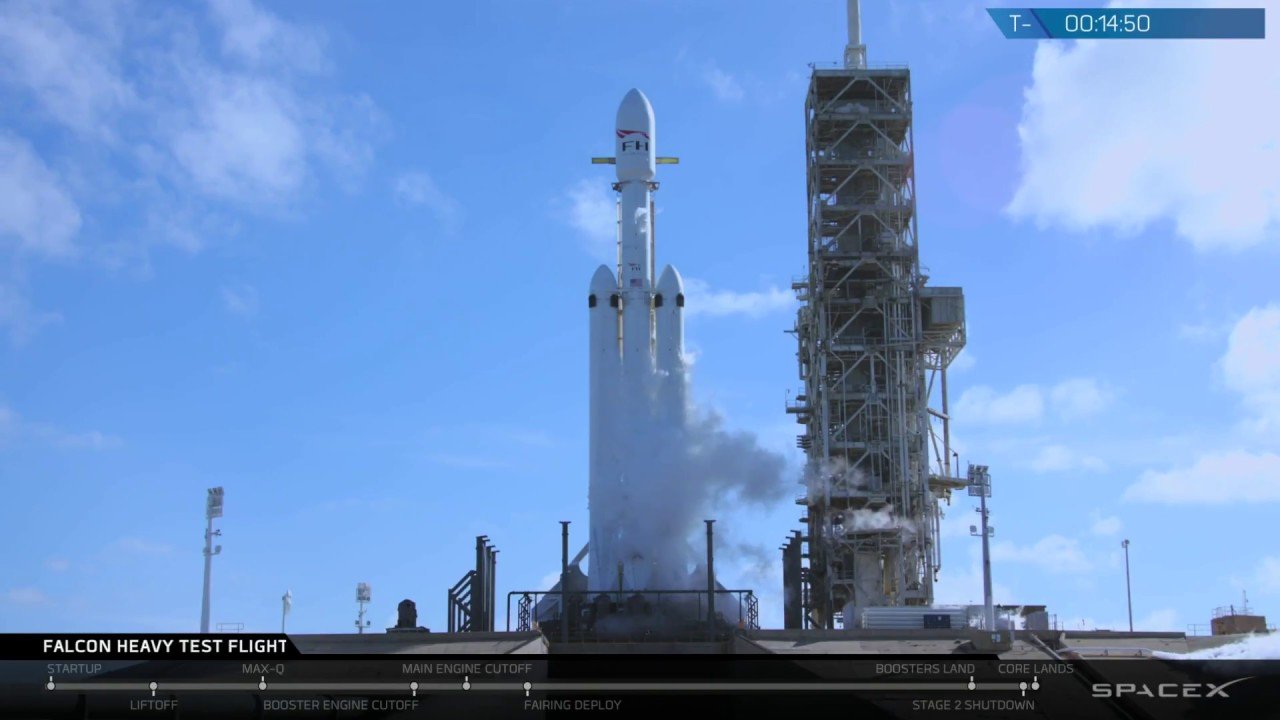
SpaceX's official webcast covers the first test flight of Falcon Heavy from pad 39A at Kennedy Space Center. It explains the three-core design, the 27 Merlin engines, the planned landings of all three cores, and the Tesla Roadster payload bound for a Mars-crossing orbit around the Sun. The side boosters were shown returning to Cape Canaveral, and the center core landing result was still awaited at the end of the broadcast.
Full written account
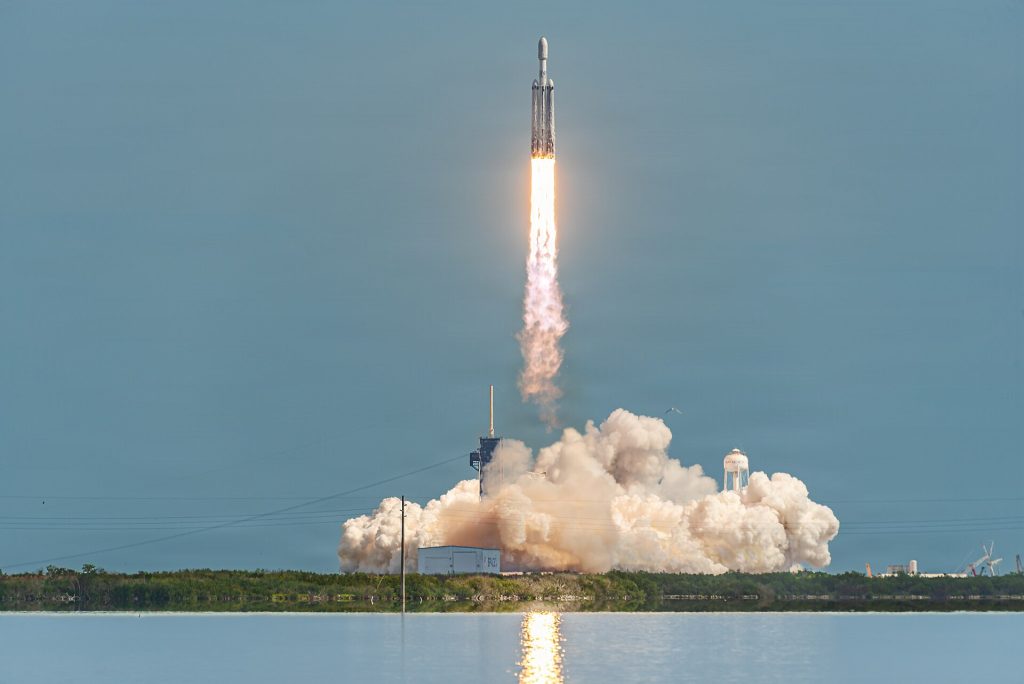
Falcon Heavy's first flight carried no customer satellite. Instead, SpaceX placed a cherry red Tesla Roadster in the fairing, with a passenger called Starman wearing the SpaceX-designed spacesuit that astronauts will wear on Crew Dragon. The rocket lifted off from historic pad 39A at Kennedy Space Center, and the webcast described it as the world's most powerful operational rocket by a factor of two.
Three cores, 27 engines
Falcon Heavy is essentially three Falcon 9 rockets strapped together. Each of the three first-stage cores has nine Merlin 1D engines, 27 in all, producing 5 million pounds of thrust, equal to 18 747s at takeoff. The engines produce so much power that they are not run at full thrust all at once: the side and center cores throttle up and down during ascent to balance aerodynamic and structural loads. Engine ignition begins at t-minus five seconds on the two side boosters, followed two seconds later by the center core.
The flight plan
About 40 seconds into flight the side boosters throttle down ahead of maximum aerodynamic load, then back up. Two and a half minutes in, they shut down in an event called side booster engine cutoff, and a pneumatic separation system pushes them away, releasing first at the top and milliseconds later at the bottom. The center core then burns for another 25 seconds, and shortly after three minutes it shuts down and the second stage separates. The second stage carries a bit more helium than usual and sends the payload toward a Mars-crossing orbit.
Three landings
SpaceX planned to recover all three first-stage cores. The side boosters, previously used on missions including CRS-9, were to return to landing zones 1 and 2 at Cape Canaveral Air Force Station using a three-burn maneuver. The center core, going too fast to return, was to land on the autonomous spaceport drone ship about 300 miles off the Florida coast, also with three burns. In the webcast, SpaceX said it had recovered 21 first stages and reflown six.
Payloads
The Roadster was a mass simulator chosen for fun. A tiny Hot Wheels roadster with a tiny Starman was also aboard. Inside the Roadster was an Arch, a 5D laser optical storage device built by the Arch Mission Foundation, holding Isaac Asimov's Foundation trilogy. A plaque with the names of over 6,000 SpaceX employees was mounted on the payload attach fitting.
The Roadster was to follow an elliptical heliocentric orbit reaching more than 400 million kilometers from Earth, at a maximum speed of nearly 40,000 kilometers per hour, staying up for about a billion years.
Liftoff and landings
After liftoff the webcast showed successful stage and booster separation. The side boosters headed back toward landing zones 1 and 2. Signal was lost near the drone ship, as can happen with vibration, and the broadcast ended before the center core's result was confirmed. The second stage continued toward Mars.
Questions this video answers
Where did Falcon Heavy launch from?
Pad 39A at Kennedy Space Center.
What time was the launch scheduled?
The webcast said liftoff was awaited at 3:45 p.m. on pad 39A; the launch date is not stated in the transcript.
What was the payload?
A cherry red Tesla Roadster carrying a mannequin called Starman in a SpaceX-designed spacesuit, plus an Arch Mission Foundation storage device holding Isaac Asimov's Foundation trilogy.
Did the boosters land?
The two side boosters were shown returning to landing zones 1 and 2 at Cape Canaveral Air Force Station. The center core's drone ship landing result was not confirmed in the webcast.
How powerful is Falcon Heavy?
27 Merlin engines produce more than 5 million pounds of thrust, which the webcast equated to 18 747s at takeoff.
Explore related missions
Connected by the topic: Falcon Heavy