Falcon Heavy’s First Test Flight: Boosters, Landings and Starman
The short version
Coverage of the Falcon Heavy test flight, including the countdown, liftoff, booster separation and the landing attempts of the two side boosters and the center core. The webcast outlines the planned sequence, from side booster throttle-downs to the upper stage sending its payload, a Tesla Roadster with Starman, on its way. The center core's drone ship landing is still awaiting confirmation when the video ends.
Full written account
Falcon Heavy's test flight carried a Tesla Roadster with Starman aboard, and its 27 Merlin engines were checked for power before the vehicle was released from the ground hold-downs. The webcast of the flight, which uploaded on 6 February 2018, walks through the plan and then follows the rocket as it flies.
The planned sequence
Before liftoff, the SpaceX commentary lays out the flight profile. Once the engines light, Falcon Heavy checks the power on all 27 Merlin engines, and only then is it commanded to release from the ground hold-downs. About 40 seconds into flight the two side boosters decrease power ahead of maximum aerodynamic loads on the vehicle. They throttle back up to full power roughly a minute later, then about half a minute after that throttle down again to reduce forces on the rocket structure, because the vehicle is much lighter by then.
Booster separation
At about two and a half minutes the side boosters are fully shut down in an event called BECO, booster engine cutoff. A pneumatic separation system on the center core unlocks the side boosters and pushes them away. They disconnect first at the top of the center core and milliseconds later at the bottom, so they rotate away from the core. The center core then throttles up to full power and burns for another 25 seconds. Just over three minutes after liftoff it shuts down in MECO, main engine cutoff, and the second stage separates. From there the commentary says the mission is like a Falcon 9 mission: the fairing separates and the MVac D upper stage fires, eventually sending the stage and payload out into the solar system to orbit around the Sun.
Liftoff and flight
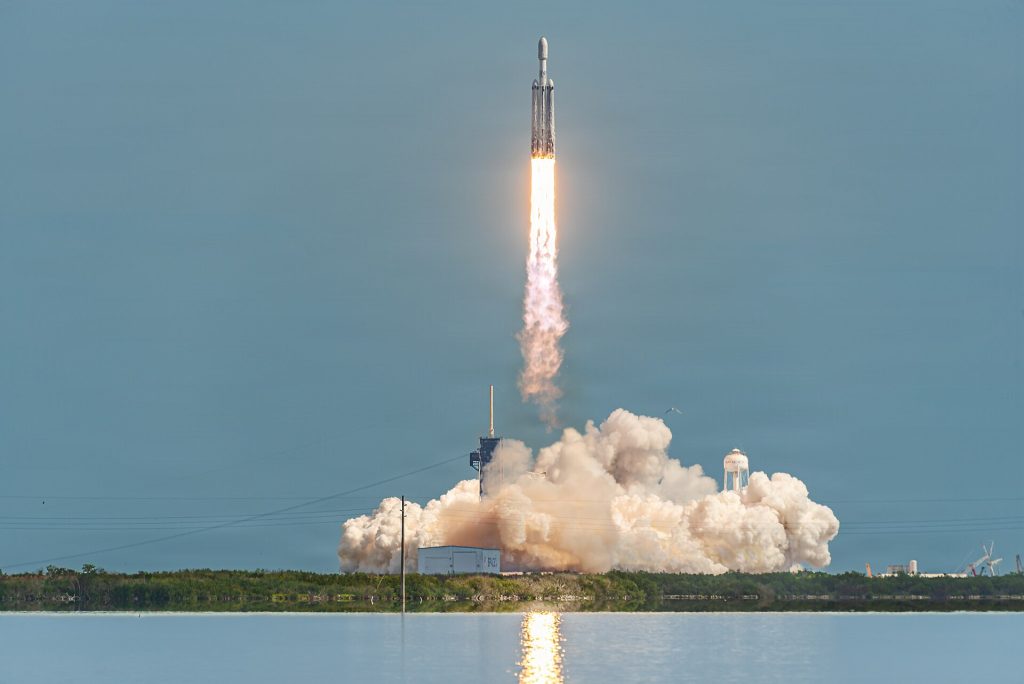
The countdown reaches terminal count and the vehicle lifts off. Callouts note it is supersonic, then past max-q, the period of maximum loads. The commentators report that engine performance is nominal and that the side boosters begin to throttle down about 20 seconds ahead of shutdown. Separation is called successful.
Landings
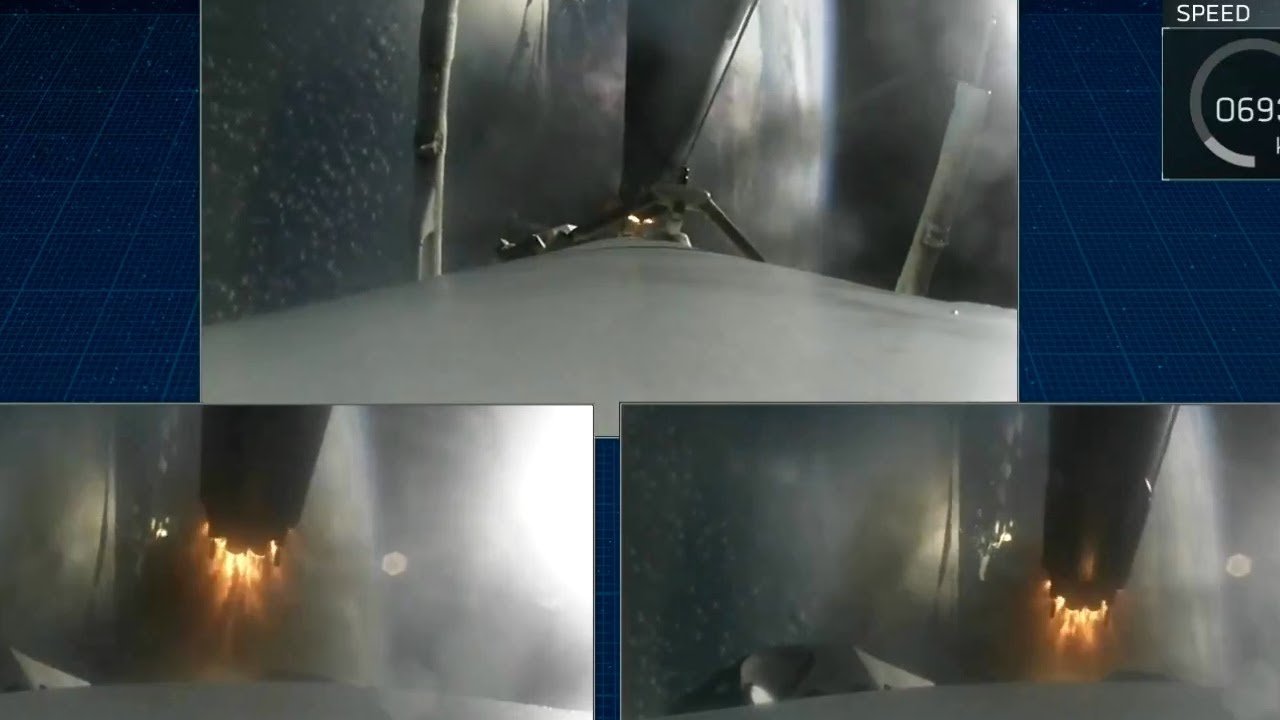
After the recap of liftoff and separations, with shots of Starman in the Roadster, the screens show the upper stage continuing its burn, the center core headed back toward the autonomous spaceport drone ship, and the side boosters headed toward Cape Canaveral landing zones 1 and 2. Each booster performs a re-entry burn that slows it from far faster than the speed of sound to just faster than it, reducing aerodynamic forces and heating. The commentators note that the drone ship's video can lose signal as vibrations shake cameras and antennas during a landing. As the center core approaches, signal is lost. People are heard cheering, but the result is still awaited as the second stage continues on its trajectory.
Questions this video answers
What was the payload on the Falcon Heavy test flight?
The coverage shows Starman in a Tesla Roadster on the upper stage.
How many Merlin engines does Falcon Heavy check before launch?
All 27 Merlin engines are checked for power.
When do the side boosters separate?
About two and a half minutes into flight, after booster engine cutoff (BECO).
Where were the side boosters headed to land?
Cape Canaveral landing zones 1 and 2.
Did the center core land?
The video ends before confirmation; signal from the drone ship was lost and the result was still awaited.
Explore related missions
Connected by the topic: Falcon Heavy