Five Space Artifacts Adam Savage Identifies at the Air
The short version
Adam Savage tries to identify five objects from the National Air and Space Museum collection: a blink comparator, a Stardust sample collector, the Viking lander weather station, a plasma-wave instrument and an Apollo 11 F-1 engine injector plate. The museum experts explain what each object did. Adam identifies or closely guesses all five and wins the round.
Full written account
In a round of "Stump the Chump" at the National Air and Space Museum, Adam Savage was shown five objects from the collection and asked to work out what each one was. His method was to ask what he could tell from the details, using what he already knew about engineering and spacecraft. He identified or came close on all five.
The blink comparator
The first object carried a Carl Zeiss lens element and a lead screw for adjustment. Adam read the two pieces of ground glass as a way of comparing the same view, and guessed it might measure the arc-second distance between stars. It is a blink comparator. A machine like it was used to discover Pluto, by comparing images of the sky taken at different times to see if anything had changed.
Stardust
Adam saw that the second object folded out and showed scarring from flight. Seeing aerogel inside, he guessed a micrometeorite collector. It is from Stardust, the first U.S. space mission dedicated solely to returning extraterrestrial materials from beyond the Moon. It launched in 1999 and returned in 2006, parachuting into the Utah desert.
The Viking weather station
The third object, a monolithic piece with a three-thread fork and needles, first looked to Adam like pitot tubes. Shown a photo of the lander it belonged to, he recalled that in 1993 he and Jamie Hyneman built a half-scale Mars lander in about six days, using pie plates from a restaurant supply store and PVC pipe. The object is the weather station from the Viking lander. It gave the first direct measurements of another planet's atmosphere, which later let scientists match air bubbles in Antarctic meteorites to Mars and conclude those rocks came from the planet.
The plasma-wave instrument
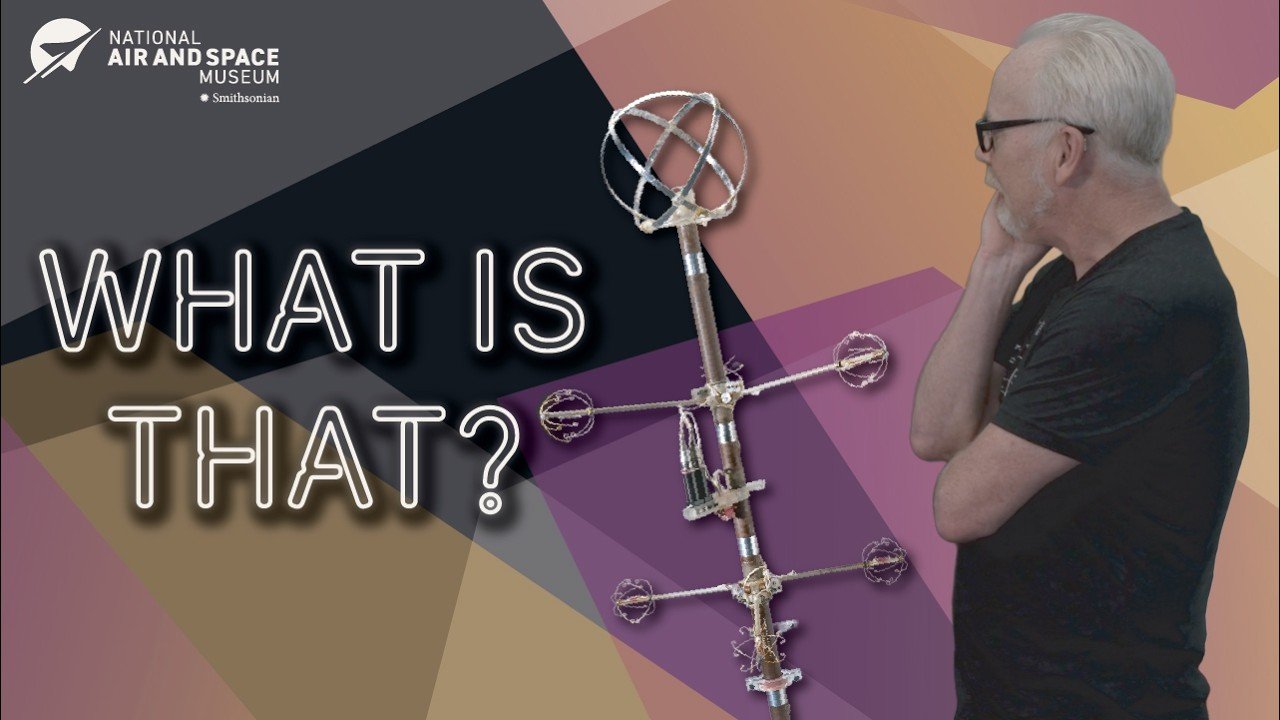
The fourth object, with balls of brass or gold-plated wire, looked like a trophy to Adam. He guessed it dealt with electrical fields, and was told it detected plasma waves. It was used on spacecraft that studied comet tails by flying through them. Comets hold information about the formation of the solar system.
The Apollo 11 injector plate
The last object Adam called a rocket's "shower head". It is the injector plate from an F-1 engine, used on Apollo 11 in 1969. After the launch it fell into the ocean, where it stayed for over 40 years until it was recovered in 2013. Adam noted it was in good shape for having been on the ocean floor that long.
Questions this video answers
What is a blink comparator?
A machine that compares images of the sky taken at different times to show whether anything changed. A machine like the one shown was used to discover Pluto.
What did Stardust do?
It was the first U.S. space mission dedicated solely to returning extraterrestrial materials from beyond the Moon. It launched in 1999 and returned in 2006 by parachuting into the Utah desert.
What did the Viking lander weather station measure?
It made the first direct measurements of another planet's atmosphere. Those measurements later allowed air bubbles in Antarctic meteorites to be matched to show the rocks came from Mars.
What happened to the Apollo 11 F-1 injector plate?
After the 1969 launch it fell into the ocean, stayed there for over 40 years and was recovered in 2013.