Apollo 11
Apollo 11 lifted off from Kennedy Space Center on 16 July 1969, and on 20 July Neil Armstrong and Buzz Aldrin landed the lunar module Eagle in the Sea of Tranquility while Michael Collins orbited above in Columbia. The crew splashed down in the Pacific on 24 July, eight days after launch.
What happened
All times Coordinated Universal Time (UTC)
-
Watch this moment · 38:25
16 July 1969, 13:32 UTC
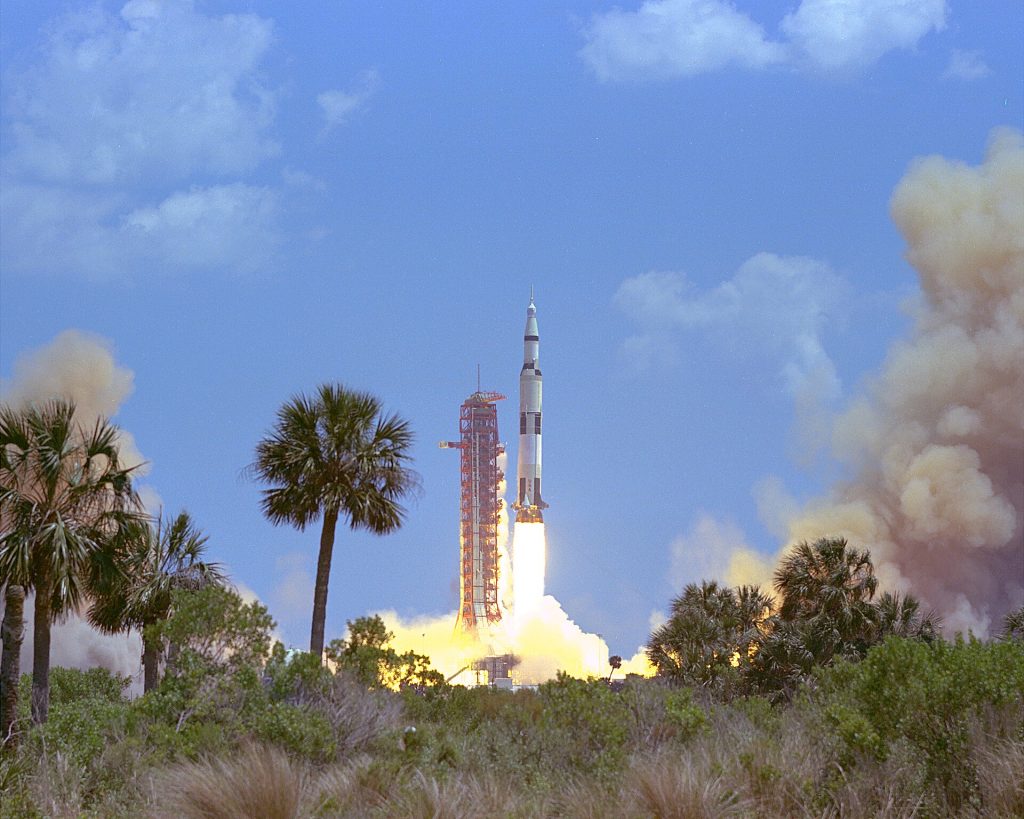
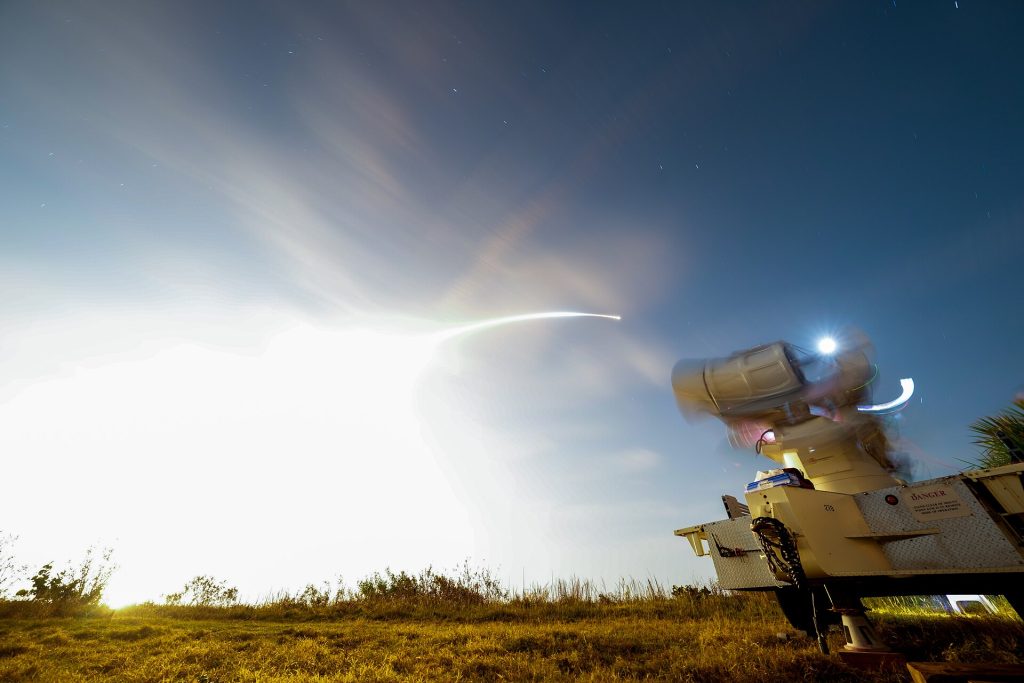
Liftoff from Launch Complex 39A
A Saturn V carrying the Apollo spacecraft lifted off from Kennedy Space Center at 9:32 a.m. Eastern Daylight Time. The film in video 23 notes that 33 Saturn rockets flew and none failed.
-
Watch this moment · 1:58
About 12 minutes after liftoffapproximately
Earth parking orbit
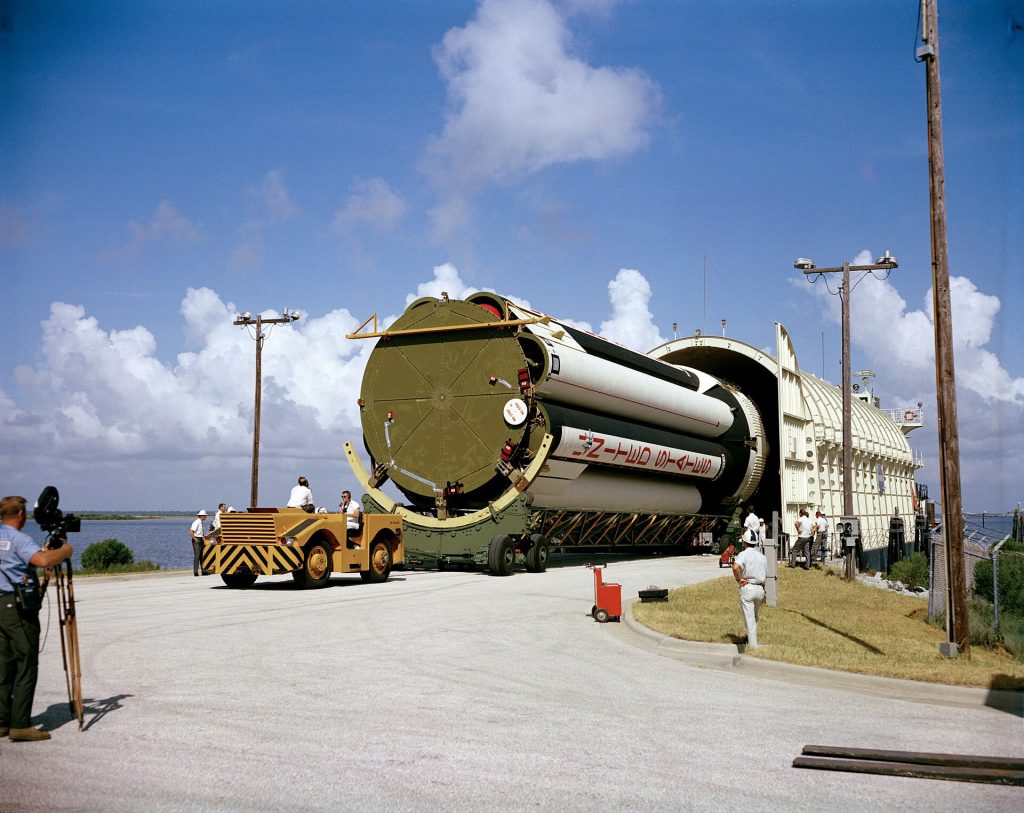
The first stage fell away, the second stage took over and the launch escape system was jettisoned, and the third stage fired briefly to place the spacecraft in a parking orbit. After final checks the third stage fired again for the translunar injection, the burn that sent Apollo 11 towards the Moon.
-
Watch this moment · 2:28
Soon after translunar injectionapproximately
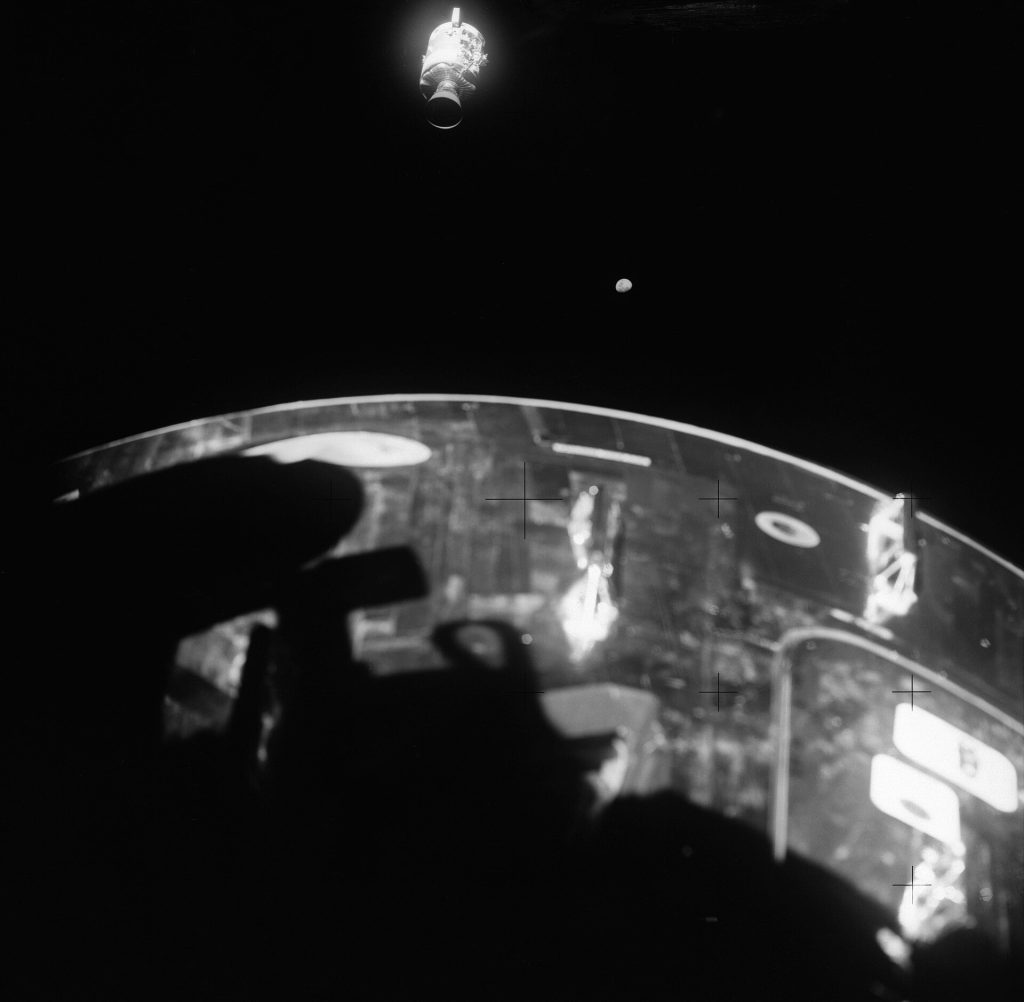
Docking with the lunar module
The command and service module separated, turned through 180 degrees, docked with the lunar module and pulled it out of its housing, leaving the spent third stage behind. The coast to the Moon then took about three days.
-
Watch this moment · 51:50
20 July 1969
Powered descent begins
Eagle separated from Columbia in lunar orbit. During the descent the flight computer showed program alarms, and the guidance controller in Mission Control judged that the landing could go on. Armstrong took over manual control to avoid a boulder-strewn area.
-
Watch this moment · 1:20:51
20 July 1969, 20:17 UTC
Eagle lands at Tranquility Base
Eagle touched down in the Sea of Tranquility with little descent fuel left, and Houston told the crew that controllers had been about to turn blue and were breathing again.
-
Watch this moment · 1:07:54
21 July 1969, 02:56 UTC
First step on the Moon
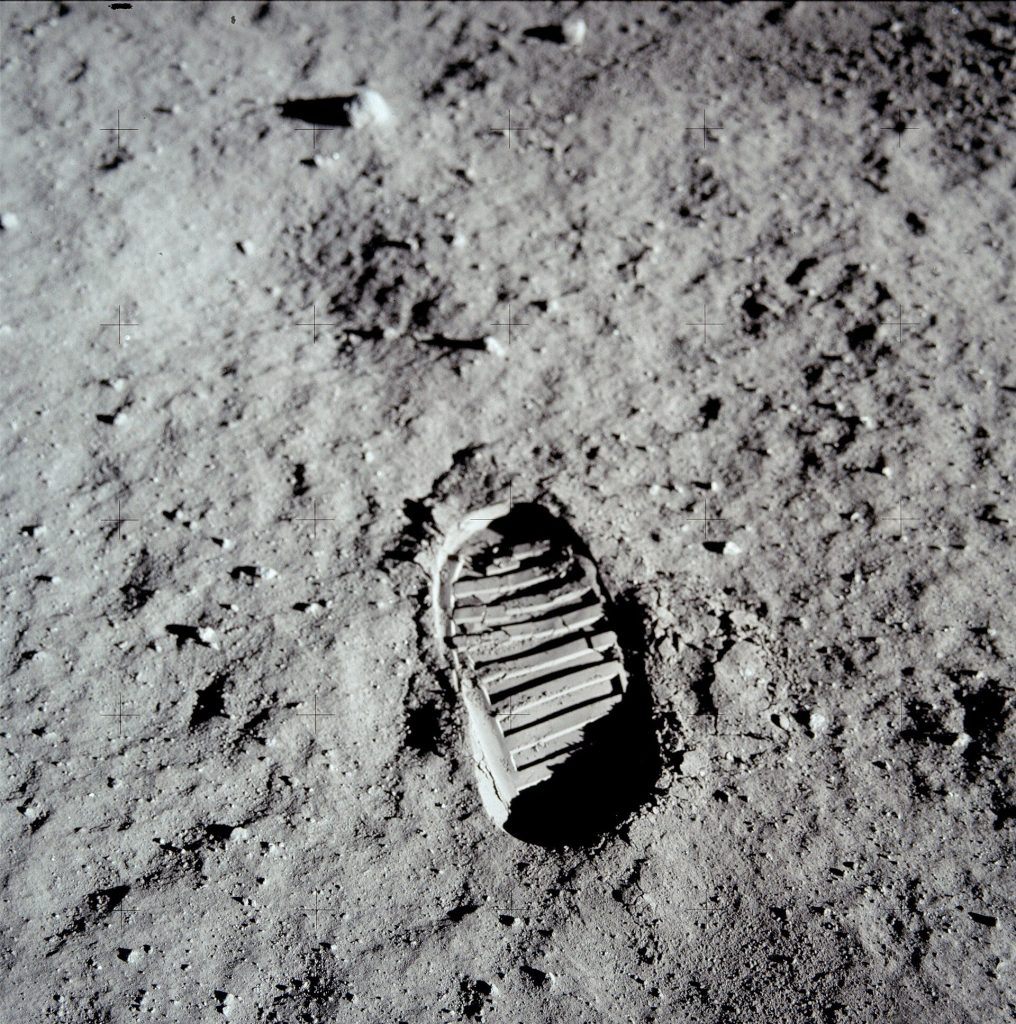
Armstrong climbed down the ladder and stepped onto the surface, followed by Aldrin. The two men set up a television camera, collected samples, left a plaque and raised a flag before returning to Eagle.
-
Watch this moment · 4:02
21 July 1969approximately
Eagle lifts off from the Moon
After a stay of 21 hours 36 minutes on the surface, the ascent engine fired and Eagle made the first launch from another world. It rejoined Columbia in lunar orbit, and the lunar module was left behind.
-
Watch this moment · 4:38
24 July 1969approximately
Splashdown in the Pacific
The service module was jettisoned before re-entry, the command module hit the atmosphere at about 25,000 miles an hour, and Columbia came down under parachutes in the Pacific with the three crew and the lunar samples. The crew were kept in isolation after recovery.
Key facts
| Vehicle | Apollo spacecraft, Saturn V |
|---|---|
| Mission name | Apollo 11 |
| Launch site | Kennedy Space Center LC-39A |
| Crew | Neil Armstrong, Buzz Aldrin, Michael Collins |
| Crew size | 3 |
| Duration | 8 days, 3 hours |
| Outcome | Success |
Videos about this mission
The videos, in date order
Drag, zoom or press play to watch them on this page.
October 2018 – August 2026
Drag to explore dates · Select a video to preview.
Dates are when each video was first published on YouTube.
Why a lander, and why a rendezvous in lunar orbit
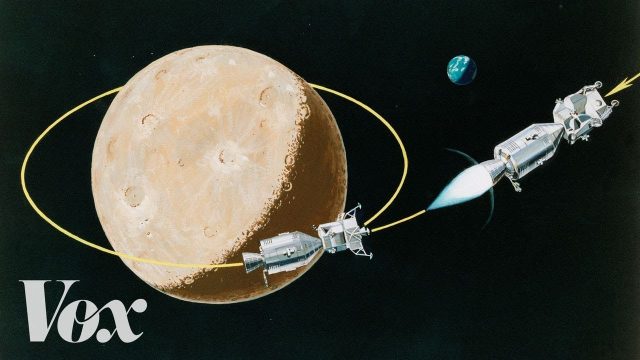
President Kennedy set the goal of landing a person on the Moon and returning them safely in 1961. Video 193 explains how NASA chose the method: direct ascent and Earth orbit rendezvous both needed a very large rocket, and Langley engineer John Houbolt argued for lunar orbit rendezvous, in which a dedicated lander goes down while the main spacecraft waits in orbit. Wernher von Braun came round to the idea and NASA adopted it.
The steps leading up to July 1969 were Gemini, which practised rendezvous, docking and spacewalking, then Apollo 8, which orbited the Moon, Apollo 9, which tested the lunar module in Earth orbit, and Apollo 10, which took a lunar module down to the Moon without landing. The Apollo programme also carried the loss of the Apollo 1 crew in a fire on the launch pad on 27 January 1967.
The crew and the flight
The crew of Apollo 11 were Neil Armstrong, commander; Michael Collins, command module pilot; and Buzz Aldrin, lunar module pilot. The spacecraft were called Columbia (the command module) and Eagle (the lunar module).
Armstrong and Aldrin flew Eagle down while Collins stayed in orbit. The descent did not go to plan. The landing computer raised program alarms, and the flight controllers had to decide in seconds whether to continue. Armstrong then flew Eagle past the planned site to find a safe place to land, and the callouts of 60 and then 30 seconds of fuel were made before the contact light came on. Video 193 puts the sequence together from the Mission Control record.
On the surface, the moonwalk was broadcast live on television, and the pictures came from a camera mounted on the lander. Armstrong and Aldrin were outside for about two and a half hours. When they were back on board they had one chance to fire the ascent engine, which had no backup.
What came next
After splashdown the crew were placed in quarantine, a precaution NASA dropped after Apollo 14. Video 23 follows them through a tour of cities and into the question of what came after Apollo: interest in the missions faded quickly, and later flights were cut as the budget shrank. Six Apollo missions landed on the Moon between 1969 and 1972.
Apollo 11 is where the programme's method was proved. The Saturn V, the lunar module and the rendezvous in lunar orbit all worked together, and every later landing used the same architecture.
Questions and answers
When did Apollo 11 land on the Moon?
Eagle landed in the Sea of Tranquility on 20 July 1969 at about 20:17 UTC. Armstrong stepped onto the surface early on 21 July UTC (the evening of 20 July in Houston).
Who was on Apollo 11?
Neil Armstrong was the commander, Michael Collins the command module pilot and Buzz Aldrin the lunar module pilot. Armstrong and Aldrin walked on the Moon; Collins stayed in lunar orbit in Columbia.
Why did the landing computer sound an alarm?
During the descent the computer raised program alarms. As the PBS and To The Moon films tell it, the flight controllers recognised that the computer was overloaded but still able to carry out its critical work, and decided to continue with the landing.
How long did the crew spend on the Moon?
Eagle stayed on the surface for 21 hours 36 minutes, and Armstrong and Aldrin spent about two and a half hours outside it. The whole mission lasted a little over eight days.
Sources: The facts and written text on this page come from the 4 videos on this page, by Vox, Primal Space, Progress – Science Documentaries, American Experience | PBS.