Apollo 11: How the Saturn V
The short version
Apollo 11 launched on July 16, 1969, carrying Neil Armstrong, Buzz Aldrin and Michael Collins. The video follows how the Saturn V and Apollo spacecraft were taken apart stage by stage, from launch through lunar landing and the splashdown of Columbia in the Pacific.
Full written account
Apollo 11 launched on July 16, 1969, from Cape Kennedy, Florida, carrying Neil Armstrong, Buzz Aldrin and Michael Collins toward the Moon, nearly 240,000 miles away. The eight-day journey worked because the 3,000-ton stack of rocket and spacecraft was shed piece by piece until only a small command module came home.
What the stack was made of
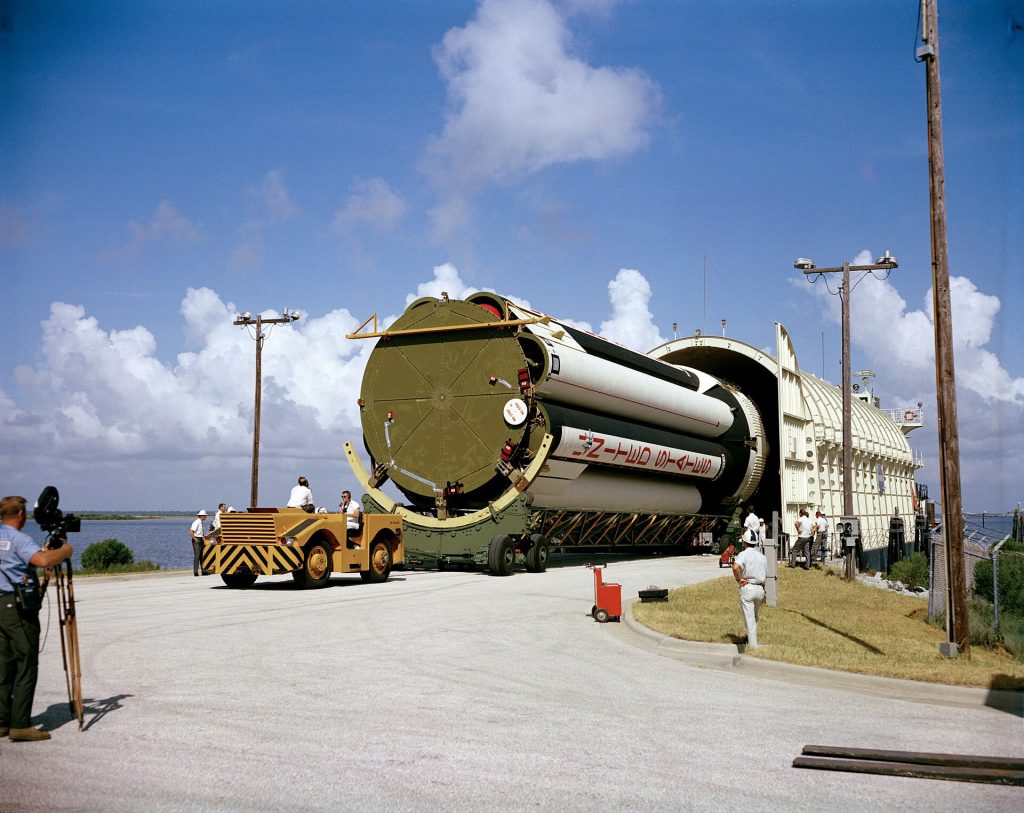
The Saturn V rocket, with three stages, sent the astronauts into space. On top sat the Apollo spacecraft, made of three parts: the lunar module, which would land on the surface; the service module, with propulsion for course corrections and for entering and escaping orbit; and the command module, where the crew spent most of the mission. A launch escape system was designed to pull the command module away from the rocket if something went wrong during launch.
Shedding stages on the way up
The first stage carried Apollo 42 miles above the Earth at about 6,000 miles per hour, then detached. When the second stage took over, the launch escape system was jettisoned. After the second stage detached, the third stage fired briefly to place Apollo in a parking orbit 103 miles above the surface. After final checks, the Saturn V fired again in the translunar injection, setting Apollo on course to the Moon.
Reconfiguring the ship
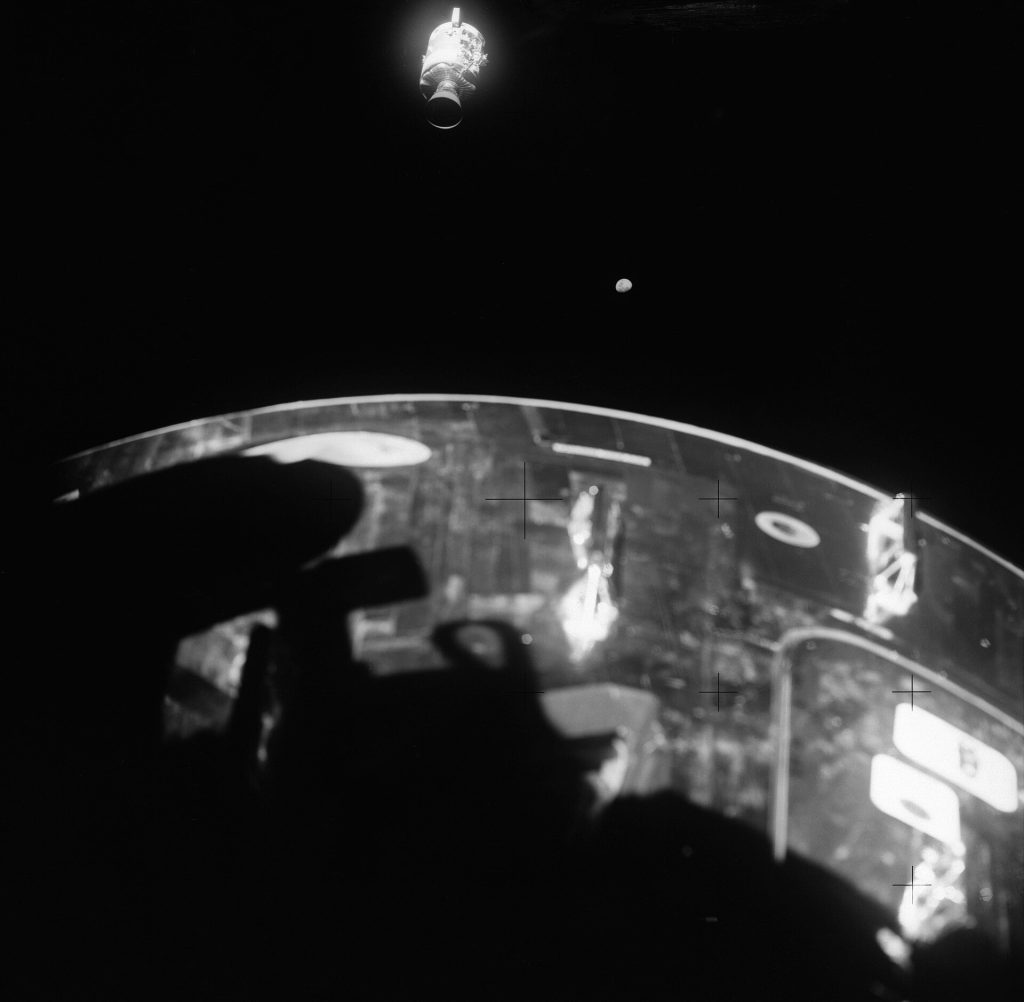
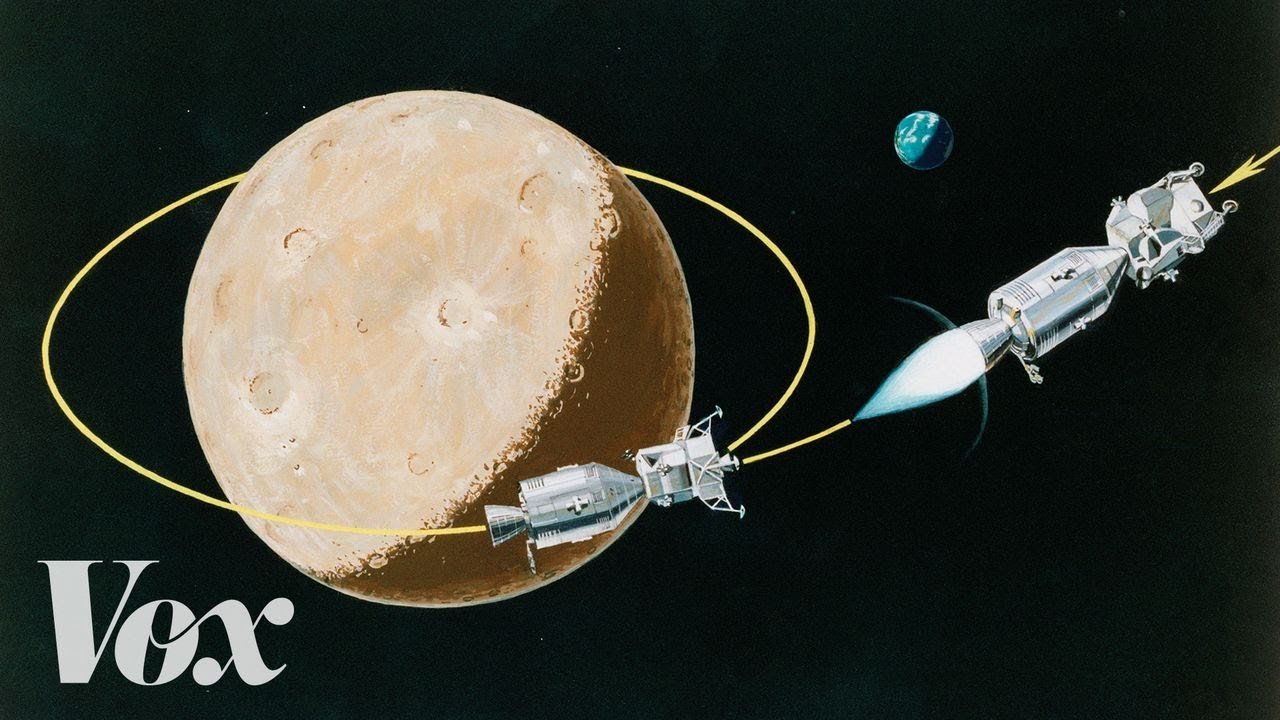
The lunar module had been stored in a protective compartment during launch. To reach it, the command and service module detached and flipped 180 degrees, docked with the lunar module and extracted it, leaving the third stage behind. The whole launch process took about three and a half hours. Apollo then coasted for three days until the Moon's gravity pulled it into orbit.
Landing and leaving the Moon
Armstrong and Aldrin moved into the lunar module Eagle and descended, while Collins kept circling in the command module Columbia. Eagle turned and used its engine to slow down before touching down. The moonwalk was broadcast live on television. After about 21 and a half hours on the Moon, Eagle made the first launch from a celestial body other than Earth, leaving its landing gear behind and timing its ascent to Columbia's path in lunar orbit. Once Armstrong and Aldrin were back in the command module, the lunar module was no longer needed.
Home
The trans earth injection broke Apollo out of lunar orbit and began a two-and-a-half-day journey home. Before re-entry the service module was jettisoned, leaving the heat shield on the bottom of the command module exposed. Apollo came back at 25,000 miles an hour, parachutes deployed and Columbia splashed down safely in the Pacific Ocean, carrying three astronauts and rock samples from the Moon.
Questions this video answers
When and where did Apollo 11 launch?
Apollo 11 launched on July 16, 1969, from Cape Kennedy, Florida.
Who was on Apollo 11?
Neil Armstrong, Buzz Aldrin and Michael Collins.
How long did Eagle stay on the lunar surface?
About 21 and a half hours on the Moon, according to the video.
Who stayed in orbit while the others landed?
Collins stayed in lunar orbit in the command module Columbia while Armstrong and Aldrin descended in the lunar module Eagle.
How did the mission end?
Columbia splashed down safely in the Pacific Ocean after re-entering at 25,000 miles an hour.