Artemis II
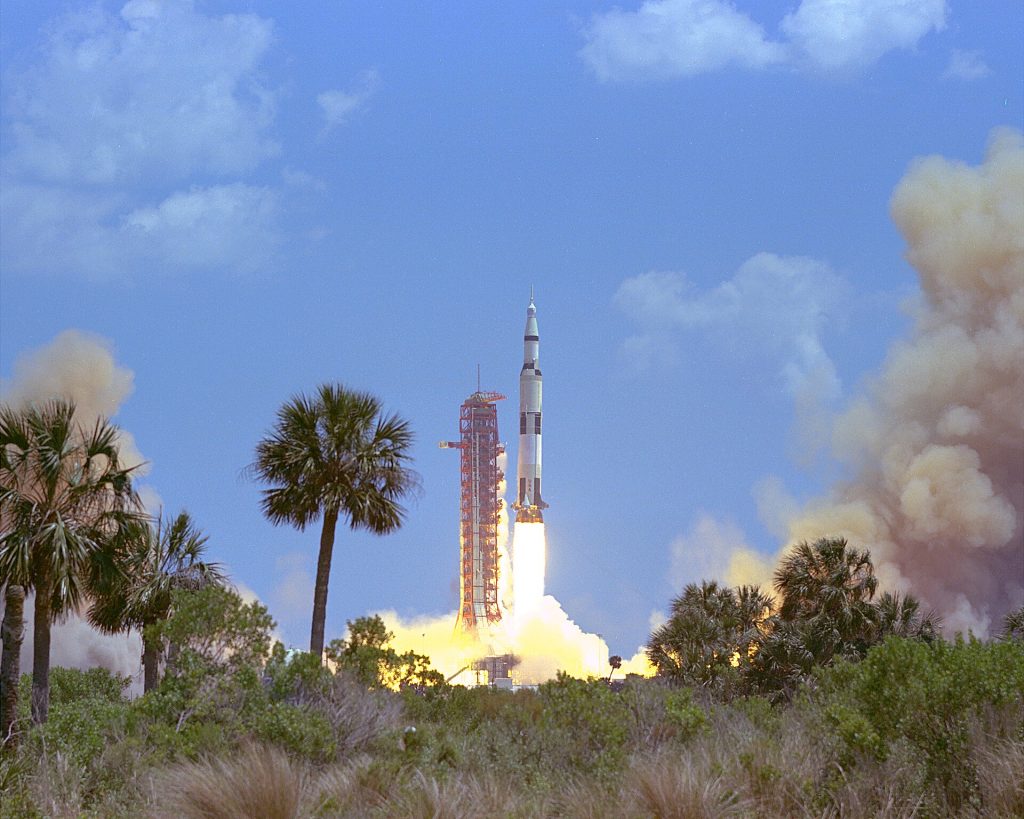
Artemis II launched from Kennedy Space Center on 1 April 2026 on NASA's Space Launch System, carrying Reid Wiseman, Victor Glover, Christina Koch and Jeremy Hansen of the Canadian Space Agency in the Orion capsule Integrity. The crew splashed down in the Pacific Ocean off San Diego on 10 April, after a mission of 9 days, 1 hour and 32 minutes.
What happened
All times local
-
Watch this moment · 0:06
Liftoff
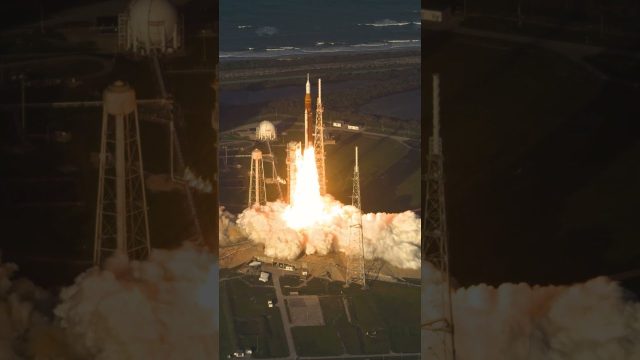
After a countdown from four seconds, the booster ignition and liftoff. NASA's clip describes the crew as bound for the Moon aboard the most powerful rocket NASA has launched, and the crew calls Houston as Integrity and says the view is great.
-
Watch this moment · 12:52
Suited up for entry
The crew were suited for entry and leak checks were completed. Commentators named the performance of Integrity's heat shield as the key point of interest.
-
Watch this moment · 1:00:40
Separation from the service module
The crew module separated from the European-built service module, and a 19-second thruster firing set the final angle of attack.
-
Watch this moment · 1:20:40
Blackout begins
Integrity entered the atmosphere at about 400,000 feet and roughly 25,000 miles an hour. A communications blackout of about six minutes began as plasma built up around the capsule.
-
Watch this moment · 1:27:53
Voice contact restored
Houston called for a comm check, and Reid Wiseman replied that they had Houston loud and clear.
-
Watch this moment · 1:30:30
Parachutes
Two drogue parachutes deployed, followed by pilot parachutes and three main parachutes, slowing the capsule to about 19 miles an hour.
-
Watch this moment · 1:34:39
Splashdown
Integrity landed upright in calm seas off San Diego. Wiseman reported four green crew members, meaning all four were in good condition.
Key facts
| Vehicle | Orion, SLS |
|---|---|
| Mission name | Artemis II |
| Launch site | Kennedy Space Center |
| Crew | Reid Wiseman, Victor Glover, Christina Koch, Jeremy Hansen |
| Crew size | 4 |
| Duration | 9 days, 1 hour |
| Outcome | Success |
Videos about this mission
The videos, in date order
Drag, zoom or press play to watch them on this page.
March – April 2026
-
Artemis II Explained: Crew, SLS, Orion and Flight Timeline
Everyday Astronaut -
Artemis II Countdown: Crew Boards Orion on SLS at Pad 39B
Everyday Astronaut -
Artemis II Liftoff: Booster Ignition and the Crew Bound for the Moon
NASA -
Artemis II Passes Apollo 13’s Distance Record on Lunar Approach
Everyday Astronaut -
Artemis II Re-entry and Splashdown: Orion Integrity Returns
Everyday Astronaut




Drag to explore dates · Select a video to preview.

Dates are when each video was first published on YouTube.
The crew
The crew of Artemis II were Reid Wiseman, Victor Glover and Christina Koch of NASA, and Jeremy Hansen of the Canadian Space Agency. Hansen is the first Canadian assigned to a mission to the Moon. NASA's page does not list the individual roles, so they are not given here.
A different way home
On the uncrewed Artemis I flight in 2022, the heat shield came back with large pieces missing. The coverage in video 248 explains that the skip entry, in which the capsule dips into the atmosphere, climbs out and dips in again, was thought to leave pockets of material under the shield.
For Artemis II NASA flew a more traditional, steeper profile. The commentary said Artemis I exposed the heat shield to about 20 minutes of peak heating, while Artemis II covered 1,700 nautical miles from entry interface in about 14 minutes. The trade-off was a larger recovery area and a higher peak temperature.
What came next
Questions and answers
When did Artemis II launch?
On 1 April 2026 from Kennedy Space Center, on NASA's Space Launch System.
Who was on board?
Reid Wiseman, Victor Glover, Christina Koch and Jeremy Hansen of the Canadian Space Agency.
How long was the mission?
9 days, 1 hour and 32 minutes, according to NASA.
Where did Orion land?
In the Pacific Ocean off San Diego, on 10 April 2026.
Why was the re-entry different from Artemis I?
Artemis I's heat shield came back damaged after a skip entry. For Artemis II NASA used a steeper profile that spends less time in peak heating.
Sources: The facts and written text on this page come from the 5 videos on this page, by Everyday Astronaut, NASA.