Apollo 11 Moon TV: The Slow-Scan Camera Behind the Broadcast
The short version
An explainer on how NASA sent live television from the Moon during Apollo 11's first moonwalk, watched by 600 million people. It covers the Westinghouse slow-scan camera, the Unified S-band system, the relay through a tracking station in Australia and Houston, and the camera's test on Apollo 9. It also notes how later Apollo missions improved the camera.
Full written account
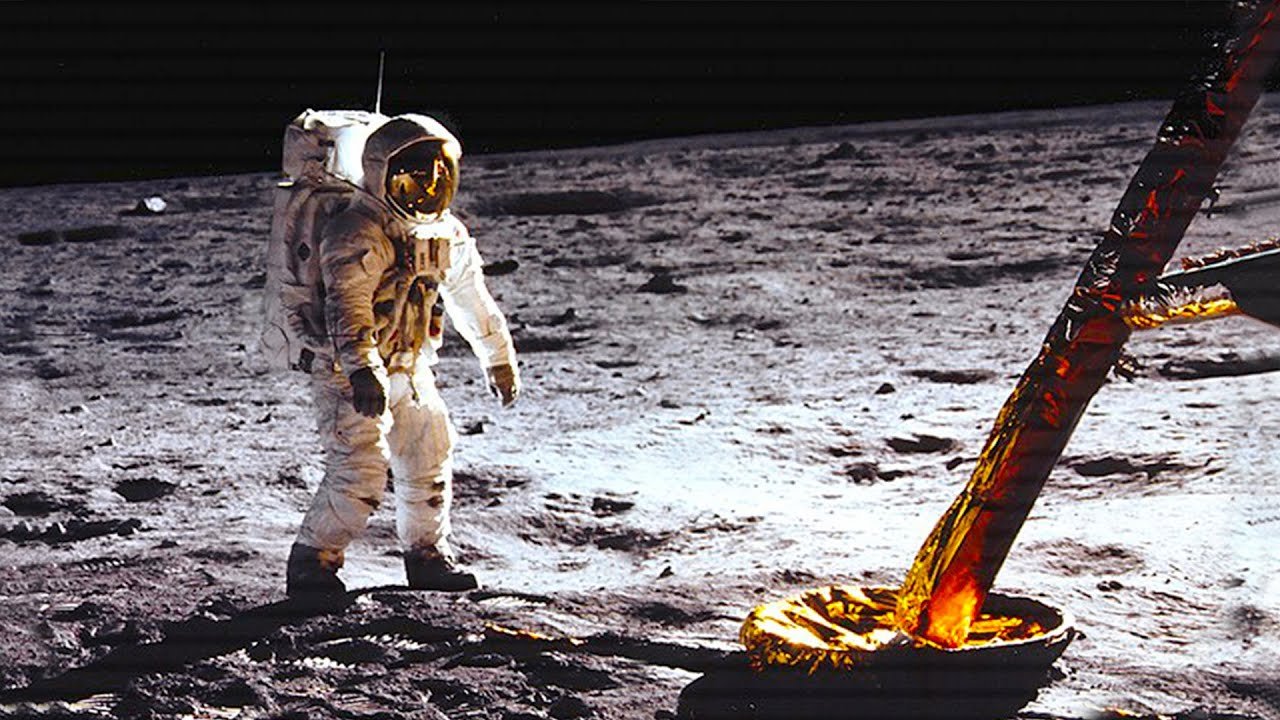
The camera that showed Neil Armstrong's first step on the Moon on 20 July 1969 ran on just 7 watts of power. Westinghouse built it for NASA, and about 600 million people watched the footage live.
Why live video mattered
The plan to send humans to the Moon met a lot of skepticism, and NASA knew live video of astronauts walking on the Moon would be crucial for the mission's credibility. The camera had to be small, black and white, survive the radiation and extreme temperatures of the lunar surface, and work on that 7 watt supply.
A new communications system
NASA developed a system called Unified S-band, which could send telemetry, command, voice and television data on different frequencies combined into a single antenna. Even so, there was not enough bandwidth for a standard 525 line video camera. Westinghouse therefore developed a slow-scan camera that transmitted 325 scan lines at 10 frames per second. It was connected to the Lunar Module by an electrical cable, so it could be moved around the landing site.
From the Moon to the world
The signal went from the Lunar Module's antenna to a tracking station in Australia, where NASA converted the image into a standard broadcast signal. That signal was sent up to a communications satellite and down to mission control in Houston, which broadcast it to the rest of the world.
Coping with contrast
The high contrast between the lunar surface and the darkness of space made a clear image difficult. Westinghouse used a low-light imaging tube developed for the Department of Defense, which had been used on jungle surveillance cameras during the Vietnam War. It could capture moving objects at low light levels without completely blurring the image.
Test and broadcast
The camera's first and only test was on Apollo 9, where the camera and the communication system were successfully tested. On Apollo 11 the camera was placed on the side of the Lunar Module, aimed toward the ladders. Buzz Aldrin hit a circuit breaker inside the cabin to turn it on. The footage at first appeared upside down; video operators in Australia inverted it just in time for Armstrong to step onto the Moon. A lot of detail was lost in the conversion, but the footage captured the moment clearly. The camera performed perfectly throughout the mission and remains on the Moon.
Later missions
Future Apollo missions used a more advanced camera that filmed in color and had better low light performance. On Apollo 15, 16 and 17 the cameras were placed on the Lunar rover. When the astronauts left, the rover was parked at a distance and a camera operator at mission control commanded the camera to tilt up and follow them as they left the surface.
Questions this video answers
How many people watched the Apollo 11 moonwalk live?
The video says 600 million people around the world watched.
Who built the Apollo 11 TV camera?
Westinghouse, contracted by NASA, designed and built a small black and white camera.
Why was a slow-scan camera used?
There wasn't enough bandwidth for a standard 525 line camera, so it transmitted 325 scan lines at 10 frames per second.
Where was the camera first tested?
On Apollo 9, which was its first and only test before Apollo 11.
Is the camera still on the Moon?
Yes, the video says it remains on the Moon to this day.