How New Shepard Flies Six People to Space and Lands Itself
The short version
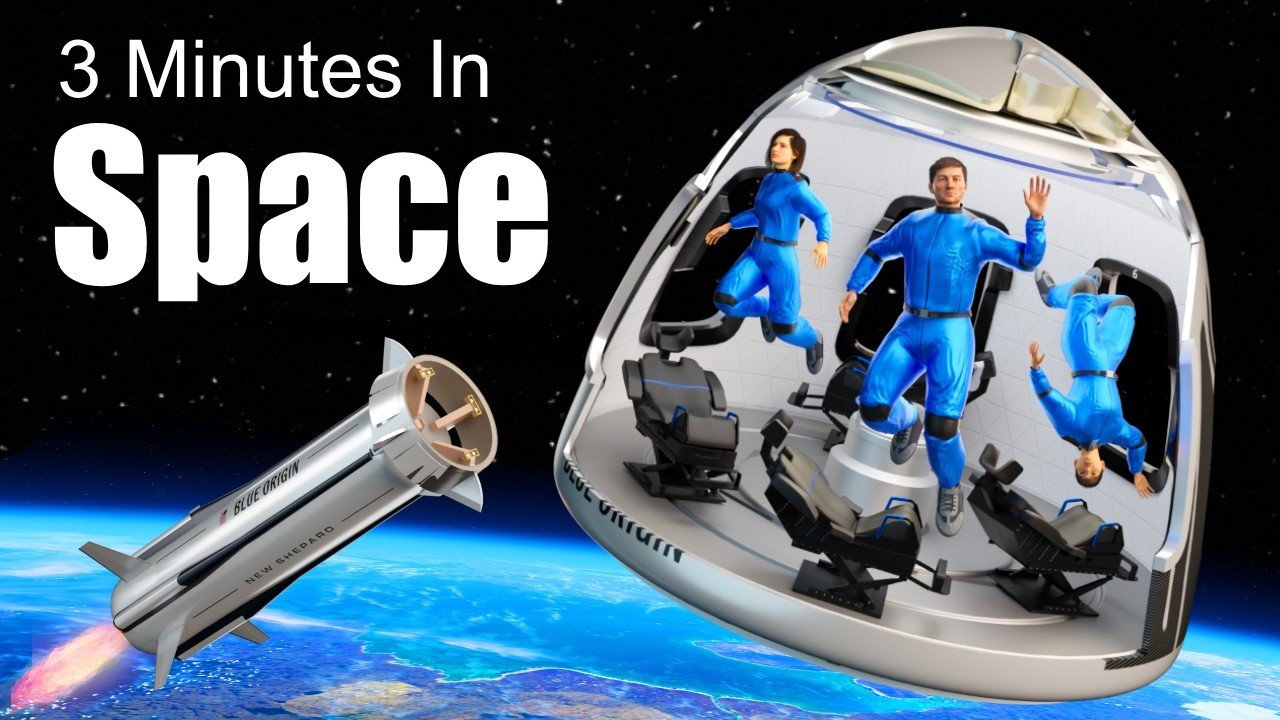
An animated explainer of Blue Origin's New Shepard suborbital rocket, covering its capsule and booster, training at Launch Site One in West Texas, and a flight that touches down just over 10 minutes after launch. It describes the abort motor, the autonomous flight profile, three to four minutes of weightlessness, and the booster and capsule landings.
Full written account
New Shepard is a reusable Blue Origin rocket that launches and lands with no pilot on board. Six people train for two days at Launch Site One in West Texas, then spend three to four minutes weightless in space, and touchdown occurs just over 10 minutes after launch.
The vehicle
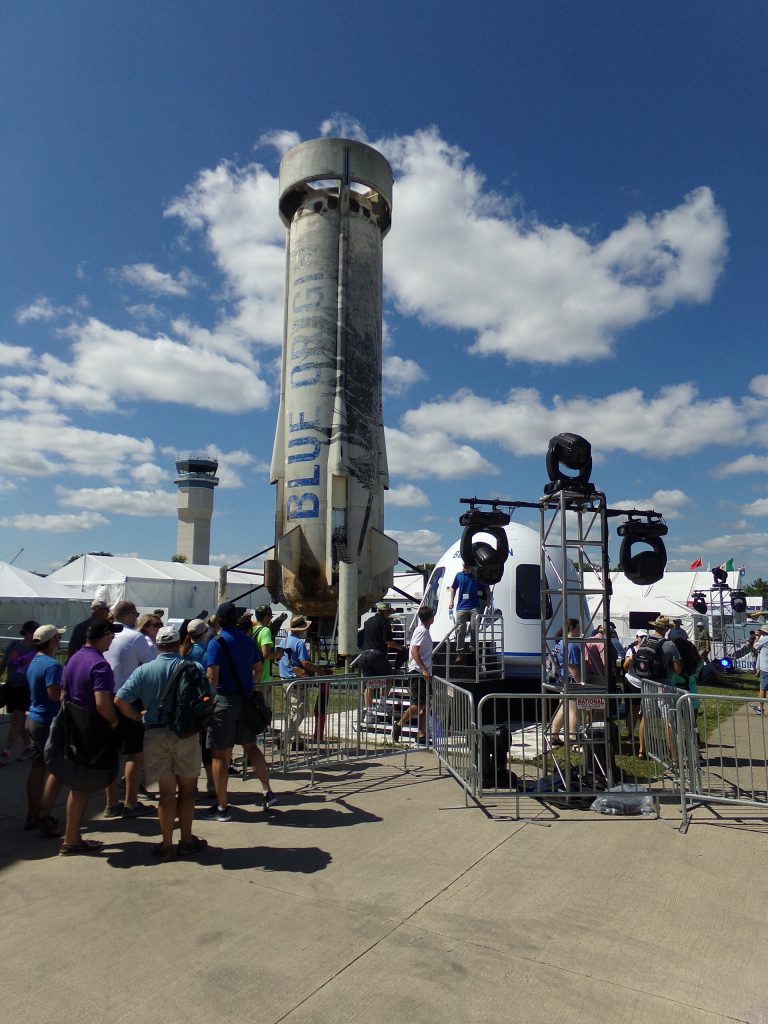
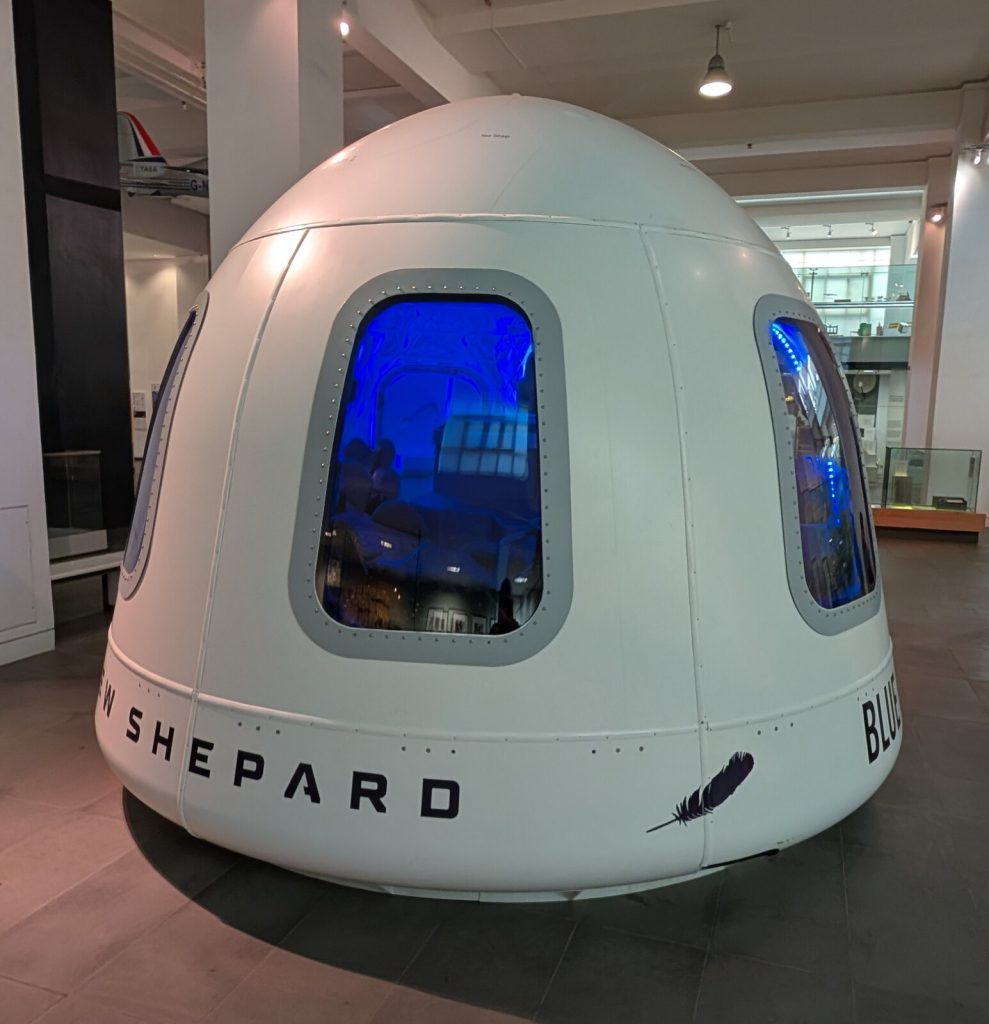
The rocket has two parts: the capsule, where the crew sit, and the propulsion module, also called the booster. The booster's main body holds an oxygen tank at the top and a hydrogen tank below, with a single BE-3 engine at the bottom that can gimbal to steer. The capsule has six reclined seats, each beside its own window, with a five-point harness for launch and descent. In the center is the abort motor, which can pull the capsule away in an emergency on the ground or during ascent. It was used once in an actual emergency, in 2022, on an uncrewed flight.
As of 2025, Blue Origin had built five propulsion modules and four capsules, and two boosters and three capsules were in active use. There had been 32 New Shepard missions, 12 with astronauts on board. The first flight, NS-1, was in April 2015 and the first crewed flight in July 2021.
Training and launch day
The crew train at Launch Site One, sometimes called The Ranch. They stay in the Astronaut Village, which has seven Airstream trailers; the seventh is for Crew Member 7, a Blue Origin employee who does not fly. Training covers the flight profile, flight suits, the seat and harness, and a full-scale capsule mock-up where they go over procedures such as a capsule abort.
The rocket is moved out of The Barn by semi-truck the night before. Hours before launch the booster is filled with liquid hydrogen and liquid oxygen, and the byproduct is water. About 45 minutes before liftoff the crew ride in all-electric Rivian SUVs to the pad. Each astronaut rings a ceremonial bell before crossing the Gantry Bridge, where the words "Light this candle" are written, words Alan Shepard spoke before his 1961 flight; the rocket is named in his honor.
The flight
About two minutes before launch the access bridge retracts and the BE-3 engine and aft fins run gimbal tests. At zero the engine ignites and takes about seven seconds to reach full power before the rocket is released. It fires for about two and a half minutes, and the crew feel gravity as three times stronger. After Main Engine Cutoff, the capsule separates a few seconds later. Both parts coast just above the Karman line, about 100 kilometers up. The booster's aft fins give a slight spin so each window can see all of Earth.
New Shepard is suborbital: it goes nearly straight up and needs only enough speed to float in space for a few minutes, which is why it needs much less fuel than an orbital rocket such as New Glenn.
Coming back
A beeping tone gives the crew 30 seconds to be back in their seats. The booster returns first, deploying wedge fins and then drag brakes. At about 2 kilometers the BE-3 relights and slows it to a hover as four landing legs deploy, touching down on a pad about 3 kilometers north of the launch site.
The capsule comes back more slowly and does not need the ablative heat shield that Crew Dragon uses. At about 2 kilometers, three drogue chutes open, then three main parachutes; the system is designed to work even if two fail to open. A crushable ring, seat scissor mechanisms and a burst of nitrogen cushion the landing. A recovery convoy then drives a few kilometers to the capsule.
Questions this video answers
How many people fly on New Shepard?
Six crew members fly in the capsule. A seventh person, Crew Member 7, is a Blue Origin employee who works with them but does not fly.
How long is a New Shepard flight?
Touchdown occurs just over 10 minutes after launch, and the crew gets three to four minutes of weightlessness.
What is the abort motor?
The abort motor, in the center of the capsule, pulls it away from the rocket in an emergency. It was used once in an actual emergency in 2022, on an uncrewed flight.
Is there a pilot on New Shepard?
No. The whole flight is autonomous, with no pilots on board, and is closely monitored by mission control.
How does the booster land?
The booster relights its BE-3 engine at about 2 kilometers above the surface and slows to a hover while four landing legs deploy.
Explore related missions
Connected by the topic: New Shepard