How Starship’s Tower Catches Super Heavy: Flight 5 and After

The short version
This explainer covers how SpaceX catches its Super Heavy booster with the launch tower's two arms instead of landing it on legs. It walks through the steering with grid fins and tilting engines, the first catch of Booster 12 on October 13, 2024, the later flights where catches were called off or succeeded, and how reuse has gone so far. It closes with Elon Musk's statement that Flight 15 will try to catch both booster and ship.
Full written account
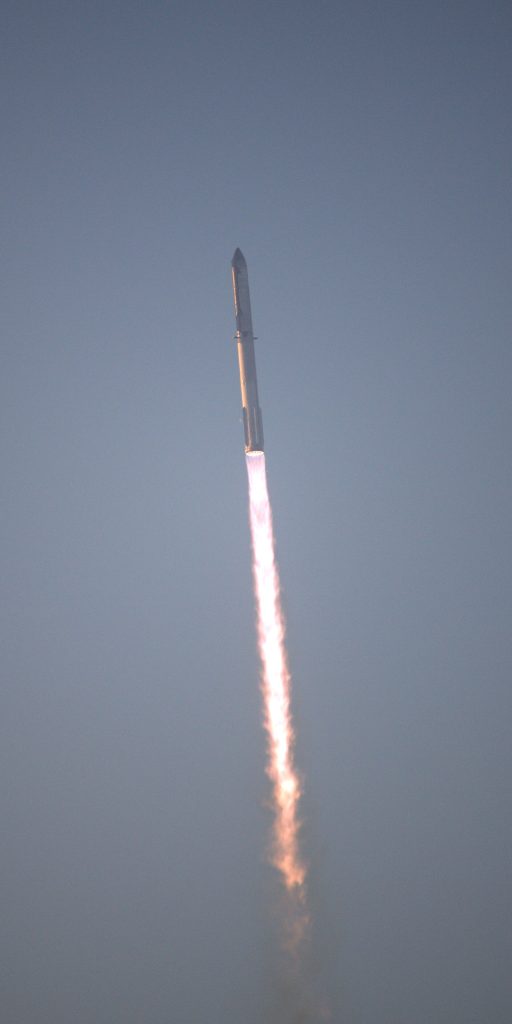
Super Heavy, the booster of SpaceX's Starship, has no landing legs. On October 13, 2024, at Starbase in South Texas, Booster 12 slowed from faster than sound to almost a stop beside the launch tower, slid sideways between two arms and hung there on two small steel bars about 7 minutes after leaving the ground. It was the first time a rocket booster had been caught by its own launch tower. Nobody was on board.
Why drop the legs
A Falcon 9 booster lands on four legs, and one of those boosters has flown more than 30 times. Super Heavy is much bigger: about 23 stories tall with 33 engines, against about 14 stories for a Falcon 9. Legs ride all the way up and back on every flight to be used for a few seconds, and every pound the rocket carries for itself is a pound less of cargo. In December 2020 Elon Musk proposed catching the booster with the tower, saying it saves the weight and cost of the legs and puts the booster right back on the launch mount. His goal was a booster ready to fly again in under an hour.
Steering to one spot
A tower cannot move, so the booster has to be steered to one exact spot from miles up. At the top, four grid fins twist so the rushing air pushes the booster where it needs to go. They only work while it falls fast through thick air. Near the ground, the 33 engines take over: 20 on the outside are fixed, and 13 in the middle can tilt. On the final approach only the three center engines keep firing.
The tower and its arms
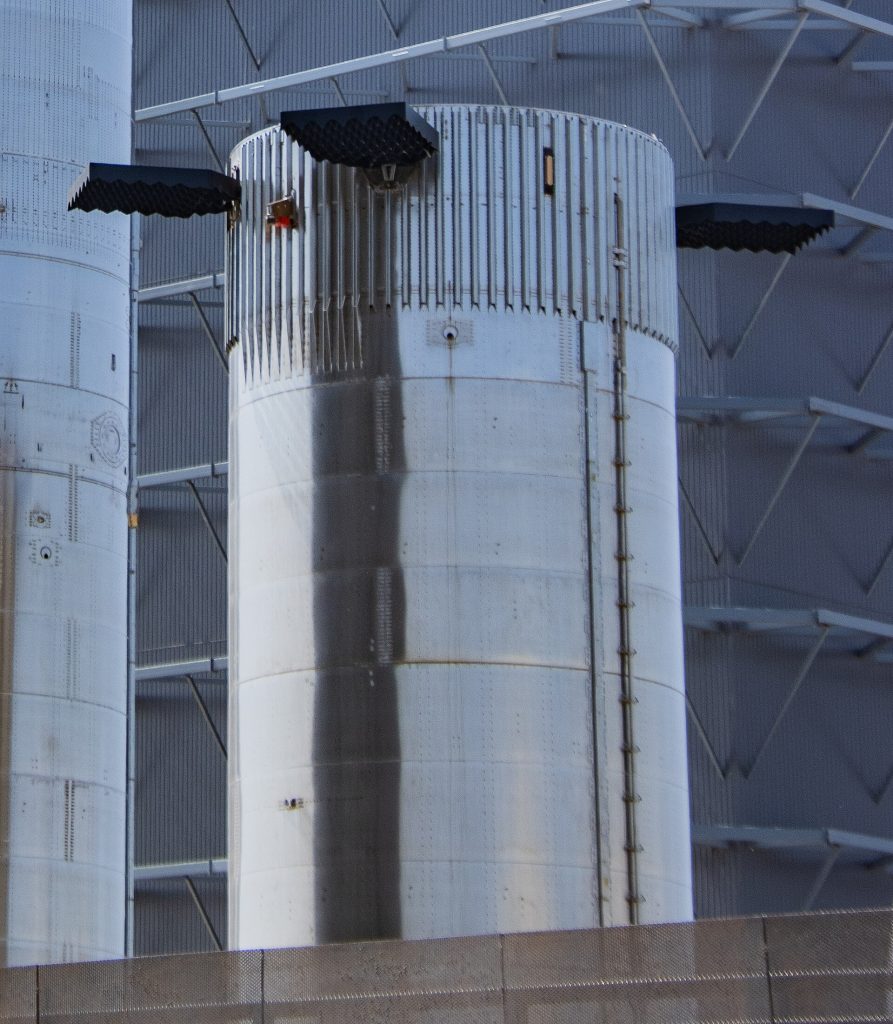
The tower stands about 480 ft by SpaceX's numbers, and Guinness World Records has listed it as the tallest launch tower in the world. It stacks the ship on the booster, holds the rocket at launch and catches the booster. Its arms, called the chopsticks, sit on a carriage that slides up and down the tower and wait wide open. The booster slides in, the arms close, and the two bars just under the fins settle onto them. SpaceX says the newest booster has three fins instead of four, each 50% bigger, with a new catch point built in.
The tower is also allowed to say no. Before a catch, the tower and the rocket check themselves, and if anything is unhealthy the booster is sent to land in the sea. On the first try a flight director also had to send a manual go before the booster finished turning back.
The first catch
At 7:25 all 33 engines lit. About two and a half minutes later most engines shut down and the ship lit its own in hot staging. The booster, about 45 miles up, flipped and fired a boostback burn toward the tower, then fell engines first with its fins steering. People on South Padre Island were warned to expect a sonic boom.
Calls off and catches
On flight six, five weeks later, the tower's automated checks found a problem with its own hardware. Musk said they had lost contact with the tower's computer and that the catch would probably still have worked, but they erred on the side of caution. The booster made a soft landing in the Gulf of Mexico. In January 2025, on flight seven, the booster was caught on the same flight where the ship was lost. In March, on flight eight, it was caught even though one of its engines failed to light, and 12 of 13 were enough. That is three catches in four tries.
Reuse
Since March 2025, no booster has returned to the tower. Some flights sent boosters into the sea on purpose to test new ways of coming back. On the first two flights of the new, bigger version in 2026, the boostback burn ended early and the booster hit the water hard; on the third, in September, it came down under control.
Booster 14, caught in January 2025, flew again at the end of May, about four months later. SpaceX says 29 of its 33 engines had flown before. Booster 15 flew again about seven months after its catch. Neither returned to the tower a second time: Booster 14 was lost over the gulf during a landing test, and Booster 15 ended its second flight in the sea as planned. The catch has been proven, but the turnaround took months, not an hour.
The ship, about 170 ft tall, has never been caught. On October 20, 2026, Musk said flight 15 will try to catch both halves, and that it should fly a little before Thanksgiving.
Questions this video answers
What does the tower actually hold?
The arms never squeeze the rocket. Two small steel bars just under the fins rest on the arms, and the whole booster hangs on them.
Why did the tower refuse the catch on flight six?
Its automated checks found a problem with the tower's own hardware. Elon Musk later said they had lost contact with the tower's computer, and the booster made a soft landing in the Gulf of Mexico.
How many catches has SpaceX made?
Three out of four tries: the first on October 13, 2024, then flights seven and eight.
Has the ship been caught?
No. Every catch so far has been the booster.
What is the tower nicknamed?
Elon Musk nicknamed it Mechazilla, and its arms are called the chopsticks.
Explore related missions
Connected by the topic: Starship