NS-36: New Shepard Flies Six to Space and Lands Booster and Capsule
The short version
Blue Origin's New Shepard launched the NS-36 crew from Launch Site One in West Texas on Oct. 8, 2025. The capsule reached an apogee of 350,438 ft, the booster landed on its pad after an engine restart, and the capsule touched down under parachutes in the West Texas desert. The crew is listed in the description as Jeff Elgin, Danna Karagussova, Dr. Clint Kelly III, Aaron Newman, Vitalii Ostrovsky and Will Lewis.
Full written account
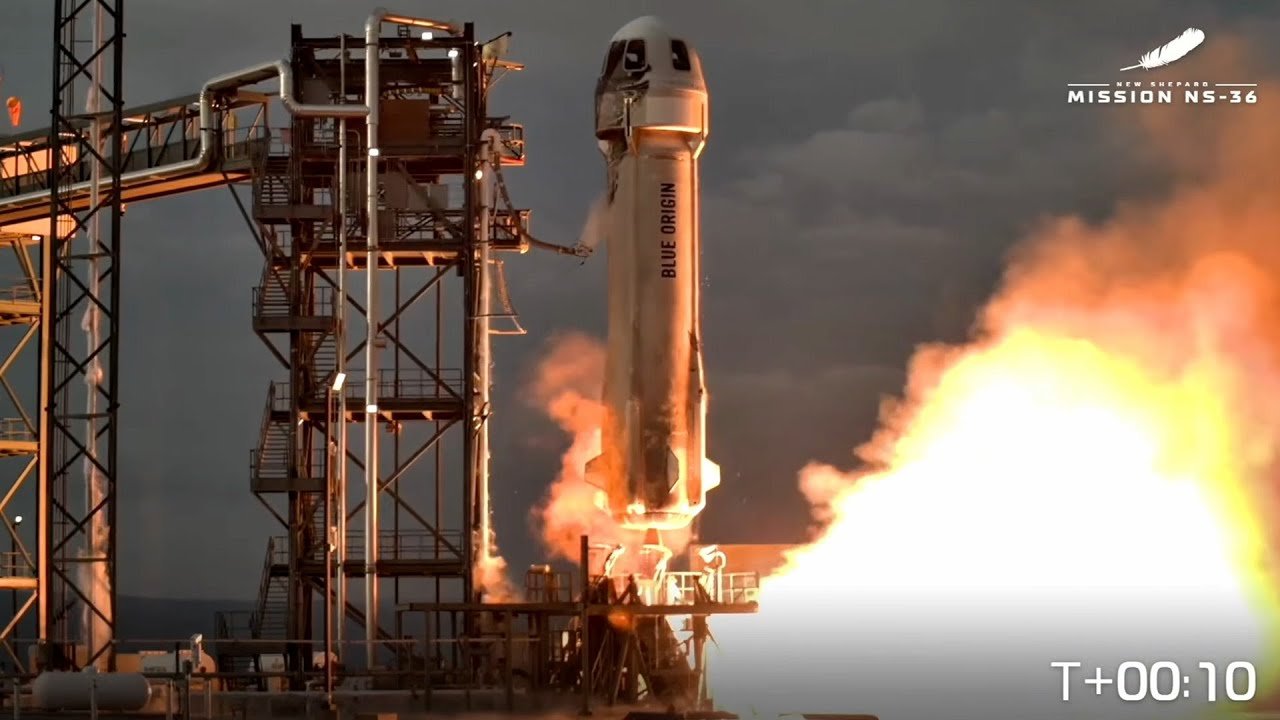
Blue Origin's New Shepard launched the NS-36 crew from Launch Site One in West Texas on Oct. 8, 2025, and both the booster and the crew capsule landed at the end of a flight of roughly ten minutes. The capsule reached an apogee of 350,438 ft, and the booster landed about 2 miles from the launch site on its landing pad. The flight was described as Blue Origin's 15th human flight.
Crew
The crew included Jeff Elgin, Danna Karagussova, Dr. Clint Kelly III, Aaron Newman, Vitalii Ostrovsky, and Will Lewis, whose identity was revealed after the launch.
Ascent
After the countdown and command engine start, New Shepard cleared the tower. The flight passed 10,000 ft, then began throttling down for Q limiting before max Q, the point of maximum dynamic pressure. The BE-3 engine then went back to full throttle with chamber pressure looking good, and the vehicle passed 70,000 ft. Infrared imaging was used to see through the clouds, including a shot from the booster looking back down on West Texas.
The engine throttled down ahead of main engine cut-off (MECO), which was confirmed, followed by separation of the capsule from the booster. The astronauts were then in zero G, taking photos and looking out the window. The capsule passed the Karman line at about 3 minutes 15 seconds into the flight and later reached apogee. The windows were described as among the biggest ever flown in space, larger than a 747 window.
Descent and landings
The booster was to land first, and at 4 minutes 30 seconds it was descending past 330,000 ft. The astronauts returned to their seats after a 1-minute warning, and the capsule reached its atmospheric pierce point. As the capsule re-entered, the astronauts were pushed into their seats with increasing Gs.
On the booster, aerodynamic control surfaces deployed to steer it autonomously back to the landing pad, followed by drag brakes. Near 10,000 ft the engine restart was confirmed, with a sonic boom heard, then the landing legs deployed and the booster touched down. Booster auto safing then began, meaning the vehicle was made ready for people to approach before maintenance for the next flight. The team has a tradition of taking a picture with the booster after a flight.
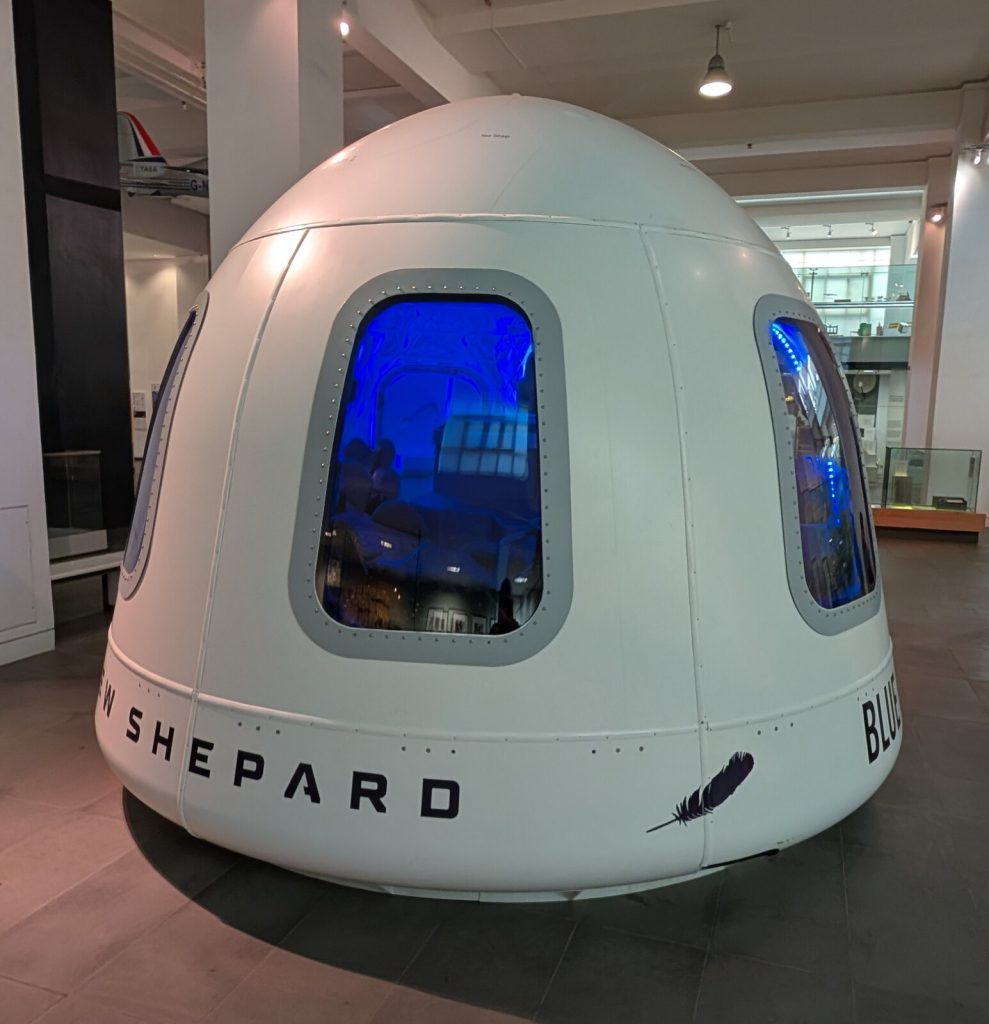
The capsule's drogues were confirmed, pulling out the main parachutes, and all three main parachutes deployed, with the landing zone within expected range limits. A retro thrust system on the base of the capsule slowed it to about 1 mile per hour just before it landed in the West Texas desert. The capsule touched down about 9 and a half minutes into the flight and the crew was welcomed back, with a recovery team en route to safe the capsule and open the hatch.
Questions this video answers
When did NS-36 launch?
On Oct. 8, 2025, from Launch Site One in West Texas.
Who flew on NS-36?
Jeff Elgin, Danna Karagussova, Dr. Clint Kelly III, Aaron Newman, Vitalii Ostrovsky and Will Lewis, whose identity was revealed after the launch.
How high did the capsule go?
The capsule reached an apogee of 350,438 ft.
Did the booster land?
Yes. After an engine restart and landing legs deploying, the booster touched down on the landing pad.
How did the capsule land?
Under three main parachutes, with a retro thrust system slowing it to about 1 mile per hour just before touchdown.
Explore related missions
Connected by the topic: New Shepard