ORBCOMM-2: Falcon 9’s Return to Flight and First Land Landing
The short version
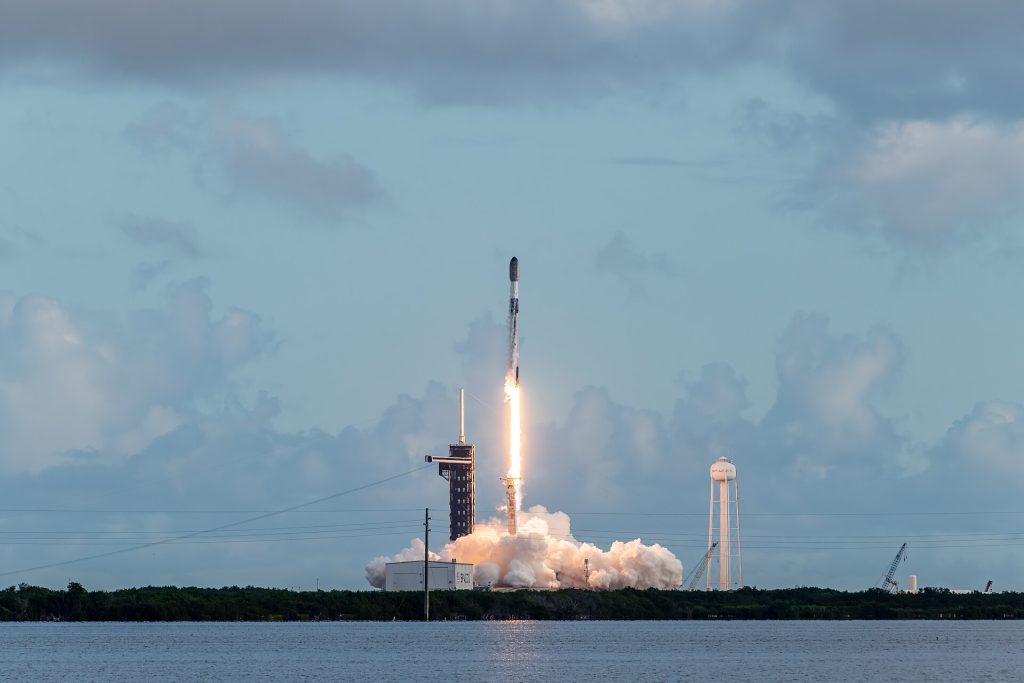
SpaceX's Falcon 9 launched 11 ORBCOMM second-generation satellites from Launch Complex 40 at Cape Canaveral on the ORBCOMM-2 mission. It was the first flight of the upgraded Falcon 9 and the return to flight after the June 28th CRS-7 anomaly. The webcast states all 11 satellites were deployed and the first stage was landed at Cape Canaveral.
Full written account
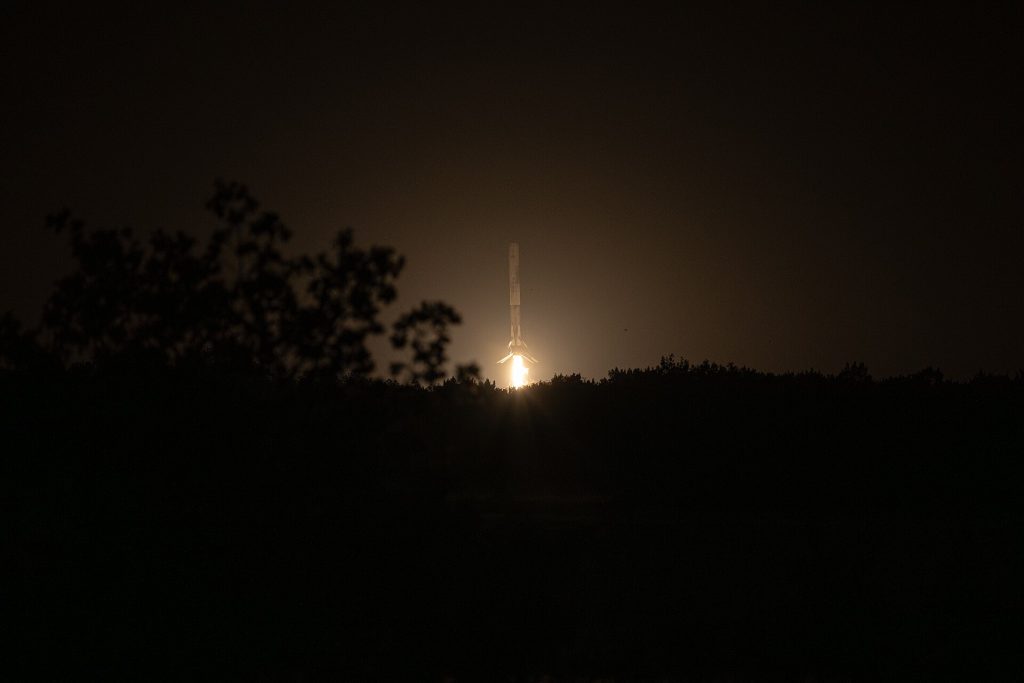
SpaceX launched 11 ORBCOMM second-generation satellites on a Falcon 9 from Launch Complex 40 at Cape Canaveral, Florida, on 22 December 2015, and for the first time brought the first stage of an orbital-class rocket back to land. Liftoff was targeted for 8:29 PM local time. The flight was SpaceX's return to flight after a roughly six-month hiatus that followed the 28 June anomaly, and it was the first flight of an upgraded Falcon 9.
Returning after CRS-7
The June 28th mishap came on the CRS-7 mission. An investigation team determined the most probable cause to be a faulty strut within the second stage. SpaceX engineers did not stop at that strut: they looked at other vulnerabilities across the Falcon 9 and applied those lessons to the launch vehicle for this flight.
The upgraded Falcon 9
The upgrades included a longer second stage and interstage, with more propellant in the second stage and an extended skirt on its engine. The vehicle also used densified, super-chilled liquid oxygen, which lets the molecules pack together more tightly so more can be carried. SpaceX gave a 33 percent increase in overall performance.
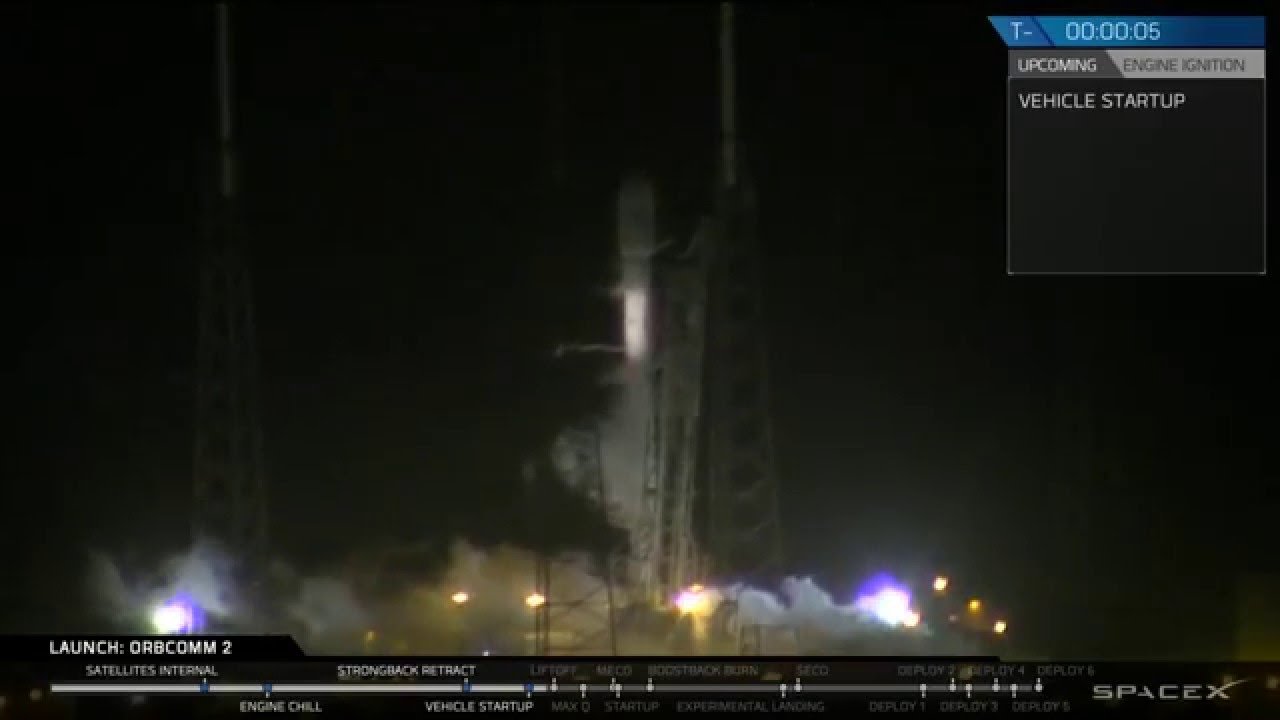
The colder oxygen changed the countdown. Earlier missions began loading it around three hours before launch, but on this flight liquid oxygen loading began at T minus 35 minutes, to keep it from warming up. The extra performance allowed heavier payloads and made landing the first stage possible. A go/no-go poll was held at T minus 38 minutes, and inside 10 minutes the pre-valves opened to chill the Merlin engines. The weather outlook was a 20 percent probability of violating conditions, with ground winds the main concern, and all systems were go at T minus 17 minutes 15 seconds.
The payload
The 11 satellites sat in the fairing in three tiers: four, then three, then four. A 12th mass simulator provided balance. Each satellite weighed about 172 kilograms, for a total of just over 2,000 kilograms. Stowed, each measured about a meter by a meter by half a meter; fully deployed, the arms extend 13 meters. They were to join 31 satellites already in ORBCOMM's constellation, including six launched by Falcon 9 in 2014, completing a 17-satellite low Earth orbit constellation as described by the mission. A parking orbit between 620 and 660 kilometers in altitude was planned.
Ascent and landing
The first stage was to take the rocket to about 100 kilometers altitude before the second stage separated. The first stage would reach an apogee of about 200 kilometers and return to Landing Zone 1, a former launch pad from the 1950s and 1960s, whose reinforced concrete pad is 282 feet in diameter. Falcon recovery manager Tripp Harris described the sequence: a boost-back burn to turn the stage toward the pad, a re-entry burn, and a final single-engine landing burn, all between 6 and 10 minutes after launch. Land offered a larger landing area than the drone ship of roughly 300 by 150 feet, and a stage that landed would not need shipping back from hundreds of nautical miles at sea.
At T minus 2 minutes 45 seconds the strongback was retracting, and the rocket was pressurized beforehand. Liftoff followed the countdown. Max Q, the point of maximum aerodynamic pressure, passed with nominal propulsion. At two minutes the speed was 1.2 kilometers per second at 11 kilometers downrange. After main engine cutoff and stage separation, fairings deployed and the first stage used cold gas thrusters to reorient before its burns. The second stage built up to 4.7 g of acceleration. The stage then touched down, and the team celebrated landing the first stage on land at Cape Canaveral.
Deployment
The 11 satellites were released in six separation events. Staggering the releases gave the satellites spacing to take their places in the constellation. The top four came first, then the bottom four, then the middle three. After the final satellite was released, SpaceX said it would deorbit the second stage. The webcast closed by calling the flight a successful return to flight and a first flight of the Falcon 9 upgrade.
Commentary
Writer Tim Urban of Wait But Why, visiting for his first launch, compared the first-stage return to launching a pencil over the Empire State Building and having it come back down onto a shoebox in a windstorm.
Questions this video answers
What did the Falcon 9 carry on this mission?
Eleven ORBCOMM second-generation satellites, which completed ORBCOMM's low Earth orbit constellation.
Where did the launch take place?
Launch Complex 40 (Space Launch Complex 40) at Cape Canaveral, Florida.
Why was this launch a series of firsts?
It was SpaceX's first flight after the June 28th CRS-7 anomaly, the first flight of the upgraded Falcon 9, and the first attempt to land a first stage on land at Landing Zone 1.
What caused the June 28th CRS-7 mishap?
The investigation team determined the most probable cause to be a faulty strut within the second stage.
How did the mission end?
All 11 satellites were deployed in six separation events, and the webcast states the first stage was landed on land at Cape Canaveral.
Explore related missions
Connected by the topic: Falcon 9