Starlink 15-25: Falcon 9 B1088 Launch and Landing at Vandenberg
The short version
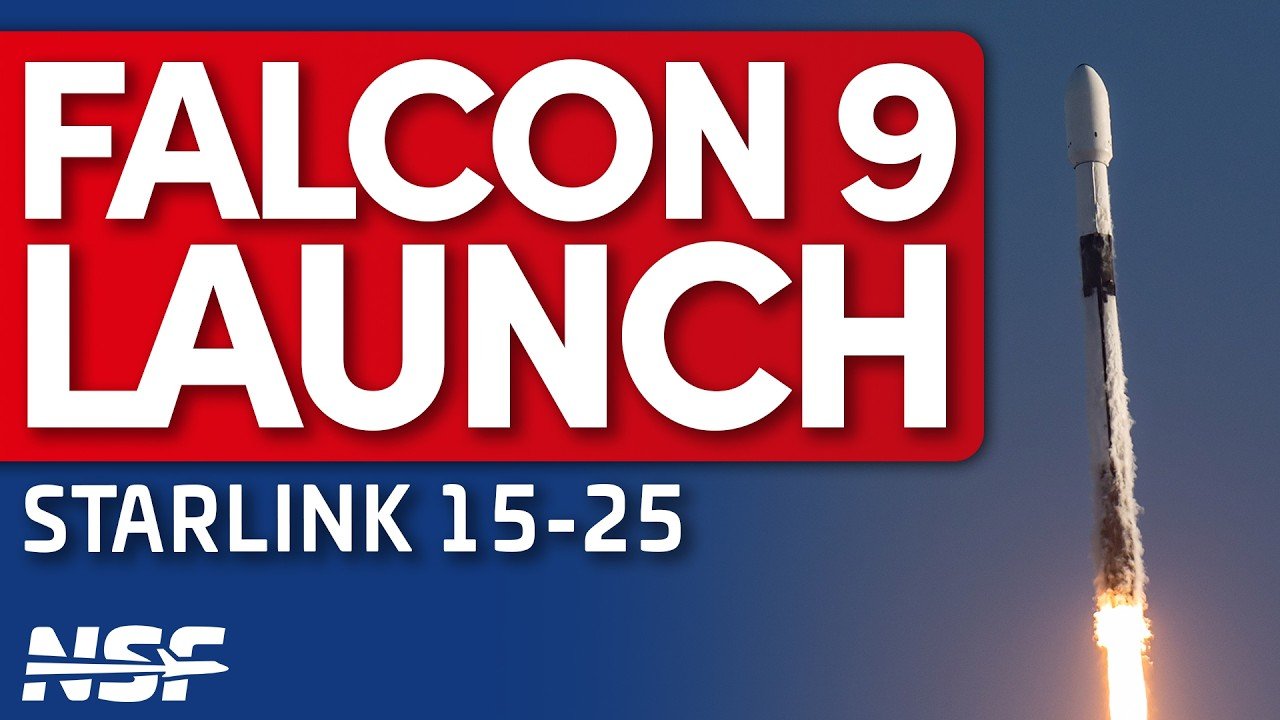
Live coverage of SpaceX's Falcon 9 launch of 27 Starlink V2 Mini satellites on the Starlink 15-25 mission from SLC-4E at Vandenberg Space Force Base. Booster B1088 landed on the droneship Of Course I Still Love You, and the hosts called a nominal orbit insertion for the second stage. The stream also covers the countdown timeline, the booster's history and Vandenberg's role as a launch site.
Full written account
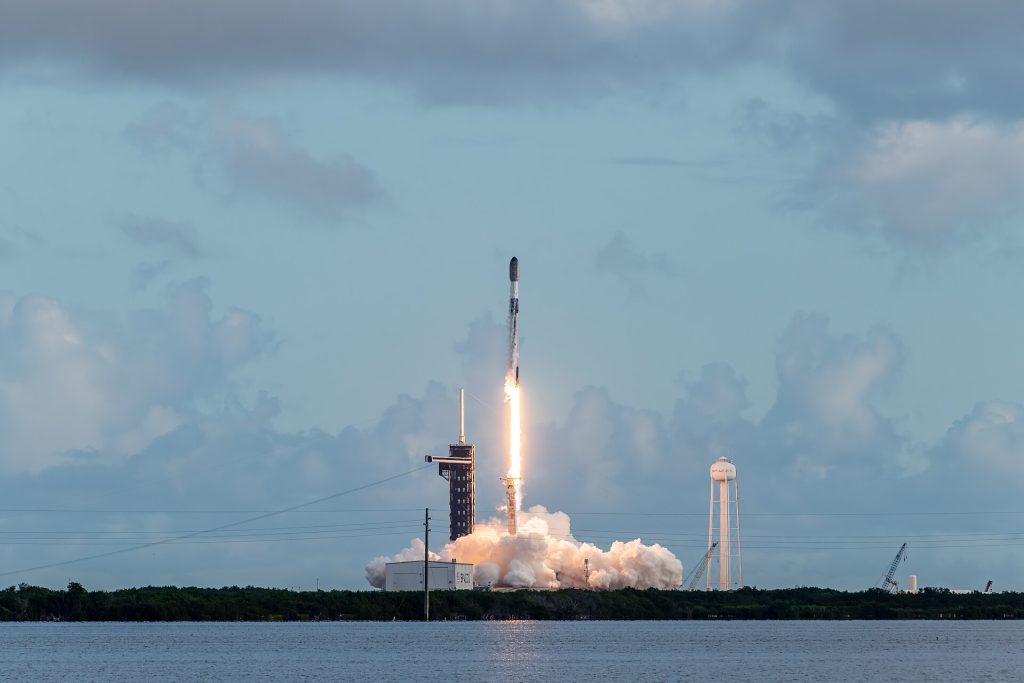
SpaceX launched 27 Starlink V2 Mini satellites on a Falcon 9 from Space Launch Complex 4E at Vandenberg Space Force Base on the evening of October 12, with liftoff at 17:11:47 PDT (00:11:47 UTC on the 13th). The Starlink 15-25 mission flew booster B1088 for the 20th time, only about 36 days after its previous flight, and the first stage landed on the drone ship Of Course I Still Love You. Nominal orbit insertion was confirmed. NASASpaceflight carried the launch live.
The mission and the booster
The target was a low Earth orbit of 251 by 266 km at 70.01° inclination, with a payload of approximately 15.5 tonnes. Because launches from the West Coast cannot head east over land, this one flew south-southeast over water. The launch window ran from 16:00 to 20:00 PDT.
B1088 had previously flown 14 Starlink missions, along with NROL-126, Transporter-12, SPHEREx and PUNCH, NROL-57 and USS-366. The turnaround listed for it was 36 days, 8 hours, 33 minutes and 6 seconds. The satellite count launched stood at 551 and was to reach 578 after the mission. The fairing halves were to be recovered by the vessel Doug, which had been brought to the West Coast only a couple of weeks earlier.
The stats listed for the flight:
- SpaceX's 727th launch overall and 118th of the year
- the 234th launch from SLC-4E
- the 693rd orbital flight of Falcon 9
- Earth's 240th orbital launch of the year
- the 229th landing on Of Course I Still Love You out of 236 attempts
- the 670th landing of a Falcon booster out of 682 attempts
Weather and the site
Field reporter Magnus Berggren, on Surf Beach, had expected fog but found a clear sky after a tropical storm over the weekend; wind was noticeable but within limits. A camera south of the Los Angeles area showed rain, but it was not in the recovery zone and the rocket would pass above those clouds. The range was reported green about 45 minutes before launch.
The hosts noted that Vandenberg had become the most active launch site in the world. They also recalled that SLC-6 was once meant to be the West Coast Space Shuttle pad, with a crew access tower, intended for military polar-orbit missions. After the Challenger disaster, operations shifted away from it. SLC-6 was demolished in June of this year, with a Falcon pad planned in its place. No crew has ever launched from the West Coast.
The countdown
The go for propellant load came at about T-35 minutes. RP-1 and liquid oxygen went into stage one, and RP-1 into stage two. Venting about 20 minutes before launch was described as nominal boil-off from the liquid oxygen. The RP-1 is cooled only a little, so the lines are thermally conditioned before the very cold liquid oxygen flows and cracking is avoided. Liquid oxygen loading began at T-16 minutes.
Because SpaceX uses super-chilled propellants, the hosts described the launch as load and go: once loading begins, the vehicle is committed to that T0, and liftoff comes about 90 seconds after loading finishes. After engine chill and strongback retract, the strongback leaned back about halfway and stayed there through liftoff, since Vandenberg uses an older transporter. Falcon 9 then entered startup, the launch director gave the go for launch, the water deluge started about 7 seconds before liftoff, and the engines lit with the green flash of TEB.
Flight
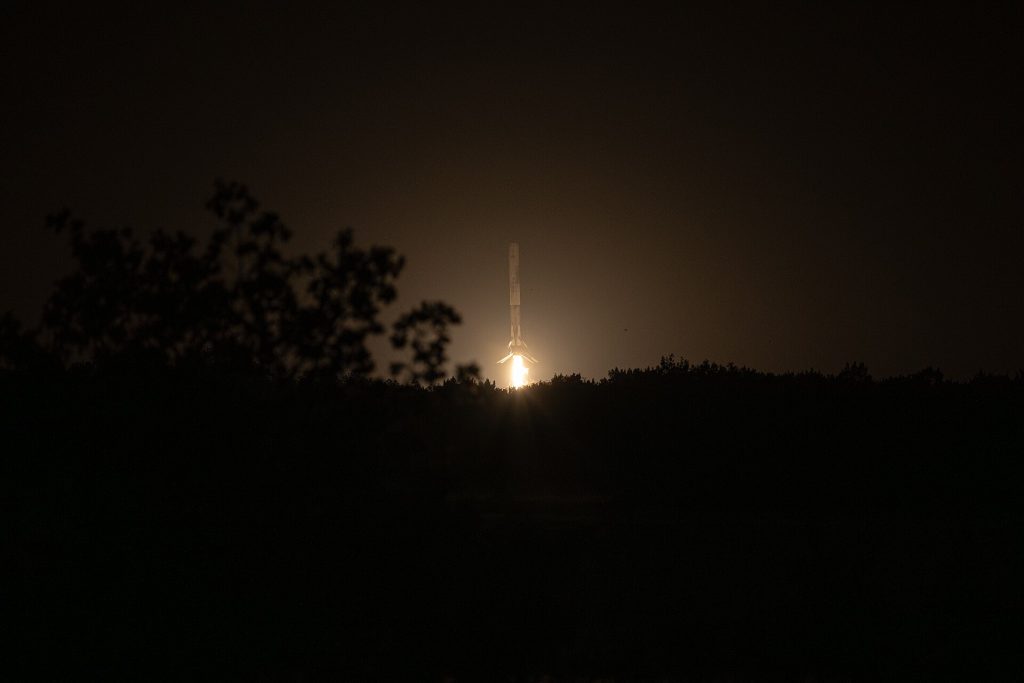
Liftoff was followed by supersonic flight, Max Q, MECO, stage separation and second-stage ignition on time. The fairing halves fell away and the grid fins opened. The first stage did an entry burn, starting on one engine and moving to three, which the hosts described as using exhaust to shield the booster from plasma heating. At about 20 km altitude it was travelling 4,200 km an hour. A single-engine landing burn followed, the landing legs deployed, and stage one landing was confirmed on the drone ship. Stage two reached nominal orbit insertion at 27,700 km an hour, with a second burn of a few seconds still to come before deployment.
A train from the nearby Amtrak station honked through the final minutes of the countdown, and Berggren said it conflicted with a scheduled service, since trains are normally held for launches. He called it probably the nicest launch he had seen at Vandenberg in at least a year.
What came next
The hosts previewed the next launch: CRS-35 to the International Space Station on cargo Dragon C211, atop B1096 on its eighth flight, with a return to launch site landing at LZ-40.
Questions this video answers
What did this mission launch?
27 Starlink V2 Mini satellites aboard a Falcon 9.
Where did it launch from?
Space Launch Complex 4E at Vandenberg Space Force Base.
Which booster flew and where did it land?
Booster B1088 flew and landed on the droneship Of Course I Still Love You.
What was the target orbit?
A low Earth orbit of 251×266 km at 70.01 degrees inclination.
What is the load-and-go window?
Once propellant loading begins, the launch is committed to the T0 because of the super-chilled propellants; liftoff comes about 90 seconds after prop load finishes.
Explore related missions
Connected by the topic: Falcon 9