Starship Flight 14: First Orbit, 26 Starlink V3s and an Early Return
The short version
Starship Flight 14 reached orbit on September 28 after a vacuum engine failed on ascent and the team polled go for orbit. It deployed Starlink V3 satellites in daylight, with full-colour video of the deployment, and the flight was cut short to just over three hours rather than the roughly ten hours originally planned. The host describes it as not 100% successful, noting engine failures on V3 Raptors.
Full written account
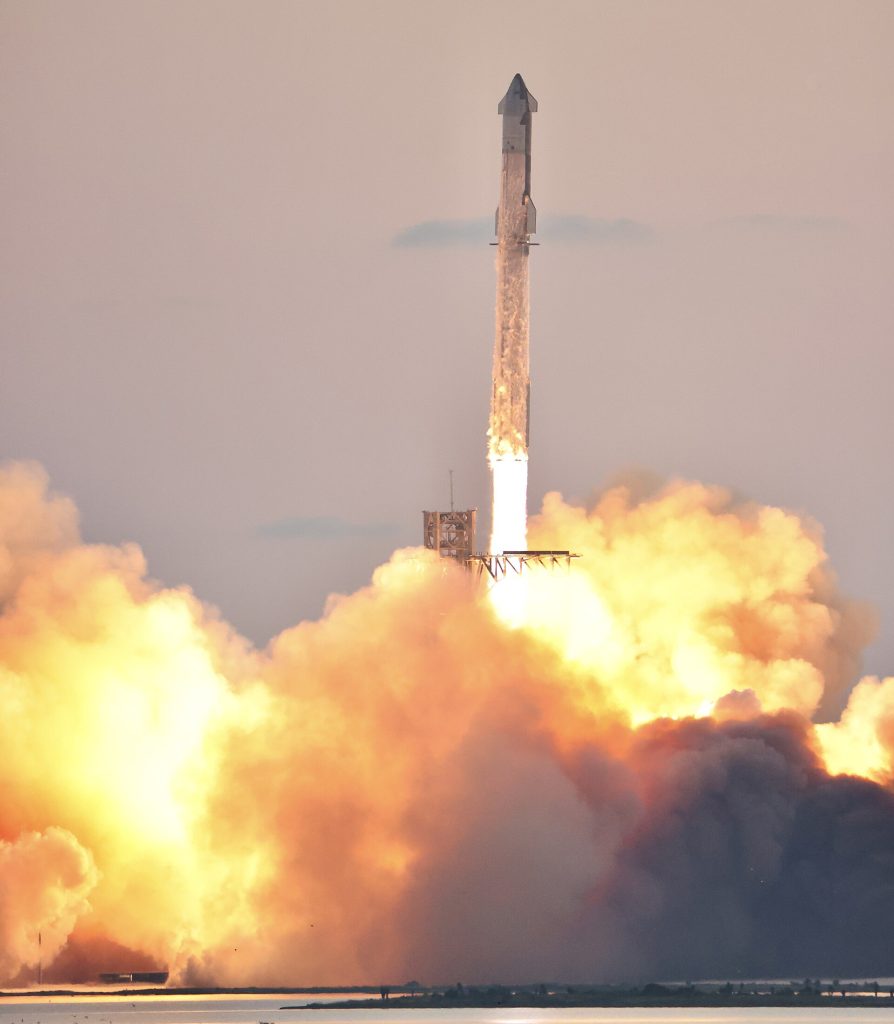
Starship Flight 14, launched on September 28, reached orbit for the first time, with a vacuum engine failure on ascent that nearly stopped it from going. The date was also the anniversary of the Falcon 1 flight that reached orbit in 2008, SpaceX's last chance at the time. Starship had never gone all the way to orbit, because the upper stage is built to survive re-entry and cannot be left in orbit uncontrolled.
A launch moved to the morning
The flight followed two successful Block 3 flights, in which engines had also caused trouble: a vacuum engine went out on the first, and the booster engines had trouble relighting on both. The launch returned to an early-morning slot, planned for 7:15 a.m. and lifting off around 7:45, so the primary landing zones would be in daylight. Three ship landing zones were available, two for orbital and one for suborbital flights, plus a booster landing site. Twenty-six Starlink satellites were in the bay.
The booster
Staging used an asymmetric engine-lighting sequence on Starship to push the pair apart. About four minutes after staging the booster relit its inner ring of engines, dropped to five, then to three for a soft touchdown in the Gulf. The camera went underwater before the image froze. Footage on the NASA Spaceflight stream showed it explode, which many people think began roughly where the flight termination charges are. The previous two booster failures had been blamed on ice clogging lines.
Go for orbit
With less than a minute left in the initial boost, a vacuum engine failed. The plan put Starship on a suborbital trajectory with about 15 minutes to decide on orbit. A SpaceX host first said the additional burn would not be done, then, after roughly a minute, said they were not giving up yet. After about eight minutes the poll came back: "we are go for orbit."
The target was 275 km, 100 km higher than any previous Starship. One sea level Raptor fired about 20 seconds, changing velocity by about 330 km per hour, or 19 m per second, under half a G.
Starlink V3 deployment
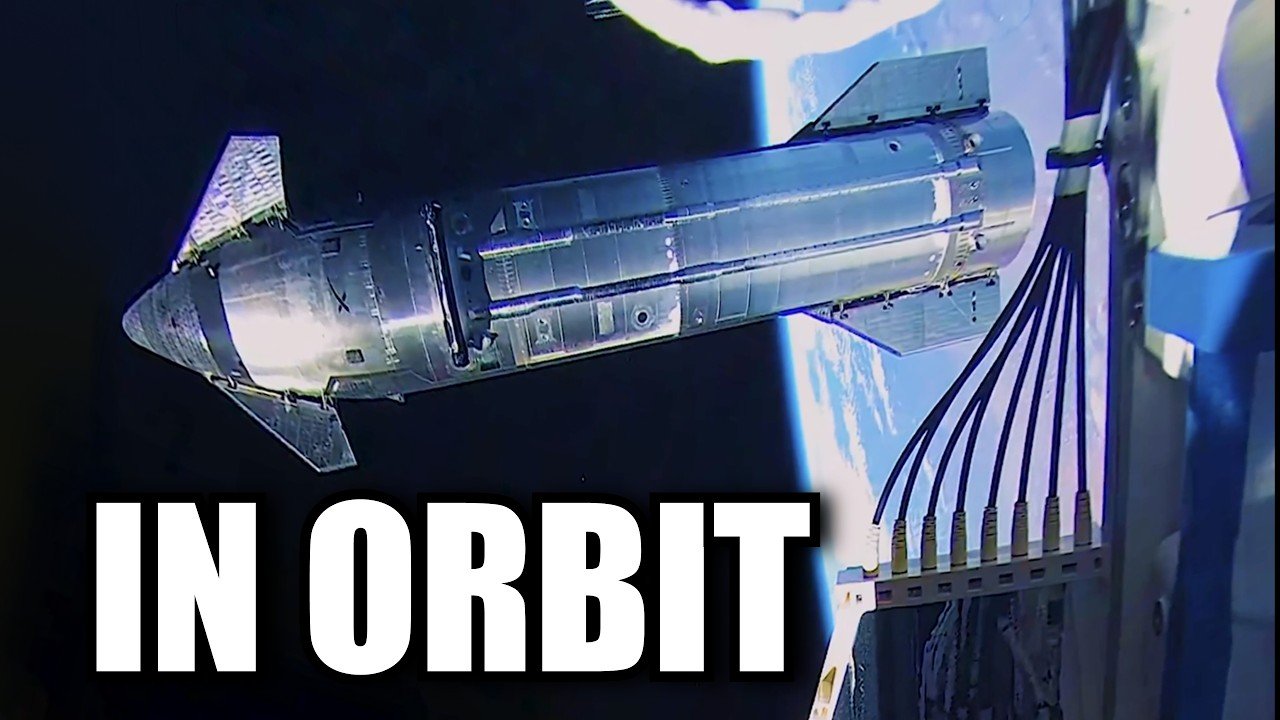
Ship return options were the second orbit, landing north of Hawaii, or orbit six and later, west of Chile. The satellites were released at about 1 m/s, around one per minute. This was the first daylight deployment, so engineering cameras on the V3 Starlinks captured the ship in colour, the first time a camera on a V3 Starlink showed any of its structure. The final satellites deployed carried bright lights to scan the heat shield.
Early return
The team took the first checkpoint and cut the flight to about one and three-quarter orbits rather than six. Before deorbit, venting suggested RCS thrusters were used to drop Starship below the Starlinks so exhaust would not hit them. One engine then fired a few seconds, removing about 100 m/s. The host calls it a short mission, but still three times longer than any previous one. Re-entry went largely as planned, and Starship performed its flip and burn north of Hawaii.
Questions this video answers
Did Starship Flight 14 reach orbit?
Yes. After a go/no-go poll it was declared go for orbit and performed a burn targeting a 275 km orbit.
How many Starlink satellites were on board?
26 Starlink V3 satellites were in the bay.
Why was the flight shortened?
The host says SpaceX erred on the side of caution because V3 Raptors are still failing during ascent, and a failure in orbit would be a disaster. The flight was cut to just over three hours.
Where did Starship land?
In the landing zone just north of Hawaii.
What happened to the booster?
It made a soft touchdown attempt in the Gulf, then appeared to explode, which many think began near the flight termination charges.
Explore related missions
Connected by the topic: Starship