Starship Flight 14: How V3 Reached Orbit and Deployed 26 Satellites

The short version
A full engineering breakdown of Starship V3, covering methane propellant, stainless steel, heat shield tiles and Raptor engines. It traces the test campaign from Starhopper through the Flight 5 booster catch to Flight 14 on September 28, 2026, which reached orbit and deployed 26 Starlink V3 satellites. It also lists what remains unproven for Artemis and Mars.
Full written account
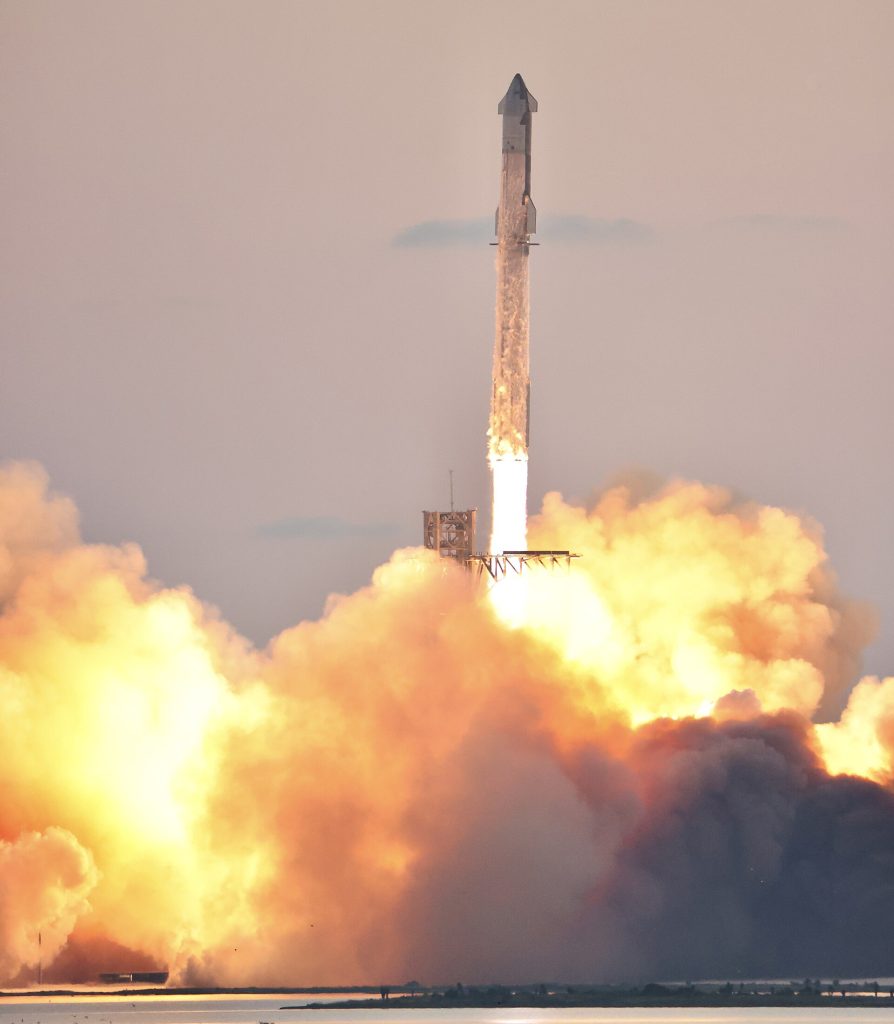
On September 28, 2026, Starship lifted off for its first orbital attempt. At 25 minutes and 19 seconds, one Raptor ignited in space, and 19 seconds later Starship was in Earth orbit for the first time. It then released 26 Starlink V3 satellites, and SpaceX established contact with all of them. None of the first 13 flights had entered a sustained Earth orbit.
Flight 14
One booster engine shut down during ascent, and one vacuum engine on the ship stopped early. The remaining engines burned longer, placing Starship on a passively safe suborbital path. Controllers confirmed that the sea-level engines needed for later maneuvers were healthy before the orbital burn.
Because of the engine issue, the team shortened the planned time in orbit. Just over 2 hours after launch, a sea-level Raptor ignited for the first Starship de-orbit burn. After re-entry over the Pacific, the ship descended belly first, reignited its engines to flip upright, and splashed down in the northern Pacific a little over 3 hours after liftoff, roughly 7 hours earlier than planned.
The V3 vehicle
Starship V3 stands 407 ft tall, about 44 ft taller than the Saturn V, and 29.5 ft wide. The 236 ft Super Heavy booster carries 33 Raptor 3 engines, and the 171 ft ship has three sea-level and three vacuum Raptors. V3 changed the booster from four grid fins to three larger ones and integrated the hot stage structure at the top of the booster. Super Heavy carries no landing legs; the launch tower's arms catch it.
Design choices
Starship burns liquid methane with liquid oxygen. Methane produces less soot than kerosene, and it is denser and far warmer as a liquid than hydrogen, which must be kept near -423°F. Mars has abundant carbon dioxide, and in principle the Sabatier reaction could make methane there, though Starship has not demonstrated the mining, power and chemical plant needed.
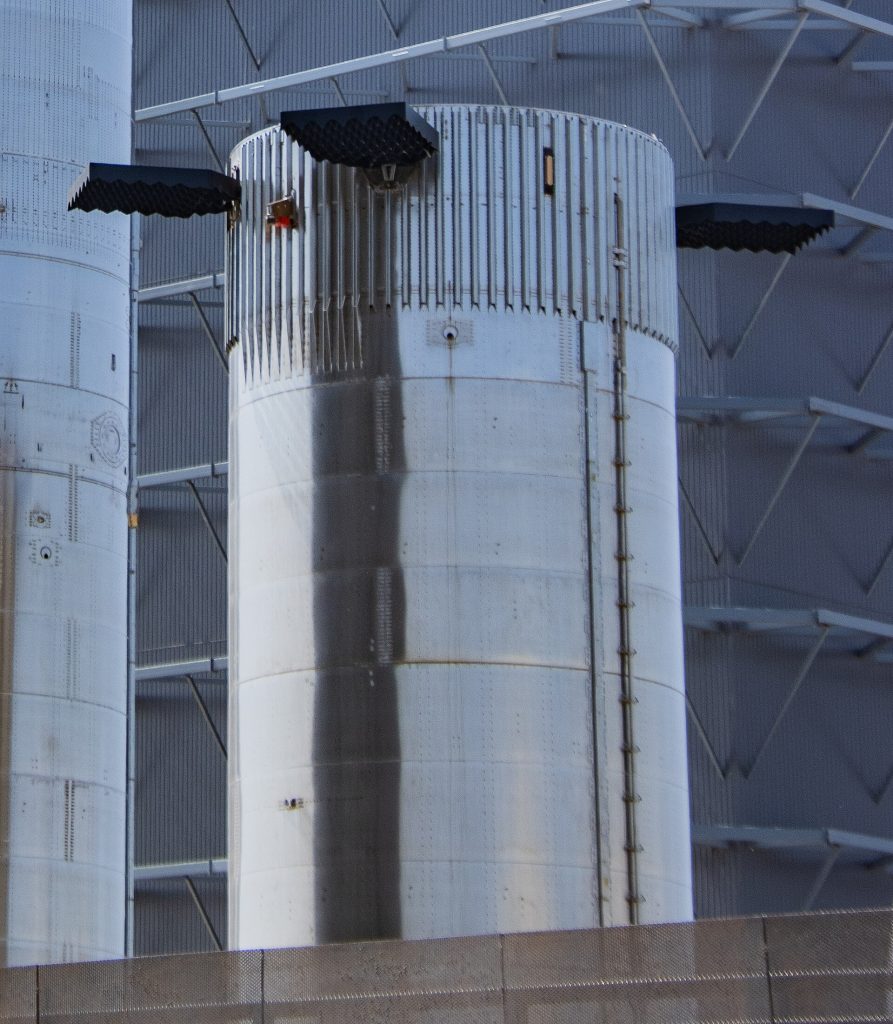
Early Mars concepts specified carbon composite tanks, but SpaceX switched to stainless steel, which keeps strength at cryogenic temperatures, tolerates more heat, costs less and can be revised quickly. The windward side is covered by silica-based tiles. Flight 14 carried stronger retention hardware, curved tiles meant to reduce heating through gaps, and two tiles recovered from an earlier vehicle and flown again.
Raptor uses full-flow staged combustion. One pre-burner runs fuel-rich gas through the methane turbine and another runs oxygen-rich gas through the oxygen turbine, which supports high chamber pressure and repeated starts at the cost of complexity.
Test campaign
Starhopper climbed to roughly 500 ft in August 2019. SN8 reached about 7.8 mi and made a controlled belly-first descent, but low methane header tank pressure prevented a safe landing. SN15 completed the whole sequence in May 2021 and remained standing.
The first integrated flight on April 20, 2023 ended with the vehicle tumbling and a delayed destruct command. Flight 2 achieved the first hot stage separation. On Flight 4 both stages made controlled returns. On October 13, 2024, Flight 5 caught the Super Heavy booster on the tower arms less than 7 minutes after launch. Flight 9 was the first to reuse a flown booster. Flight 12 in May 2026 was the first V3 launch and the first from Starbase Pad 2.
What remains
SpaceX has not yet caught and reflown the orbital ship, shown rapid turnaround of both stages, placed more than 110 US tons into orbit in a fully reusable configuration, or transferred propellant between separate Starships. SpaceX said it planned to attempt catching both booster and ship on Flight 15. NASA described a planned 2027 demonstration in which a Starship V3 test article would dock with Orion in low Earth orbit.
Questions this video answers
When did Starship reach orbit on Flight 14?
On September 28, 2026, Starship lifted off for its first orbital attempt, and a Raptor ignition in space put it in Earth orbit.
What did Flight 14 deploy?
It released 26 Starlink V3 satellites, and SpaceX established contact with all of them.
How did Flight 14 end?
It splashed down in the northern Pacific a little over 3 hours after liftoff, roughly 7 hours earlier than planned.
When was the first booster catch?
Flight 5, on October 13, 2024, was the first time a Super Heavy booster returned to its launch tower and was caught by the arms.
What has Starship not yet demonstrated?
It has not caught and reflown the orbital ship, shown rapid turnaround of both stages, or transferred propellant between separate Starships.
Why does Starship use liquid methane?
It is less sooty than kerosene, denser and warmer than liquid hydrogen, and could in principle be made on Mars with the Sabatier reaction.
Explore related missions
Connected by the topic: Starship