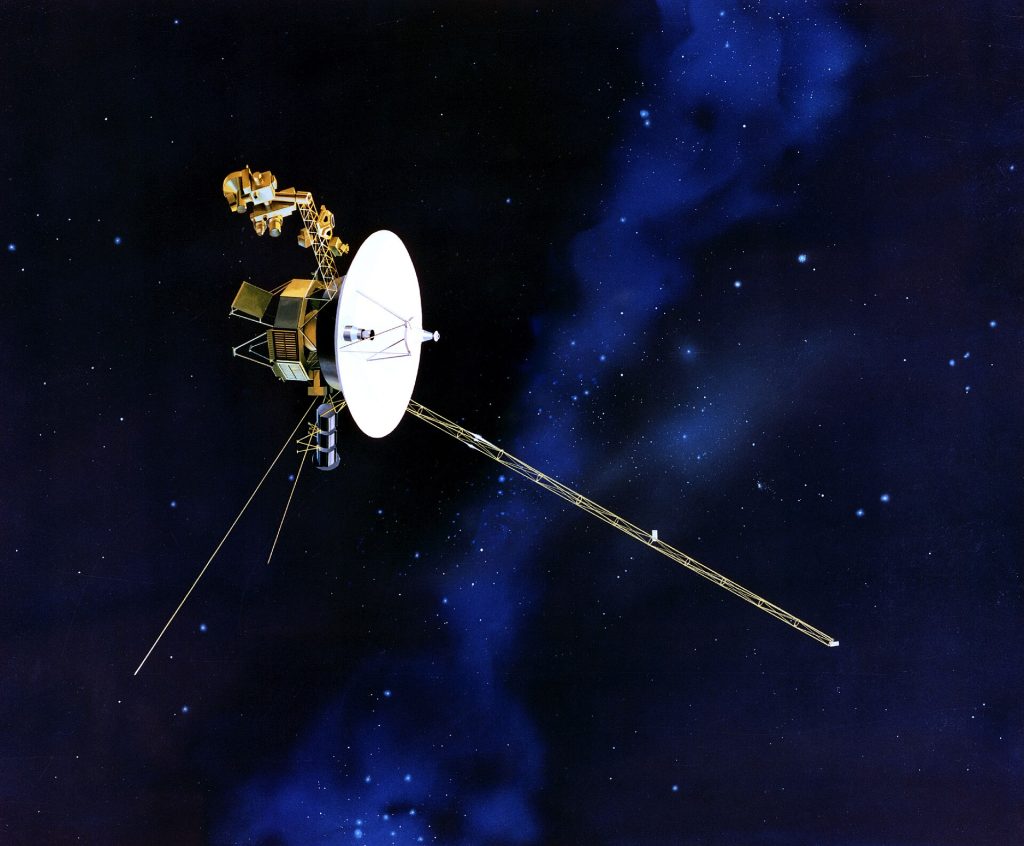
Voyager 1 and 2: From the Grand Tour to Interstellar Space
The short version
A documentary on the Voyager probes, launched from Cape Canaveral in 1977, following them past Jupiter, Saturn, Uranus and Neptune and out to interstellar space. It also covers the golden records and the later New Horizons mission to Pluto.
Full written account
Voyager 2 is still the only spacecraft to have visited Uranus and Neptune, and that mission nearly depended on a single moon: had Voyager 1's flyby of Titan failed, Voyager 2 would have been re-routed to Titan, giving up the ice giants. The twin probes launched from Cape Canaveral in the late summer of 1977, and Voyager 2 went first.
From the Grand Tour to Voyager
JPL physicist Gary Flandro noted that a planetary alignment, occurring only once every 175 years, would allow a visit to each outer planet. By 1966 JPL had drawn up the planetary Grand Tour, with four probes. Estimated costs rose above a billion dollars while Congress favoured the Space Shuttle, and the Grand Tour was cancelled in 1971. It was replaced by a scaled-back Mariner mission pitched as a Jupiter and Saturn mission only, on trajectories that left the door open for further flybys. A few months before the 1977 launch, NASA voted to rename the expedition Voyager.
Jupiter and Saturn
Voyager 1 overtook Voyager 2 in mid December 1977, despite a turbulent launch on 5 September. It studied Jupiter for around four months and took over 19,000 images, with closest approach on 5 March 1979. It found a faint ring system and an active volcanic eruption on Io, the first active volcanism seen on a body other than Earth. Voyager 2 followed in July 1979.
Voyager 1 reached Saturn's vicinity in late August 1980 and came within 124,000 km of its clouds in mid November. It measured a Saturn day at 10 hours 39 minutes. On 12 November 1980 it passed within 4,000 km of Titan's clouds to probe the atmosphere. Voyager 2 passed Saturn on 26 August 1981, and a scan platform malfunction was rectified by engineers.
Uranus and Neptune
Voyager 2 passed about 81,000 km from Uranus on 24 January 1986. It measured a day at 17 hours 14 minutes, with the axis tilted almost 98 degrees, and found the magnetic field inverted at the same angle. It discovered 11 new moons, including Cordelia and Ophelia, and mapped fault lines on Miranda.
On 25 August 1989 it passed barely 5,000 km above Neptune's North Pole and about five hours later flew by Triton from about 40,000 km. Triton orbits retrograde and is thought to be a captured Pluto analog. Voyager 2 found evidence of cryovolcanism, a thin atmosphere and six new Neptunian moons.
Out of the heliosphere
On Valentine's Day 1990 Voyager 1 captured the family portrait that includes the pale blue dot, from over 40 astronomical units. Its cameras were then powered down for good. Voyager 1 is thought to have crossed the termination shock around December 2004 at 94 astronomical units, entered the heliosheath in 2005, and passed the heliopause in August 2012 at more than 121 astronomical units, with a 9% rise in cosmic rays recorded. Voyager 2 crossed in November 2018 at around 100 astronomical units.
At the turn of 2024 Voyager 1 is around 160 astronomical units from the Sun, and by 2025 it will lack the power to operate even one instrument. Voyager 2 should stay in touch until the mid 2030s.
Golden records and New Horizons
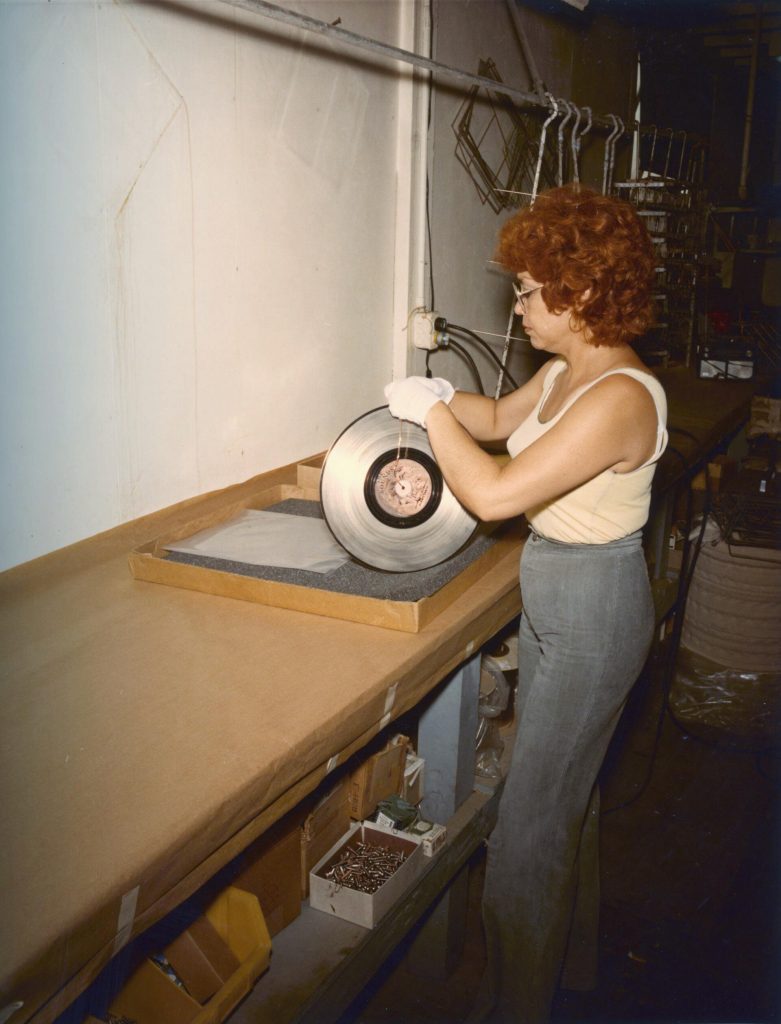
Both probes carry golden records with greetings, sounds and images, coated in uranium 238, with a pulsar map based on 14 nearby neutron stars. New Horizons, launched on 19 January 2006, flew by Pluto on 14 July 2015 at 122,000 km and met Arrokoth on New Year's Day 2019. It carries ashes of Clyde Tombaugh.
Questions this video answers
Which probe visited Uranus and Neptune?
Voyager 2 is still the only spacecraft to have visited Uranus and Neptune. It reached Uranus on 24 January 1986 and Neptune on 25 August 1989.
When did the Voyagers reach interstellar space?
Voyager 1 passed through the heliopause in August 2012 at more than 121 astronomical units, becoming the first man-made object to reach interstellar space. Voyager 2 followed in November 2018 at around 100 astronomical units.
Why was the Titan flyby so important?
Voyager 1's flyby of Titan was its principal objective at Saturn. Had it failed, Voyager 2 would have been re-routed past Titan, giving up Uranus and Neptune.
What do the golden records contain?
Both carry a pair of golden records with sounds, greetings and images of Earth, plus instructions for playing them and a pulsar map based on 14 nearby neutron stars.
When and where did the Voyagers launch?
Both lifted off from Cape Canaveral in the late summer of 1977. Voyager 2 launched first; Voyager 1 followed a few weeks later on 5 September.
Explore related missions
Connected by the topic: Voyager and Grand Tour probes