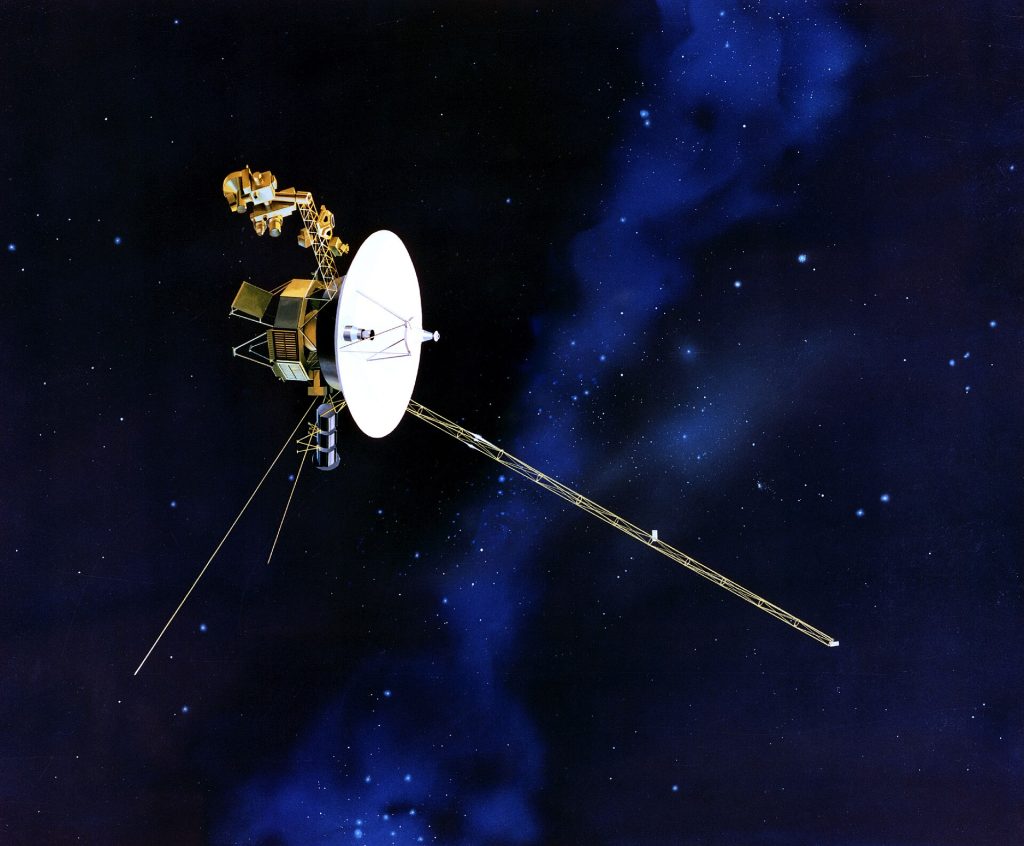
Voyager 1 and Voyager 2
What happened
-
Watch this moment · 4:12
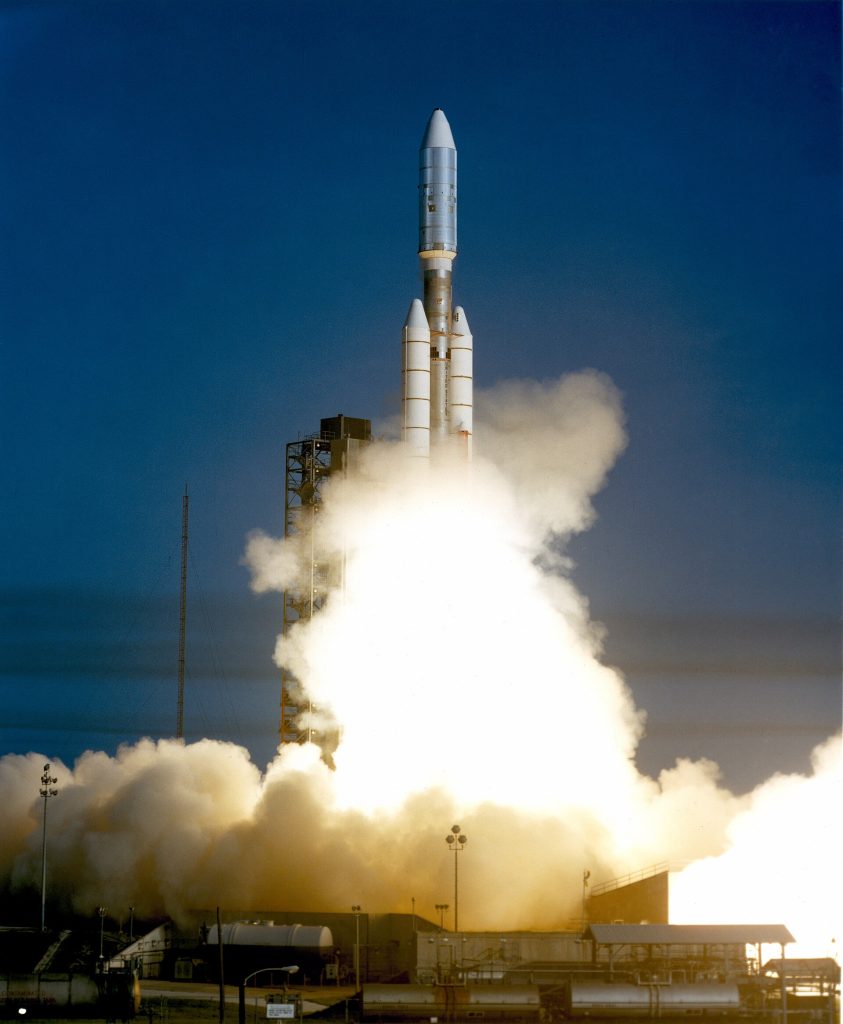
Voyager 2 launches
-
Watch this moment · 5:05
Voyager 1 launches with a fuel line leak
Kosmo says instruments indicated a leak and the first stage fell short of velocity. A reserve of 500 kg of fuel placed the craft in orbit, about 3.5 seconds from disaster according to NASA staff.
-
Watch this moment · 5:05
Voyager 1 overtakes Voyager 2
Kosmo says this happened shortly after both craft reached the asteroid belt, measured by distance from Earth.
-
Watch this moment · 4:12
In the asteroid beltapproximately
Voyager 2's main radio transmitter fails
-
Watch this moment · 16:53
Voyager 1 makes closest approach to Titan
Kosmo says the probe passed about 6,500 km above the haze-covered moon, and other instruments gave data on its atmosphere.
-
Watch this moment · 25:26
Voyager 2 begins observing Uranus
Kosmo reports the discovery of a tilted magnetic field and thin rings at the planet.
-
Watch this moment · 35:19
Voyager 2 approaches Triton at Neptune
Kosmo describes Triton's thin atmosphere and eruptions of gas jets carrying dust.
-
Watch this moment · 38:08
After the primary missionsapproximately
Voyager 1 captures the Family Portrait mosaic
-
Watch this moment · 45:00
Voyager 1 crosses the heliopause
Kosmo says this showed in more high-energy particle collisions and fewer particles arriving from the Sun's direction.
Videos about this mission
The videos, in date order
Drag, zoom or press play to watch them on this page.
May 2025 – July 2026
Drag to explore dates · Select a video to preview.
Dates are when each video was first published on YouTube.
Two probes and a message for the far future
Curious Droid says the mission took advantage of a favourable planetary alignment to explore Jupiter and Saturn.
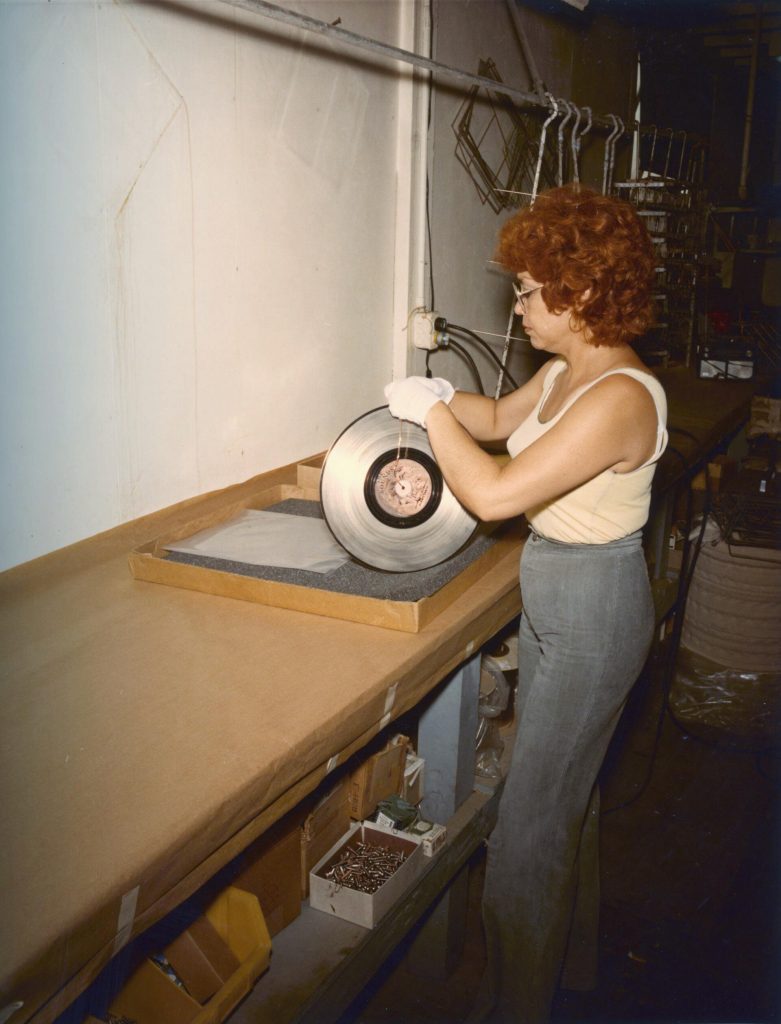
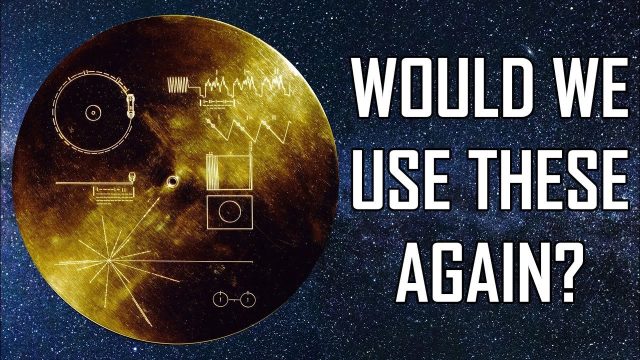
Pioneer 10 and 11 had already carried small metal plaques. Curious Droid says the Voyagers were given a more ambitious time capsule, a gold-plated copper record that can be played with its own stylus at 16 2/3 RPM. It holds 115 images, natural sounds, music and greetings in 55 languages, and 12 copies exist, two of them in space.
Two launches that nearly failed
Kosmo reports that both launches ran into trouble. On Voyager 2, systems stopped responding and the trajectory strayed, and the software was said to switch systems off or into backup modes at random before engineers stabilised the flight.
On Voyager 1, a fuel line leak left the first stage short of velocity. Kosmo says 500 kg of reserve fuel saved the launch, which NASA staff described as 3.5 seconds from disaster. Voyager 2's main radio transmitter later failed in the asteroid belt, and a backup took over.
From Jupiter's volcanoes to Neptune's moon Triton
Kosmo traces the flybys. At Jupiter, Voyager 1 gave a first proper look at the Great Red Spot and found active volcanoes on Io. Images of Europa prompted the hypothesis of a hidden ocean.
At Titan, Voyager 1's cameras could not see through the haze, but other instruments measured an atmosphere about one and a half times as dense as Earth's. Voyager 2 later found Uranus's tilted magnetic field and thirteen rings, flew past Miranda, and reached Neptune and Triton in 1989. Kosmo gives remaining power as 20 percent at Uranus and 9 percent at Neptune.
Open questions about Voyager 1's 2021 signals
Kosmo says Voyager 1 transmitted strange signals in 2021, detected by its charged particle detectors, and that their origin is still debated. Some scientists believe the craft heard the hum of interstellar space, while others think its instruments were caught in a powerful solar wind eruption. A third hypothesis is that space beyond the heliosphere has a structure like soap foam. None of these is an official finding.
Flight history versus the record's far future
Kosmo covers the launches, planetary flybys and the journey beyond the heliosphere. Curious Droid looks ahead instead, asking whether a Voyager 3 would still carry a golden record.
Curious Droid says a uranium 238 cover protects the record, and cites calculations by Oberg that both records could last about 5 billion years. It says fused quartz would last longer but be hard for finders to read, so a metal vinyl-style record might still be best.
Sources: The facts and written text on this page come from the 2 videos on this page, by Curious Droid, Kosmo.