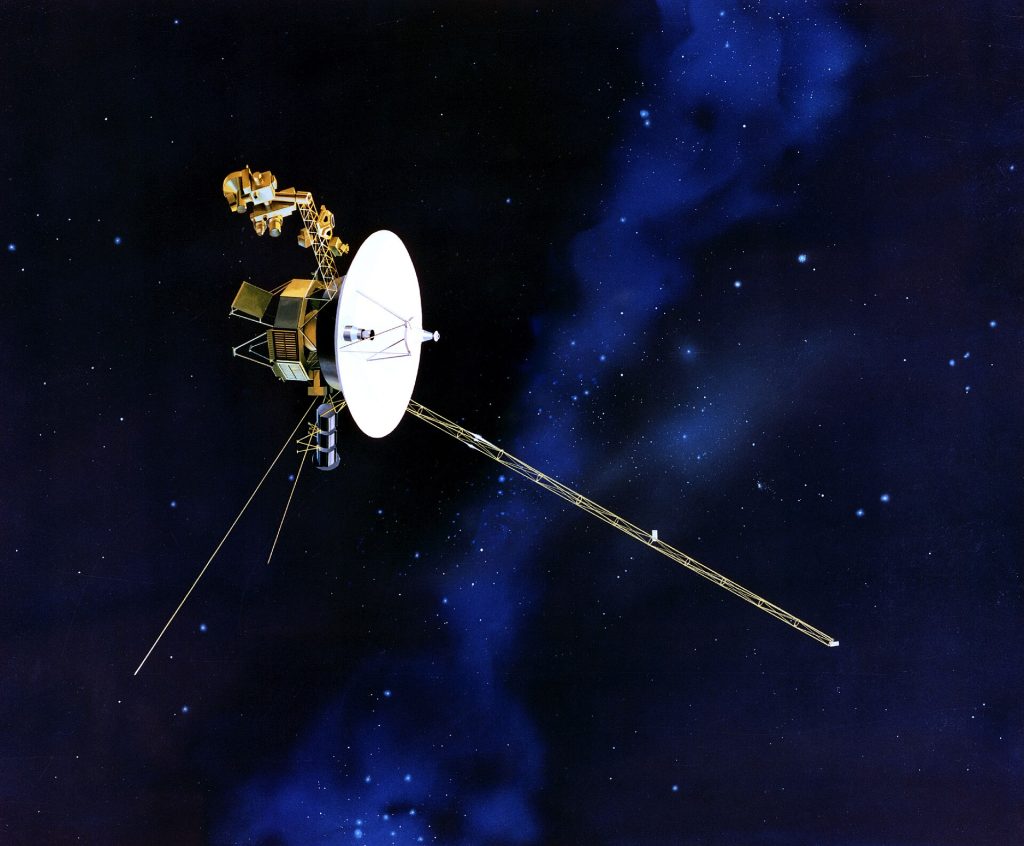
New Horizons
NASA's New Horizons launched in January 2006 and flew past Pluto on 14 July 2015, returning the first close images of the dwarf planet and its moons. It then went on to the Kuiper Belt object Arrokoth in 2019.
What happened
-
Watch this moment · 3:20
2003approximately
The mission is approved
After years of campaigning by a group nicknamed the Pluto Underground, led by Alan Stern, NASA approved New Horizons.
-
Watch this moment · 0:56
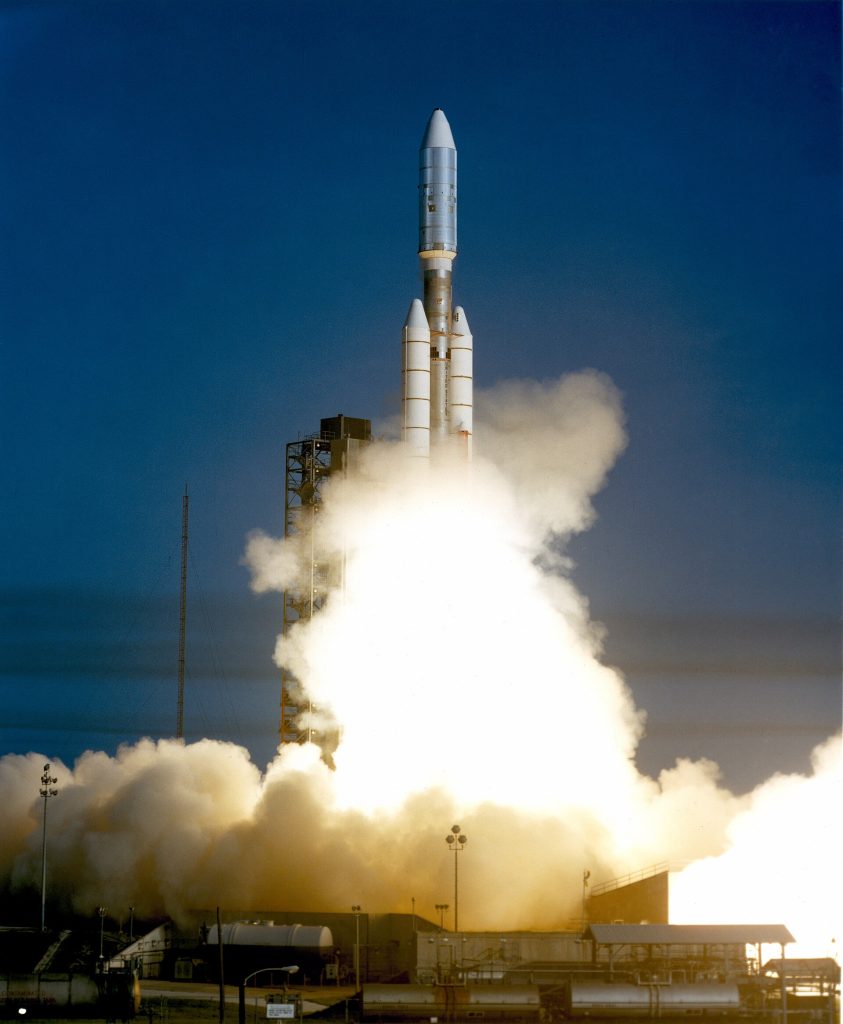
Launch on an Atlas V
New Horizons left Earth at more than 30,000 miles an hour, light enough that it passed the Moon in about nine hours, as video 63 puts it.
-
Watch this moment · 8:04
February 2007approximately
Jupiter gravity assist
A gravity assist from Jupiter increased its speed by 20 percent and cut three years off the trip.
-
Watch this moment · 8:29
4 July 2015approximately
Contact lost
Ten days before the flyby, the spacecraft's main computer was overworked and reset. Alice Bowman, the mission operations manager, led the recovery, and the flyby went ahead as planned.
-
Watch this moment · 2:40
Closest approach to Pluto
New Horizons passed about 12,500 kilometres from Pluto at closest approach. The spacecraft was busy taking pictures and could not send anything home while it did.
-
Watch this moment · 13:59
Telemetry arrives
At about 9 p.m. the team gathered and locked onto telemetry from the spacecraft, which confirmed that it had survived the flyby.
-
Watch this moment · 15:57
Weeks afterapproximately
Mountains, glaciers and a blue sky
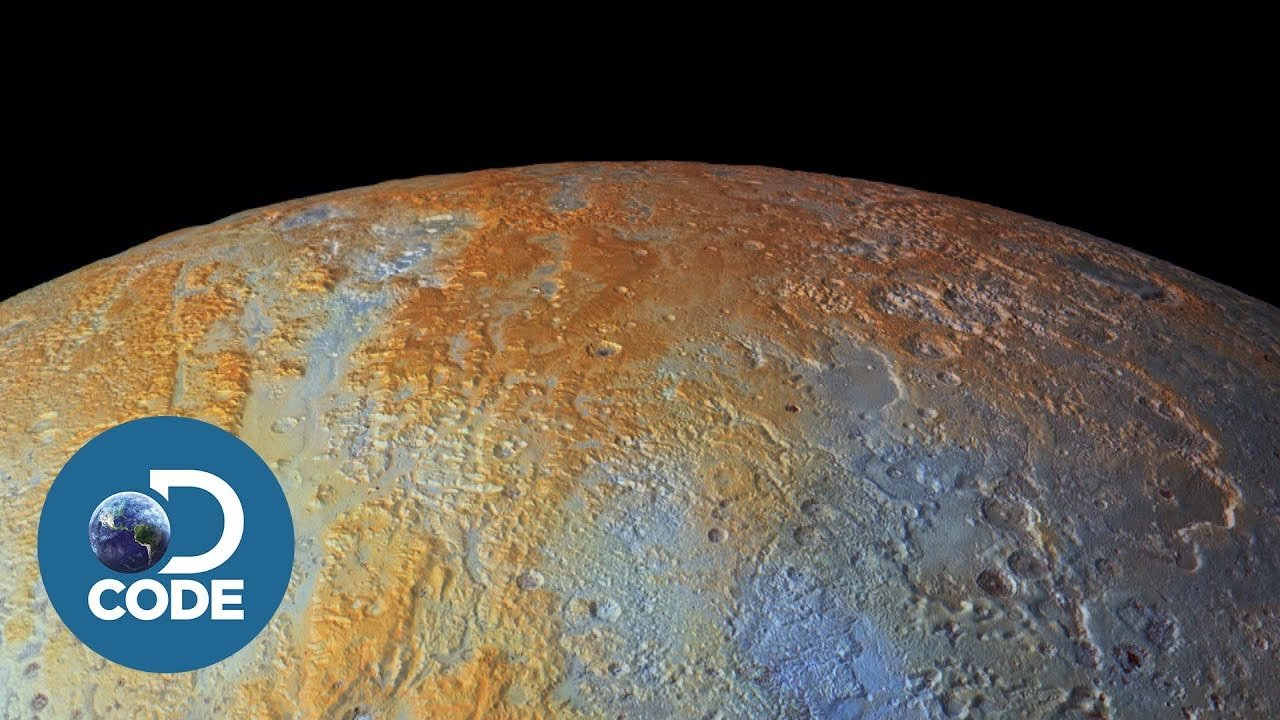
The first close images showed water-ice mountains about 10,000 feet tall, nitrogen glaciers, and later the blue haze of Pluto's atmosphere.
Key facts
| Vehicle | Atlas V |
|---|---|
| Mission name | New Horizons |
| Launch site | Cape Canaveral SLC-41 |
| Crew size | 0 |
| Outcome | In progress |
Videos about this mission
The videos, in date order
Drag, zoom or press play to watch them on this page.
January – July 2018
Drag to explore dates · Select a video to preview.
Dates are when each video was first published on YouTube.
The Pluto Underground
Pluto is three billion miles away. Video 58 tells the story of a group of young scientists and graduate students who wanted to fly there. Alan Stern led them. The spacecraft is the size of a small piano and weighs about 1,000 pounds.
What the flyby found
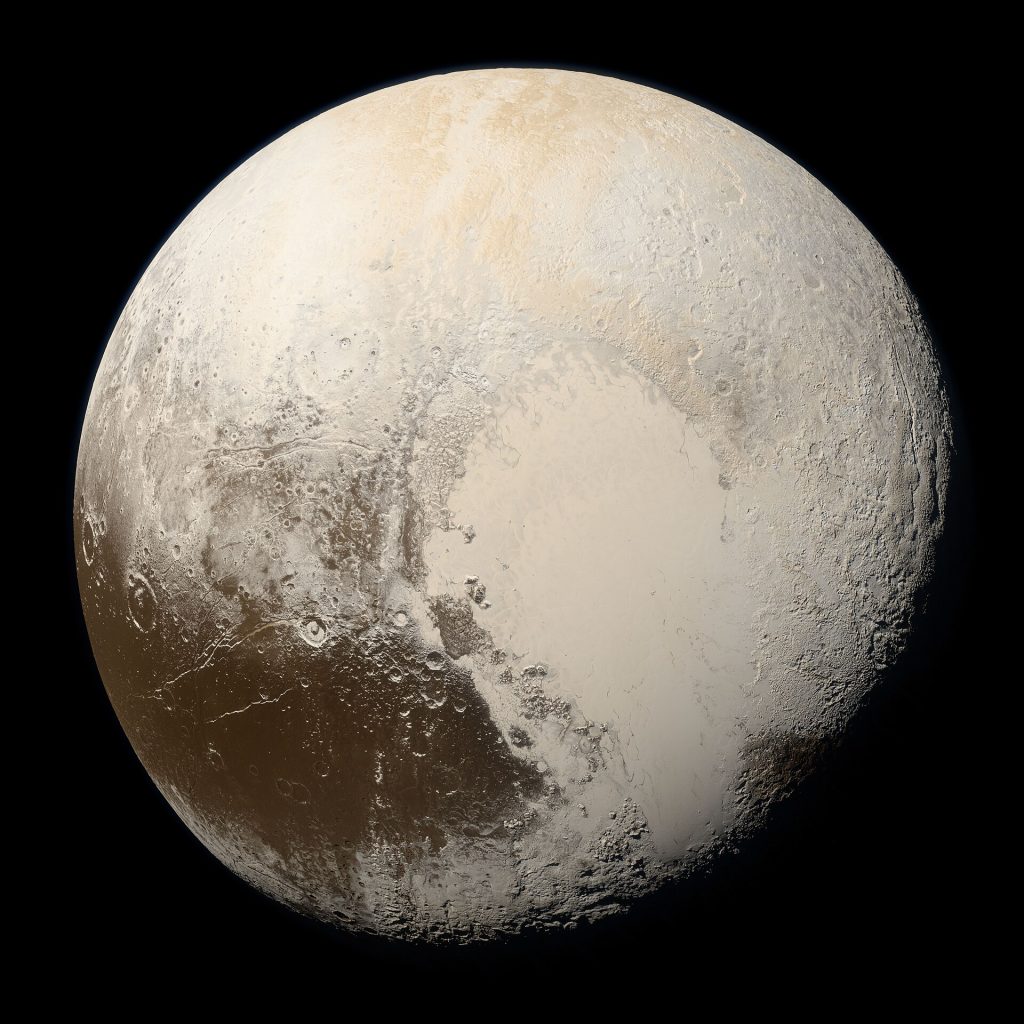
- Sputnik Planitia: a giant heart-shaped ice plain about the size of Texas, covered mostly in nitrogen ice.
- Mountains: ranges of water ice, which is the only ice strong enough to hold up mountains at Pluto's temperature, and Wright Mons, a candidate cryovolcano about four kilometres tall.
- Atmosphere: up to 20 haze layers, more than expected, and a thin atmosphere with surface pressure roughly 10 microbars.
- Charon: Pluto's large moon, which orbits so closely that the two circle a point in space outside Pluto.
The probe's data link ran at about one kilobit per second, with a delay of about 4.5 hours each way, so the flyby data took more than a year to come down.
After Pluto
New Horizons went on to the small Kuiper Belt object 2014 MU69, now called Arrokoth, which it flew past on 1 January 2019. Video 63 ends as the spacecraft heads towards it. Alan Stern concluded in video 58 that Pluto is geologically alive, which upended theories that predicted small worlds would cool and die early.
Questions and answers
When did New Horizons reach Pluto?
On 14 July 2015, after nine and a half years in flight.
Why didn't it orbit Pluto?
It was launched at high speed and carried fuel only for small course corrections, so it could not slow down. It could only fly past.
What is the heart on Pluto?
A large ice plain called Sputnik Planitia, covered mainly by nitrogen ice.
What did New Horizons visit after Pluto?
The Kuiper Belt object Arrokoth, on 1 January 2019.
Why did data take so long to arrive?
The link ran at about one kilobit per second, with a 4.5-hour delay each way, so it took more than a year to bring it all home.
Sources: The facts and written text on this page come from the 2 videos on this page, by Astrum, DCODE by Discovery.