Voyager 1
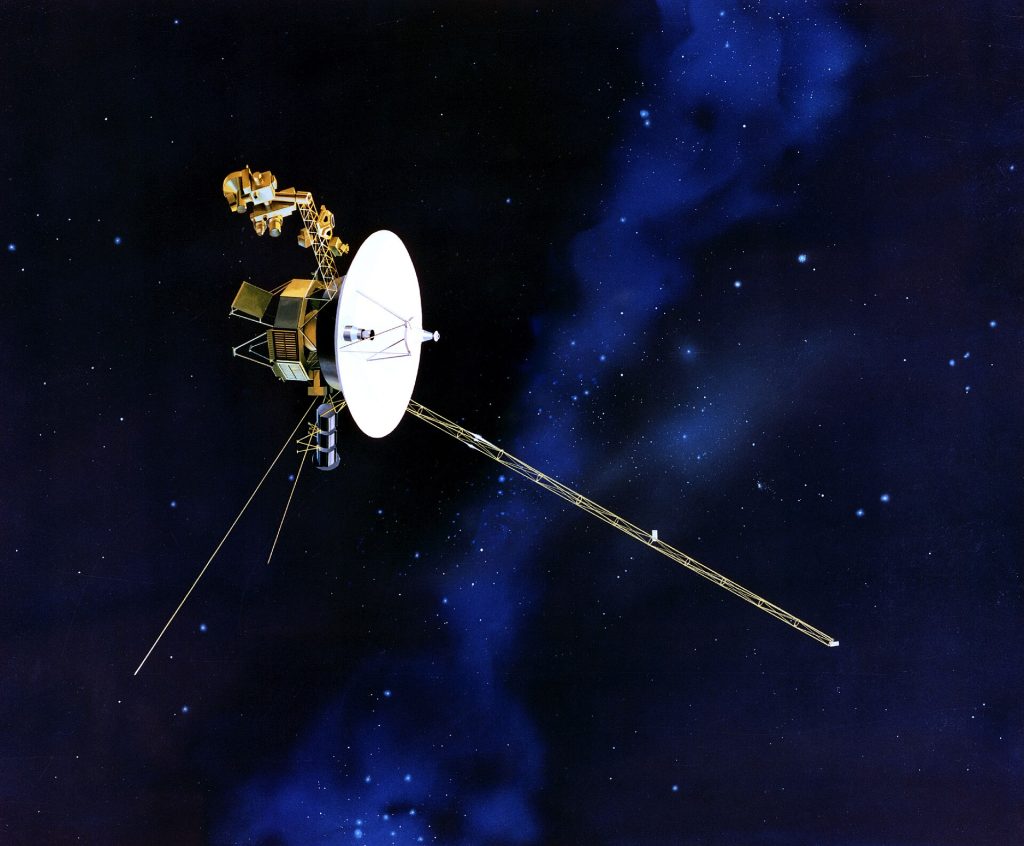
Voyager 1 launched from Cape Canaveral on 5 September 1977, flew past Jupiter and Saturn, and in August 2012 became the first spacecraft to cross into interstellar space. It was built for a five-year mission, and NASA is still receiving its data nearly five decades later.
What happened
-
Watch this moment · 18:00
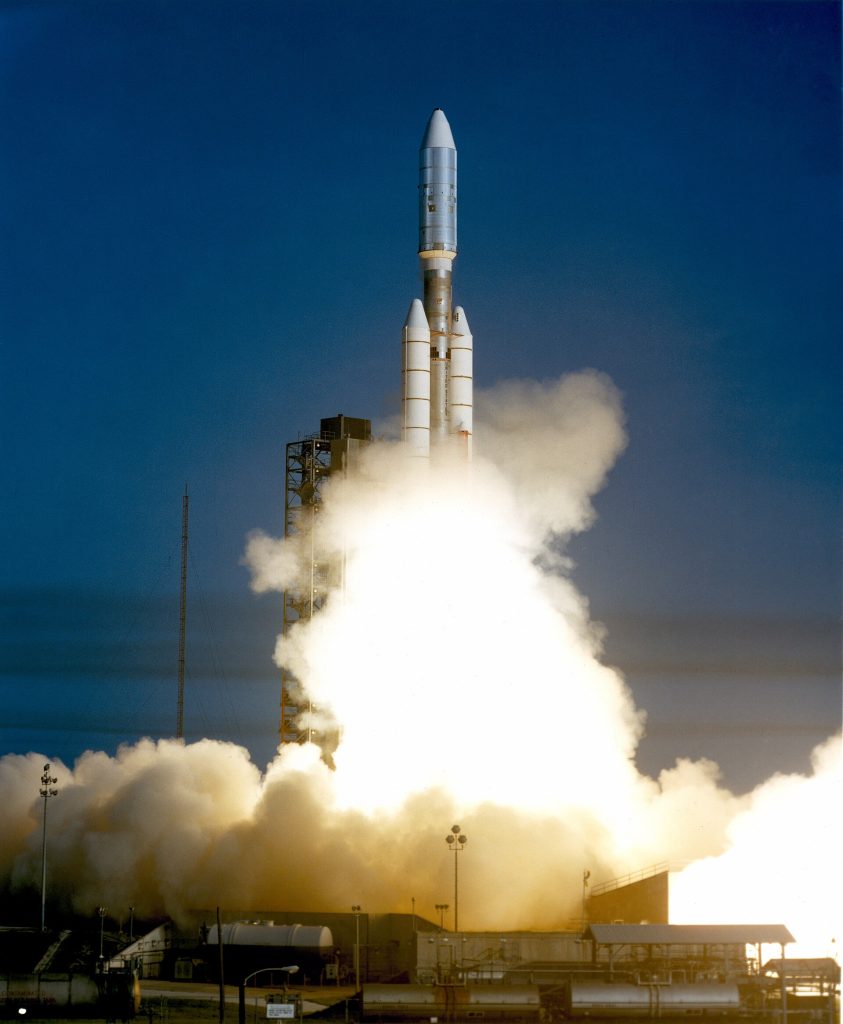
Launch on a Titan IIIE
The Titan booster developed a small propellant leak and underperformed, so the Centaur upper stage burned longer to make up for it and shut down with only 3.4 seconds of usable propellant left, according to video 211.
-
Watch this moment · 58:48
Jupiter
Voyager 1 reached Jupiter. Its images showed active volcanoes on Io, with plumes rising more than 300 km in the account in video 212, and a smooth, cracked surface on Europa that suggested an ocean below.
-
Watch this moment · 1:11:26
November 1980approximately
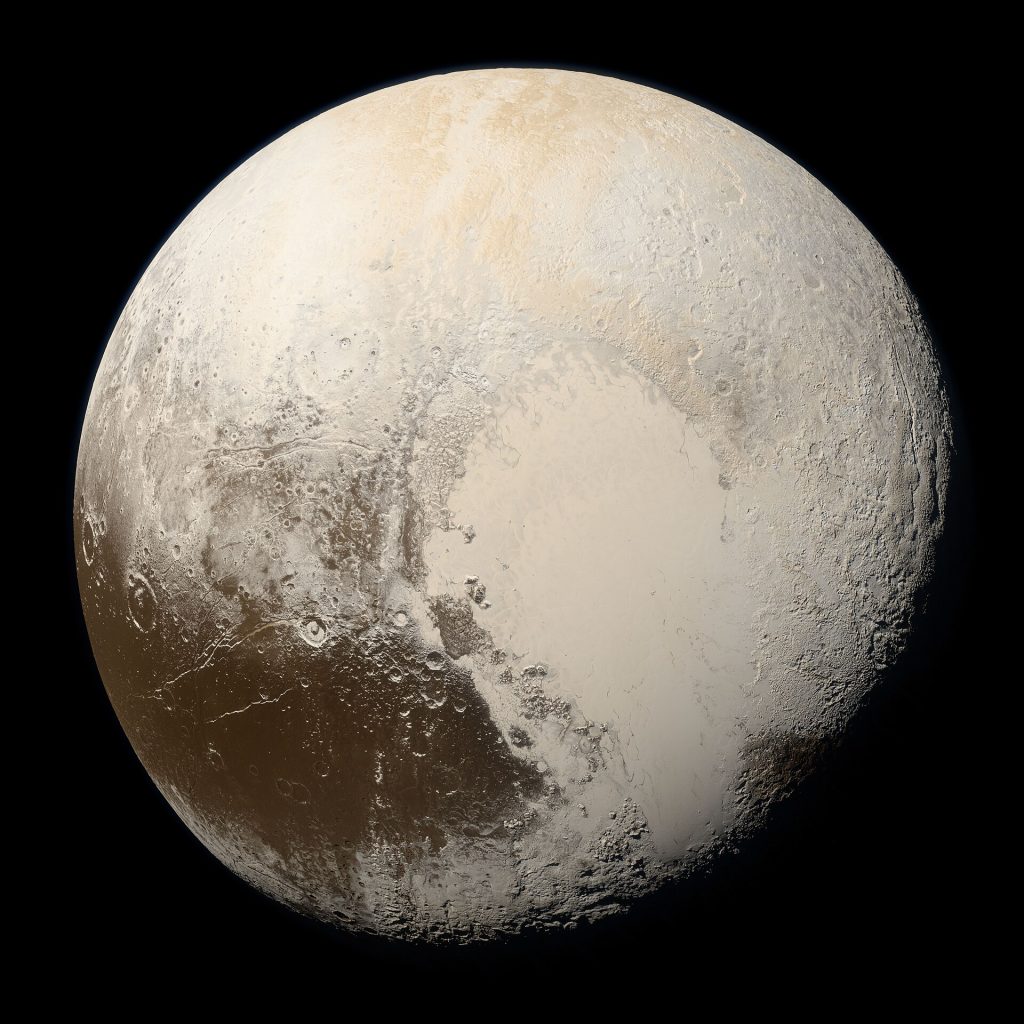
Saturn and Titan
The rings resolved into thousands of ringlets. Voyager 1 then passed within 4,000 miles of Titan, a flyby that bent its path out of the plane of the planets and ended its planetary tour.
-
Watch this moment · 54:13
The Pale Blue Dot
On the advice of Carl Sagan, the camera was turned back for a last set of pictures from about 6 billion kilometres away, including the image known as the Pale Blue Dot. The cameras were then shut down.
-
Watch this moment · 1:48:41
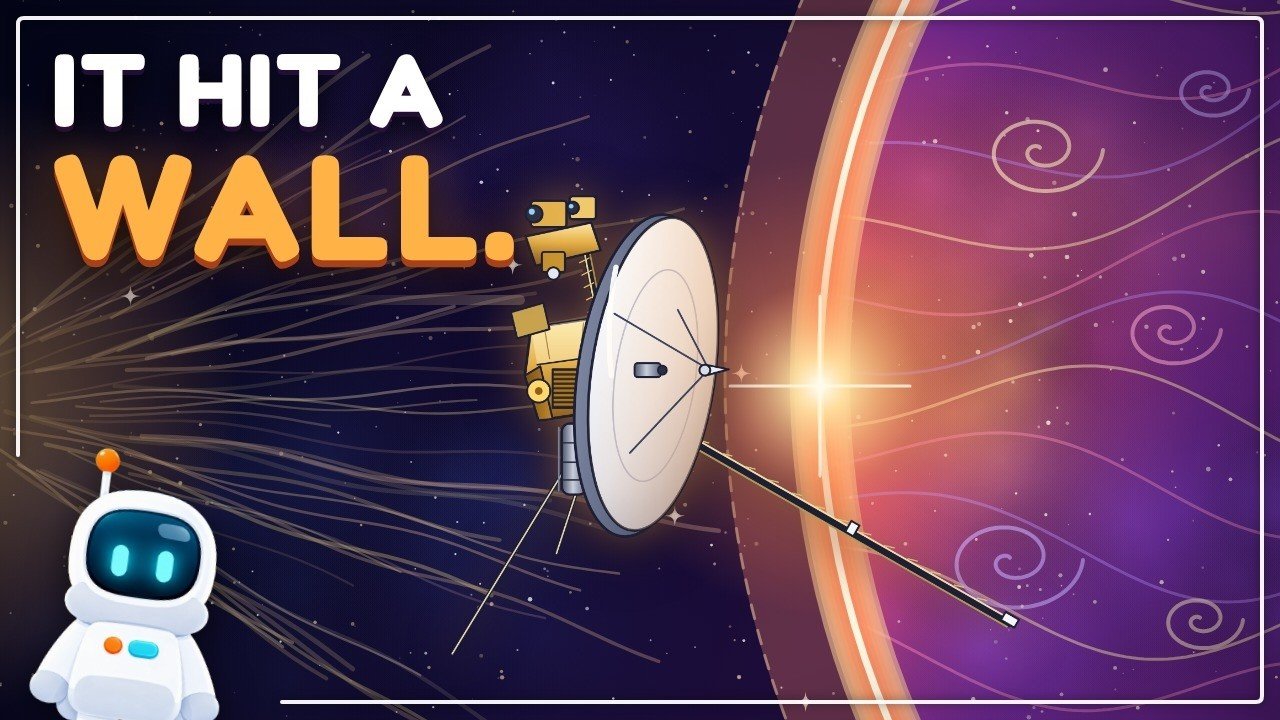
The termination shock
Voyager 1 crossed the termination shock, where the solar wind slows suddenly, at about 94 astronomical units from the Sun.
-
Watch this moment · 1:03:45
Interstellar space
Low-energy particles from the Sun fell sharply while galactic cosmic rays rose to record highs. Voyager 1 had left the heliosphere, the bubble of the Sun's wind. NASA confirmed the crossing the following year.
-
14 November 2023
Silence
Voyager 1 began sending a meaningless stream of binary code. The cause was a memory failure in its flight data subsystem.
-
April 2024approximately
Contact restored
Engineers moved the affected code to other parts of the memory and, with signals taking more than 22 hours each way, restored contact.
Key facts
| Mission name | Voyager 1 |
|---|---|
| Launch site | Cape Canaveral, Florida |
| Crew size | 0 |
| Outcome | In progress |
Videos about this mission
The videos, in date order
Drag, zoom or press play to watch them on this page.
August 2023 – November 2026
-
Voyager Probes: Engineering Choices That Kept Them Running
Astrum -
Voyager 1 and 2: From the Grand Tour to Interstellar Space
Beyond Horizons -
Voyager 1 and 2: Launch, Grand Tour and Crossing into Interstellar
Actual Space -
Voyager 1 Nears One Light-Day: Thrusters, Power and the Big Bang
Googol Space -
Voyager 1 Pale Blue Dot: Why the Cameras Looked Back in 1990
Anaxa -
Voyager 1 Reaches One Light-Day: Power, Memory and the Golden Record
NumberShock -
Voyager 1 and 2: Planetary Tour to One Light-Day From Earth
Deep Orbit Stories -
Voyager 1: How It Proved It Had Reached Interstellar Space
Oruvi
Drag to explore dates · Select a video to preview.
Dates are when each video was first published on YouTube.
A once-in-176-years alignment
In 1965 a JPL engineer, Gary Flandro, found that Jupiter, Saturn, Uranus and Neptune would line up in the late 1970s, letting a spacecraft use gravity assists to cut the flight time to Neptune from 30 years to about 12. The multi-billion-dollar Grand Tour was cancelled, and Voyager was a cheaper replacement of two spacecraft. Each carried 11 science instruments and was powered by radioisotope generators that burn plutonium-238.
What it found
- Jupiter: a faint ring, and the first look at the active volcanoes on Io.
- Saturn: thousands of ringlets, shepherd moons and a layered haze on Titan.
- The edge: after the Pale Blue Dot in 1990, Voyager 1 kept its few remaining instruments on. In 2012 they recorded the change in the particles around it that showed it had left the heliosphere.
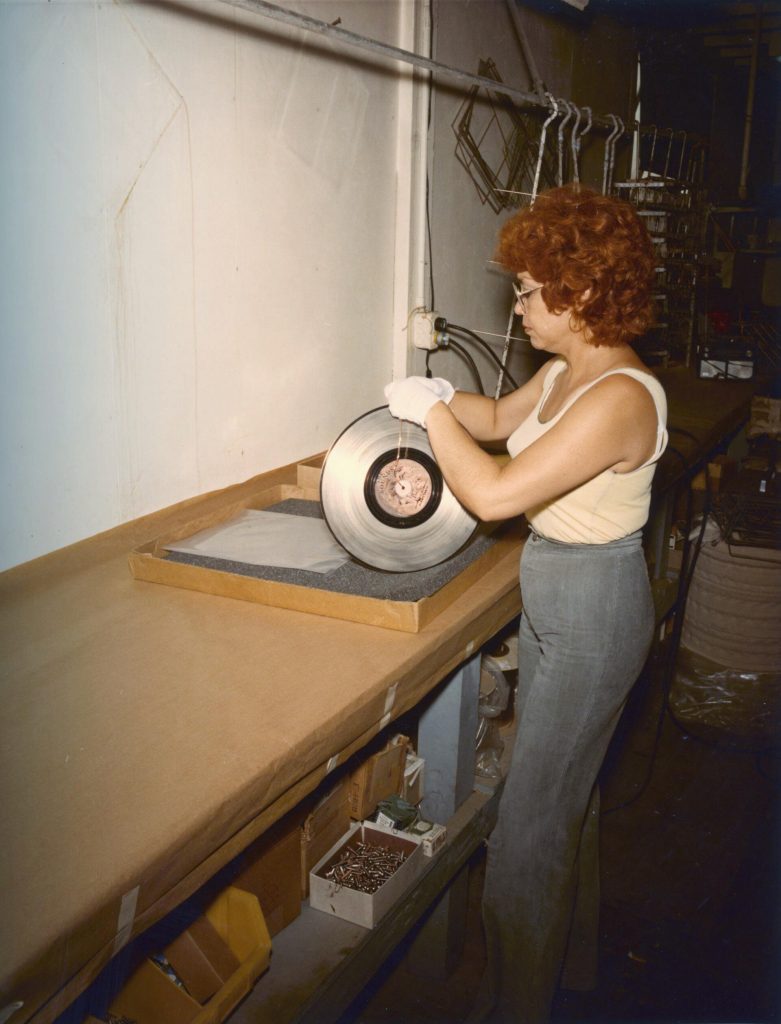
Each probe also carries a Golden Record, a gold-plated copper disc with 115 images, greetings in 55 languages, sounds of Earth and about 90 minutes of music, assembled by a team led by Carl Sagan.
The faults of its later years
In May 2022 the attitude control system began sending scrambled data, although the spacecraft still answered commands, and engineers had it return to the right computer. In November 2023 the flight data subsystem failed and Voyager 1 sent only a meaningless stream of binary data. After months of work, engineers reallocated the code to other parts of the memory. A command takes about 22 hours to reach the probe, and the reply takes as long.
What comes next
The power available to the probe declines by about four watts a year, so instruments and heaters are switched off one by one. Video 211 says the active mission is expected to end in the late 2020s or early 2030s. Voyager 1 will keep going, and in roughly 40,000 years passes within about 1.6 light-years of another star, as the video puts it.
Questions and answers
When did Voyager 1 enter interstellar space?
On 25 August 2012, when the particles around it changed sharply. NASA announced it in 2013.
Is Voyager 1 still working?
Yes. After the memory failure of November 2023, engineers restored contact in April 2024.
What is the Golden Record?
A disc on each probe with images, greetings in 55 languages, sounds of Earth and music, meant for any finder.
How long does a signal take?
More than 22 hours each way.
Sources: The facts and written text on this page come from the 8 videos on this page, by Astrum, Beyond Horizons, Actual Space, Anaxa, NumberShock, Googol Space, Deep Orbit Stories, Oruvi.