Voyager Probes: Engineering Choices That Kept Them Running

The short version
An explainer on the engineering choices that let the Voyager probes keep working for about 45 years, including plutonium-238 power generators, backup thrusters, onboard computers and 8-track tape recorders. It also covers the 1977 planetary alignment and Voyager 1's scrambled telemetry announced in June 2022.
Full written account
Voyager 1 and Voyager 2 were built for a five-year mission to explore Jupiter and Saturn and their larger moons. Nearly 45 years after launch, Voyager 1 is still working, with an onboard computer holding less memory than a car key fob and an 8-track magnetic tape recorder from the 1970s. It takes over 21 hours to send and receive radio signals with Voyager 1, which is 23 billion kilometers away.
From five years to interstellar space
After completing its objectives at Jupiter and Saturn, the mission team added flybys of Uranus and Neptune. NASA then announced the Voyager Interstellar Mission, aimed at the outer limits of the Sun's sphere of influence, including the termination shock, the denser and hotter heliosheath and finally the heliopause into interstellar space.
Power and the 1977 alignment
Each probe carries a radioisotope thermoelectric generator that converts heat from decaying plutonium-238 into electricity. At launch it produced 157 watts, about enough to power a laptop. The output declines constantly, halving every 87.7 years, and would still run the essentials until at least 2025.
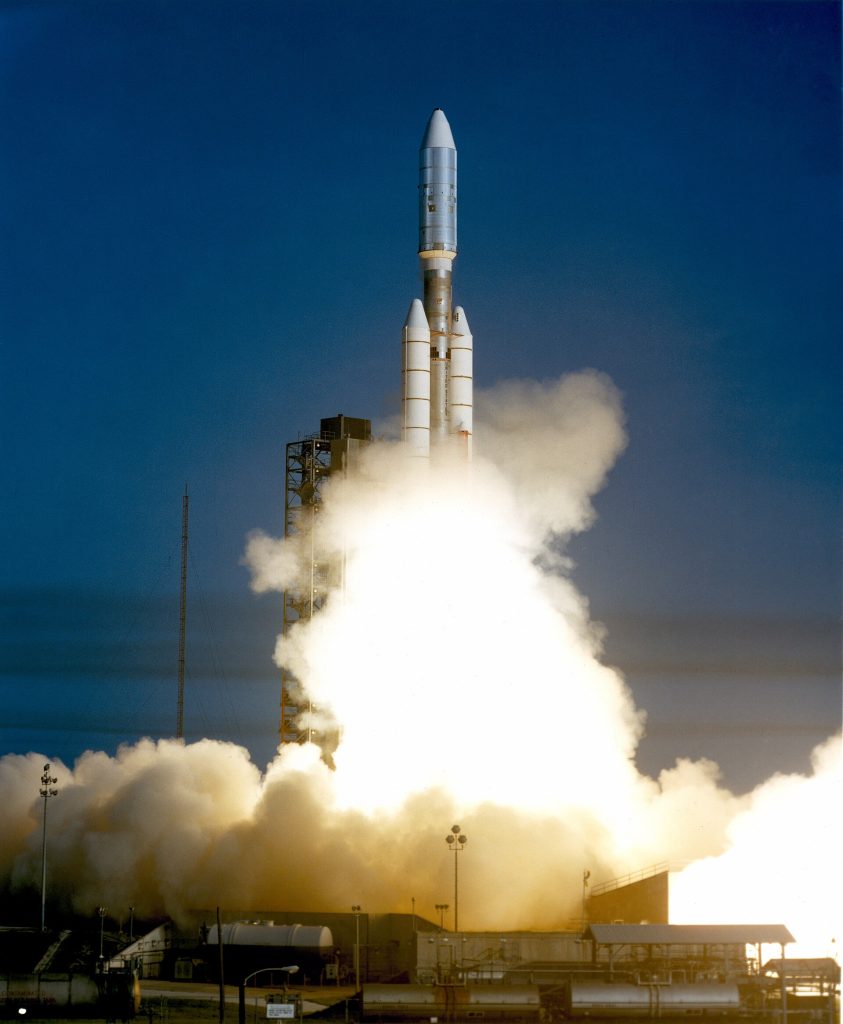
The probes launched in 1977, when the planets were in a 1 in 176 year alignment. It allowed visits to Neptune and Uranus with minimal course adjustment and a gravity assist from each of the four outer giants. The narrow window set a strict deadline, and Congress would not earmark enough funding for a longer Grand Tour. The team engineered the probes for a potentially longer mission and hoped funding would follow.
Redundancy and computers
Each probe has 11 scientific instruments, most with redundancies that can be toggled to conserve power. There are 16 hydrazine thrusters, eight of them backups. Voyager 2's main thrusters stopped working after 37 years, and the backups, idle for four decades, engaged and worked perfectly.
The attitude and articulation control subsystem keeps the high-gain antennae pointed at Earth. This matters because the transmitters have only the wattage of a refrigerator light bulb, and the Deep Space Network must know where the probes are.
Tape recorders and hazards
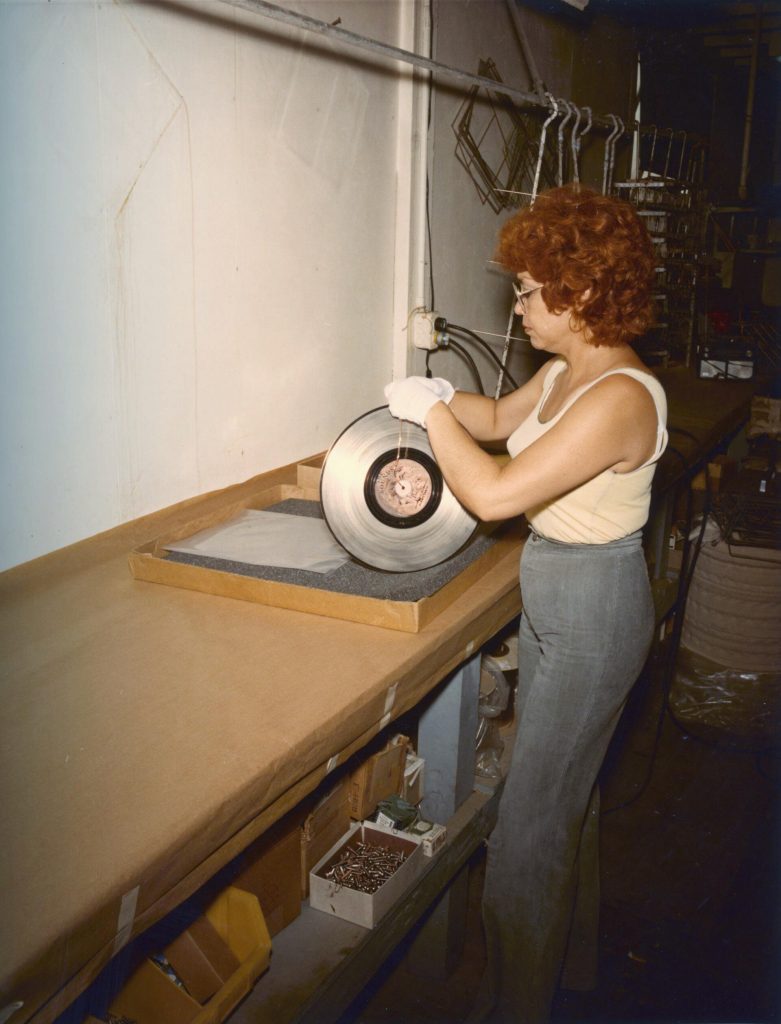
Each spacecraft has a 3.7 meter antenna for real-time transmission and an 8-track digital tape recorder that buffers 536 megabits, about 100 photographs. Its manufacturer, Odetics, claimed the recorders could process over 4,000 kilometers of tape without visible wear. They ran without data loss or machine failure until taken offline to conserve power.
Before Jupiter, the probes had to cross the asteroid belt, which scientists once believed might shred a spacecraft. Pioneers 10 and 11 had already passed through it. Both Voyagers made it through unscathed.
As power waned, NASA turned off some heaters. When the cosmic ray detector's heater was turned off two years earlier, its temperature fell by 70 degrees Celsius, yet it kept running smoothly.
Voyager 1's scrambled telemetry
At a June 2022 meeting of the National Academies, NASA announced that Voyager 1's attitude articulation and control system was returning nonsensical data such as rows of zeros, while the probe responded to commands and operated normally. Scientists found a workaround by moving to a backup.
A proposal from the Johns Hopkins Applied Physics Laboratory describes an interstellar probe launching in 2036 and reaching interstellar space in 15 years.
Questions this video answers
How are the Voyager probes powered?
Each probe has a radioisotope thermoelectric generator that converts heat from decaying plutonium-238 into electric power. It produced 157 watts at launch.
What data storage do the Voyagers use?
Each has a 3.7 meter antenna for real-time transmission and an 8-track digital tape recorder that can buffer 536 megabits and store about 100 photographs.
Why did the Voyagers launch in 1977?
The probes launched in 1977 and used a rare planetary alignment that allowed gravity assists from each of the four outer giants they visited.
What happened to Voyager 2's thrusters?
Voyager 2's main thrusters stopped working after 37 years, and its backup thrusters engaged after four decades of idleness and worked perfectly.
What problem did Voyager 1 develop?
In June 2022 NASA announced that Voyager 1's attitude articulation and control system was sending scrambled telemetry, such as rows of zeros, though the probe still responded to commands. Scientists found a workaround by moving to a backup.
Explore related missions
Connected by the topic: Voyager and Grand Tour probes