Voyager 1 and 2: From the Grand Tour to Interstellar Space
The short version
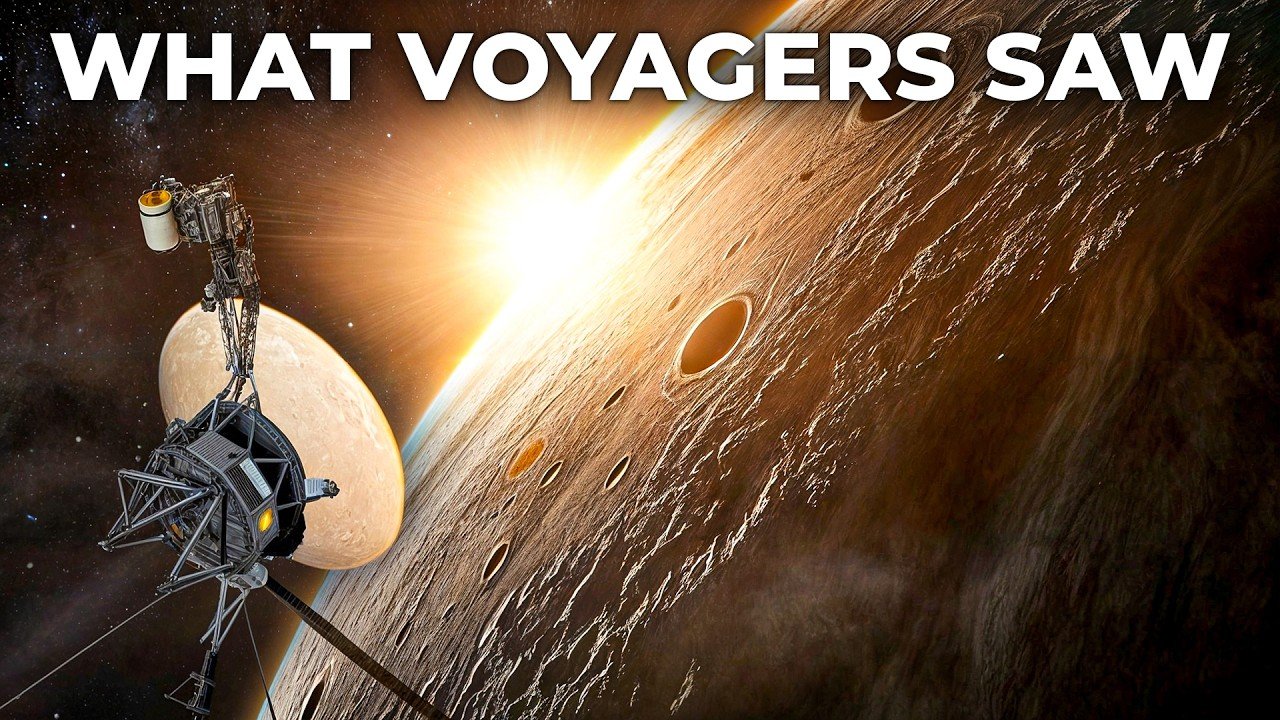
A long documentary on the Voyager 1 and Voyager 2 probes, from the Grand Tour concept and spacecraft design to the golden record and the discoveries at Jupiter, Saturn, Uranus, Neptune and the edge of the heliosphere. Voyager 2 launched on August 20, 1977 and Voyager 1 on September 5, 1977, aboard Titan IIIE rockets. Both have crossed into interstellar space.
Full written account
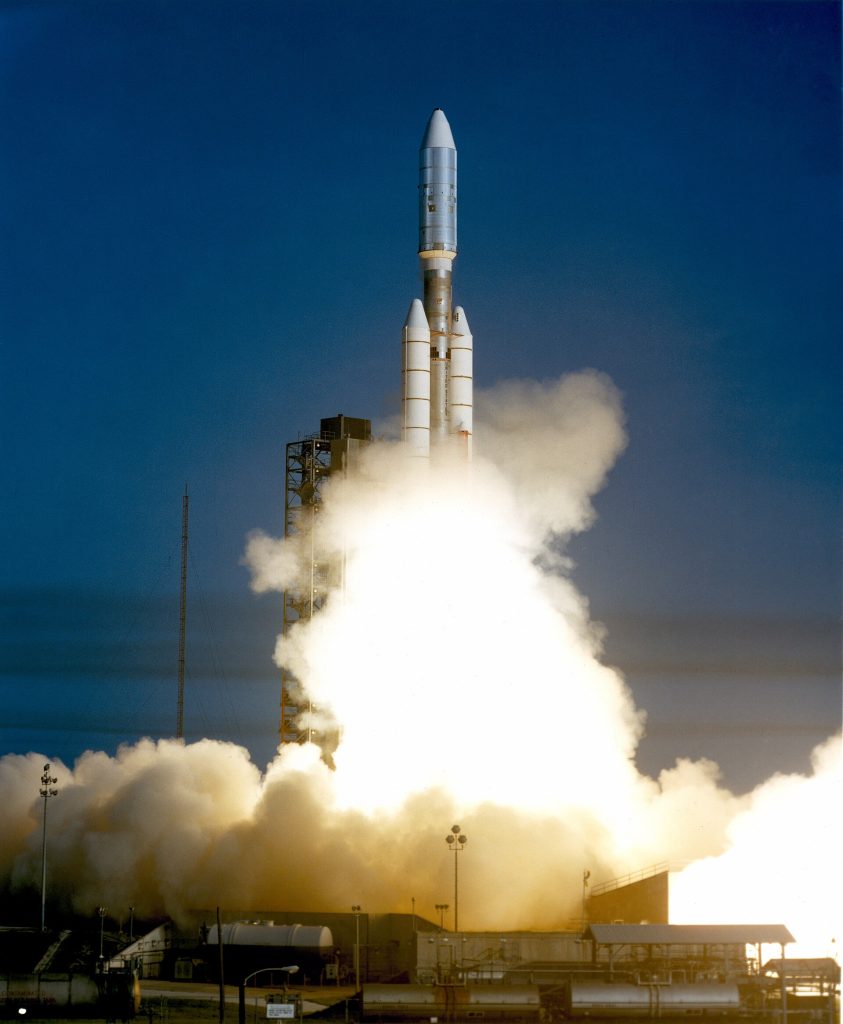
Why did two small spacecraft, launched in 1977, end up visiting four giant planets and then leaving the solar system? The answer starts with an alignment of the outer planets that happens only once every 176 years, and with years of quiet lobbying to turn that chance into a mission. Voyager 2 left Earth on August 20th, 1977, and Voyager 1 followed on September 5th, both aboard Titan IIIE rockets. Both carried a golden record, and both are still sending data from beyond the planets.
From the Grand Tour to Voyager
In the early 1960s, scientists at NASA's Jet Propulsion Laboratory and at universities realised that Jupiter, Saturn, Uranus and Neptune would line up so that one spacecraft could visit all four, with gravity assists from each planet propelling it onward. The idea became known as the Grand Tour. Selling it was hard: Apollo costs had soared, the Vietnam War was straining budgets, and policymakers asked why money should go to distant planets. The National Academy of Sciences issued reports stressing the importance of exploring the outer planets, and officials including Homer Newell and James Fletcher worked with the Office of Management and Budget and Congress.
The original vision of four or even five spacecraft was pared down to two, designed to be durable enough to possibly complete the whole tour. The plan had built-in off-ramps: visit at least Jupiter and Saturn, and continue to Uranus and Neptune if the craft survived and funding allowed. NASA won approval in the early 1970s under the name Voyager, and official documents avoided promising the full Grand Tour.
Built to last decades
Engineers designed for a craft that nobody could repair. Aluminum formed much of the structure and titanium was used where extra strength was needed. Electronics used hardened components and were shielded by insulation and by placement inside the spacecraft body. Voyager carried three computers, plus duplicate transmitters, receivers and attitude control systems. Hardware was baked, frozen in vacuum chambers, blasted with radiation and vibrated on shakers. Software was kept simple and, when it could not fix a problem itself, the spacecraft waited for instructions from Earth. Its antenna was a 12-foot dish.
Sunlight at Jupiter is about 25 times dimmer than near Earth, and at Saturn 100 times dimmer, so solar panels were ruled out. Each Voyager carried three radioisotope thermoelectric generators (RTGs) on a boom, using heat from decaying plutonium-238, which has a half-life of about 87.7 years. They produced about 470 watts at the start of the mission and also kept the instruments warm. Public protests and legal challenges came before launch over the risk of spreading plutonium in an accident; NASA and the Department of Energy ran safety studies, and the RTGs were launched without incident.
The golden record
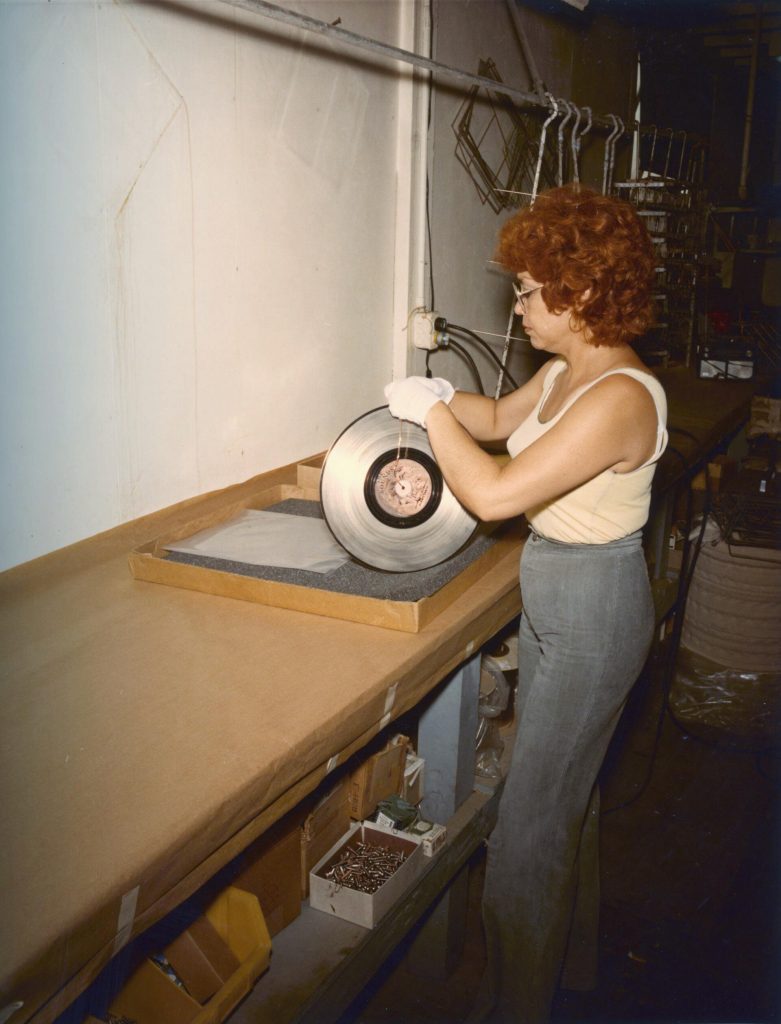
A team led by Carl Sagan, including Frank Drake, Ann Druyan, Timothy Ferris, Linda Salzman Sagan and Jon Lomberg, built a record to carry a message to any finder. They debated whether to show humans clothed or naked, and chose anatomy diagrams over explicit photographs. They left out images of war. The music ranged from Bach to a Peruvian wedding song, an Azerbaijani folk melody and Chuck Berry's Johnny B. Goode. Spoken greetings were recorded in 55 languages, from ancient Sumerian to modern English, Chinese and Arabic. Natural sounds included thunder, birdsong, a volcano, a baby's cry and a heartbeat, and Druyan's brain waves and heartbeat were recorded too. The record was copper plated with gold, with a cartridge, a needle and playing diagrams, in an aluminum case.
The instruments and the flight paths
The imaging system had a wide-angle and a narrow-angle camera, both using vidicon tubes and colour filters. Other instruments included a photopolarimeter, an infrared interferometer spectrometer and radiometer, planetary radio astronomy antennas, a plasma spectrometer, a low energy charged particle instrument, a cosmic ray subsystem, a magnetometer on a boom, a plasma wave subsystem and an ultraviolet spectrometer.
Gravity assist made the tour possible. After its Jupiter flyby Voyager 1 left the planet at about 35,000 mph relative to the sun. Radio round-trip time was about 90 minutes at Jupiter and nearly 8 hours at Neptune, so manoeuvres ran from pre-programmed sequences.
The two craft were deliberately different. Voyager 2 launched first on a slower path as a kind of backup. Voyager 1 was aimed at a close Titan flyby, which bent its path steeply north out of the plane of the solar system and meant it could not go on to Uranus and Neptune. Voyager 1 reached Jupiter in March 1979 and Voyager 2 in July of that year. Voyager 2 stayed near the ecliptic and became the first and so far only spacecraft to visit Uranus and Neptune.
Jupiter and its moons
Imaging with the sun behind the planet revealed a ring around Jupiter too faint to be seen from Earth: a narrow main ring only a few hundred km wide, with a broader halo inside it. The ring dust was thought to come from small moons struck by micrometeorites. When Voyager 2 later reached Uranus and Neptune it found rings around both.
Radiation was far more extreme than expected. Voyager measured electrons moving at nearly the speed of light and ion densities many orders of magnitude above anything near Earth. Io was feeding Jupiter's magnetosphere with sulfur and oxygen, and the Io plasma torus held some of the highest particle densities and energies in the solar system outside the sun.
On Io, Voyager 1's infrared instruments found hotspots that stayed fixed as the moon rotated, and the ultraviolet spectrometer saw plumes of sulfur and oxygen, some rising over 300 km. One was later named Pele. The heat was explained by tidal heating from Jupiter and the pulls of Europa and Ganymede. Voyager 2 confirmed the findings months later.
Europa had few craters, long cracks, double ridges and jumbled regions called chaos terrain, which suggested ice floating on a liquid or slushy layer. Voyager could not confirm an ocean directly.
Saturn and Titan
Voyager 1 saw spokes in Saturn's rings in late 1980: faint streaks that formed in as little as 5 minutes and rotated with the period of Saturn's magnetic field, mostly in the B-ring. The leading idea was that electrostatic forces lifted charged dust above the ring. Radio signals passing through Saturn's atmosphere revealed gravity waves in the stratosphere.
Titan appeared as a smooth orange sphere, opaque in visible light. The ultraviolet spectrometer showed layered haze made largely of hydrocarbons produced when sunlight split methane. The upper atmosphere was around -180° C, and surface pressure was perhaps as much as 1.5 times Earth's. Voyager also found a detached haze layer. It could not see the surface.
Uranus and Neptune
When Voyager 2 reached Uranus in January 1986, its magnetometer found a field tilted about 60° from the rotation axis and offset from the centre by nearly a third of the planet's radius, so the field swung like a lawn sprinkler. Auroras were faint and patchy, and the magnetic tail was twisted into a corkscrew. The encounter lasted only a few hours, and no spacecraft has visited Uranus since. Voyager 2 also flew close to Miranda after months of course corrections.
At Neptune in August 1989, Voyager 2 found dark plumes on Triton rising up to 8 km, leaving dark streaks, direct evidence of cryovolcanism. Surface temperature was about 38 Kelvin. The close imaging covered roughly 40% of the moon. Neptune's Great Dark Spot was roughly as wide as Earth, with winds up to 2,100 km/h, plus a smaller spot called D2 and a fast cloud nicknamed the Scooter. Neptune emitted roughly 2.6 times the energy it received from sunlight. When Hubble looked in the mid 1990s, the Great Dark Spot was gone.
Beyond the planets
Voyager 1 crossed the termination shock in December 2004 at about 94 astronomical units; its plasma instrument had already stopped working. Voyager 2 crossed in August 2007 at about 84 astronomical units, and its plasma instruments still worked. The difference indicated a compressed southern heliosphere, with the interstellar magnetic field the leading clue. Voyager 1 crossed the heliopause in 2012 and Voyager 2 in 2018. In the heliosheath, the plasma was turbulent and cosmic ray levels fluctuated; at the heliopause, cosmic ray levels sometimes rose by 20% or more over a few days. Beyond it, the interstellar magnetic field's direction shifted by only about 20°, not the 90° many had anticipated.
Questions this video answers
When did Voyager 1 and Voyager 2 launch?
Voyager 2 launched on August 20, 1977, and Voyager 1 followed on September 5, 1977.
Why did Voyager 1 not visit Uranus and Neptune?
Voyager 1 was aimed at a close Titan flyby, which sent it steeply north out of the plane of the solar system, so it could not continue to Uranus and Neptune.
What powers the Voyager probes?
Sunlight is too weak in the outer solar system, and no chemical battery could last decades. Radioisotope thermoelectric generators using plutonium-238 supplied power and heat.
When did the Voyagers reach interstellar space?
Voyager 1 crossed the heliopause in 2012 and Voyager 2 crossed it in 2018.
What did the Voyagers discover?
Voyager 1 discovered a faint ring around Jupiter. Voyager 2 found active plumes on Triton, a tilted and offset magnetic field at Uranus, and the Great Dark Spot at Neptune.
Explore related missions
Connected by the topic: Voyager and Grand Tour probes